Earth observation
Copernicus plans November upgrade for Sentinel-5P atmospheric products
The October 13 notice warns of a near-real-time data gap during deployment and details cloud-screening and nitrogen-dioxide product changes.
Add us as a preferred source on Google Add us as a preferred source on Google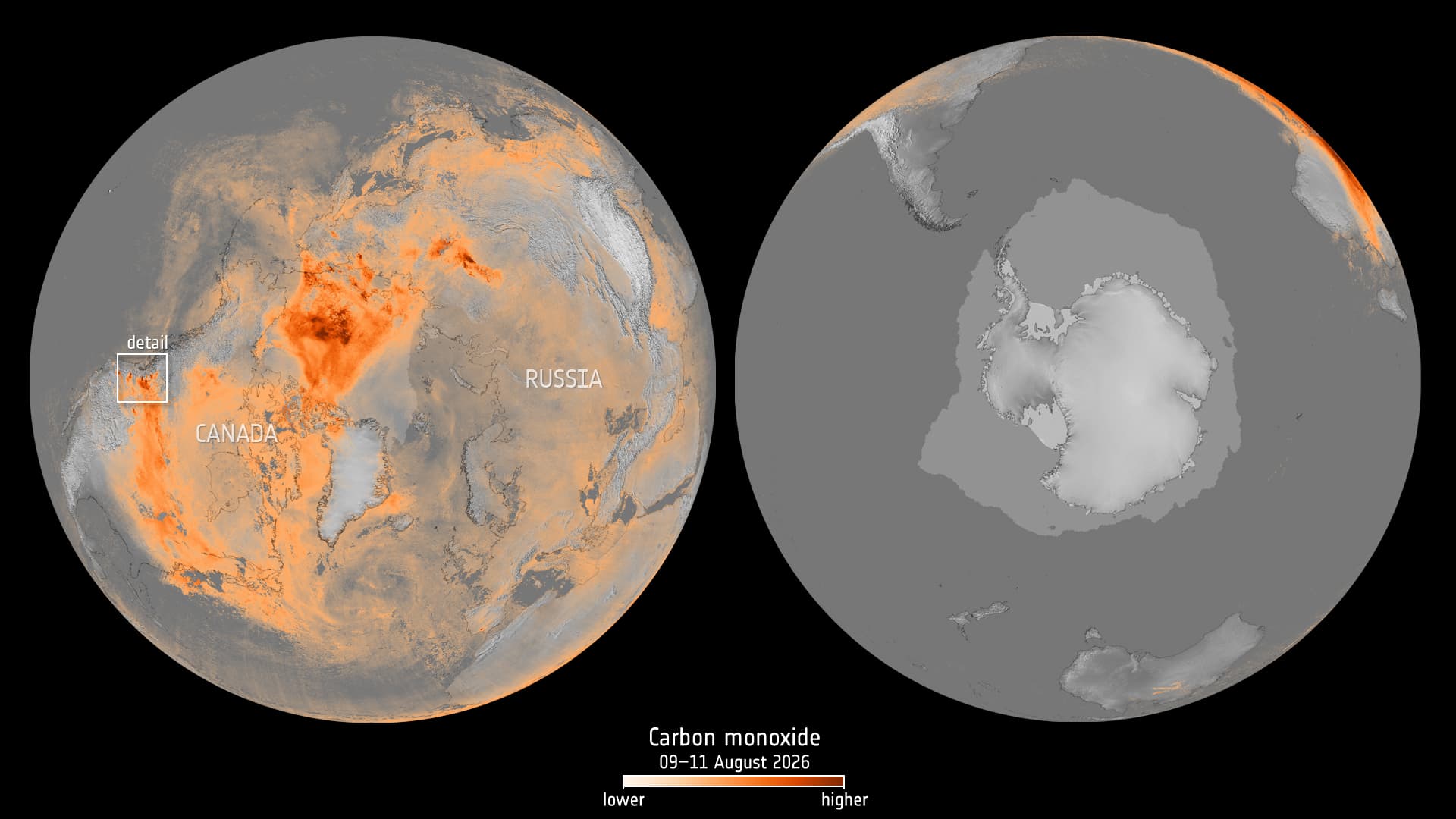
Copernicus plans to switch Sentinel-5P’s ground-processing system on November 10, 2026, changing atmospheric data products and interrupting near-real-time output during deployment. The October 13 operational notice on the Copernicus Data Space Ecosystem warns that near-real-time products will not be generated for observations acquired during the downtime.
The change concerns a shared atmospheric-data resource. SentiWiki’s official product documentation states that Sentinel-5P products are freely available through the Copernicus Data Space Ecosystem. The service describes access for institutional, research and commercial users, as well as citizens worldwide.
For methane, the planned processor update changes the internal cloud mask so it no longer depends on the carbon-monoxide retrieval converging to a solution, according to the notice. This internal screening provides an alternative to cloud information from the separate VIIRS satellite instrument.
The accompanying pre-operations document describes a machine-learning cloud mask for aerosol-layer-height products, trained using VIIRS observations. It distinguishes a warning of possible cloud contamination from a filter that prevents a contaminated pixel from being processed. The update also extends aerosol-height retrievals to higher altitudes.
Nitrogen-dioxide products are due to gain additional lower-atmosphere column results and more detailed error reporting. The technical document identifies emission-estimation work as a use for the added column results. It puts the extra output at about 30 megabytes per file, a 5% increase, and lists new variables and other format changes.
Users can examine pre-operational samples before the switch. The document links public test datasets for both updated Level-2 processor families, using observations from September 9, 2024. These samples describe the forthcoming products; they are not observations collected under an already deployed November system.
The operational notice does not specify how long the downtime will last. It states that detailed product readme files will follow the switch, and that the first orbits processed with the new versions, for both near-real-time and offline products, will be identified after successful deployment.
Reporting trail
Primary sources
Copernicus Data Space EcosystemCopernicus Sentinel-5 Precursor (S5P) products improvementdataspace.copernicus.eu
ESA SentiWikiS5P Productssentiwiki.copernicus.eu
Copernicus Data Space EcosystemCopernicus Data Space Ecosystem | Europe’s eyes on Earthdataspace.copernicus.eu
ESASentinel-5 Precursor Pre-operations Sample Dataset Description, version 1.0dataspace.copernicus.eu
ESACarbon monoxide from fires in North Americaesa.int
Creative CommonsAttribution-ShareAlike 3.0 IGOcreativecommons.org
For an image post, download the card and copy this suggested caption.
The October 13 notice warns of a near-real-time data gap during deployment and details cloud-screening and nitrogen-dioxide product changes. Read the full report: https://www.spaceexploration.in/news/sentinel-5p-november-processor-upgrade-plan #SpaceExplorationNews #SpaceNews #SpaceScience