International cooperation
ESA notice extends ISRO cooperation framework to 2032
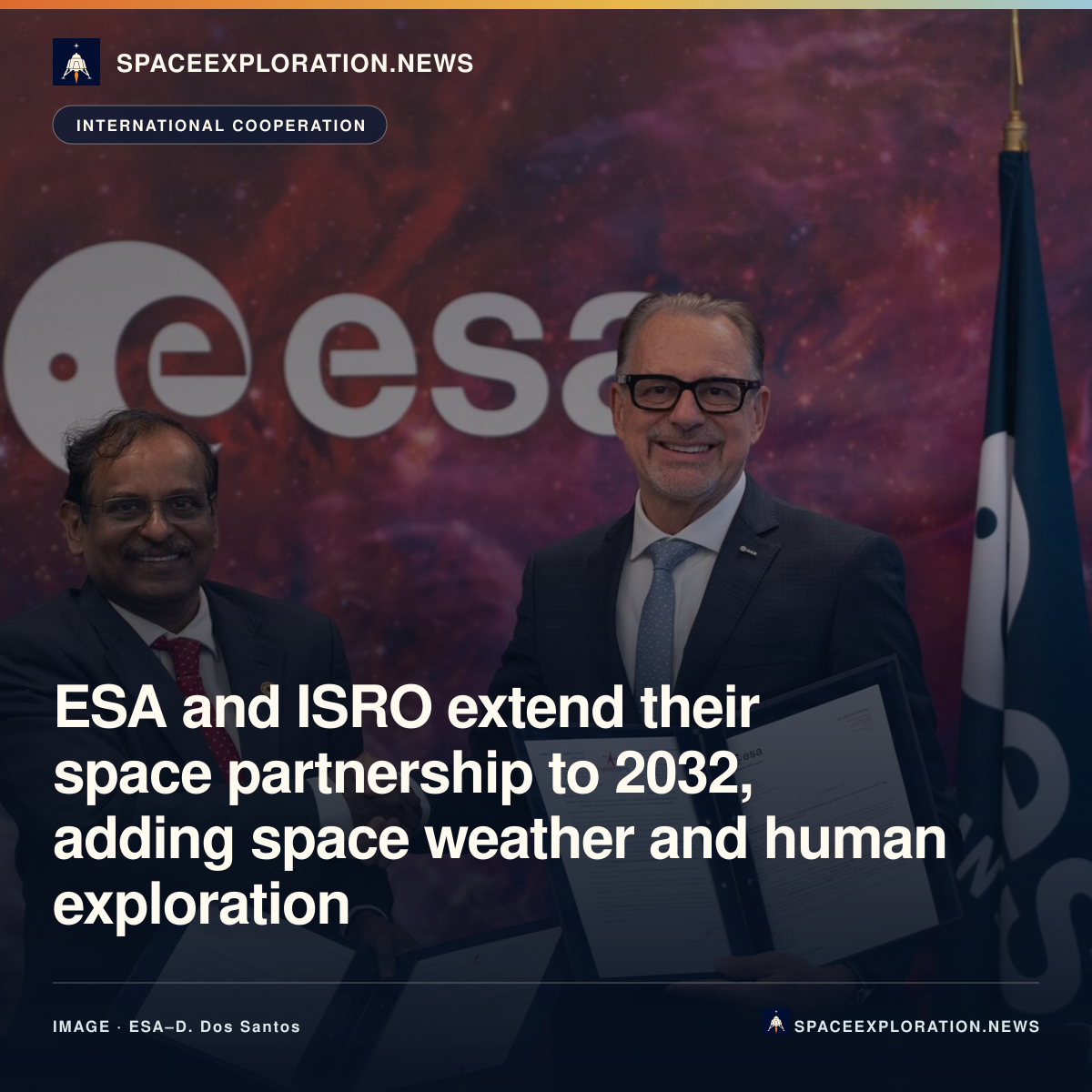
ESA’s September 21 notice says an exchange of letters extends the agencies’ framework for five years and adds space weather plus human and robotic exploration.
Add us as a preferred source on Google Add us as a preferred source on Google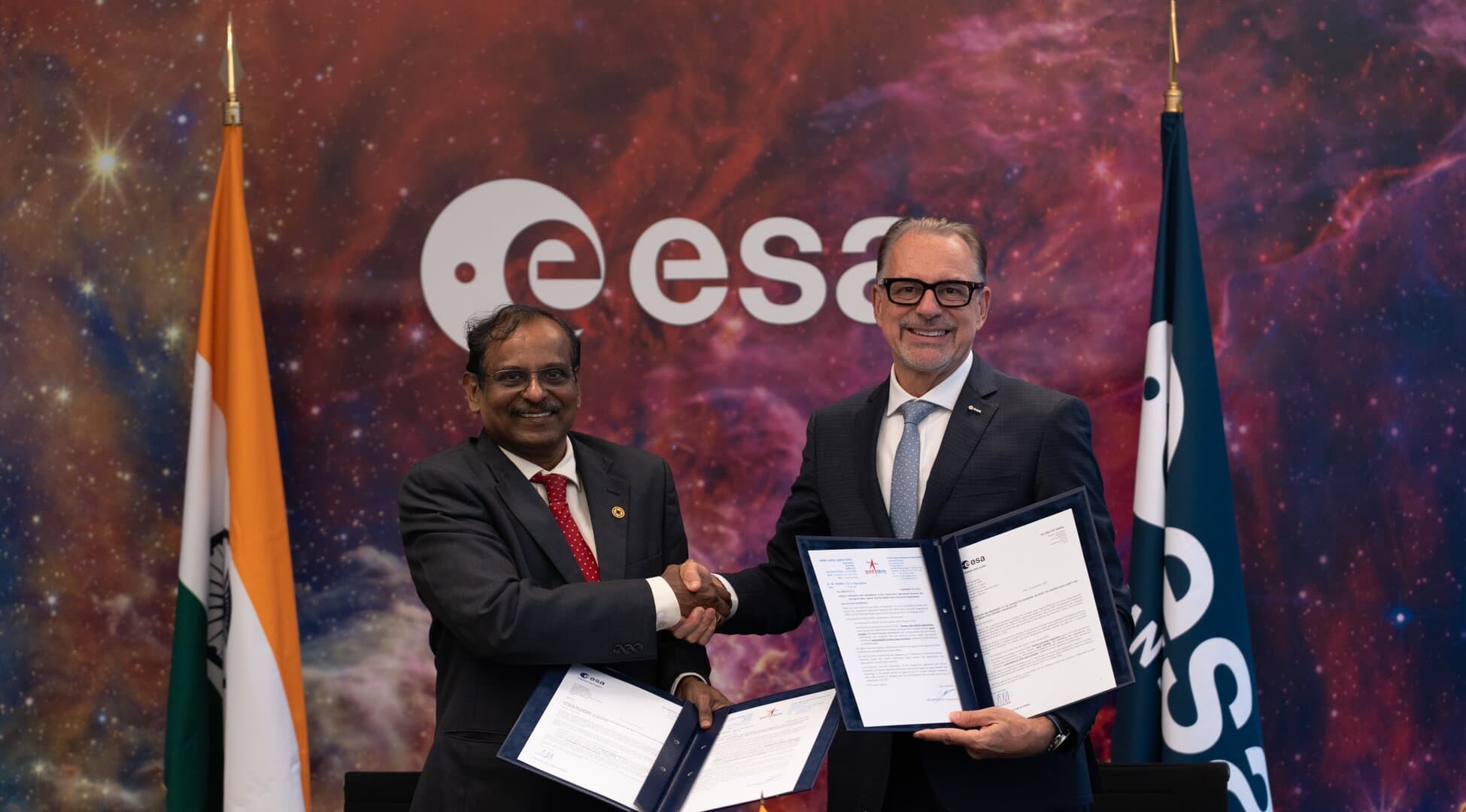
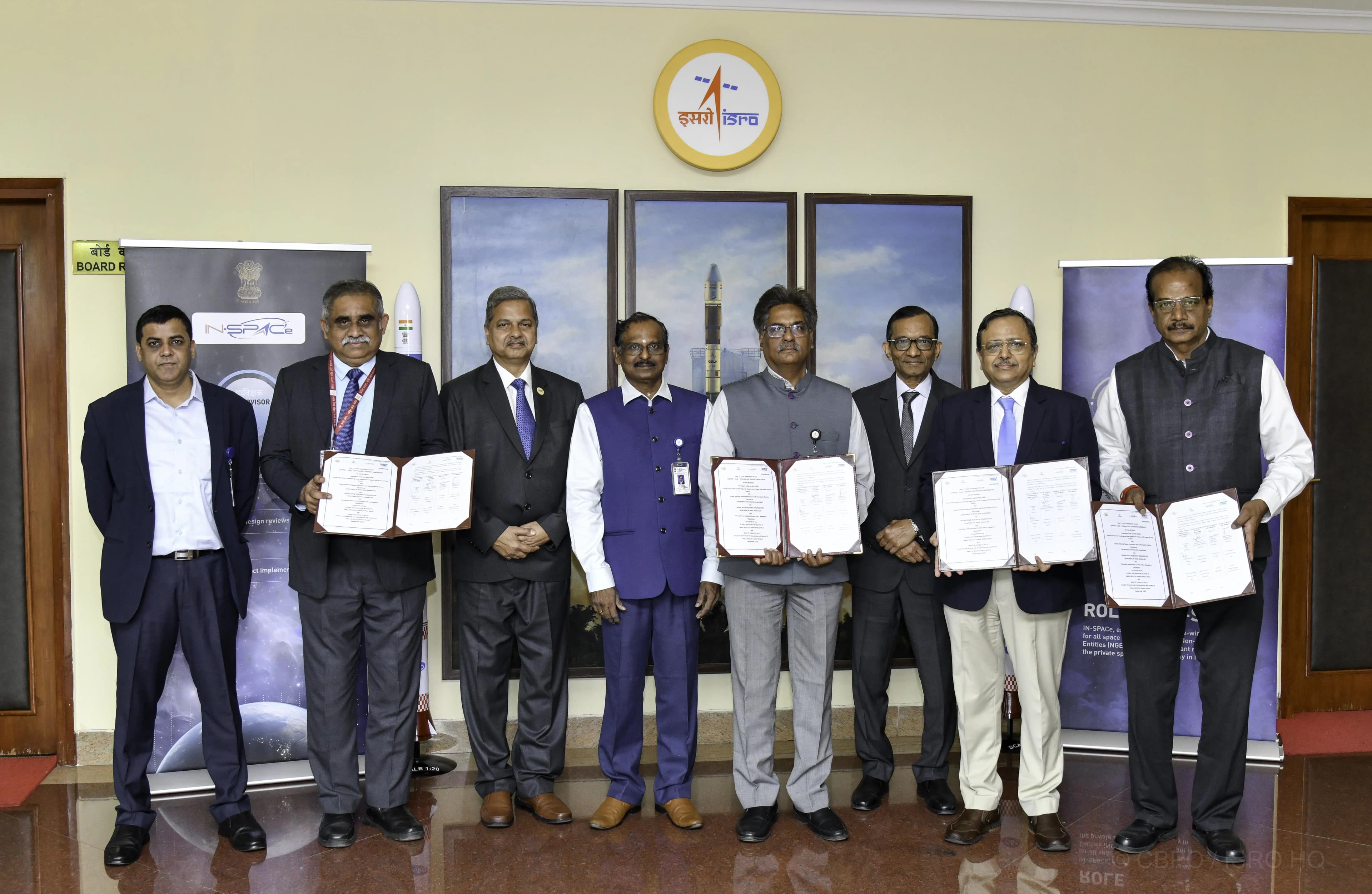
The European Space Agency published a notice on September 21 stating that it and the Indian Space Research Organisation had signed an exchange of letters extending their Cooperative Agreement for five years, through January 8, 2032. ESA said the signature took place in Paris on September 10 during the International Space Summit. The notice is the public record for the extension; an independently published text of the exchange of letters was not available for review.
ESA said the agreement is a framework for cooperation across space activities and has been in force since January 2002. Its new notice names space weather and human and robotic exploration as additions to the scope, alongside a recognition of the sustainability of outer-space activities. The announcement does not identify a joint mission, a funding commitment, a delivery schedule or a new operational programme.
A framework extension, not a mission announcement
The agencies already have a separate December 2024 agreement on astronaut training, mission implementation and research experiments. ISRO said that arrangement covered astronaut training, experiment development and integration, use of ESA facilities on the International Space Station, and related human-spaceflight research. ESA’s September notice describes the broader Cooperative Agreement rather than presenting those activities as a newly approved mission.
ISRO is a direct party to the extension, giving the development a material India connection rather than a general international-interest angle. The next public test of the broadened framework will be whether either agency identifies a project, programme decision or implementation step under its added areas; ESA’s notice does not set a date for one.
Reporting trail
Primary sources
Pass the signal on
Share this report
LinkedIn will use this branded story card as the article preview. For a native image post, download the card and paste the suggested caption.
 Share on LinkedInOpens LinkedIn with the article preview↗
Suggested caption
ESA’s September 21 notice says an exchange of letters extends the agencies’ framework for five years and adds space weather plus human and robotic exploration. Read the full report: https://www.spaceexploration.in/news/esa-isro-cooperation-extension-2032 #SpaceExplorationNews #SpaceNews #SpacePolicy