Lunar cooperation
NASA invites ISRO to join Moon Base programme, but terms remain undisclosed
The offer was recorded after an August 5–6 bilateral meeting in Bengaluru. Neither side announced Indian acceptance, funding, hardware or a mission assignment.
Add us as a preferred source on Google Add us as a preferred source on Google
NASA invited the Indian Space Research Organisation to join its Moon Base programme during the ninth India-U.S. Civil Space Joint Working Group meeting, the U.S. Embassy in India said in a statement published on Tuesday, August 11, 2026. NASA’s Moon Base account separately said the agency had reaffirmed its interest in ISRO joining. The two statements put an invitation on the public record. Neither says ISRO accepted it, and neither names Indian funding, hardware, personnel, a mission assignment or a schedule for defining a role.
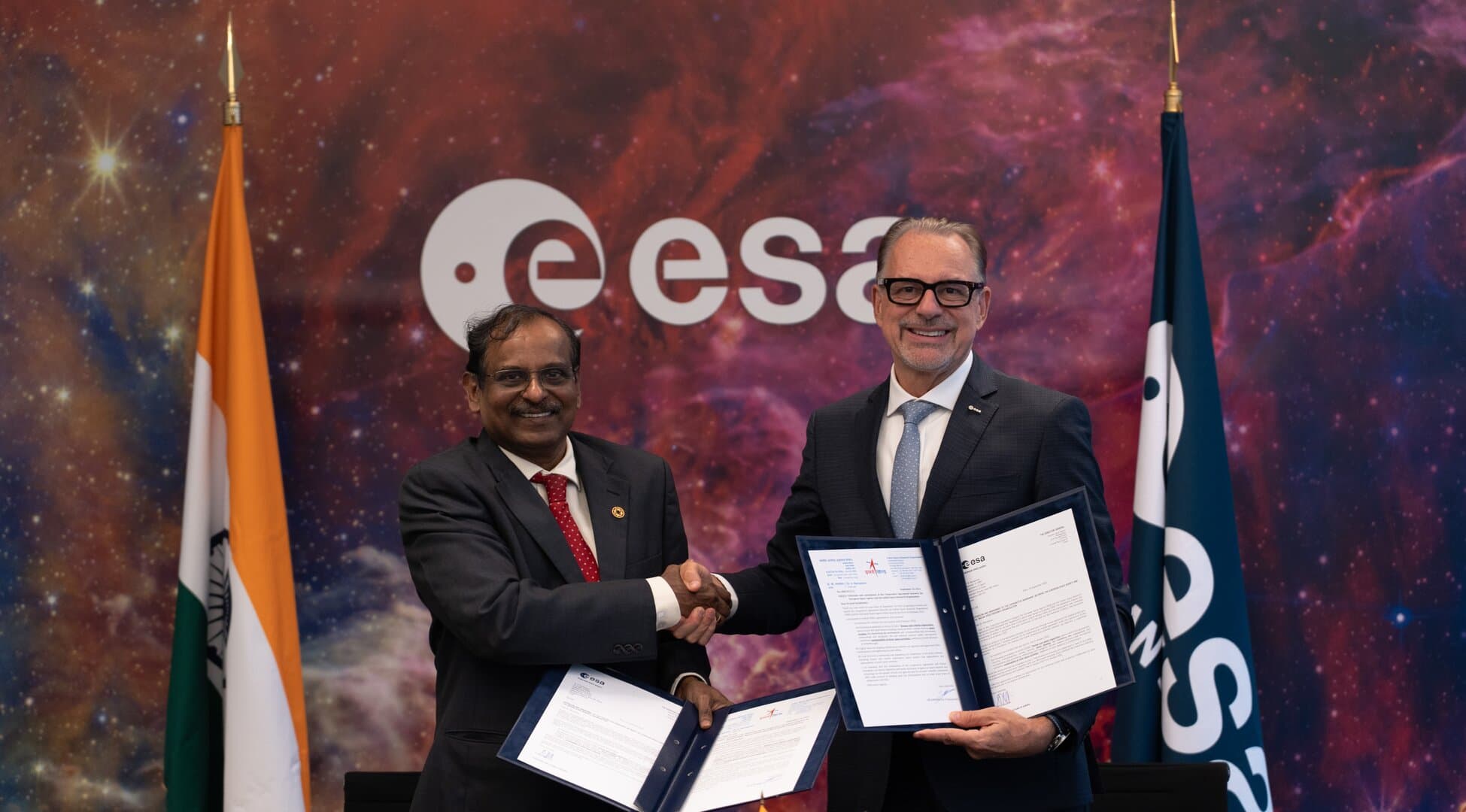
The meeting was hosted by India at ISRO headquarters in Bengaluru on August 5–6. ISRO Chairman and Department of Space Secretary V. Narayanan and U.S. Ambassador to India Sergio Gor addressed the opening session. M. Sankaran, director of ISRO’s U R Rao Satellite Centre, co-chaired for India; U.S. co-chairs were Wesley Brooks, the State Department’s assistant secretary for oceans and international environmental and scientific affairs, and Kathleen Karika, NASA’s associate administrator for international and interagency relations.
The embassy placed the talks under the bilateral Transforming the Relationship Utilizing Strategic Technology, or TRUST, initiative. Its meeting record says the sides discussed wider cooperation after the launch of the joint NASA and ISRO Synthetic Aperture Radar mission, future science and human-spaceflight technology work, and long-term sustainability guidelines at the United Nations Committee on the Peaceful Uses of Outer Space. It says both sides agreed to advance discussions on open scientific data sharing under the Artemis Accords. The Moon Base sentence uses a different verb: NASA invited ISRO.
An invitation, not a mission assignment
That distinction is the story’s central limit. The embassy says NASA invited ISRO, while NASA’s public post says it reaffirmed its interest in ISRO joining. Neither source provides a memorandum, technical work package, payload, landing site, launch date, procurement, budget line or negotiating timetable. Space.com, which reported the invitation on Friday, August 14, also noted that official statements supplied few details about what Indian participation would mean. As of August 17, the disclosed status is an invitation without published terms or an announced Indian response.
The absence of a public response does not show that India rejected the invitation, or that officials are not discussing possible work privately. It sets a boundary on what can be reported. The sources reviewed for this article contain no ISRO acceptance statement and no U.S. or Indian announcement assigning money, equipment, astronauts or lunar-surface work to India. Claims that India has already joined the programme or secured a particular base role go beyond the available record.
NASA reorganised Moon Base in 2026
Moon Base is not simply another name for Artemis in NASA’s current organisation. In a May 22 workforce note, NASA Administrator Jared Isaacman said the agency would combine its space-operations and exploration directorates into a Human Spaceflight Mission Directorate. He listed Moon Base, led by programme manager Carlos García-Galán, and Artemis, led by programme manager Jeremy Parsons, as separate primary divisions. The same note described Artemis around returning astronauts to the lunar surface and Moon Base around building an enduring outpost through a phased approach.
NASA says it announced Moon Base on March 24, 2026, as an outpost planned near the lunar South Pole. Its published development sequence has three stages: robotic access and technology experiments through 2029; early power, cargo, logistics and communications infrastructure from 2029 to 2032; and assembly of a permanent outpost from 2032 onward. NASA’s programme page says international collaborators will have multiple entry points across that build-up. The invitation identifies ISRO as a prospective collaborator, but the public documents do not select an entry point for it.
Existing announcements show how specific a defined Moon Base contribution can be. NASA’s May 26 mission update named commercial landers and rover providers, launch targets, contract amounts and payloads, including contributions from the European Space Agency and the Korea Astronomy and Space Science Institute. A June 30 solicitation separately listed infrastructure, power, communications and navigation, transportation, mobility, habitation, autonomy and robotics, lunar science, and concepts of operations as work areas. Those are possible fields across the programme, not assignments to ISRO.
The Artemis Accords are a framework, not the missing work order
The embassy linked the Moon Base invitation to the countries’ partnership under the Artemis Accords. India became the 27th signatory in June 2023. NASA describes the accords as principles for civil exploration, including transparency, emergency assistance, registration of space objects and the public release of scientific data. Signing them did not by itself allocate India a Moon Base mission. At the August meeting, the concrete new step tied to the accords was an agreement to continue discussions on open scientific data sharing; the release did not describe a lunar-base implementation agreement.
NISAR shows what a defined bilateral mission looks like
The joint NASA and ISRO Synthetic Aperture Radar mission offers a concrete comparison. NISAR launched from Sriharikota on July 30, 2025, after more than a decade of joint development. NASA’s launch release describes an equal collaboration: NASA supplied the L band radar, reflector antenna and other systems, while ISRO supplied the S band radar, spacecraft bus, launch vehicle and mission operations. The working-group statement cites NISAR as the successful collaboration on which the two sides want to build. No comparable division of Moon Base responsibilities has been announced.
The next meaningful development would therefore be a public Indian response or a document that defines participation: a study agreement, named payload, technology demonstration, mission, funding decision or operating responsibility. Until one appears, the evidence supports a narrower conclusion. The United States has invited ISRO into a newly organised NASA programme, and the offer sits inside an active bilateral space forum. It does not establish that India has accepted, committed funds or been assigned to build any part of a lunar base.
Reporting trail
Primary sources
U.S. Embassy & Consulates in IndiaIndia-U.S. Civil Space Joint Working Group Advances Civil and Commercial Space Cooperationin.usembassy.gov
Space.comIndia-US space ties deepen as NASA invites ISRO to join moon base programspace.com
NASAA Message From Administrator Jared Isaacmannasa.gov
NASAMoon Basenasa.gov
NASANASA Provides Update on Moon Base Rovers, Landers, Missionsnasa.gov
NASANextSTEP-3 B: Moon Base Demonstrationsnasa.gov
NASANASA Welcomes India as 27th Artemis Accords Signatorynasa.gov
NASANASA-ISRO Satellite Lifts Off to Track Earth’s Changing Surfacesnasa.gov
For an image post, download the card and copy this suggested caption.
The offer was recorded after an August 5–6 bilateral meeting in Bengaluru. Neither side announced Indian acceptance, funding, hardware or a mission assignment. Read the full report: https://www.spaceexploration.in/news/nasa-invites-isro-moon-base #SpaceExplorationNews #SpaceNews #SpaceMissions