Lunar exploration
Europe prepares lunar instrument models for India-Japan rover checks
ESA’s October 14 account describes development hardware assembled under Kayser Italia’s lead, with interfaces to Japan’s rover still to be checked.
Add us as a preferred source on Google Add us as a preferred source on Google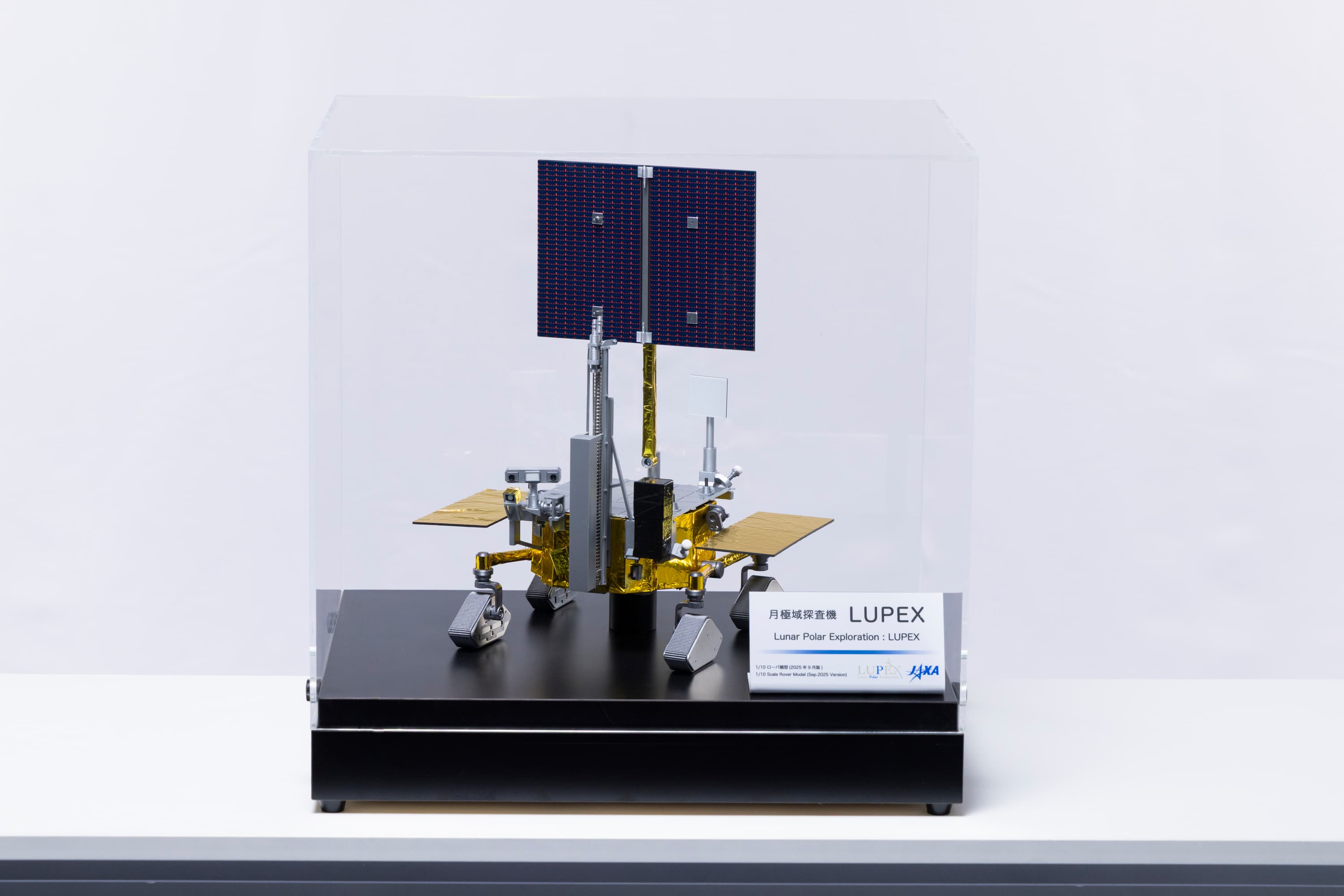
Europe is preparing development models of a lunar science instrument for checks with Japan’s rover on the joint Indian-Japanese Lunar Polar Exploration mission, or LUPEX. ESA’s October 14 account places the next work in Japan, where engineers will test how the instrument and rover connect.
European industry led by Kayser Italia has assembled and tested two models, according to ESA. An engineering model reproduces the instrument’s functions and digital connections. A structural thermal model reproduces its shape, mechanical connections and thermal and structural properties. These are development models, rather than the completed flight instrument.
The planned Japanese checks cover mechanical, thermal, electrical and data interfaces between the models and the rover. ESA is the source for the assembly and test status; its account gives no dispatch date or results from rover-level interface checks.
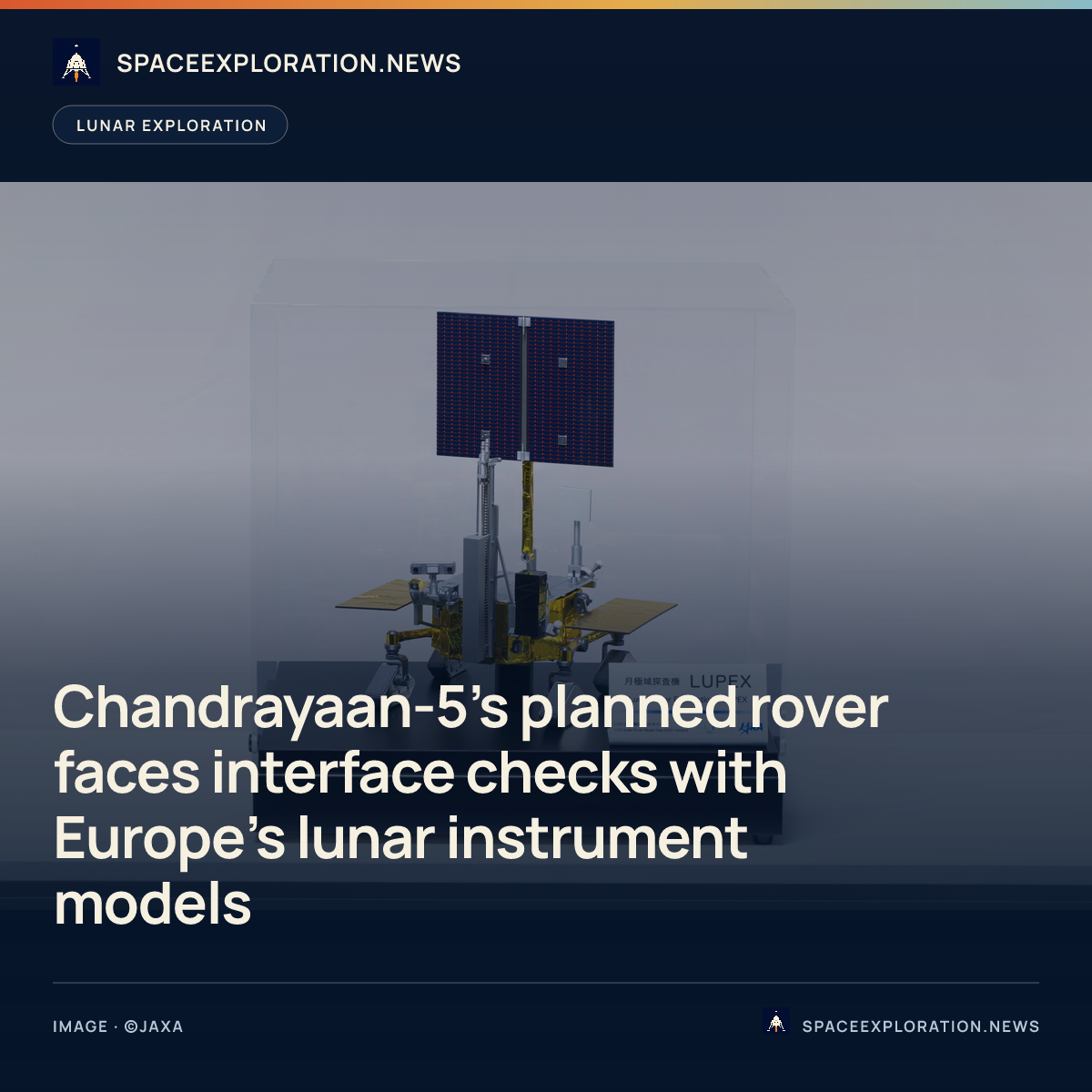
The instrument, called the Exploration Mass Spectrometer for LUPEX, is intended to travel on JAXA’s rover, which ESA describes as reaching the Moon aboard ISRO’s Chandrayaan-5 lander. JAXA lists an H3 launch no earlier than 2028 and a landing in the lunar south-pole region.
ESA plans to use the instrument to identify atoms and molecules in the Moon’s thin exosphere and sample volatile substances released as the rover moves and drills. Measurements at different locations are intended to help map the lunar environment and water-related resources.
JAXA describes LUPEX’s objective as measuring the quantity, distribution and forms of lunar water through observations on the ground. Its planned investigation sequence combines surface and subsurface observations with sample collection and heating to release volatile substances for analysis. Those measurements remain mission objectives, rather than findings from the development-model tests.
Reporting trail
Primary sources
For an image post, download the card and copy this suggested caption.
ESA’s October 14 account describes development hardware assembled under Kayser Italia’s lead, with interfaces to Japan’s rover still to be checked. Read the full report: https://www.spaceexploration.in/news/lupex-ems-development-models #SpaceExplorationNews #SpaceNews #SpaceMissions