Mars exploration
Japan launches Phobos sample-return mission aboard H3 rocket
JAXA confirmed MMX’s separation about 71 minutes after liftoff. Mars arrival is planned for 2027; landing, sampling and the 2031 Earth return remain ahead.
Add us as a preferred source on Google Add us as a preferred source on Google
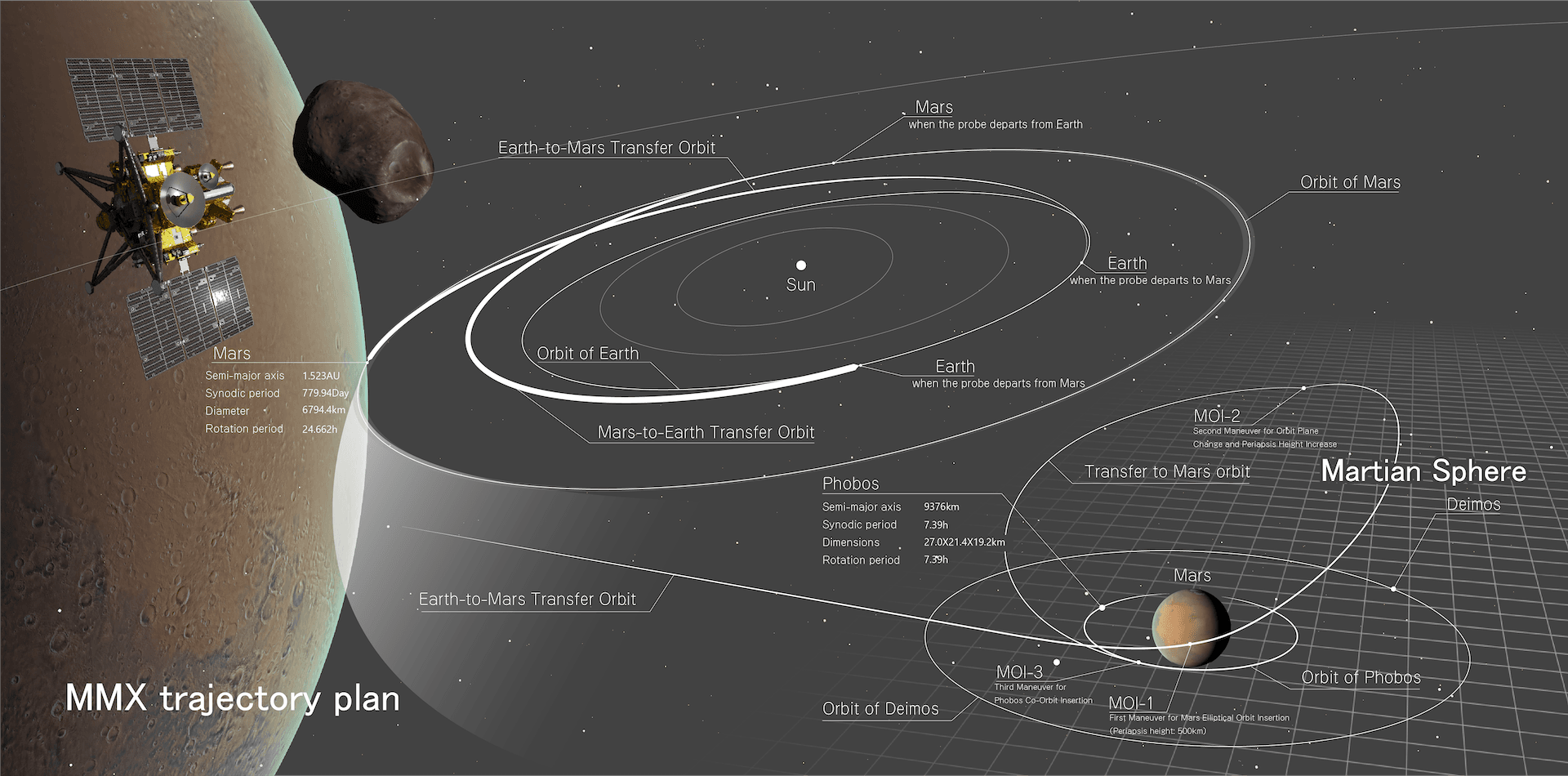
Japan’s Phobos sample-return spacecraft launched aboard H3 Flight 10 from Tanegashima Space Center on October 20, 2026, and separated successfully from the rocket. The Japan Aerospace Exploration Agency confirmed the launch and separation in its flight-result notice; Jiji Press also reported that the spacecraft reached its planned orbit.
JAXA recorded liftoff at 04:41:03 Japan Standard Time, with separation approximately 71 minutes and 13 seconds later. The agency said the rocket flew as planned. Its notice confirms the launch phase; it does not report arrival at Mars, a Phobos landing or sample collection.
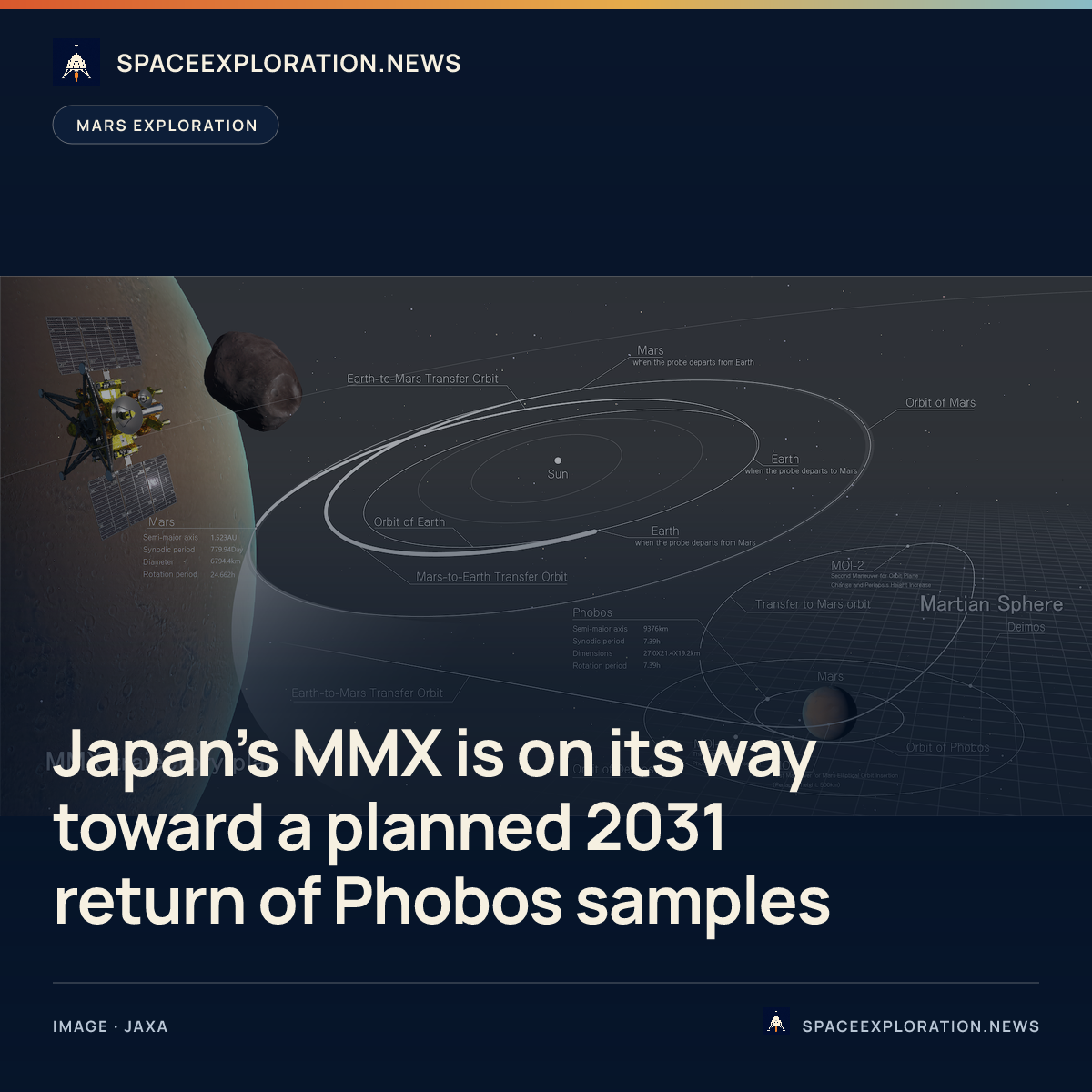
The spacecraft, called Martian Moons eXploration, or MMX, is intended to bring material from the Martian moon Phobos back to Earth in 2031. Jiji Press described the planned return as the first from a Martian moon if successful. That distinction belongs to the completed round trip, which remains ahead.
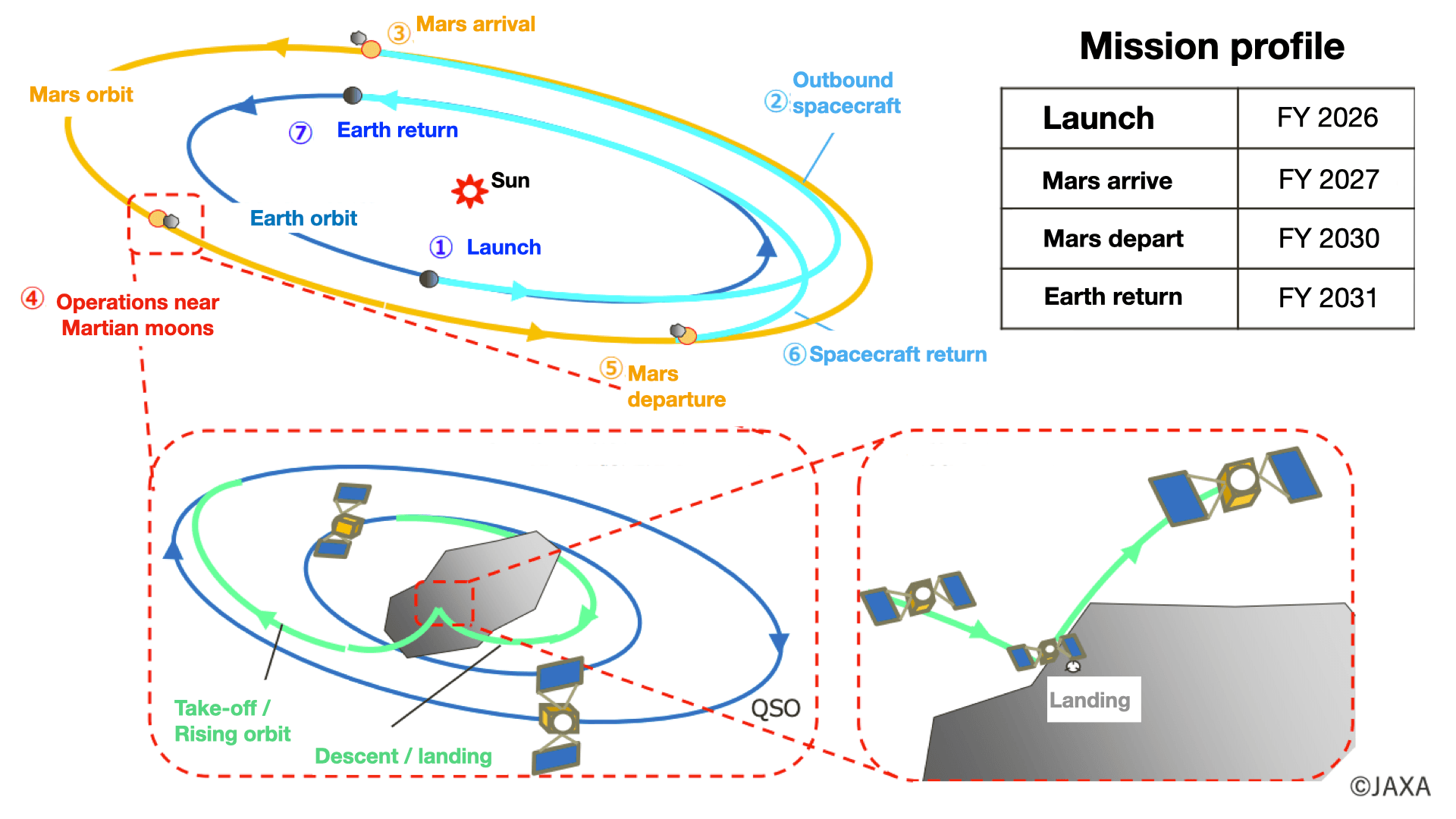
JAXA’s mission plan calls for roughly a year of travel to Mars, with arrival in 2027. MMX would then follow an orbit close to Phobos while observing its shape, surface composition and candidate landing sites. The plan also includes observations of Deimos, Mars’s other moon.
The sampling sequence requires a rover to reach Phobos before the main spacecraft lands. JAXA sets a minimum target of 10 grams of surface material for return to Earth. The mission page describes landing, collection and ascent as separate operations after the observations used to select a landing site.
The scientific question is how the two Martian moons formed. JAXA’s mission overview sets out two leading explanations: debris assembled after a large impact on Mars, or asteroids captured by the planet’s gravity. The team intends to combine spacecraft observations with laboratory analysis of returned material to distinguish between those possibilities.
The published schedule places departure from the Martian system in 2030, followed by about a year of return travel. JAXA plans to separate the sample capsule for atmospheric entry and recover it in Australia in 2031. The next major destination in that sequence is Mars in 2027.
Reporting trail
Primary sources
For an image post, download the card and copy this suggested caption.
JAXA confirmed MMX’s separation about 71 minutes after liftoff. Mars arrival is planned for 2027; landing, sampling and the 2031 Earth return remain ahead. Read the full report: https://www.spaceexploration.in/news/mmx-launches-for-phobos #SpaceExplorationNews #SpaceNews #SpaceMissions