Interstellar missions
Voyager 1 reaches one light-day from Earth amid data outage
NASA confirmed the distance using a carrier signal and trajectory calculations. Science and engineering data have been missing since November 14.
Add us as a preferred source on Google Add us as a preferred source on Google
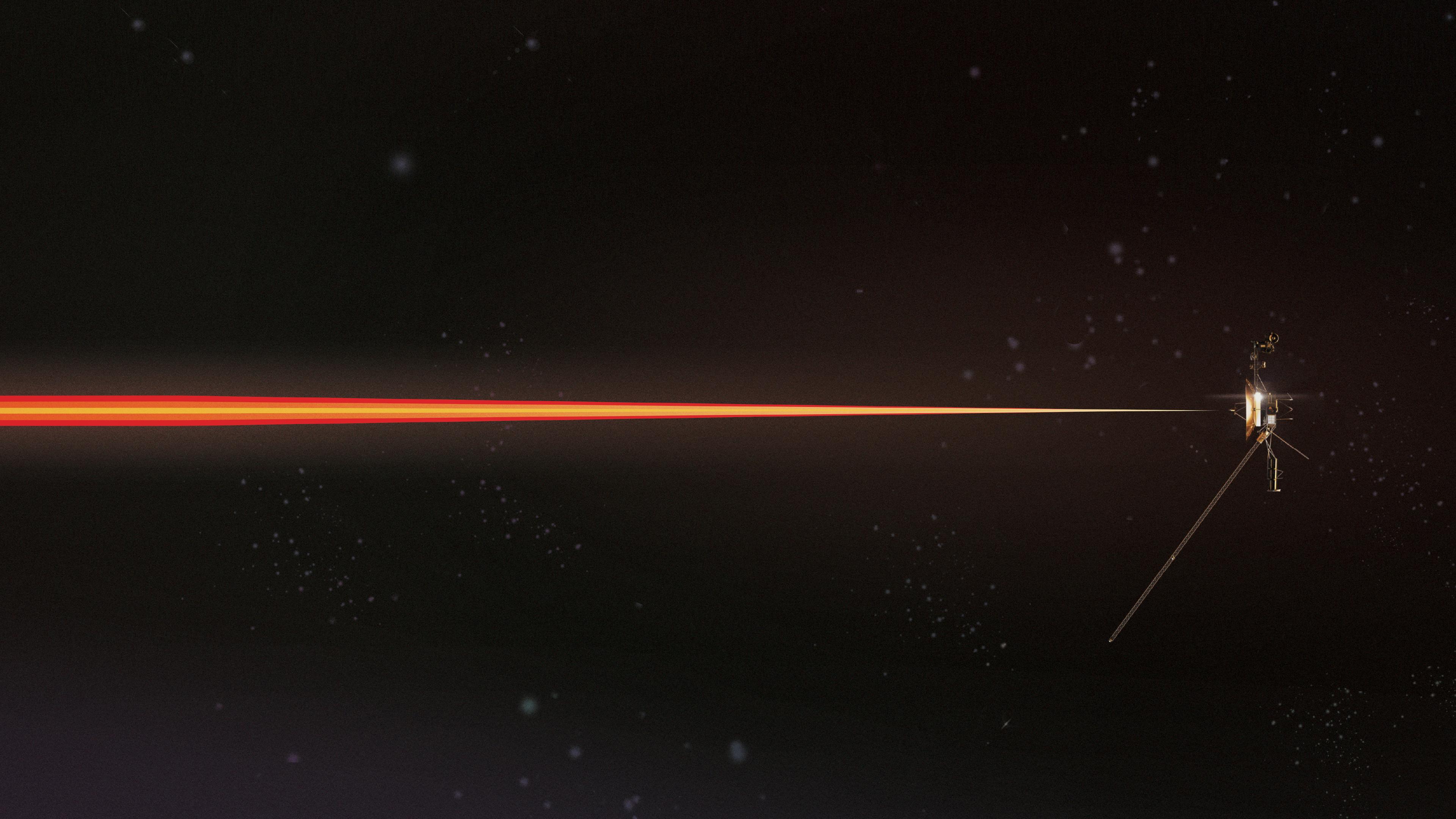
NASA’s Voyager 1 has become the first human-made object to reach one light-day from Earth. The Jet Propulsion Laboratory announced on November 19 that the spacecraft crossed the distance at 2:16 a.m. Pacific Standard Time on November 18; its radio signal reached the mission team 24 hours later.
One light-day is about 25.9 billion kilometres, or 16.1 billion miles. Radio signals now need a day to travel between Earth and Voyager 1 in either direction, JPL said, making the combined outward and return journey two days.
The contact does not mean Voyager 1 is returning usable data. NASA said the mission team discovered on November 14 that science and engineering data had stopped arriving when a Deep Space Network antenna in Canberra, Australia, received the spacecraft’s carrier signal without the data it normally carries.
NASA’s November 18 engineering notice said the carrier indicates that the spacecraft is keeping its antenna pointed at Earth and that its antenna and broadcasting equipment still work. The missing data suggests a problem with the computer that gathers and formats information from onboard systems, but engineers have not established the cause.
The Associated Press reported that controllers received the November 19 signal through the Deep Space Network facility near Madrid. Launched in 1977, Voyager 1 flew past Jupiter in 1979 and Saturn in 1980 before continuing outward. It became the most distant human-made object in 1998.
Voyager 1 entered interstellar space in 2012, crossing beyond the Sun’s heliosphere, the bubble formed by its particles and magnetic fields. Its twin, Voyager 2, crossed that boundary in 2018. JPL describes them as the only probes operating in interstellar space.
Engineers are still investigating the loss of science and engineering data and deciding their next steps. Confirmation of the distance leaves that operational problem unresolved.
Reporting trail
Primary sources
For an image post, download the card and copy this suggested caption.
NASA confirmed the distance using a carrier signal and trajectory calculations. Science and engineering data have been missing since November 14. Read the full report: https://www.spaceexploration.in/news/voyager-one-light-day-confirmed #SpaceExplorationNews #SpaceNews #SpaceScience