Satellites & Earth observation
GalaxEye Space
Bengaluru multi-sensor Earth-observation company whose OptoSAR satellite Drishti reached orbit on 3 May 2026 and fell silent weeks later after a geomagnetic storm.
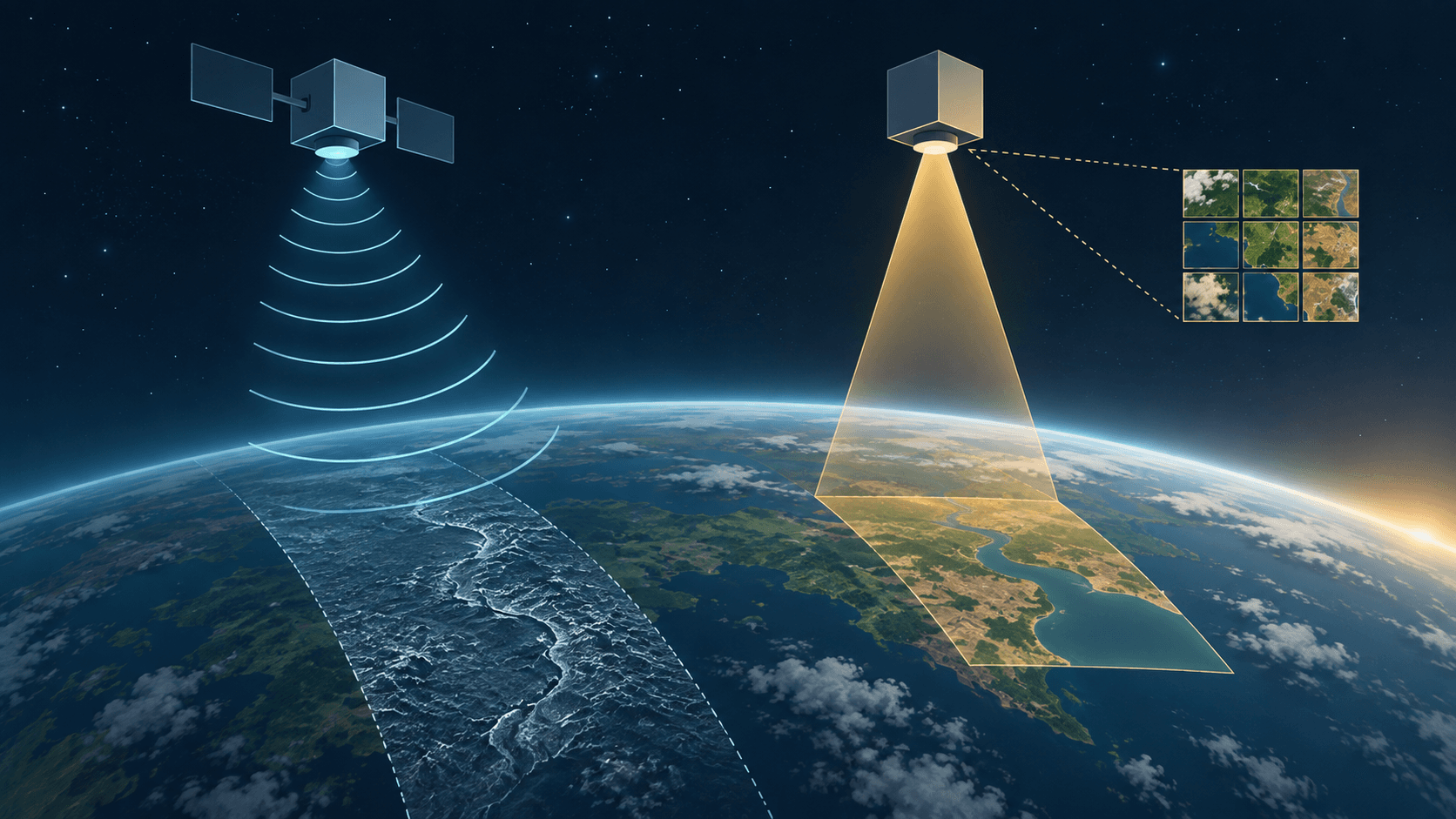
GalaxEye Space Solutions builds multi-sensor Earth-observation satellites that carry a synthetic aperture radar and a multispectral optical imager on the same spacecraft, an arrangement the company calls OptoSAR. Five graduate students from the Indian Institute of Technology Madras, finalists in the 2019 SpaceX Hyperloop competition, set the company up in 2021, and it is based in Bengaluru. Fusing radar and optical data on one platform is meant to deliver imagery usable at night and through cloud, which optical sensors alone cannot provide.
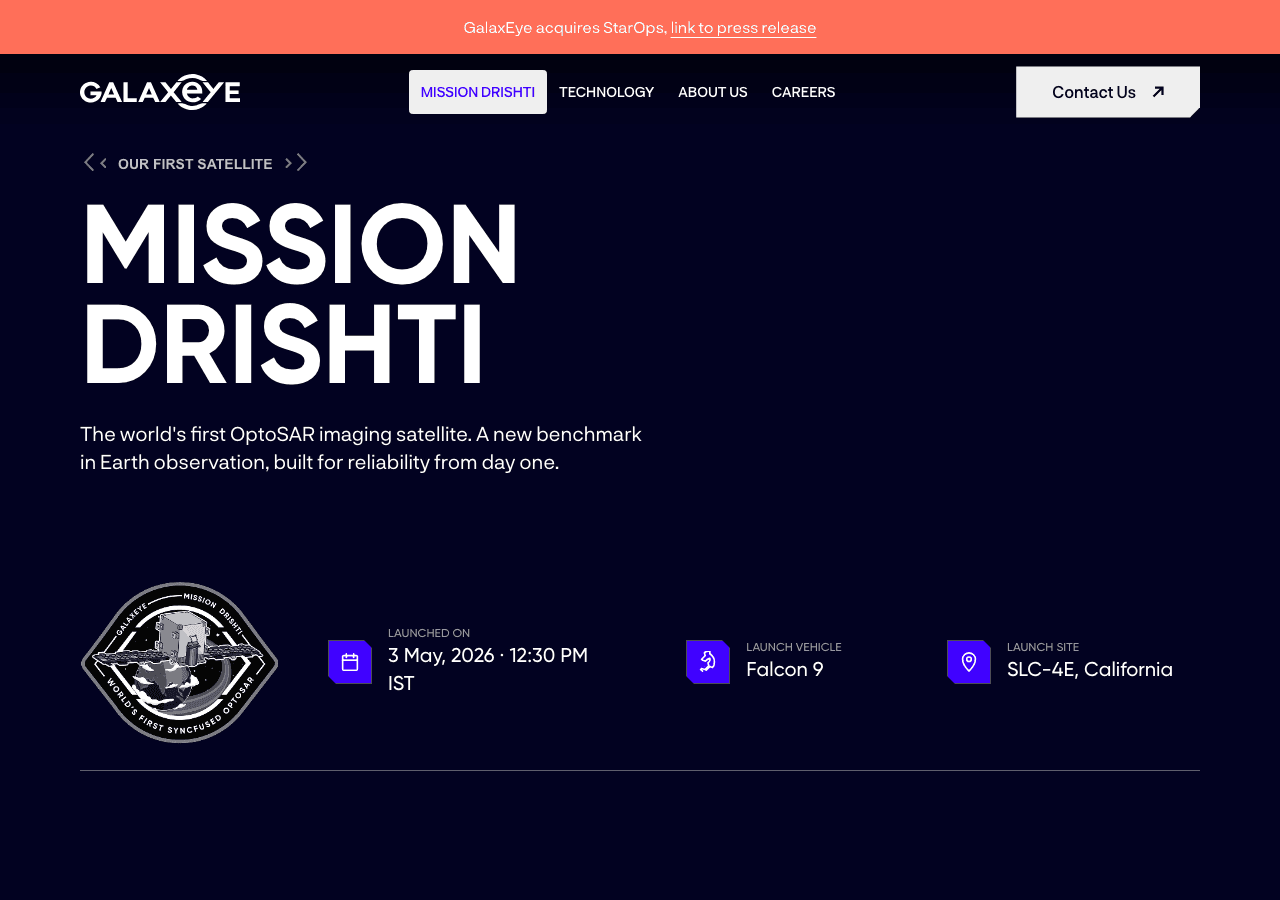
Mission Drishti, the company's first satellite, launched on a SpaceX Falcon 9 from Vandenberg Space Force Base on 3 May 2026 into a sun-synchronous orbit near 500 km. At roughly 190 kg it was the largest Earth-observation spacecraft built by an Indian private company; its X-band radar reaches 0.9 m in spotlight mode, its seven-band multispectral imager 3.6 m at nadir, and the fused product about 1.8 m. GalaxEye said on 7 July 2026 that the satellite had established communications and completed a major portion of its launch and early orbit phase, validating deployment and attitude control, onboard computing and communications, and flying the mission entirely from its own Mission Control Centre in Bengaluru. In the final stage of that phase the spacecraft hit an anomaly after a geomagnetic solar storm. Initial root-cause analysis pointed to radiation effects on a critical onboard system; communication became intermittent and was eventually lost, and the company said the likelihood of recovery "currently appears low". Its account of the mission records no imagery from the payload.
A precursor payload had already flown. GLX-SQ rode ISRO's PSLV-C60 as part of the POEM-4 orbital platform from 31 December 2024, testing onboard processing of radar imagery ahead of Drishti; the module re-entered on 5 April 2025. eoPortal records a planned Drishti constellation of eight to twelve satellites. After losing the first spacecraft, GalaxEye said it was incorporating the lessons into a next-generation spacecraft architecture, moving a significant portion of its supply chain, manufacturing and satellite development in-house, and aiming to launch two new OptoSAR satellites within the next 24 months.
Funding has arrived in tranches and is reported inconsistently. eoPortal records a $3.5 million seed round in December 2022 and a $10 million Series A in November 2024 led by MountTech Growth Fund, while The Tech Portal reported a $6.5 million Series A led by Mela Ventures in August 2024; Infosys agreed in September 2024 to invest Rs 17 crore for a minority stake of less than 20 percent. Inc42 reported a ₹44.2 crore extension of the Series A in March 2026 and put the total raised at about $27 million in July 2026. The company has also lost ground commercially: its ₹97 crore bid with CoreEL Technologies for India's national Earth-observation constellation was beaten in 2025 by a Pixxel-led consortium that sought no government funding at all, and Drishti's launch had already slipped from an original 2023 target because of satellite mechanics complexities and vendor problems.
On 24 September 2026, the Technology Development Board announced a signed agreement for ₹63.84 crore in Research, Development and Innovation Fund support for GalaxEye’s proposed multisensor OptoSAR satellite. The support is structured as optionally convertible debentures for a project with an approved cost of ₹247.69 crore. The board described a plan to move the technology from readiness level 6 to 9; the release did not disclose a disbursement date or conversion terms.
What they build and operate
- Mission Drishti · Satellite
About 190 kg OptoSAR spacecraft carrying an X-band synthetic aperture radar and a seven-band multispectral imager, launched 3 May 2026 into a 500 km sun-synchronous orbit; contact was lost in the final stage of its launch and early orbit phase.[2][3][1] - OptoSAR · Platform
Sensor architecture fusing radar and multispectral optical imaging on one spacecraft; the SAR reaches 0.9 m in spotlight mode, the multispectral imager 3.6 m at nadir and the fused product about 1.8 m.[3][4] - GLX-SQ · Component · Retired
Technology-demonstration payload flown on ISRO's POEM-4 platform from 31 December 2024 to test onboard radar image processing ahead of Drishti; the module re-entered on 5 April 2025.[3] - Drishti constellation · Constellation · In development
Planned fleet of eight to twelve OptoSAR satellites; after the loss of the first spacecraft GalaxEye said it aims to launch two more within 24 months.[3][1][6]
Funding
- December 2022 · Seed
$3.5 million[3] - August 2024 · Series A
$6.5 million — Mela Ventures, Speciale Invest, ideaForge, Rainmatter Capital, Navam Capital, Faad Capital, Anicut Capital[8] - September 2024 · Strategic investment
Rs 17 crore (about $2 million) — Infosys Innovation Fund[9][3] - November 2024 · Series A
$10 million — MountTech Growth Fund[3] - 12 March 2026 · Series A extension
₹44.2 crore (about $4.8 million) — Mounttech Growth Fund, Rainmatter, Mela Venture, Speciale Invest, LV Angel Fund, Eraya Capital Fund I, Grand Anicut Angel Fund[7] - 24 September 2026 · RDI Fund support agreement through optionally convertible debentures
₹63.84 crore — Technology Development Board[10]
Milestones
- 2021
Incubated at IIT Madras by five graduate students who were finalists in the 2019 SpaceX Hyperloop competition.[3][4] - August 2024
Raised a $6.5 million Series A led by Mela Ventures; Drishti, originally targeted for 2023, had slipped on satellite mechanics complexities and vendor problems.[8] - 31 December 2024
GLX-SQ technology-demonstration payload launched on ISRO's PSLV-C60 aboard the POEM-4 orbital platform.[3] - August 2025
Lost India's national Earth-observation tender: its ₹97 crore bid with CoreEL Technologies was beaten by a Pixxel-led consortium bidding Re 0.[5] - 12 March 2026
Raised ₹44.2 crore in an extended Series A from existing investors including Mounttech Growth Fund, Rainmatter and Mela Venture.[7] - 03 May 2026
Drishti launched on a SpaceX Falcon 9 from Vandenberg Space Force Base — at about 190 kg, India's largest privately built Earth-observation satellite.[2][3][4] - 07 July 2026
Disclosed that Drishti had gone silent after a geomagnetic solar storm in the final stage of its launch and early orbit phase, with recovery judged unlikely.[1][6] - 24 September 2026
Technology Development Board signed an agreement for ₹63.84 crore of RDI Fund support through optionally convertible debentures for OptoSAR development.[10]
Facilities
- Mission Control Centre · Bengaluru, Karnataka, India
In-house mission operations centre that flew Mission Drishti's launch and early orbit phase.[1]
Leadership
- Suyash Singh
Founder and chief executive officer (as of 07 July 2026)[1][6] - Denil Chawda
Co-founder (as of 12 March 2026)[7]
Sources
GalaxEyeMission Drishti Successfully Demonstrates Foundational Capabilities for OptoSAR Constellationcdn.prod.website-files.com
GalaxEyeMission Drishtigalaxeye.space
eoPortalDrishti Constellation (GalaxEye)eoportal.org
ThePrintThis Bengaluru startup just launched world's first OptoSAR satellite. It started at IIT Madrastheprint.in
ThePrint'Zero-bid' EOS contract has Indian space players asking: 'did PixxelSpace-led consortium need it?'theprint.in
Inc42GalaxEye Loses Connection With 'Mission Drishti' Satellite, Eyes 2 More Launchesinc42.com
Inc42Exclusive: GalaxEye Raises ₹44 Cr In Ongoing Series A Funding Roundinc42.com
The Tech PortalGalaxEye lands $6.5 million in Series A to launch its first satellite, 'Drishti'thetechportal.com
IIT Madras Office of Alumni & Corporate RelationsInfosys to invest Rs 17 crore in IIT-M incubated spacetech startup GalaxEyeacr.iitm.ac.in
Press Information BureauTDB-DST signs agreement with GalaxEye for ₹63.84 crore RDI supportpib.gov.in
Coverage of GalaxEye Space
Commercial Earth observation
India signs ₹63.84 crore GalaxEye debenture agreement
The Technology Development Board says the support will use optionally convertible debentures for further OptoSAR development; the planned imaging resolution remains a target.

Space industry
Bengaluru Space Expo roster lists many space and related companies
The organiser’s 12-page roster names many space and space-related exhibitors; company-controlled posts verify plans from Skyroot, Pixxel, XDLINX, Manastu, GalaxEye, Bellatrix, Maargin and General Datum.
Policy
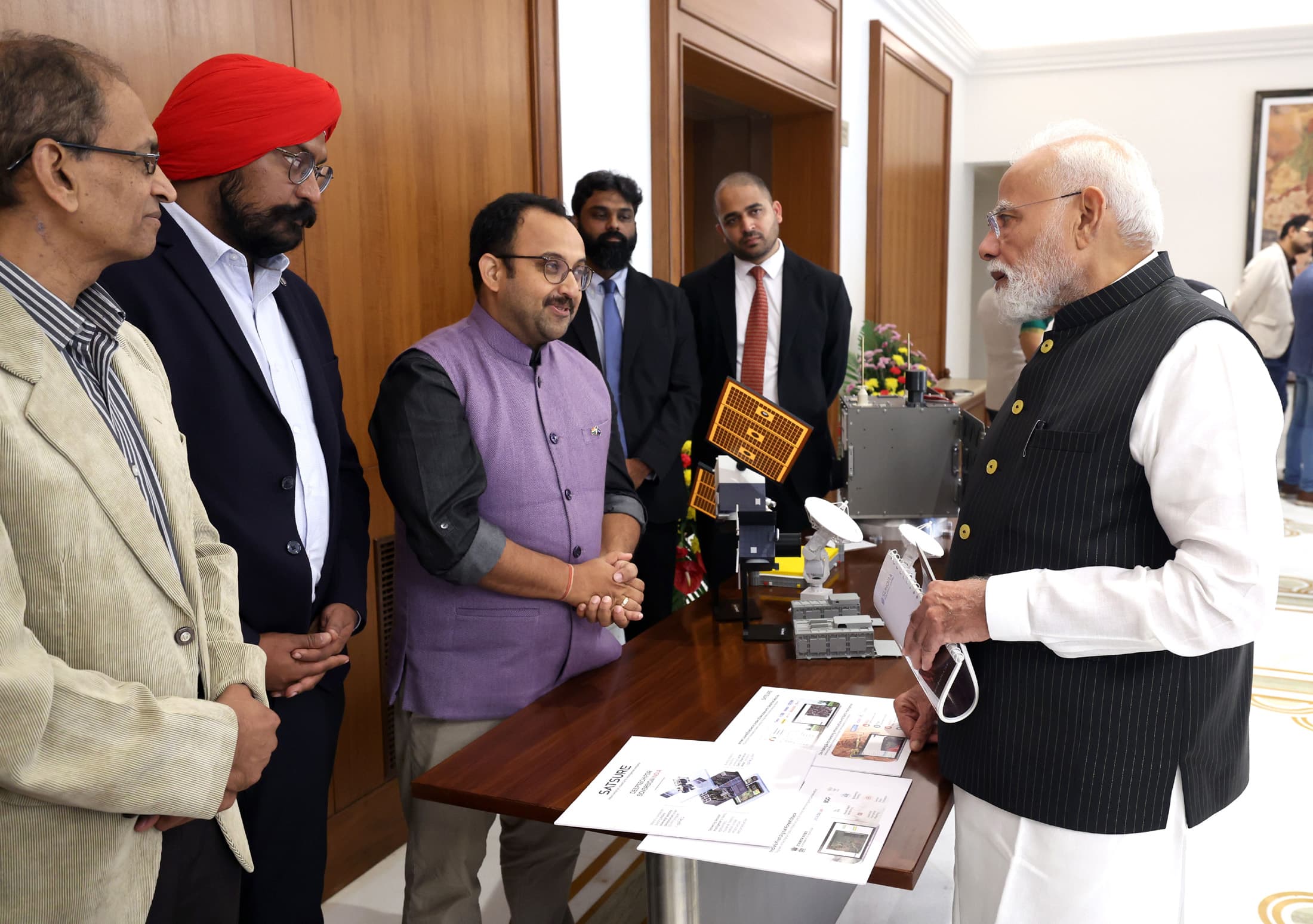
Modi meets 20 space-startup leaders, urging wider uses of their technology
The August 21 meeting put the private space sector before the prime minister, but the official account announced no new funding, authorisations, contracts or binding policy changes.
Commercial Earth observation
GalaxEye loses contact with Drishti before OptoSAR payload test
The spacecraft proved early-orbit systems and in-house mission operations, but GalaxEye says imaging never began; its solar-storm explanation remains preliminary as two larger follow-on satellites are planned.
Update this profile
Work at GalaxEye Space or represent it? If something here is wrong or missing, email contact@spaceexploration.news with a public source for the change. Every profile edit is verified before it is published.
Request a profile change