Policy
Modi meets 20 space-startup leaders, urging wider uses of their technology
The August 21 meeting put the private space sector before the prime minister, but the official account announced no new funding, authorisations, contracts or binding policy changes.
Add us as a preferred source on Google Add us as a preferred source on Google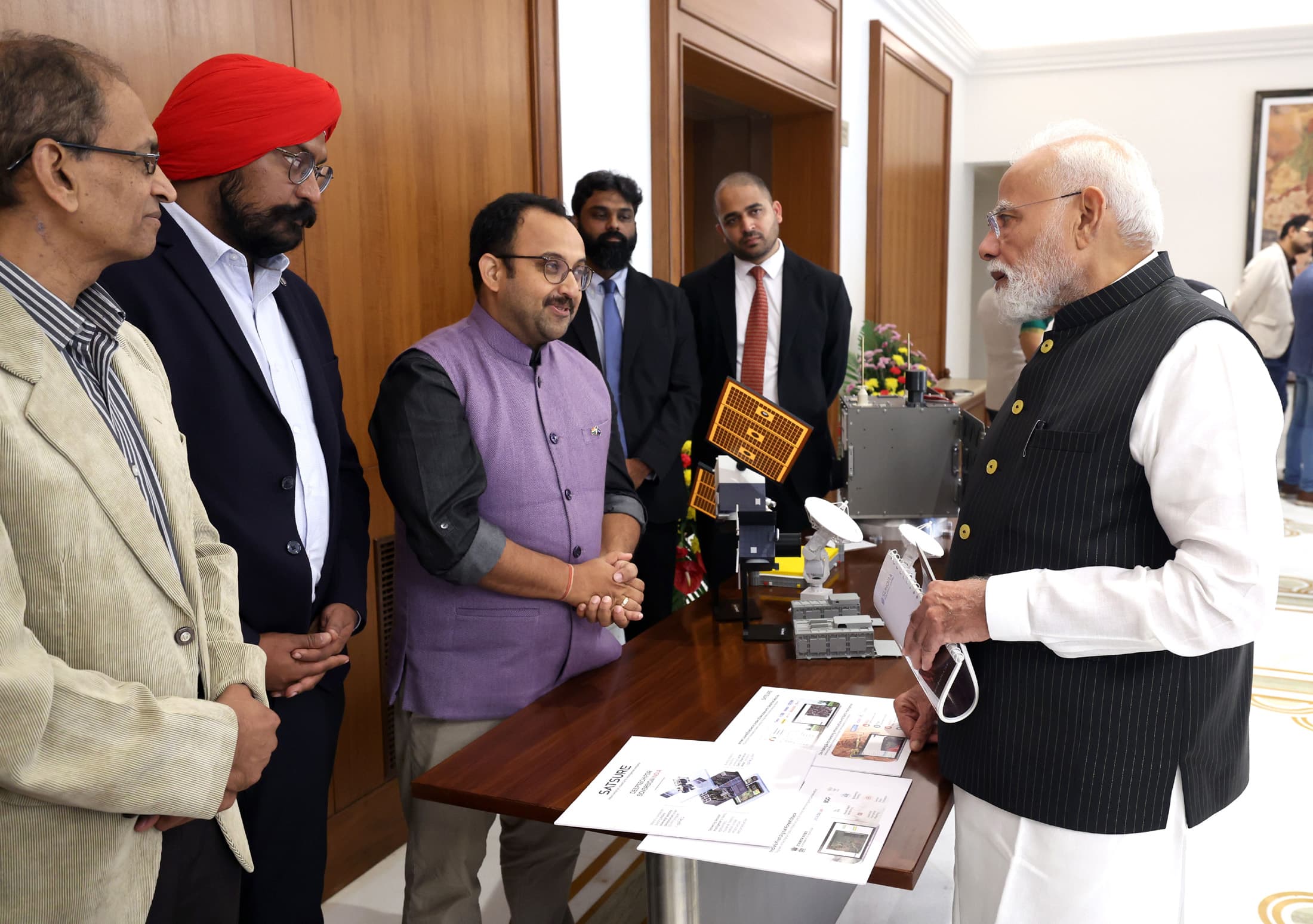
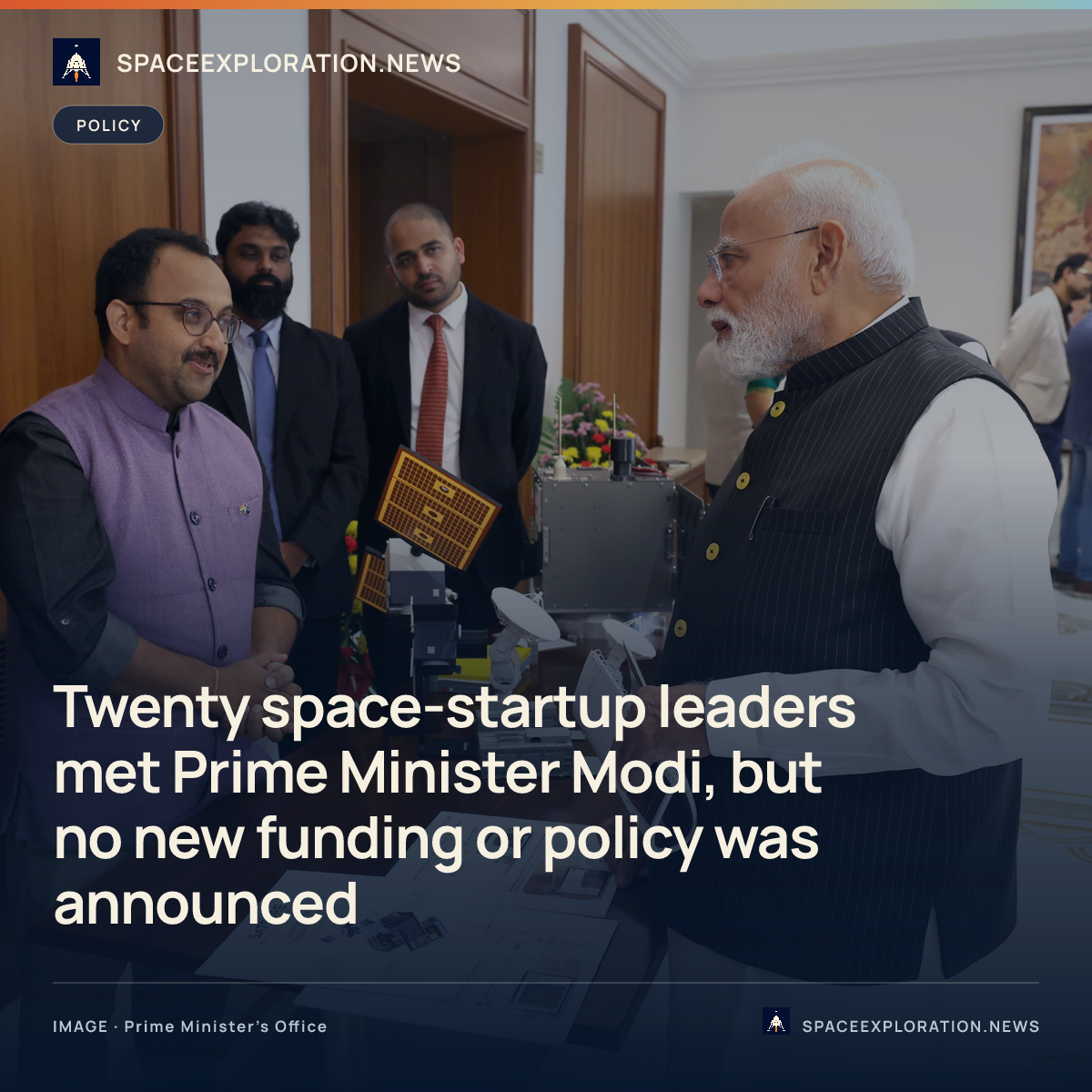
Prime Minister Narendra Modi met the chief executives and founders of 20 Indian space startups at Seva Teerth in New Delhi on August 21, according to the Prime Minister’s Office. The official account says he urged the companies to find wider applications for space technology, work more closely with organisations in other sectors and help build an ecosystem that can draw global talent, companies and investment to India. The meeting is a high-level policy and ecosystem signal for the private space sector, not an announced grant, contract, authorisation or new binding rule.
That distinction is central to what the release establishes. It records a discussion between the prime minister and company leaders, along with aspirations for the sector, but it does not identify a fresh funding allocation, a procurement award, a regulatory decision, a timeline for a new policy measure or a commitment by a named company. The official page describes the interaction and the ideas raised there; it is not a notice of an operative government action.
A broad cross-section of private-space companies
The Prime Minister’s Office named Skyroot Aerospace, Agnikul Cosmos, Pixxel, Dhruva Space, GalaxEye, PierSight, Bellatrix Aerospace, Digantara, SatSure, Suhora Technologies, Manastu Space, Astrobase, TakeMe2Space, VyomIC, Cosmoserve Space, OrbitAID Aerospace, SkyServe (Hyspace), Serendipity Space, Vassar Labs and mistEO as participants. The release says their work spans rockets, reusable semi-cryogenic launch vehicles, avionics, satellites, advanced propulsion, space and defence intelligence, debris removal, and artificial-intelligence-powered weather and climate intelligence.
Those fields make the event broader than a launch-company meeting. The official description groups firms working on spacecraft and launch hardware with companies focused on Earth-observation data, weather information, orbital-debris work and space-related intelligence. It does not provide a deal-by-deal account of what any participant sought from the government, disclose the companies’ revenues or investments, or say that the meeting changed the status of a particular mission, product or regulatory application.
Business Standard independently reported the gathering on August 21 and said National Security Adviser Ajit Doval and Indian National Space Promotion and Authorisation Centre (IN-SPACe) chair Pawan Goenka were present. Its account also reported comments from Dhruva Space cofounder and chief executive Sanjay Nekkanti and Suhora Technologies cofounder and chief executive Krishanu Acharya about their companies’ work and the sector’s development. Those company views describe how participants see the opportunity; they are not evidence that new public support was approved at the meeting.
Applications beyond the space sector
The PMO account places the clearest policy emphasis on uses outside the core space industry. Modi suggested that companies working on debris removal collaborate with environmental organisations, and that firms applying space technology to agriculture work with agricultural universities and departments to help farmers make better-informed decisions. He also called for closer collaboration with Atal Tinkering Labs, a government school-innovation programme, to encourage children’s interest in space. These are directions and examples from the meeting, not published programme rules or funded partnerships.
The official release also says participating founders described government support and industry collaboration as factors behind their progress, and said companies outside India had shown interest in adopting technologies developed by the country’s emerging private space industry. The release does not name those prospective adopters, describe the technologies involved, say whether any agreement exists, or provide a value or schedule for such activity. The claim should therefore be read as the participants’ account of interest, rather than as a record of completed international business.
Engagement is not a new policy instrument
India opened its space sector to greater private participation through reforms announced in 2020, a policy shift that the entrepreneurs and Modi both referred to in the meeting account. The August 21 release presents the gathering as part of that continuing effort: Modi said the confidence shown by the sector had reinforced the rationale for opening it to private participation. It does not announce an amendment to that framework, an authorisation decision by IN-SPACe, new eligibility rules, a procurement mechanism or a change to foreign-investment policy.
The event therefore adds visibility and a stated set of priorities—commercial applications, cross-sector collaboration, talent and investment—to the government’s relationship with space startups. Its practical consequences remain unannounced. The next material evidence would be a published programme, budget, procurement, authorisation, policy document or company agreement that connects one of the meeting’s themes to an identifiable action. Until then, the supportable account is narrower: the prime minister met 20 startup leaders and set out aspirations for where their technology could be applied.
Reporting trail
Primary sources
For an image post, download the card and copy this suggested caption.
The August 21 meeting put the private space sector before the prime minister, but the official account announced no new funding, authorisations, contracts or binding policy changes. Read the full report: https://www.spaceexploration.in/news/modi-space-startup-ceos-meeting #SpaceExplorationNews #SpaceNews #SpacePolicy