Satellites & Earth observation
Grahaa Space
Bengaluru nanosatellite company streaming near-real-time Earth-observation video; its SOLARAS demonstrator flew on Vikram-1 after a first satellite was lost in a 2025 launch failure.
Grahaa Space is a Bengaluru nanosatellite company building a constellation to stream near-real-time, high-resolution geospatial video from low Earth orbit, with onboard artificial intelligence and edge computing feeding a tasking and analytics platform. It was co-founded by Ramesh Kumar Venkatesan, an ex-IBM manager who is chief executive, and Loganathan Muthuswamy, a former ISRO scientist whom the Adelaide University incubator profile calls co-founder and mission director while the company's own about page lists him among its advisers; the company's own timeline dates its start to 2018. Its patent-pending method captures video and then processes, compresses and encrypts it onboard before transmitting it to ground stations, with customers reading the decrypted feed through a secured web portal. The company credits the STIIC incubation centre at IIST Thiruvananthapuram and IN-SPACe for its progress, and lists Skyroot Aerospace, Innospace, Startup Karnataka, Microchip and HEX20 among its partners.
The first orbital attempt failed. Grahaa signed with the South Korean launch company Innospace in 2024 for a technology-demonstration flight of Solaras S2, and IN-SPACe authorised the mission, which The Hans India reported on 22 November 2025 was targeted for the end of that month from the Alcantara Space Center in Brazil. The flight slipped repeatedly, from July 2025 to an October-November window and then past attempts on 17 December, stopped by a cooling-system anomaly, and 19 December, stopped by weather and a fuel valve. HANBIT-NANO finally lifted off on 22 December 2025 and broke up 33 seconds later, destroying Solaras S2 along with the Brazilian payloads FloripaSat-2A and 2B, Jussara-K and PION-BR2. Brazil's CENIPA released its final report on 12 June 2026, attributing the failure to insufficient compression of first-stage engine sealing components, which caused a gas leak.
The second attempt reached orbit. SOLARAS, a technology-demonstration nanosatellite flying as Mission SIDDHI, was deployed on 18 July 2026 from Satish Dhawan Space Centre by Skyroot Aerospace's Vikram-1, on that rocket's first successful flight, which reached a 450 km orbit at 60 degrees inclination carrying payloads from Cosmoserve and DCubed and Skyroot's own SCOPE satellite. SOLARAS was built to validate Grahaa's stackable nanosatellite bus and platform, its communication systems and its hosted-payload architecture, and it carried VISWA-M, an academic research payload from VIT-AP University in Amaravati. On 22 July 2026 the company said the satellite had returned telemetry confirming healthy operation and had transmitted payload data, received by the SSPACE-Tarang ground station at IIST Thiruvananthapuram and by amateur stations worldwide, and declared Mission SIDDHI complete.
That flight ran later than planned: in November 2025 the company had said the Skyroot mission would fly in early 2026 to qualify its communications module, gather geospatial data and establish intersatellite links. Grahaa has not published the size or the schedule of the constellation it intends to operate, and no completed funding round appears in the sources consulted for this profile; the Adelaide University incubator that took the company into its Venture Catalyst Space programme lists it as seeking seed capital for a first technology-demonstration mission, and names disaster response, military reconnaissance and investigative journalism as intended uses. The commercial argument rests on the stackable bus: several satellites to a launch, the company says, buy higher revisit rates, wider coverage and near-continuous monitoring.
What they build and operate
- SOLARAS · Satellite · Operational
Technology-demonstration nanosatellite deployed into a 450 km orbit on 18 July 2026, which returned telemetry and payload data and completed Mission SIDDHI.[7][9][10][6] - Solaras S2 · Satellite
First orbital attempt, authorised by IN-SPACe and destroyed when Innospace's HANBIT-NANO broke up 33 seconds after liftoff on 22 December 2025.[4][5] - Stackable nanosatellite platform · Platform · In development
Modular bus designed to stack several satellites on one launch, with onboard AI and edge computing; validated in orbit by SOLARAS in July 2026.[1][9][7] - Near-real-time geospatial video · Service · In development
Streaming high-resolution video of selected locations from low Earth orbit, processed and encrypted onboard and delivered through a secured AI-powered web portal.[1][11] - Hosted payload architecture · Service · Operational
Third-party payload hosting on the Grahaa bus; SOLARAS carried VISWA-M, an academic research payload from VIT-AP University, Amaravati.[7][8]
Milestones
- 2018
Grahaa Space dates the start of the company to this year on its own timeline.[2] - 2024
Signed with the South Korean launch company Innospace for the Solaras S2 technology-demonstration mission.[4] - November 2025
IN-SPACe authorised the maiden Solaras S2 mission, reported on 22 November 2025 as targeted for launch from the Alcantara Space Center at the end of that month.[4] - 22 December 2025
Solaras S2 was destroyed when Innospace's HANBIT-NANO broke up 33 seconds after liftoff from Alcantara on its first flight.[5] - 12 June 2026
CENIPA's final report attributed the HANBIT-NANO failure to insufficient compression of first-stage engine sealing components, which caused a gas leak.[5] - 18 July 2026
SOLARAS was deployed from Skyroot Aerospace's Vikram-1 into a 450 km orbit at 60 degrees inclination on that rocket's first successful flight.[6][7][1] - 22 July 2026
Grahaa said SOLARAS had transmitted telemetry and payload data, received at IIST Thiruvananthapuram, completing Mission SIDDHI.[9][10]
Leadership
- Ramesh Kumar V
Co-founder and chief executive officer (as of 22 July 2026)[11][9][4] - Loganathan Muthuswamy
Co-founder and mission director per the Adelaide incubator profile; listed on the company's own advisory board (as of 04 August 2026)[11][3] - Malaya Kumar Biswal M
Director, R&D (as of 04 August 2026)[2][3] - Aparajith BSM
Director (as of 04 August 2026)[2][3] - Manimaran V S
Director (as of 04 August 2026)[2][3]
Sources
Grahaa SpaceGrahaa Space | Near Real-Time Geospatial Video Intelligence from Orbitgrahaa.space
Grahaa SpaceAbout Grahaa Space | Building the Future of Earth Intelligencegrahaa.space
Internet Archive Wayback MachineGrahaa Space About page as captured on 4 August 2026web.archive.org
The Hans IndiaGrahaa Space to Launch 'Solaras S2' from Brazil on Korean Hanobit-Nano Rocketthehansindia.com
WikipediaHANBIT-NANO flight 1en.wikipedia.org
Via SatelliteSkyroot Aerospace Makes History for India With First Launch Successsatellitetoday.com
TimesTechGrahaa Space Successfully Deploys SOLARAS Aboard Skyroot Aerospace's Vikram-1 Missiontimestech.in
IndianWeb2Grahaa Space Successfully Deploys SOLARAS Aboard Skyroot Aerospace's Vikram-1 Missionindianweb2.com
IndianWeb2Grahaa Space's SOLARAS Completes Mission SIDDHI, Validates India's Indigenous Stackable Nanosatellite Platform in Orbitindianweb2.com
Deccan ChronicleGrahaa Space's Solaras Nanosatellite Completes Mission Siddhi Objectivesdeccanchronicle.com
Adelaide University Innovation & Collaboration CentreGrahaa Space - Innovation & Collaboration Centre - Adelaide Universityicc.adelaide.edu.au
Coverage of Grahaa Space
India space industry
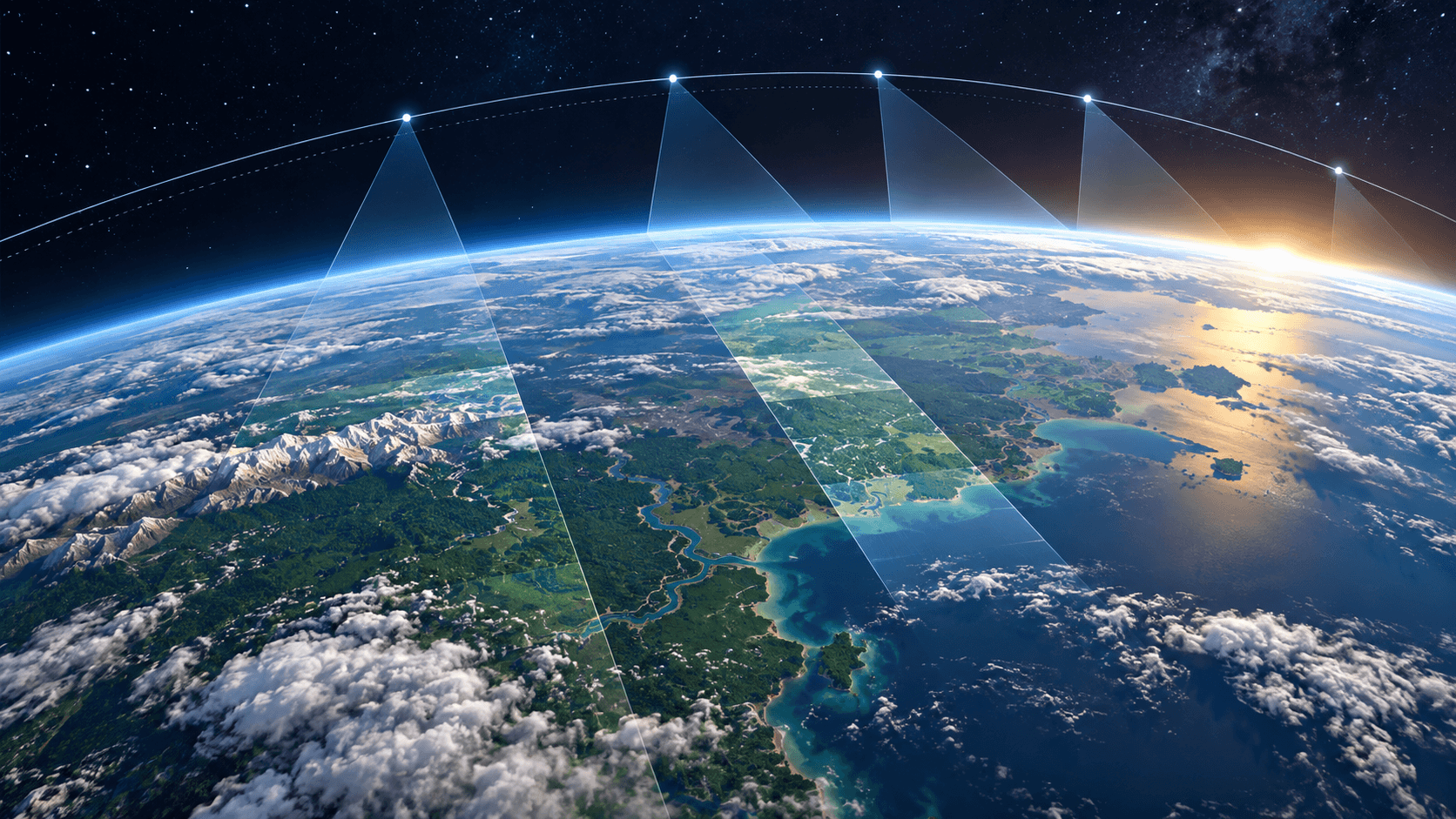
Grahaa plans optical payload test for customer missions
Its chief executive told BusinessLine that two customers had signed on; their identities, contract terms and launch dates remain undisclosed.
Launch
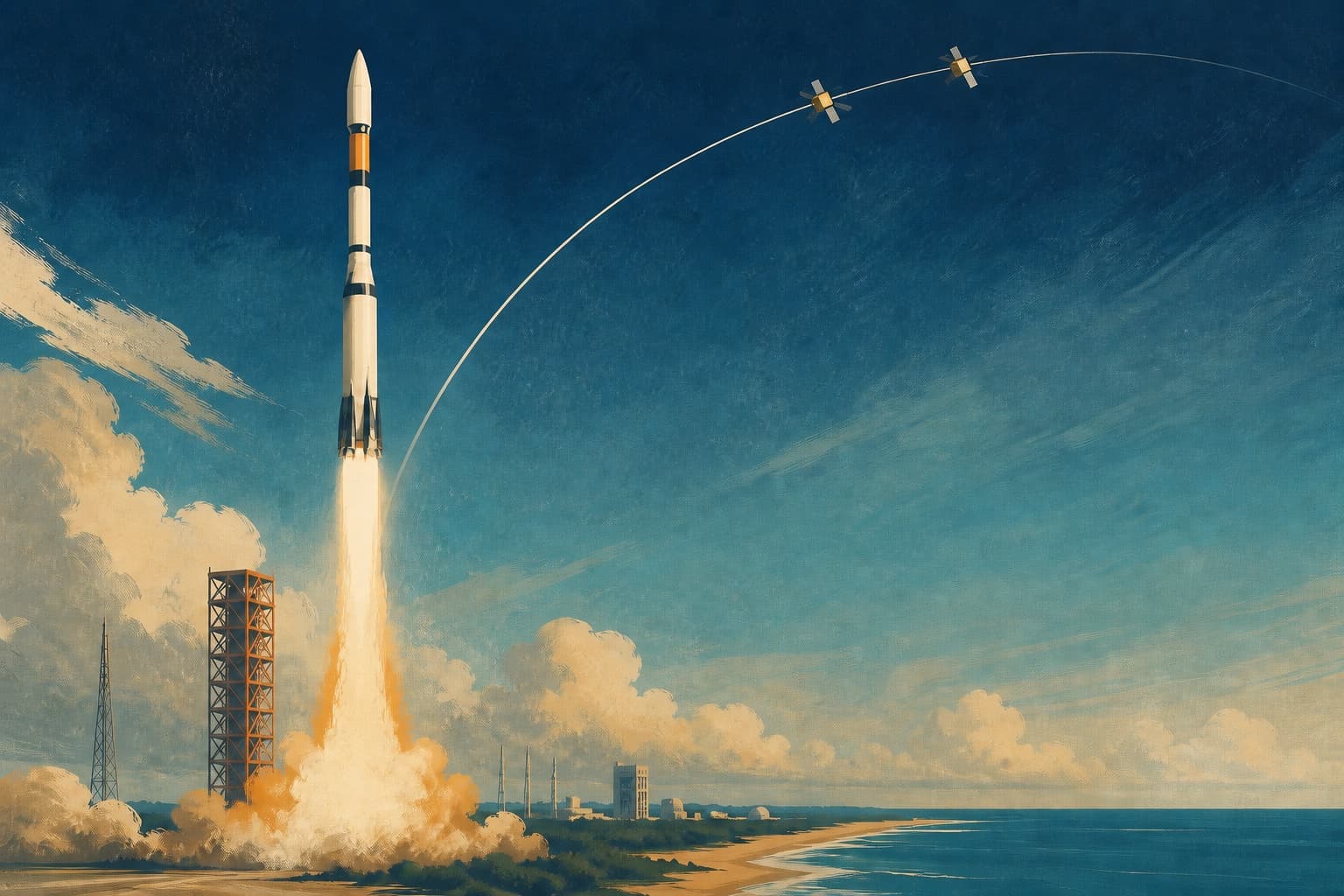
Vikram-1 reaches orbit on India’s first private orbital launch
Skyroot’s four-stage launcher placed two satellites in low Earth orbit on its maiden flight, crossing a threshold for India’s commercial launch ecosystem.
Update this profile
Work at Grahaa Space or represent it? If something here is wrong or missing, email contact@spaceexploration.news with a public source for the change. Every profile edit is verified before it is published.
Request a profile change