Artemis
NASA publishes Artemis II heat shield engineering analysis
The agency attributes reduced cracking and char loss to a shorter re-entry trajectory, while material testing and surface measurements remain underway.
Add us as a preferred source on Google Add us as a preferred source on Google
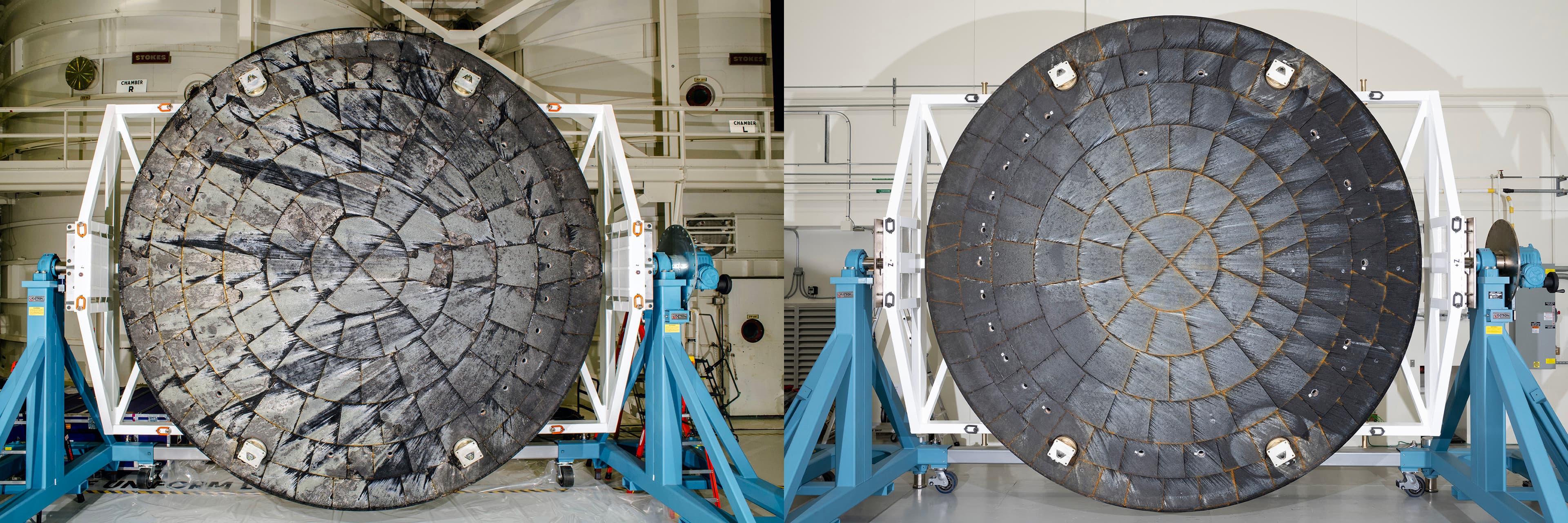
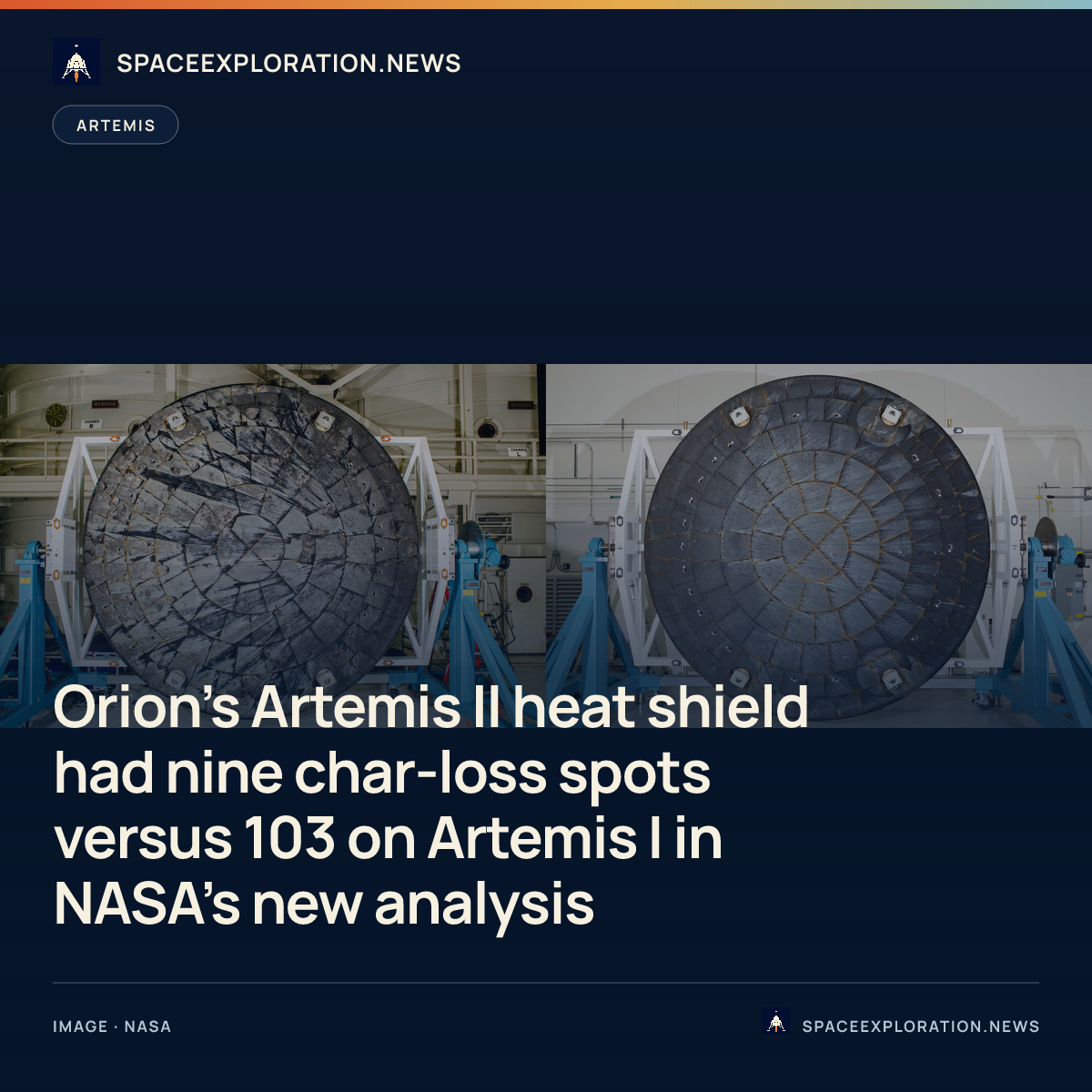
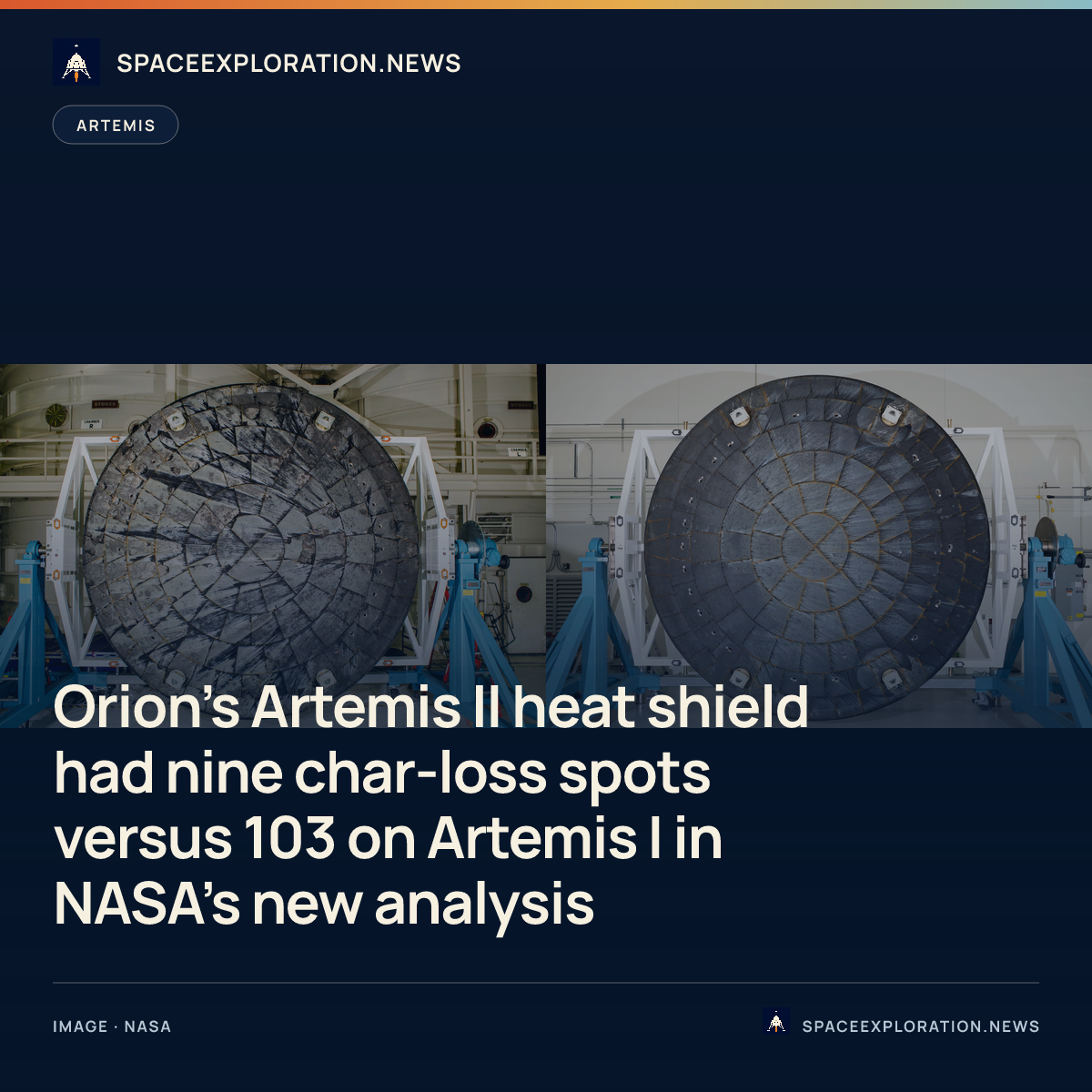
NASA published additional engineering analysis of Orion’s Artemis II heat shield on October 15, 2026, reporting nine spots where charred material was lost, compared with 103 after Artemis I. The agency’s assessment found the spacecraft’s aerodynamic and heating performance matched predictions from ground testing and pre-flight analysis.
The new publication concerns the earlier flight: Artemis II splashed down on April 10, 2026, after carrying four astronauts around the Moon. NASA’s initial recovery inspections had already found less cracking and char loss than on Artemis I.
For Artemis II, NASA shortened the maximum distance Orion could travel between entering the atmosphere and splashing down. The agency explains that this limited time in the temperature range associated with the earlier heat-shield problem. Its post-flight review attributes a tenfold reduction in cracking and char loss to that trajectory change.
The heat shield contains 186 blocks of Avcoat, an ablative material. Sample extraction and internal X-ray scans began at Marshall Space Flight Center in August. Engineers are also comparing post-flight laser scans with pre-flight measurements to determine how much material receded during re-entry.
NASA’s October account describes that comparison, sample extraction, material tests and thermal analysis as continuing work. The published performance assessment therefore accompanies further investigation of the shield’s material behaviour, rather than marking completion of every post-flight test.
Reporting trail
Primary sources
For an image post, download the card and copy this suggested caption.
The agency attributes reduced cracking and char loss to a shorter re-entry trajectory, while material testing and surface measurements remain underway. Read the full report: https://www.spaceexploration.in/news/artemis-ii-heat-shield-analysis #SpaceExplorationNews #SpaceNews #SpaceMissions