Planetary mission operations
BepiColombo targets December separation after shortened Mercury burn
ESA details a software interruption and a revised burn sequence. The mission is in a stable but larger orbit, with the investigation continuing.
Add us as a preferred source on Google Add us as a preferred source on Google
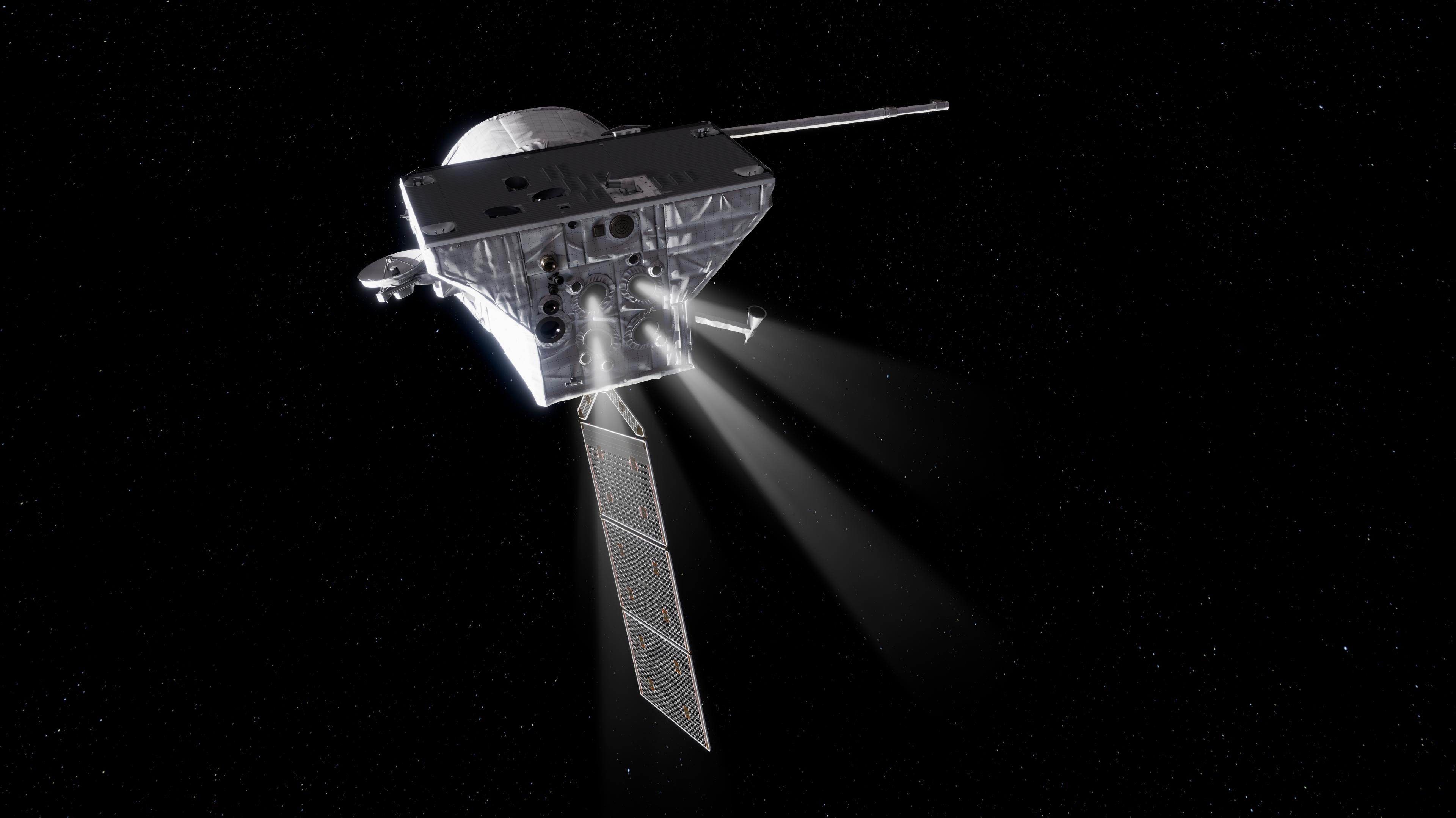
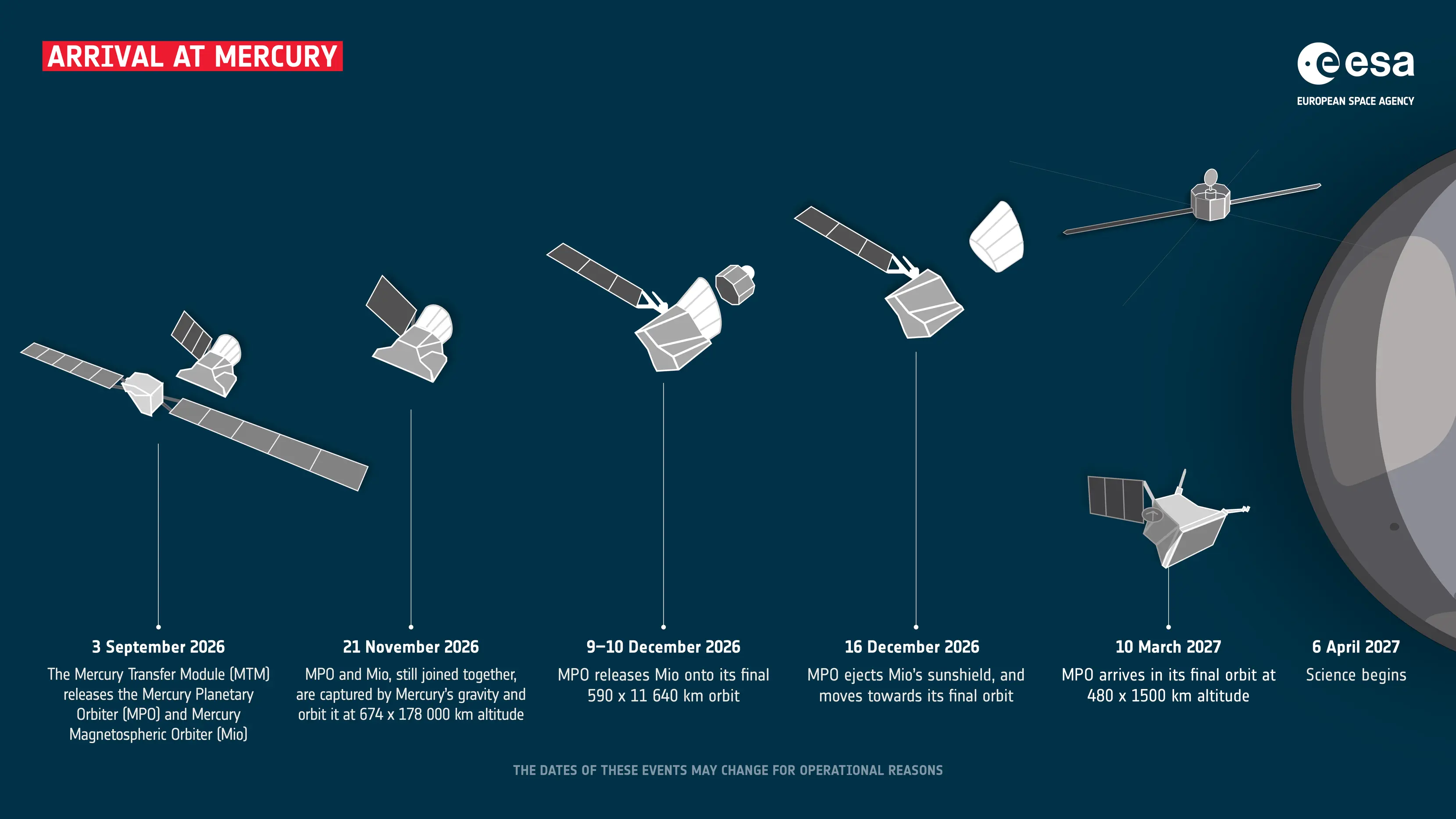
BepiColombo’s two orbiters remain on course to separate on December 9 despite a software fault that cut short their Mercury capture burn. The European Space Agency’s November 23 update details a revised manoeuvre sequence after the November 21 operation.
Telemetry showed that the burn delivered about 77% of the planned velocity change before the spacecraft entered safe mode, ESA reported. Engineers traced the interruption to software involving attitude guidance and thruster control; ESA and spacecraft manufacturer Airbus are continuing the investigation.
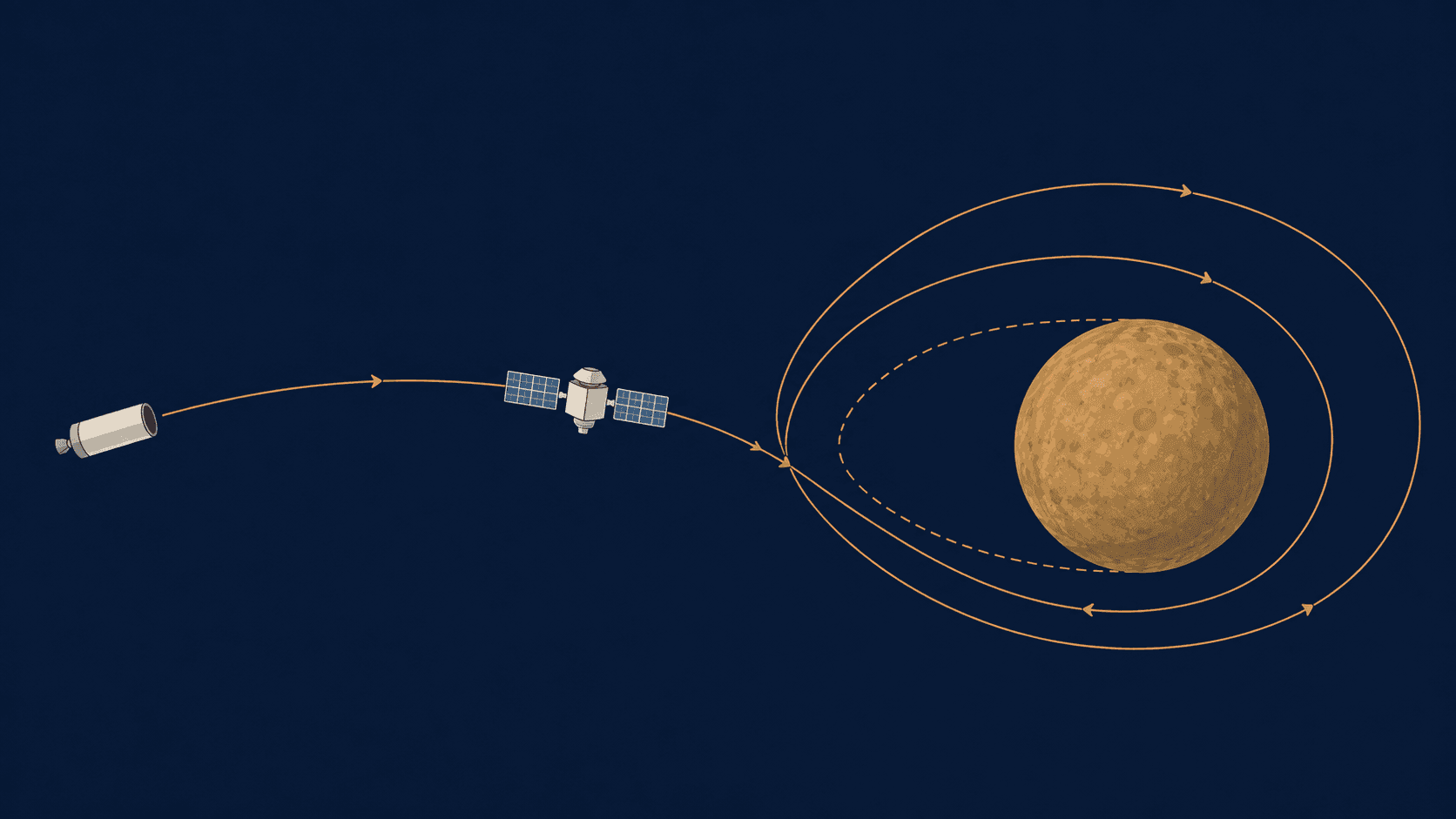
The spacecraft is in a stable orbit taking 75 hours rather than the planned 58. ESA has adapted the remaining burns to that trajectory without adding manoeuvres, and reports no change to the separation target or the European orbiter’s intended science orbit.
Mission scientist Gabriele Cremonese told Media INAF on November 23 that the new mission report confirmed capture after initial uncertainty over the trajectory. The institute’s account distinguishes the larger current orbit from the orbit required for science.
Update, November 24: Our earlier report covered orbital capture while telemetry analysis continued. This dispatch adds the identified software problem, altered orbit and recovery sequence. The European orbiter is still due to reach its science orbit by March 2027, with science operations planned for April.
Reporting trail
Primary sources
For an image post, download the card and copy this suggested caption.
ESA details a software interruption and a revised burn sequence. The mission is in a stable but larger orbit, with the investigation continuing. Read the full report: https://www.spaceexploration.in/news/bepicolombo-shortened-burn-recovery #SpaceExplorationNews #SpaceNews #SpaceMissions