Planetary missions
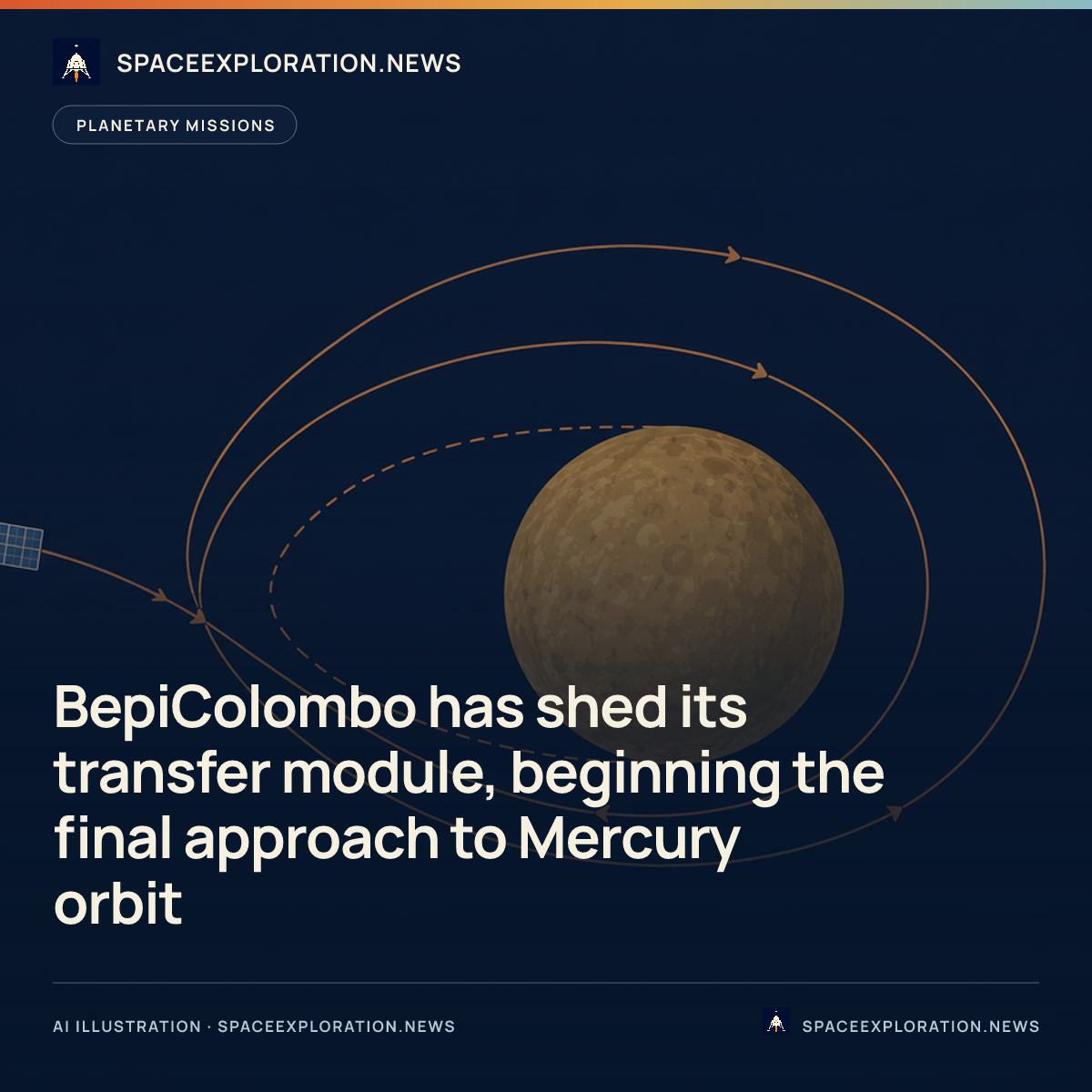
BepiColombo sheds transfer module on approach to Mercury
The separation has started the mission's arrival phase, but Mercury orbit insertion, the split between its two science orbiters and science operations are still ahead.
Add us as a preferred source on Google Add us as a preferred source on Google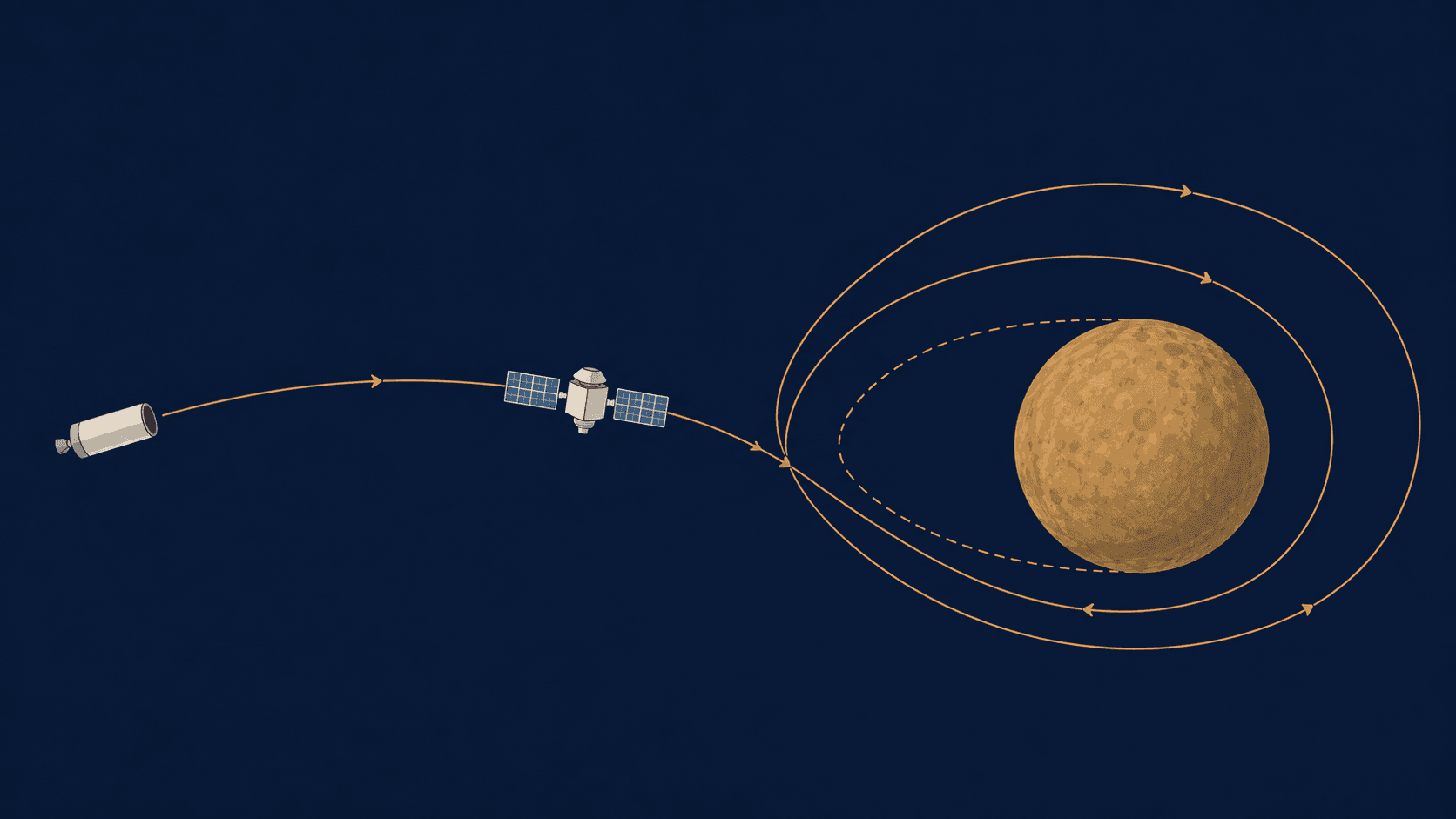
BepiColombo's Mercury Transfer Module separated from the spacecraft stack on September 3, beginning the European-Japanese mission's arrival phase at Mercury. ESA said signals received through its deep-space antennas in Spain and Argentina confirmed the separation and that current telemetry showed the remaining spacecraft systems were nominal.
The Associated Press independently reported the planned separation, saying controllers waited about two hours for radio confirmation from the spacecraft. The operation took place more than 200 million kilometres from Earth, according to ESA.
The transfer module provided propulsion for BepiColombo's journey through the inner Solar System. Its departure leaves ESA's Mercury Planetary Orbiter, or MPO, and JAXA's Mercury Magnetospheric Orbiter, Mio, travelling together toward Mercury; ESA says MPO will power the stack until the orbiters split.
Separation does not put BepiColombo in orbit around Mercury. ESA schedules orbit insertion for November 21, followed by the separation of MPO and Mio on December 9–10. The agency has set the mission's science phase to begin in April 2027.
BepiColombo was launched in 2018 and is led by ESA in collaboration with JAXA. Its two orbiters are intended to operate around Mercury at the same time, but that operational phase remains future work rather than a result of the module separation.
Reporting trail
Primary sources
For an image post, download the card and copy this suggested caption.
The separation has started the mission's arrival phase, but Mercury orbit insertion, the split between its two science orbiters and science operations are still ahead. Read the full report: https://www.spaceexploration.in/news/bepicolombo-transfer-module-separation #SpaceExplorationNews #SpaceNews #SpaceMissions