International Space Station
EVA 97 removes failed ISS antenna but leaves spare for later
Anil Menon and Sophie Adenot secured the old unit after cables and bolts consumed the available work time. One antenna remains operational, while NASA has not assigned the replacement to a date.
Add us as a preferred source on Google Add us as a preferred source on Google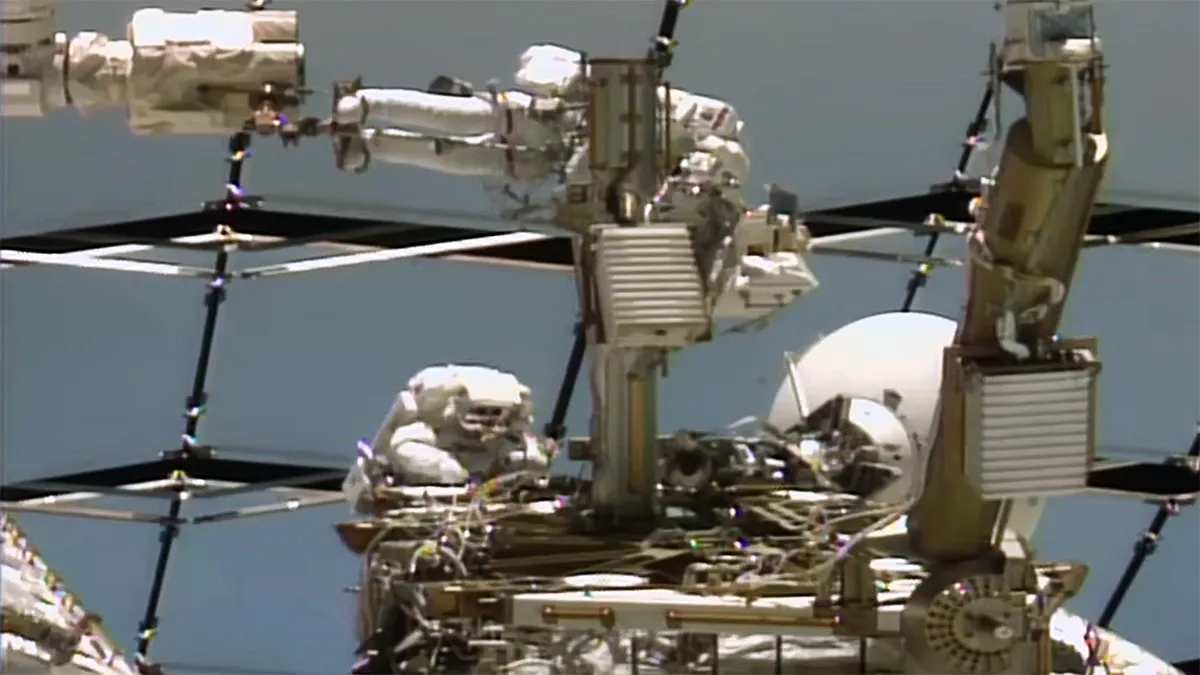
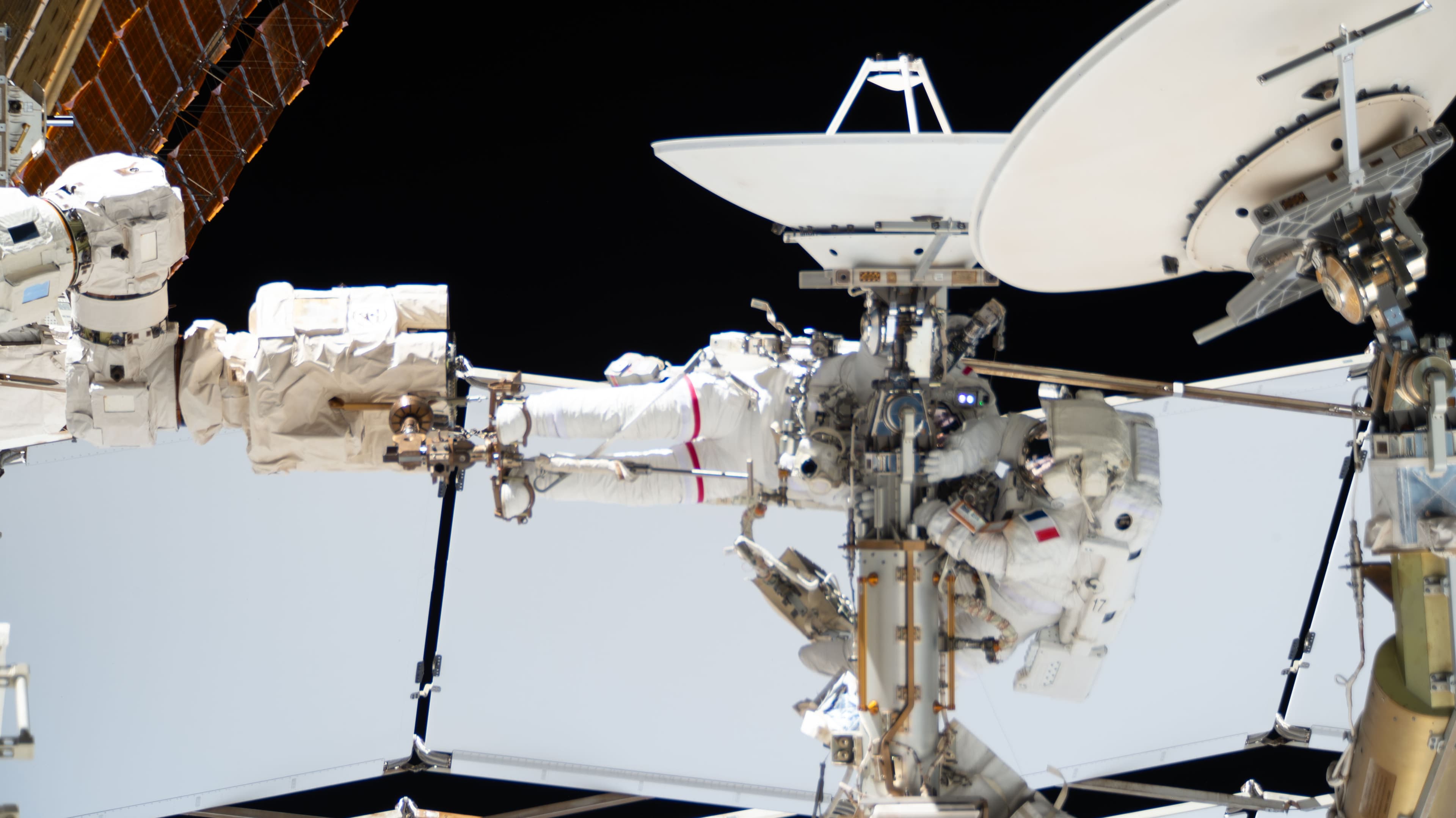
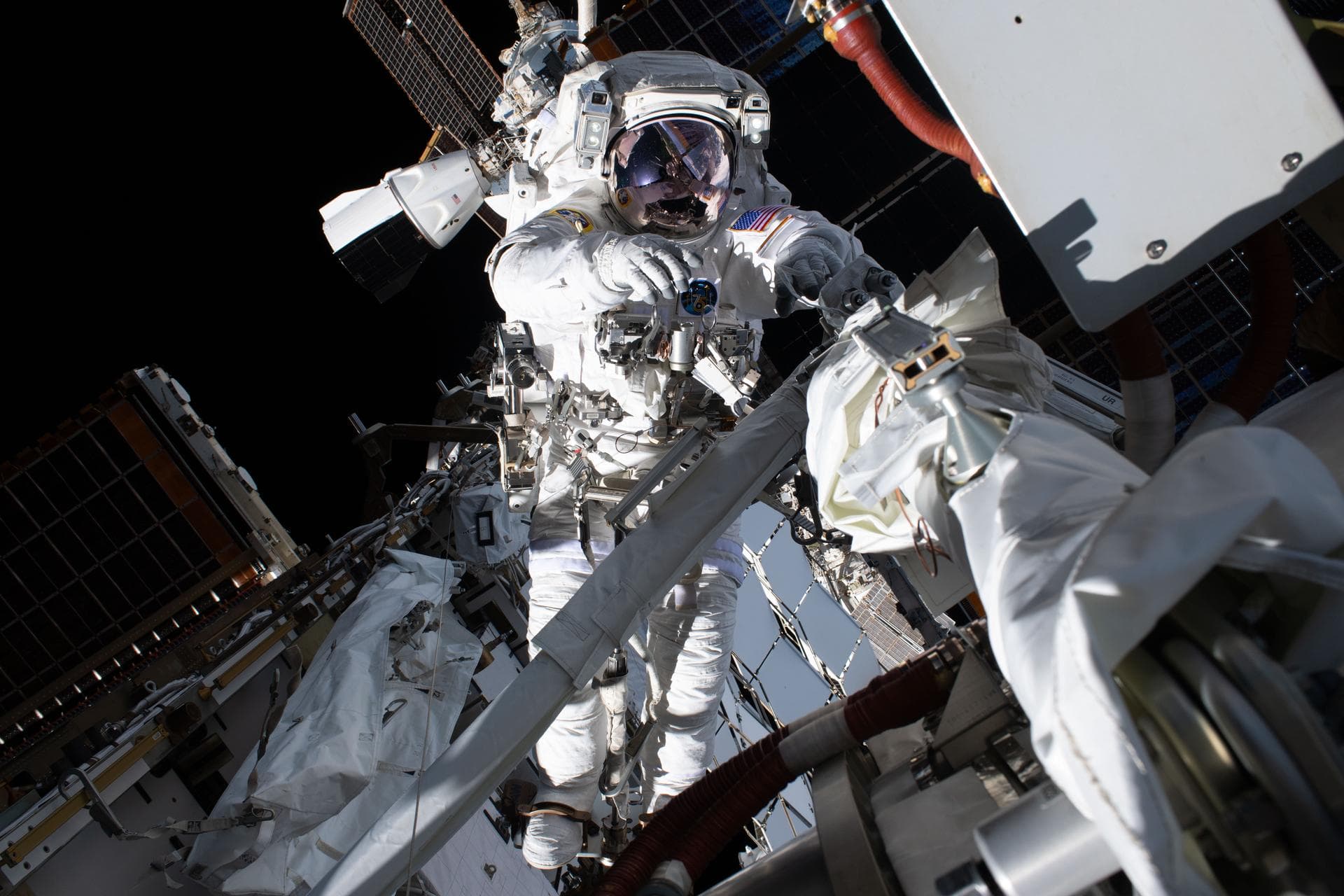
NASA astronaut Anil Menon and European Space Agency astronaut Sophie Adenot removed a failed Space-to-Ground antenna from the International Space Station on Tuesday, August 18, but did not install the spare meant to replace it. Work on electrical connections and bolts took longer than planners expected, so the crew secured the old unit to the Z1 truss and returned inside. NASA said the station still had one fully functional antenna; its August 19 follow-up assigned the spare installation only to a future spacewalk, without a date.
U.S. Spacewalk 97 began at 8:29 a.m. EDT (12:29 UTC) when the astronauts switched their suits to battery power and ended at 2:52 p.m. EDT (18:52 UTC) when repressurisation of the Quest airlock began. The 6-hour, 23-minute duration was close to the roughly six and a half hours NASA had allotted, but the task sequence no longer left time to mount and connect the replacement.
Why the replacement stayed outside
The plan treated the antenna job as a swap, not merely a removal. Menon, designated spacewalk crew member 1, and Adenot, crew member 2, were to take out the failed Space-to-Ground antenna and leave the orbital complex with its replacement installed. Space.com reported that the failed unit had been unable to track NASA’s relay satellites since November. A second antenna had continued carrying critical data and high-speed communications with Mission Control in Houston.
Removing the unit proved slower than planned. NASA said the astronauts needed extra time to disconnect electrical cables and loosen bolts. Space.com added that securing the antenna’s gimbal-lock bolts for transport also caused delays. Those details explain where schedule margin went, but neither source identified a new fault with the spare itself or said the astronauts attempted to install it and failed.
Once controllers decided installation could not be completed within the remaining spacewalk, the objective changed to leaving the worksite safe. Menon and Adenot completed a long-duration tie-down of the failed antenna on Z1 rather than continuing into the replacement steps. Near the end, NASA said they also cleaned up, inspected a portable foot restraint near Quest and swapped it.
Menon described the gap between procedure and hardware in seven words: “Things were a lot different than expected.” He also said contingency planning had covered the changed conditions. The decision to tie the failed dish down and leave the spare for another outing was one of those contingencies, not evidence that the station had lost its remaining high-speed link.
What remains working
The operational distinction is important. NASA said the station continued to operate with a fully functional Space-to-Ground antenna, which carries high-data-rate communications through the Tracking and Data Relay Satellites to control centres, including Mission Control Houston. Space.com reported that this second unit had been used since the failure in November. EVA 97 therefore did not create a station-wide communications outage.
What it also did not do was restore the second antenna. The failed dish was off its mount but still outside on Z1, and the spare had not been installed. In practical terms, the station remained dependent on the one working unit for this link. NASA did not report a problem with that unit, but the maintenance job intended to return the system to two usable antennas remained open.
Why August 25 is not yet the answer
NASA’s completion notice said ground teams would discuss a “forward plan” in connection with the next spacewalk, then planned for Tuesday, August 25. It did not say the antenna installation had been added. Space.com reported that managers were deciding between attaching it to the August 25 outing and leaving it for a later EVA. NASA’s August 19 station update again used only “a future spacewalk,” keeping the replacement date unresolved.
The August 25 spacewalk already had its own task list. NASA’s published plan for U.S. Spacewalk 98 called for crews to connect power-channel cables and data-relay systems, including work supporting the station’s eventual deorbit, and replace a docking navigational aid on the Harmony module’s forward port. NASA had not said whether antenna work would be added to, replace or be deferred beyond that task list.
That is the operational consequence of an unscheduled follow-up: a known maintenance task remains outside the published timeline even though the communications service it supports is still available. NASA’s reference to forward planning, followed by its August 19 wording, leaves open whether managers will fold the antenna installation into the next outing or preserve Spacewalk 98’s existing scope and assign another date.
A delayed EVA, then a first
EVA 97 had already moved once before it began. NASA shifted it from August 13 to August 18 after a carbon-dioxide sensor in Menon’s suit showed an unexpected reading near the end of his August 6 spacewalk with Jessica Meir. The sensor returned to normal after Menon removed the suit, and NASA said engineers would evaluate whether to change suits. That delay was separate from the cable-and-bolt delays encountered outside on August 18.
The completed outing was Menon’s second career spacewalk and Adenot’s first, making her the first French woman to conduct one. NASA counted it as the 282nd spacewalk supporting ISS assembly, maintenance and upgrades. Those milestones did not change the unfinished status of the antenna task: as last stated by NASA on August 19, the failed unit was secured on Z1, one antenna remained functional, and the spare would wait for a spacewalk yet to be assigned.
Reporting trail
Primary sources
NASANASA, ESA Astronauts Wrap Up Station Spacewalknasa.gov
NASAExpedition 75 Cleans Up After Spacewalk, Keeps Up Microgravity Researchnasa.gov
NASANASA to Cover Three US Spacewalks, Host Preview News Conferencenasa.gov
NASASpace Station Crew Wraps Busy Week, Plans New Date for US Spacewalk 97nasa.gov
Space.comNASA astronaut and 1st female French spacewalker remove failed antenna but run out of time for replacementspace.com
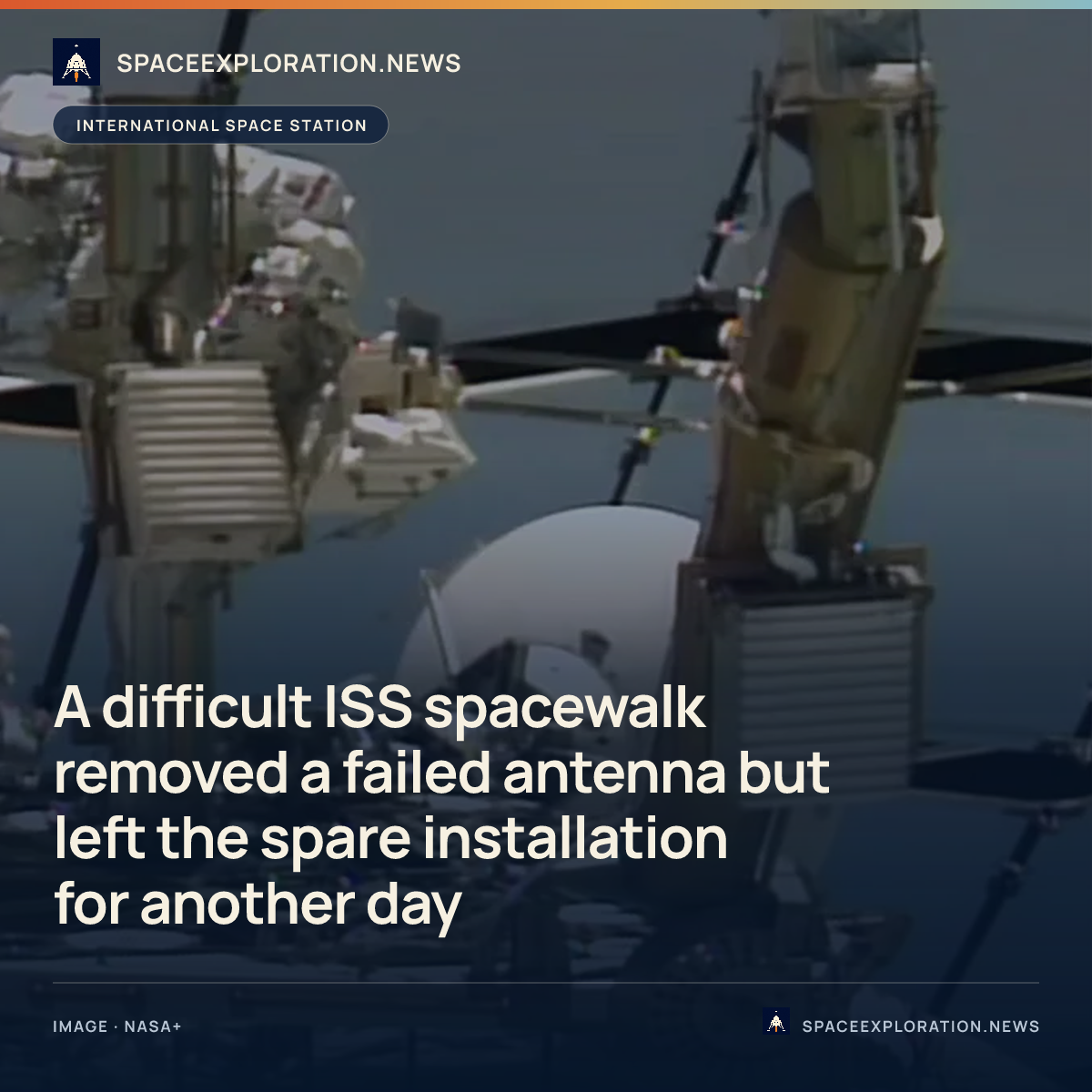
For an image post, download the card and copy this suggested caption.
Anil Menon and Sophie Adenot secured the old unit after cables and bolts consumed the available work time. One antenna remains operational, while NASA has not assigned the replacement to a date. Read the full report: https://www.spaceexploration.in/news/iss-eva-97-antenna-replacement-deferred #SpaceExplorationNews #SpaceNews #SpaceMissions