Stellar evolution
Study reconstructs a star’s spiral inside its giant companion
Led by Pune-raised Viraj Karambelkar, the Nature study interprets observations of the Andromeda system Bao; its eruption occurred in 2025.
Add us as a preferred source on Google Add us as a preferred source on Google
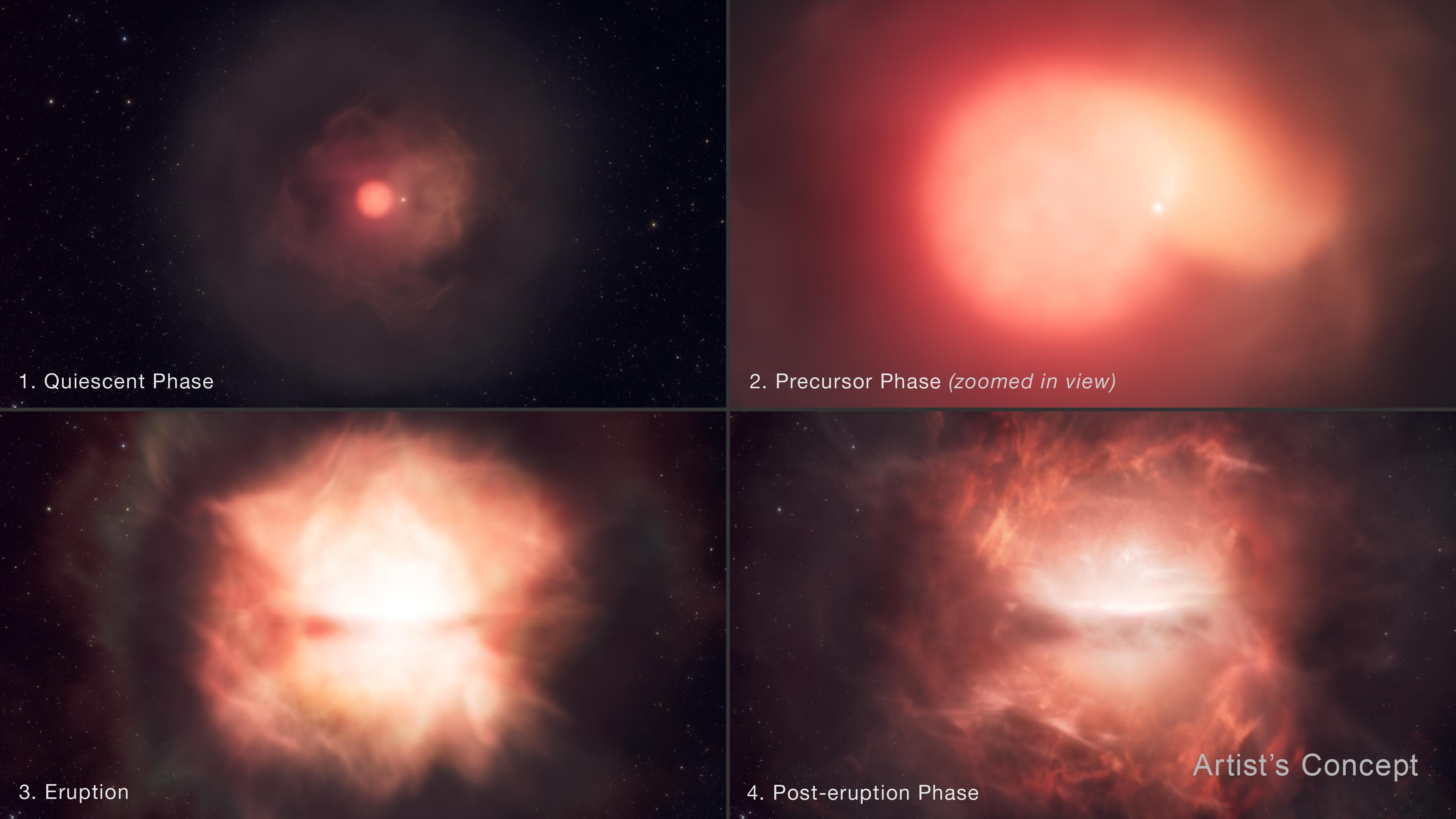
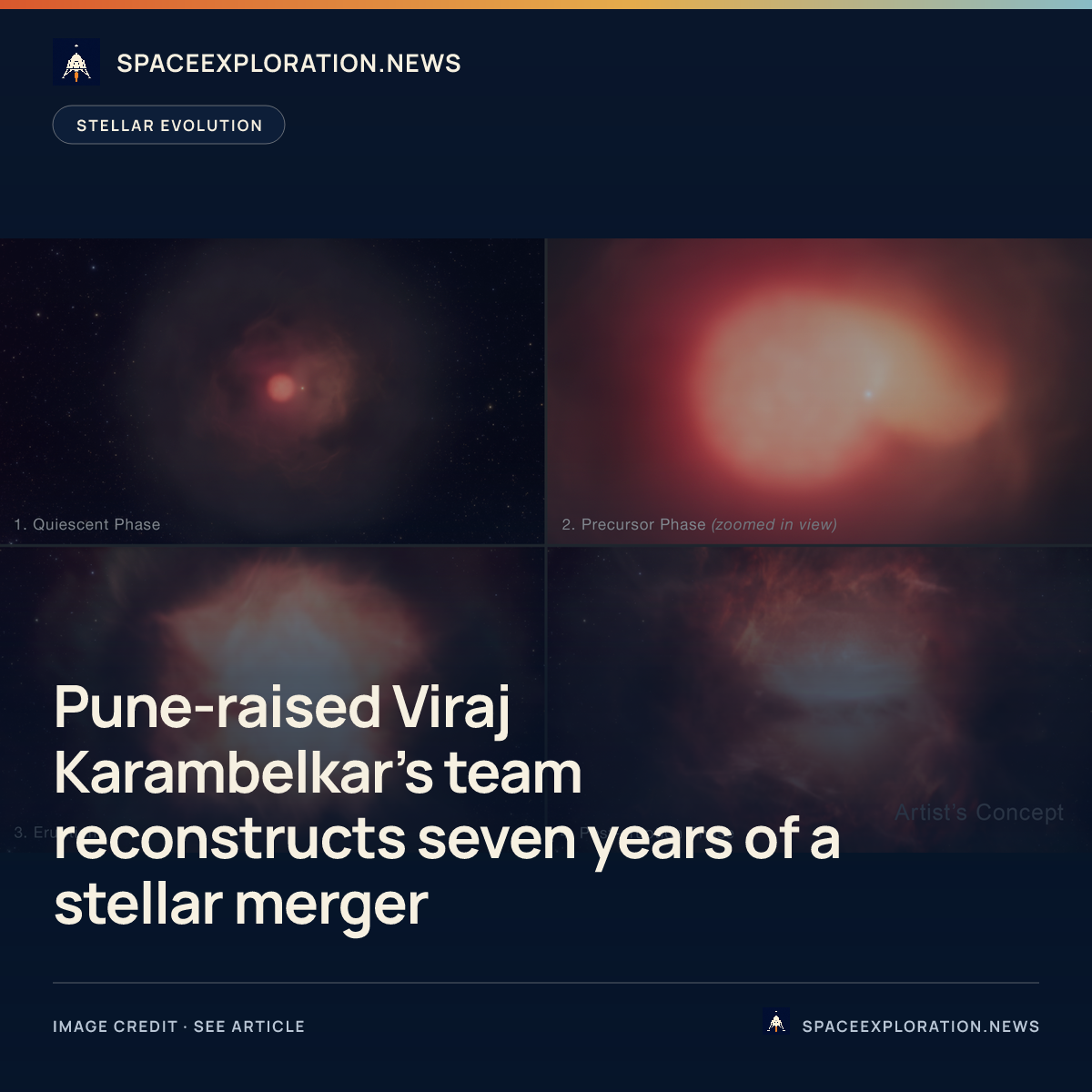
A study published in Nature on November 18 reconstructs how a small star spiralled inside its giant companion before the pair merged. The researchers combined telescope observations to follow roughly seven years of change in the Andromeda galaxy’s binary system AT 2025abao, nicknamed Bao.
Lead author Viraj Karambelkar is a NASA Hubble Fellow at Columbia University. His official Space Telescope Science Institute fellowship biography records that he grew up in Pune and completed his bachelor’s degree at the Indian Institute of Technology Bombay in 2019.
The paper estimates that the giant had about seven times the Sun’s mass, while its companion had about seven-tenths of a solar mass. Spectra taken before and after the eruption support an interpretation in which the smaller star lost orbital energy through friction inside the giant’s gas envelope.
This shared outer layer is called a common envelope. The authors connect a gradual brightening that began in 2018 with the companion’s inward spiral, followed by an eruption in late 2025 as it merged with the giant’s core. The reconstruction rests on observations compared with stellar models.
NASA’s James Webb Space Telescope observed Bao on December 24, 2025, 47 days after the eruption peaked, NASA reported. Its infrared measurements helped the team test what surrounded the stars before, during and after the merger. The new development is the published analysis, rather than a merger occurring this month.
Further observations are needed to determine how the merged star settles, NASA reports. The paper also releases the study’s photometry, spectra and fitted parameters through Zenodo, with Webb images available in the public telescope archive.
Reporting trail
Primary sources
For an image post, download the card and copy this suggested caption.
Led by Pune-raised Viraj Karambelkar, the Nature study interprets observations of the Andromeda system Bao; its eruption occurred in 2025. Read the full report: https://www.spaceexploration.in/news/karambelkar-bao-stellar-merger #SpaceExplorationNews #SpaceNews #SpaceScience