Open astronomy data
Lattice search uncovers a pulsar in Fermi’s open data
The published test used about ten processor-hours where an earlier search failed after roughly 600 processor-years. Extending the method to binary systems remains a goal.
Add us as a preferred source on Google Add us as a preferred source on Google
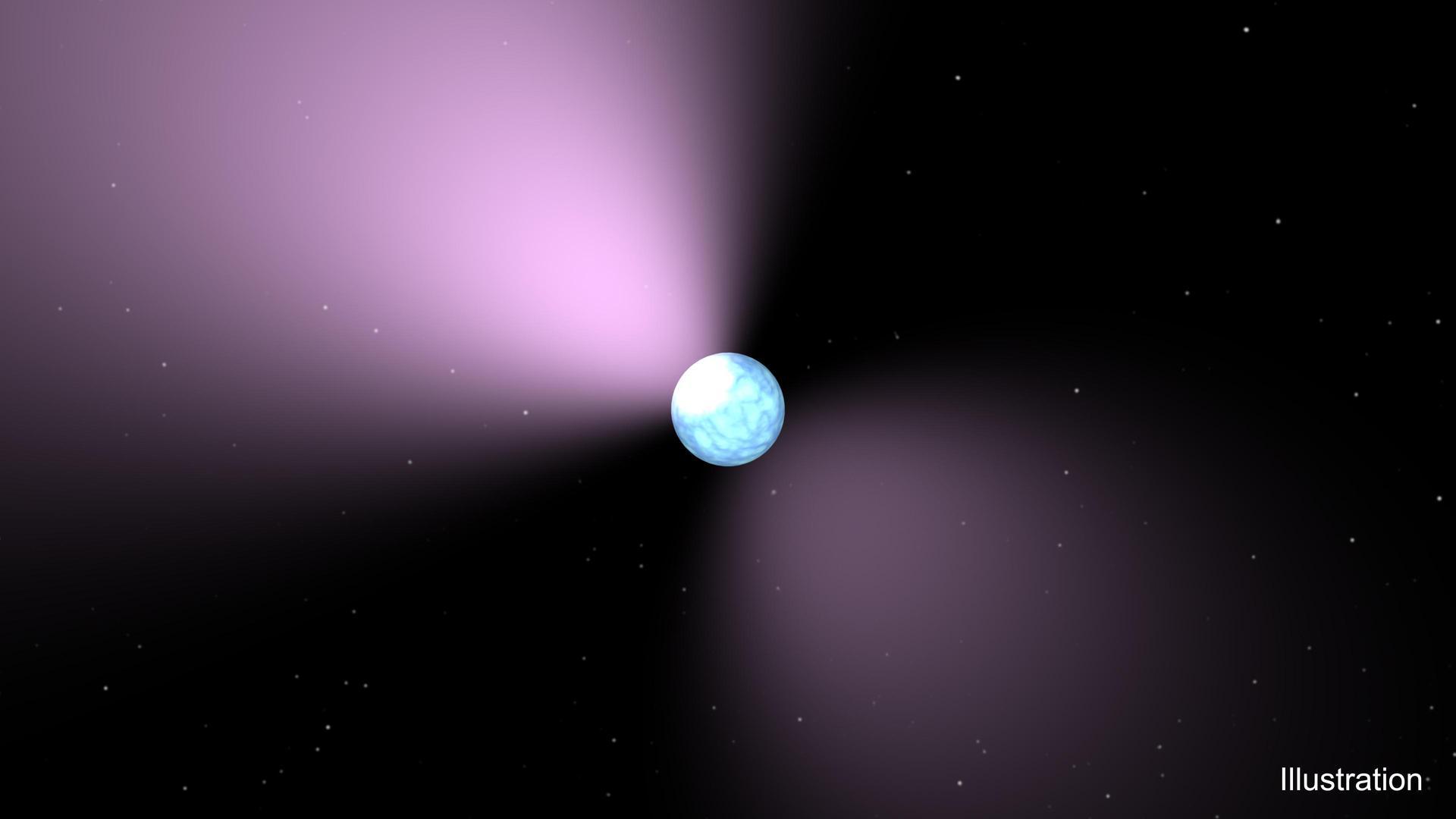
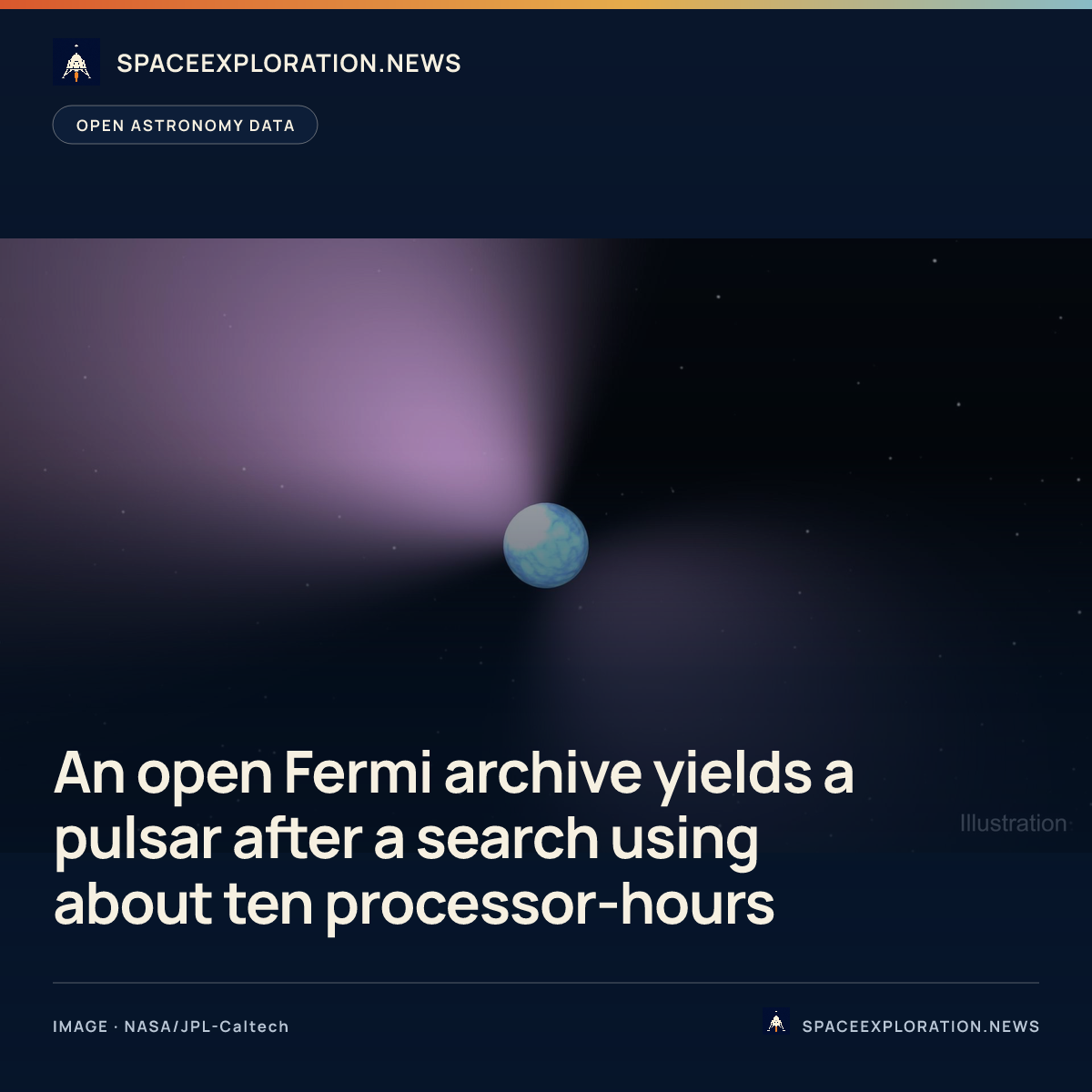
A lattice-based search has uncovered a pulsar in 15 years of publicly available Fermi telescope data, using about ten processor-hours. The result, published in Physical Review Letters on November 19, identifies PSR J1622−7204, an isolated neutron star rotating 261 times a second.
The study’s previous semicoherent search had failed to detect the pulsar after roughly 600 processor-years of computation. NASA describes the new approach as about a million times faster. That comparison concerns this search; it does not establish an identical speed gain for every target.
The researchers transformed the search into a geometry problem: finding a short vector in a high-dimensional lattice, a regular grid of points. The method draws on algorithms used in cryptography, avoiding an exhaustive trial of every possible combination of the pulsar’s position, rotation rate and slowing.
Fermi records sparse gamma-ray photons from pulsars among background radiation. Researchers must recover a periodic signal even though most rotations produce no detected photon. The newly identified source is a millisecond pulsar, completing each rotation in a small fraction of a second.
The underlying archive remains available to researchers worldwide. NASA’s Fermi data portal provides photon-event and spacecraft-pointing records without a proprietary period, alongside analysis tools and an Italian data-server mirror. This is a new use of existing open observations, rather than a new data-access policy.
The authors identify pulsars in binary systems as a possible next application. Their additional orbital parameters have made blind searches especially difficult; the reported discovery is of an isolated pulsar, and does not demonstrate a binary-system detection.
Reporting trail
Primary sources
For an image post, download the card and copy this suggested caption.
The published test used about ten processor-hours where an earlier search failed after roughly 600 processor-years. Extending the method to binary systems remains a goal. Read the full report: https://www.spaceexploration.in/news/fermi-lattice-pulsar-discovery #SpaceExplorationNews #SpaceNews #SpaceScience