Science
Magnetar polarization strengthens the case for vacuum birefringence
Coordinated X-ray and radio measurements link unusually strong polarization to 1E 1547.0-5408’s magnetic geometry, while model dependence keeps the result short of direct proof.
Add us as a preferred source on Google Add us as a preferred source on Google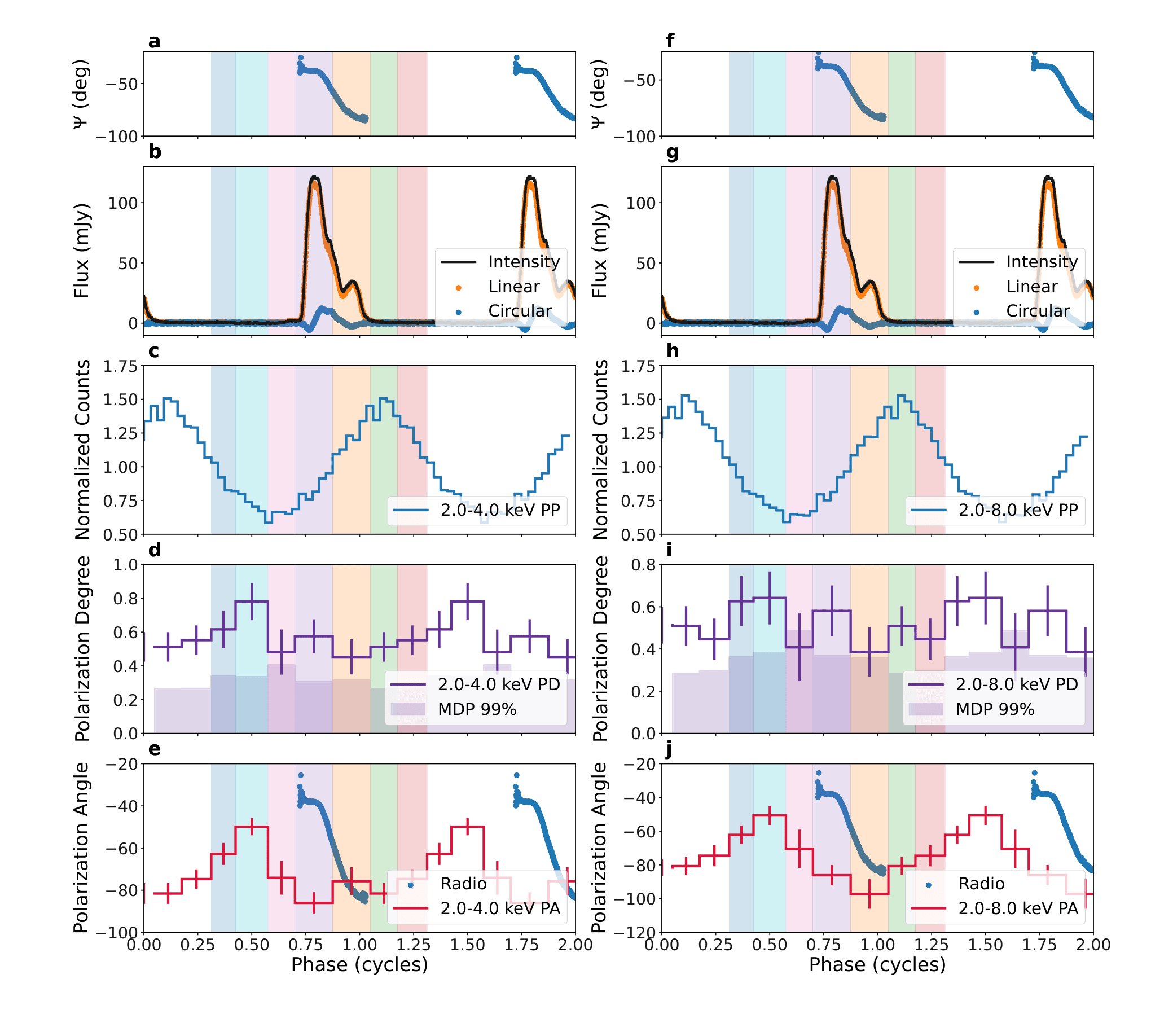
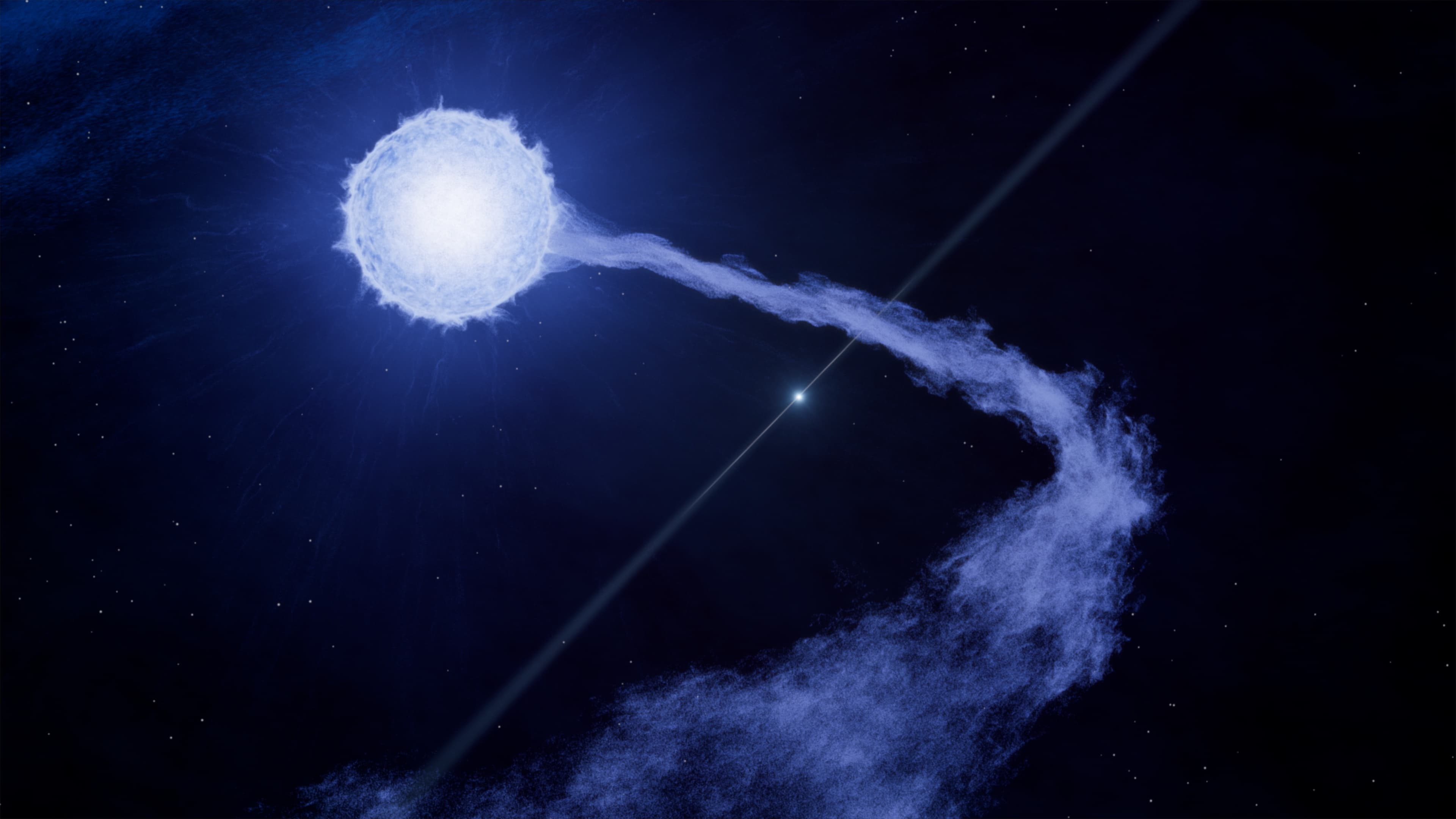
A radio-emitting magnetar has supplied unusually strong astrophysical evidence for vacuum birefringence, the quantum-electrodynamic prediction that an intense magnetic field can make empty space affect different light polarizations differently. The Nature study, published on August 5, combines X-ray and radio measurements of 1E 1547.0-5408 with radiation-transport simulations. Its result strengthens the case that the effect operates in the star’s magnetosphere, but it is not a direct, model-independent proof.
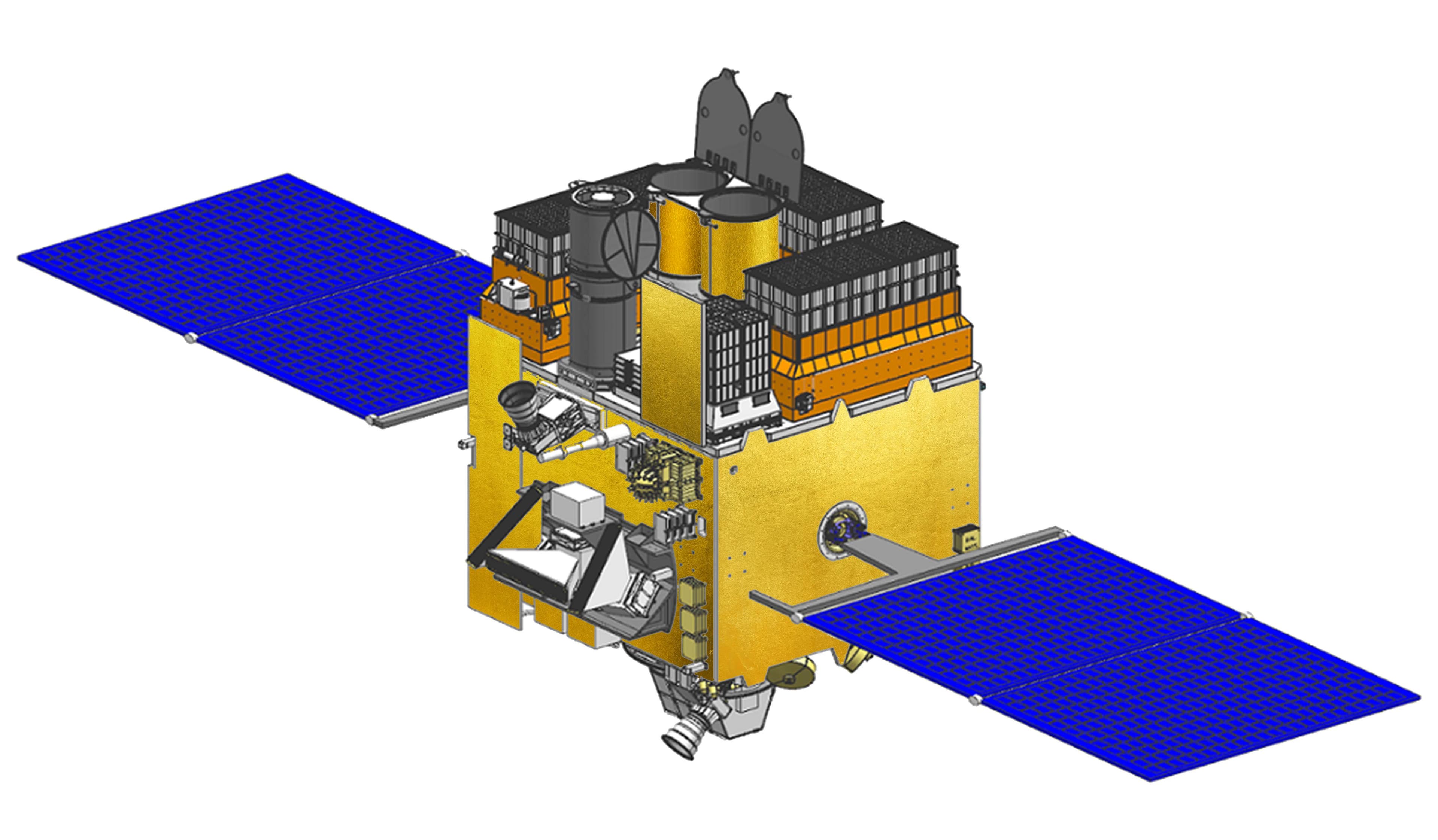
The observing campaign ran from March 26 to April 5, 2025. NASA’s Imaging X-ray Polarimetry Explorer (IXPE) measured the direction and degree of X-ray polarization, the Neutron Star Interior Composition Explorer (NICER) tracked the X-ray spectrum and timing, and the 64-metre Parkes/Murriyang telescope measured the magnetar’s radio pulse and polarization. The radio data matter because 1E 1547.0-5408 is one of the few magnetars that persistently emits radio waves, allowing the researchers to constrain how its magnetic axis is oriented as the star rotates roughly once every two seconds.
Why a magnetar can test the quantum vacuum
Quantum electrodynamics treats a vacuum not as featureless nothingness but as a state in which virtual charged-particle fluctuations can influence light. In a magnetic field above about 10¹⁴ gauss, such as the field at a magnetar’s surface, the theory predicts polarization-dependent refractive indices. Light polarized in different modes then propagates differently, an effect called vacuum birefringence. No terrestrial magnet can sustain a comparable field over the path length needed for this test, so neutron stars provide a natural strong-field laboratory.
The observable is not simply whether the X-rays are polarized. Radiation emerging from a strongly magnetized atmosphere can already have a preferred polarization. The sharper question is whether that polarization remains coupled to the changing magnetic-field direction while the light crosses the magnetosphere. Vacuum birefringence can keep polarization vectors aligned out to a larger radius, reducing the cancellation that would otherwise occur when a telescope collects light from surface regions with different field directions.
The polarization stayed high and followed the field geometry
IXPE measured a 2–8 keV polarization degree of about 46% when averaged across energy and rotational phase. A joint IXPE–NICER spectral analysis put the phase-averaged value at 65% ± 8% at 2 keV, where thermal emission from the surface dominates. In the 2–3 keV band it reached 82% ± 15% at some rotational phases and remained above roughly 40% while the observer’s line of sight crossed the radio beam. Standard non-refractive surface-emission models have difficulty retaining that level of coherence across the sampled geometry.
The polarization degree also dropped rapidly between 2 and 4 keV without a comparably strong change in polarization angle. The authors interpret that energy dependence as a possible signature of photon-mode conversion near the vacuum resonance in a magnetized atmosphere. They are more cautious above 4 keV, where fewer detected photons weaken the measurement, and say deeper IXPE observations are needed to establish the high-energy behaviour.
Murriyang recorded the characteristic S-shaped swing of the radio polarization angle expected when a line of sight cuts across a dipolar magnetic field. Fitting that swing with a rotating-vector model produced a nearly aligned geometry: the magnetic and spin axes were separated by about 3.4 degrees, while the line of sight lay about 7.5 degrees from the spin axis. The X-ray polarization angle followed a similar rotating-vector pattern, although its geometrical constraints were weaker and the radio and X-ray profiles showed phase offsets that point to different emission locations or departures from a simple dipole.
In the team’s simulations, models that included magnetospheric vacuum birefringence described the phase-resolved X-ray intensity and Stokes polarization data markedly better than models that let the light propagate non-refractively. The no-birefringence cases produced stronger phase variations in the Stokes Q and U components than IXPE observed. The paper explicitly describes this comparison as model-dependent: it supports the physical interpretation, but does not turn an astronomical inference into a direct measurement of the vacuum’s refractive indices.
Why an earlier analysis sounded more cautious
An Astrophysical Journal paper published in April analysed the same roughly 500,000-second IXPE observation and measured a 2–6 keV polarization degree of 47.7% ± 2.9%. Its X-ray-only geometrical fit favoured an inclined rotator viewed nearly perpendicular to the spin axis, with emission from a small, non-uniform hot spot about 1.2 kilometres in radius. In that configuration, strongly polarized light from a compact spot can reach the observer without vacuum birefringence, so the authors concluded that a high polarization degree alone could not provide compelling evidence for the magnetospheric effect.
That paper did not rule out quantum-electrodynamic effects. It found that the rotating-vector fit to the X-ray polarization angle and a possible 3–4 keV polarization dip still hinted at them. It also noted that the nearly aligned geometry derived from radio observations lay at the boundary of its three-sigma X-ray contour and could not be excluded. The Nature analysis changes the weight of the argument by using the simultaneous radio geometry and the full phase-dependent X-ray signal together, rather than treating the polarization fraction as decisive on its own.
A stronger test, with uncertainty still visible
The two analyses therefore differ principally in the geometry used to interpret the same IXPE dataset, not in whether the magnetar is highly polarized. The combined X-ray and radio picture makes magnetospheric vacuum birefringence a natural explanation for several observations at once: the large polarization fraction, its persistence across the radio-beam crossing, the energy-dependent decline and the field-tracking polarization angle. Remaining uncertainty comes from the inferred emission geometry, the assumed atmospheric composition and the radiative-transfer model.
For a more decisive test, the Nature team calls for deeper X-ray polarimetry, especially where the present signal is photon-limited, and for measurements at softer X-ray energies where even higher polarization may be expected. IXPE and proposed soft-X-ray polarimeters such as GoSOX could tighten the geometry and energy dependence. Until then, 1E 1547.0-5408 offers compelling evidence that the quantum vacuum is shaping the light, while the paper’s own language keeps vacuum birefringence in the category of a long-standing prediction that has not yet been directly observed.
Reporting trail
Primary sources
NatureVacuum birefringence and the polarized X-ray emission from a radio magnetarnature.com
arXivVacuum birefringence and the polarized X-ray emission from a radio magnetararxiv.org
The Astrophysical JournalThe long quest for vacuum birefringence in magnetars: 1E 1547.0-5408 and the elusive smoking gundoi.org
Space.comIs empty space really empty? This magnetic star may finally solve a 90-year-old mysteryspace.com

For an image post, download the card and copy this suggested caption.
Coordinated X-ray and radio measurements link unusually strong polarization to 1E 1547.0-5408’s magnetic geometry, while model dependence keeps the result short of direct proof. Read the full report: https://www.spaceexploration.in/news/magnetar-vacuum-birefringence-evidence #SpaceExplorationNews #SpaceNews #SpaceScience