Space astronomy
AstroSat measures gamma-ray burst across two detector bands
The October 8 circular separates CZTI’s detector measurements for the October 7 burst; its Compton-event analysis remains preliminary.
Add us as a preferred source on Google Add us as a preferred source on Google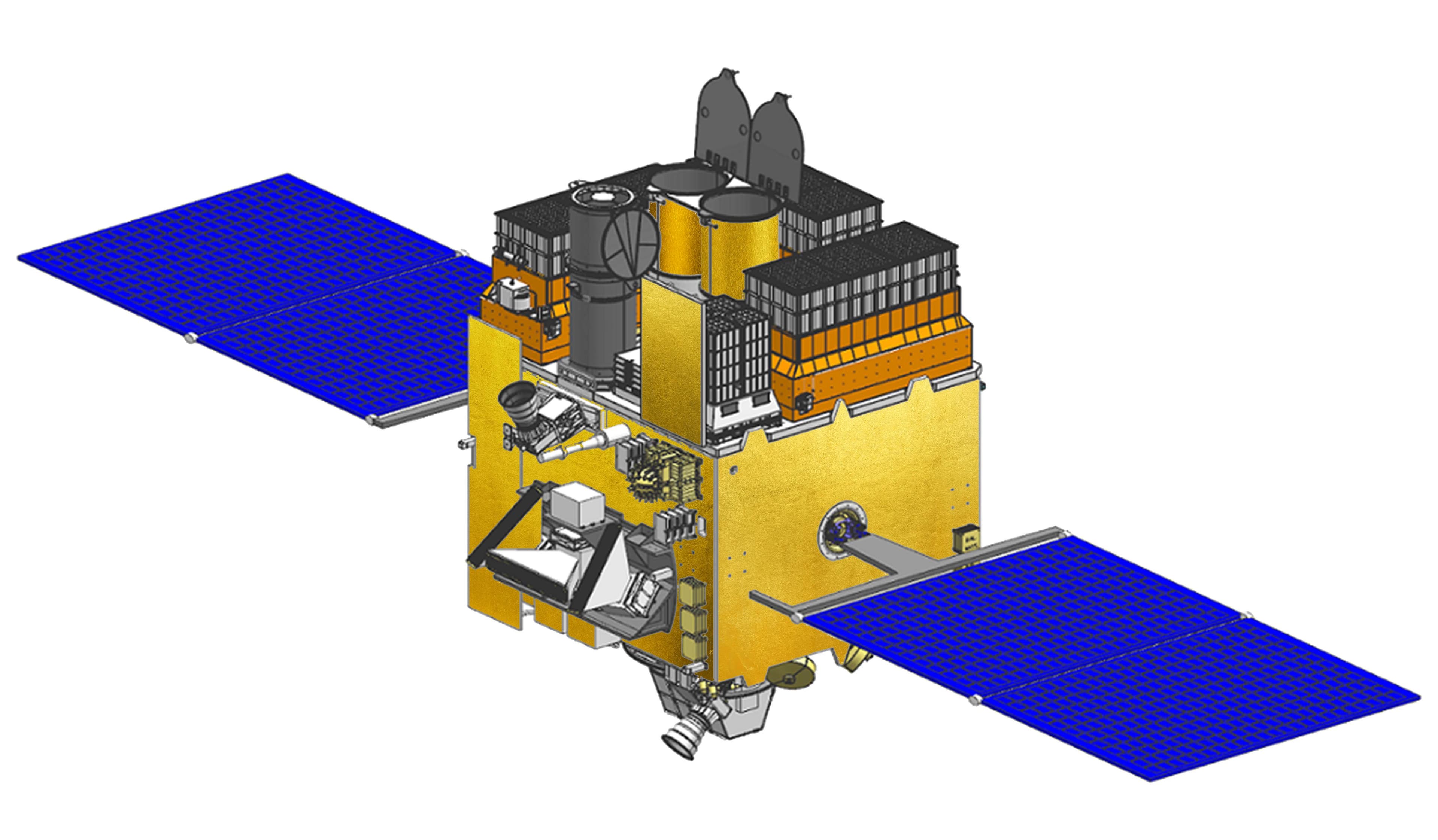
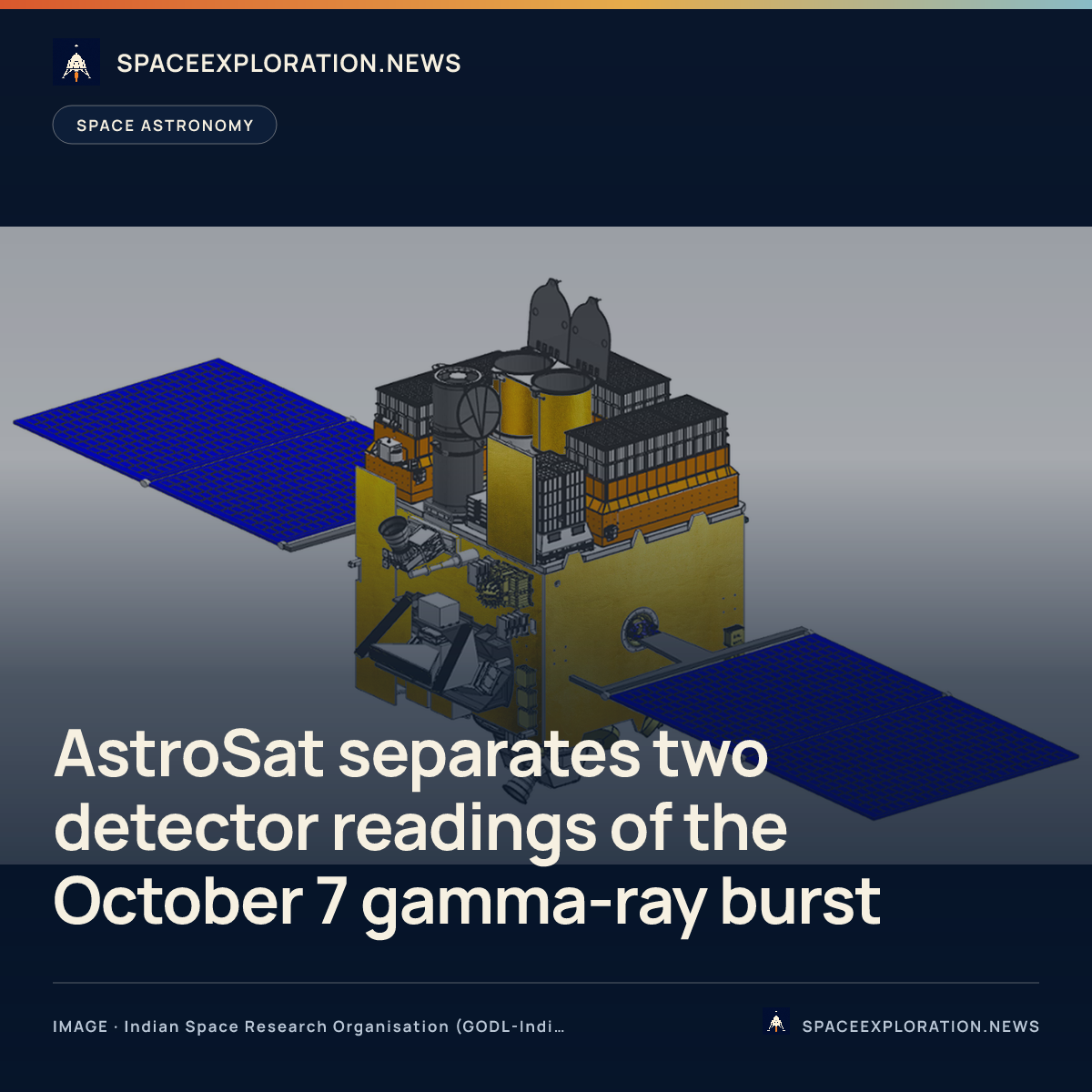
AstroSat’s Cadmium Zinc Telluride Imager (CZTI) measured gamma-ray burst GRB 261007A in two energy bands on October 7. An October 8 circular from the Indian instrument’s collaboration gives separate measurements and links to public light curves.
The circular places the strongest cadmium-zinc-telluride detector peak at 05:40:02.36 UTC in the 20–200 kilo-electronvolt band. It reports a T90 duration of 22.9 seconds, with an upper uncertainty of 0.3 seconds and a lower uncertainty of 0.4 seconds.
The caesium-iodide veto detector covered 100–500 kilo-electronvolts and peaked at 05:40:11.67 UTC. Its reported T90 was 22.4 seconds, plus or minus 0.3 seconds. The team labels its Compton-event analysis preliminary and gives no polarization result.
Other instruments observed the same burst. The Space Variable Objects Monitor (SVOM) team’s October 8 circular reports multiple pulses and a 25-second duration in its broader 15–5,000 kilo-electronvolt band. Glowbug, operating on the International Space Station, independently recorded a multi-peaked burst and also described its analysis as preliminary.
CZTI was built by a consortium led by the Tata Institute of Fundamental Research and funded, managed and facilitated by the Indian Space Research Organisation, according to the AstroSat circular.
The linked automated product page lists different T90 values: 22.1 seconds for the cadmium-zinc-telluride detectors and 22.21 seconds for the veto detector. The two records do not explain that difference; the measurements above are those in the dated circular.
Reporting trail
Primary sources
AstroSat CZTI collaboration / GCNGRB 261007A / EP261007a: AstroSat CZTI detectiongcn.nasa.gov
SVOM team / GCNGRB 261007A: SVOM/GRM observationgcn.nasa.gov
Glowbug team / GCNGRB 261007A: Glowbug gamma-ray detectiongcn.nasa.gov
IUCAA AstroSatEvent Analysis Report: ET20261007T053949astrosat.iucaa.in
 ISRO / Wikimedia CommonsAstrosat-1 rendering (September 22, 2015)commons.wikimedia.org
Government of IndiaGovernment Open Data License – Indiadata.gov.in

For an image post, download the card and copy this suggested caption.
The October 8 circular separates CZTI’s detector measurements for the October 7 burst; its Compton-event analysis remains preliminary. Read the full report: https://www.spaceexploration.in/news/astrosat-czti-grb-261007a-detection #SpaceExplorationNews #SpaceNews #SpaceScience