Science
XRISM spectra trace stellar wind falling toward a pulsar
A September 18 study identifies iron-line shifts in a 2025 observation of BP Crucis; the changing shape of the inflow remains an interpretation.
Add us as a preferred source on Google Add us as a preferred source on Google
A study published on September 18 reports direct spectral evidence of gas falling toward GX 301-2, a pulsar in the BP Crucis binary system. Using the Japan-led XRISM observatory, the researchers found redshifted iron absorption lines during an X-ray flare. Those shifted lines track material moving toward the neutron star, according to the paper; they are measurements of the gas, not an image of the inflow.
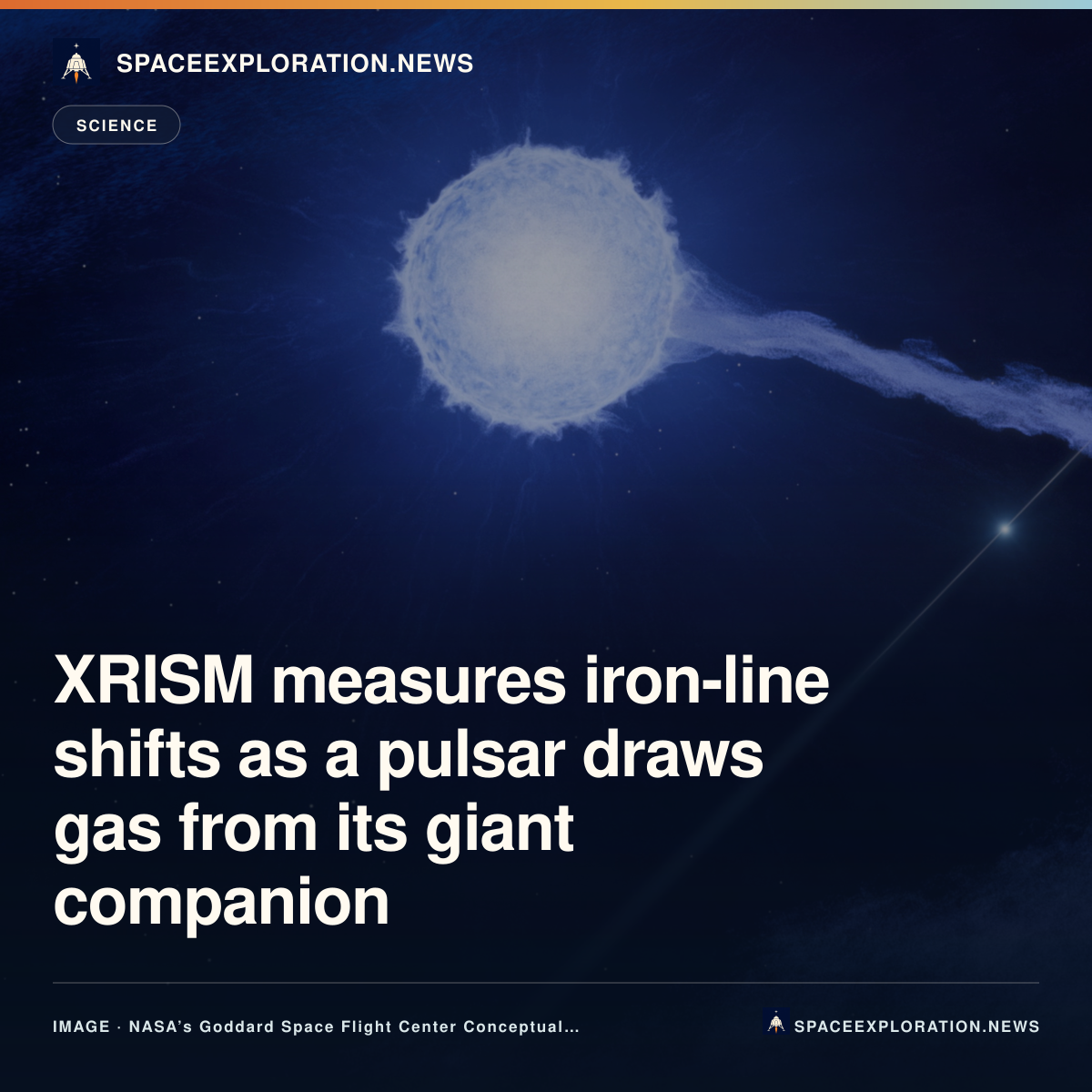
The gas originates in the stellar wind of Wray 977, the pulsar’s blue-hypergiant companion. NASA says GX 301-2 crosses a dense stream from that star during its 41.5-day orbit, producing strong X-ray flares. The system lies about 13,000 light-years away in the constellation Crux.
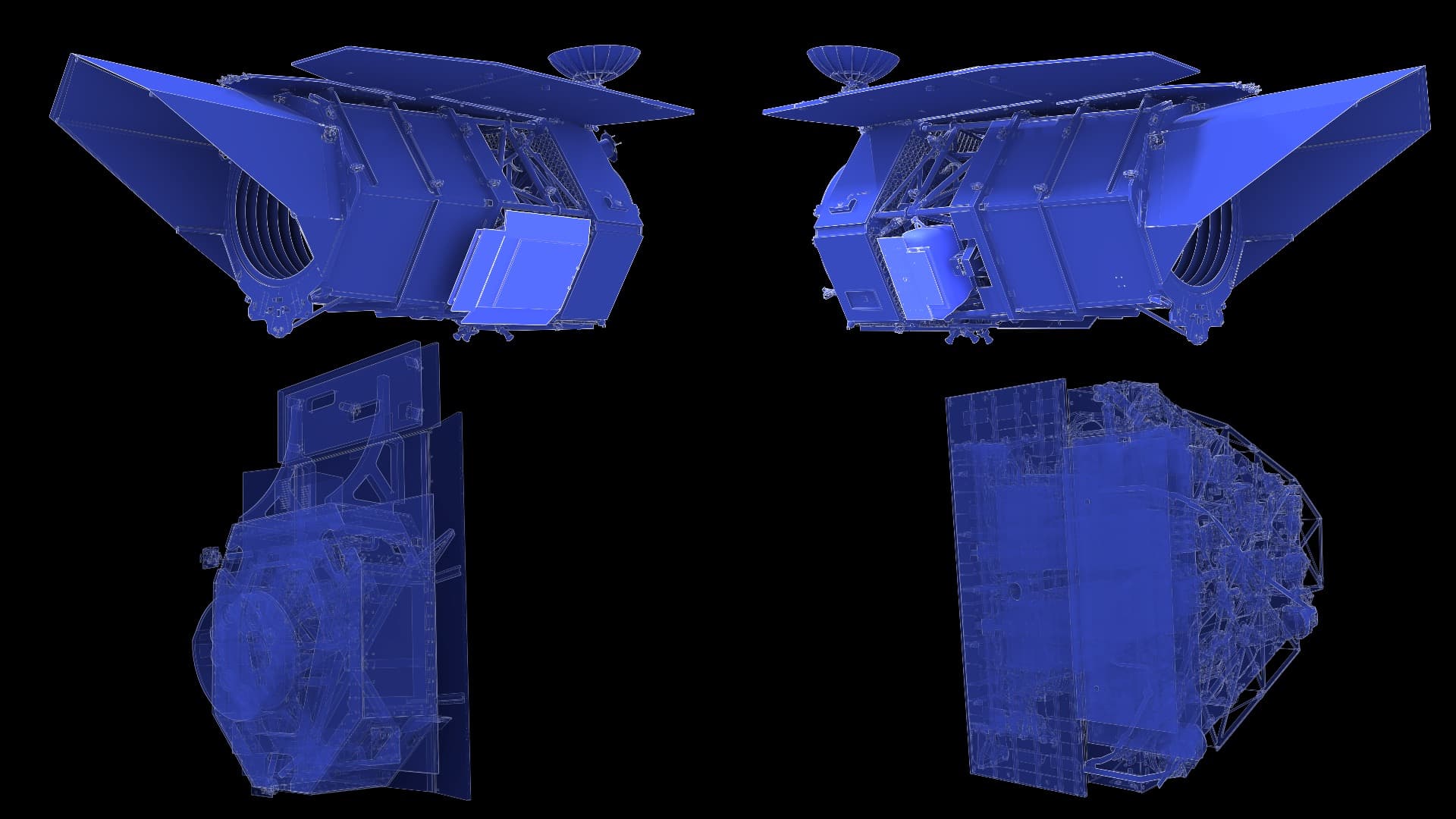
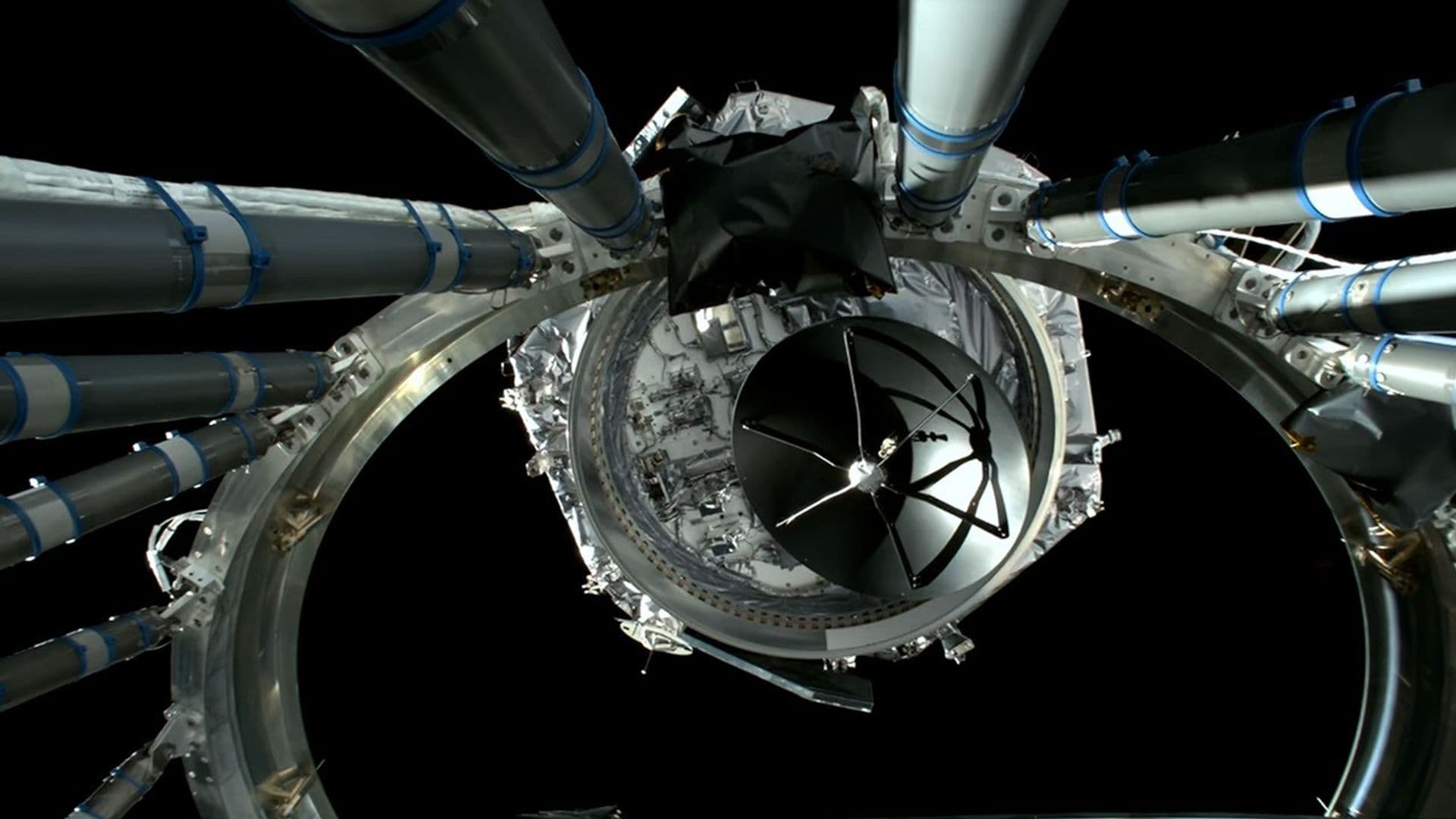
XRISM’s Resolve instrument observed the system for about 16 hours on February 1, 2025, near the end of a strong flare. NASA puts the inferred speed of gas moving toward the pulsar at about 540,000 kilometres per hour. The published abstract describes iron features changing from absorption early in the observation to emission late in it, with mixed phases in between.
The researchers interpret that progression as a change from mainly radial inflow to a more transverse, possibly disk-like flow. NASA describes a fuller scenario in which a turbulent disk breaks up and later reforms, but the study’s spectra do not directly image a disk or establish its exact shape.
The September publication therefore adds a direct measurement of infalling matter to models of wind-fed pulsars. Its proposed sequence of flow changes comes from one observation during one flare; whether the same pattern recurs on later passages remains open.
Reporting trail
Primary sources
Pass the signal on
Share this report
LinkedIn will use this branded story card as the article preview. For a native image post, download the card and paste the suggested caption.
 Share on LinkedInOpens LinkedIn with the article preview↗
Suggested caption
A September 18 study identifies iron-line shifts in a 2025 observation of BP Crucis; the changing shape of the inflow remains an interpretation. Read the full report: https://www.spaceexploration.in/news/xrism-stellar-wind-pulsar-observation #SpaceExplorationNews #SpaceNews #SpaceScience