Dwarf planet candidate
Minor Planet Center publishes Rubin dwarf planet candidate’s orbit
The estimated 600–1,500-kilometre size remains unconfirmed. Infrared follow-up is needed to determine whether 2026 ED138 qualifies as a dwarf planet.
Add us as a preferred source on Google Add us as a preferred source on Google
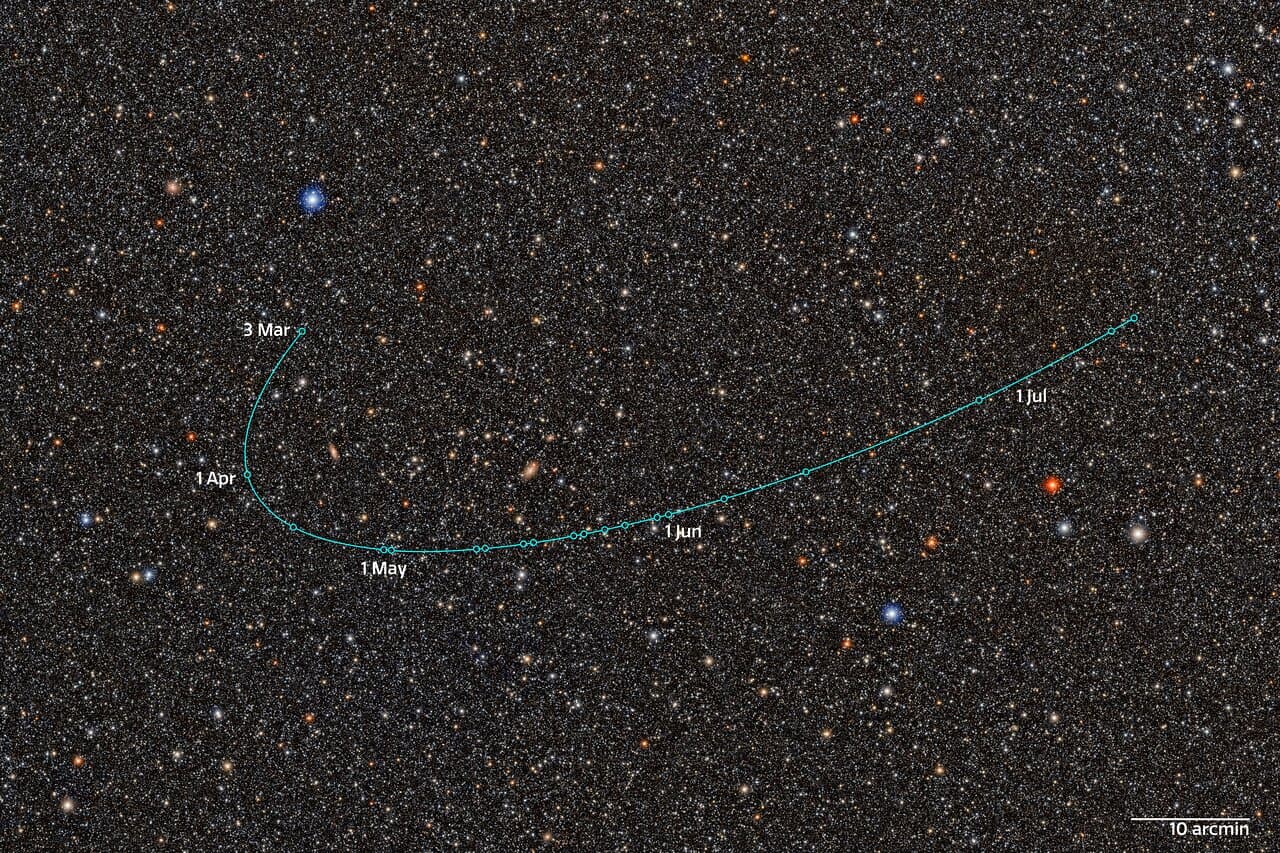
The Minor Planet Center published observations and an orbit for 2026 ED138 on October 27, putting a new dwarf planet candidate from Vera C. Rubin Observatory into the public record. The U.S. National Science Foundation identifies it as an object beyond Pluto that other observatories can now study.
The object was found against the crowded star fields near the plane of the Milky Way. NSF’s account credits Rubin’s repeated observations and search algorithms with distinguishing its motion from the background stars. The agency’s article is an edited version of Rubin’s announcement.
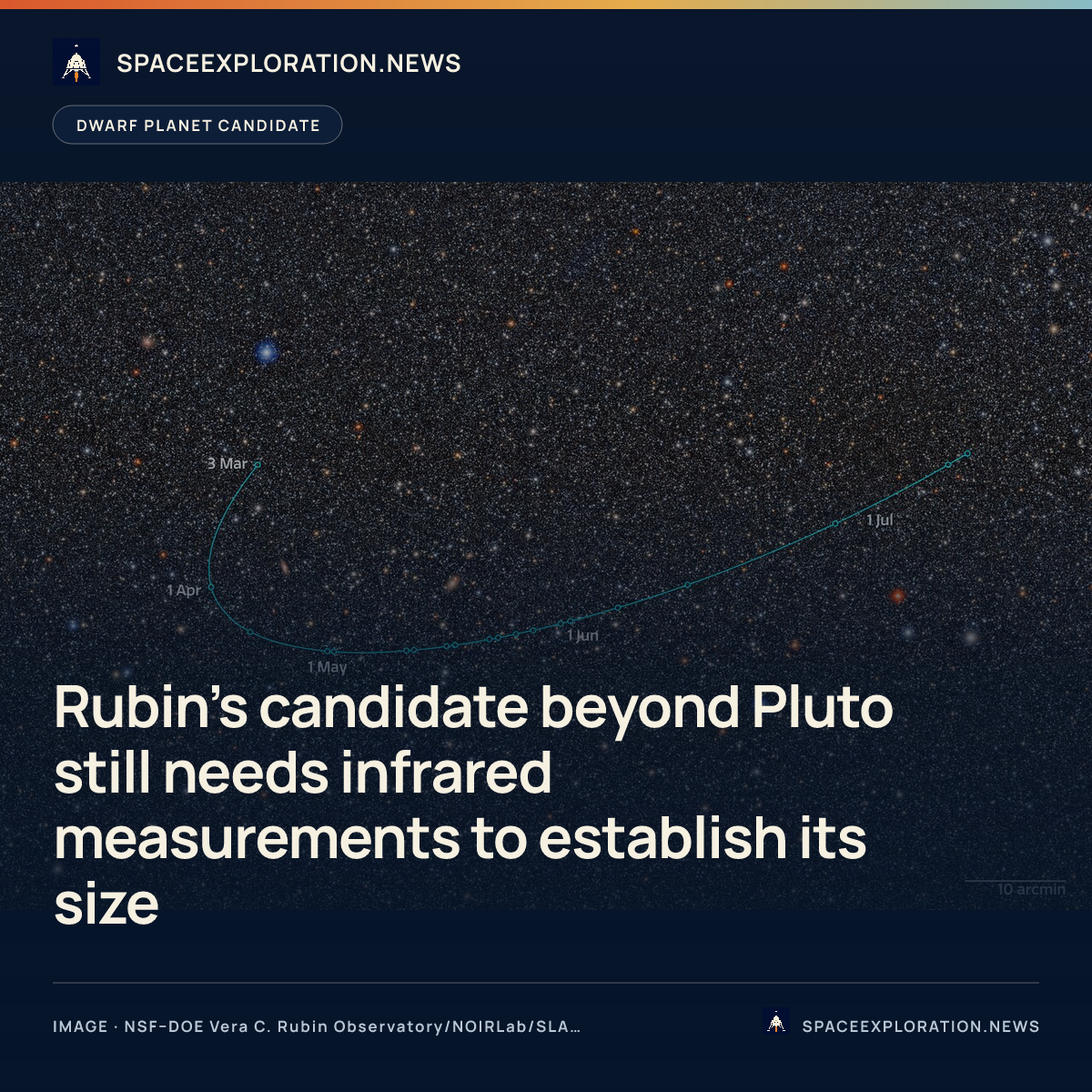
Rubin dates the identification to October 13, when Matthew Holman of the Center for Astrophysics | Harvard & Smithsonian searched earlier observations using code developed with colleague Kevin Napier. The telescope had recorded ED138 30 times on 20 nights between March 4 and July 11, 2026.
Rubin’s team estimates its size at 600–1,500 kilometres from its brightness, distance and assumed surface reflectivity. That is an estimate, not a measured diameter. The observatory says infrared observations are needed to narrow the size and establish whether the object qualifies as a dwarf planet.
The circular includes archival observations dating to February 2016 alongside the 2026 Rubin measurements. Its orbital solution gives a period of about 281 years. Those records extend the observed arc well before the October identification and public announcement.
Rubin says scientists around the world can organise follow-up observations. Images on the Rubin Science Platform are available to Rubin data-rights holders; the public can explore the orbit through Orbitviewer. The candidate’s size and dwarf-planet status await further observations.
Reporting trail
Primary sources
Minor Planet CenterMPEC 2026-U85 : 2026 ED138minorplanetcenter.net
Rubin ObservatoryNSF–DOE Vera C. Rubin Observatory Reveals Its First Dwarf Planet Candidate in Our Solar Systemrubinobservatory.org
U.S. National Science FoundationNew dwarf planet candidate discovered by NSF–DOE Rubin Observatorynsf.gov
Rubin Observatory2026 ED138 orbital arc (with annotations)rubinobservatory.org
Rubin ObservatoryMedia Use Policyrubinobservatory.org
Creative CommonsAttribution 4.0 Internationalcreativecommons.org
For an image post, download the card and copy this suggested caption.
The estimated 600–1,500-kilometre size remains unconfirmed. Infrared follow-up is needed to determine whether 2026 ED138 qualifies as a dwarf planet. Read the full report: https://www.spaceexploration.in/news/rubin-ed138-dwarf-planet-candidate #SpaceExplorationNews #SpaceNews #SpaceScience