India space policy
Starlink’s reported Gen 2 filing adds a constellation step in India
A reported application to IN-SPACe would seek authority to provide Gen 2 capacity in India, but it does not settle the separate spectrum and security steps before customer service can begin.
Add us as a preferred source on Google Add us as a preferred source on Google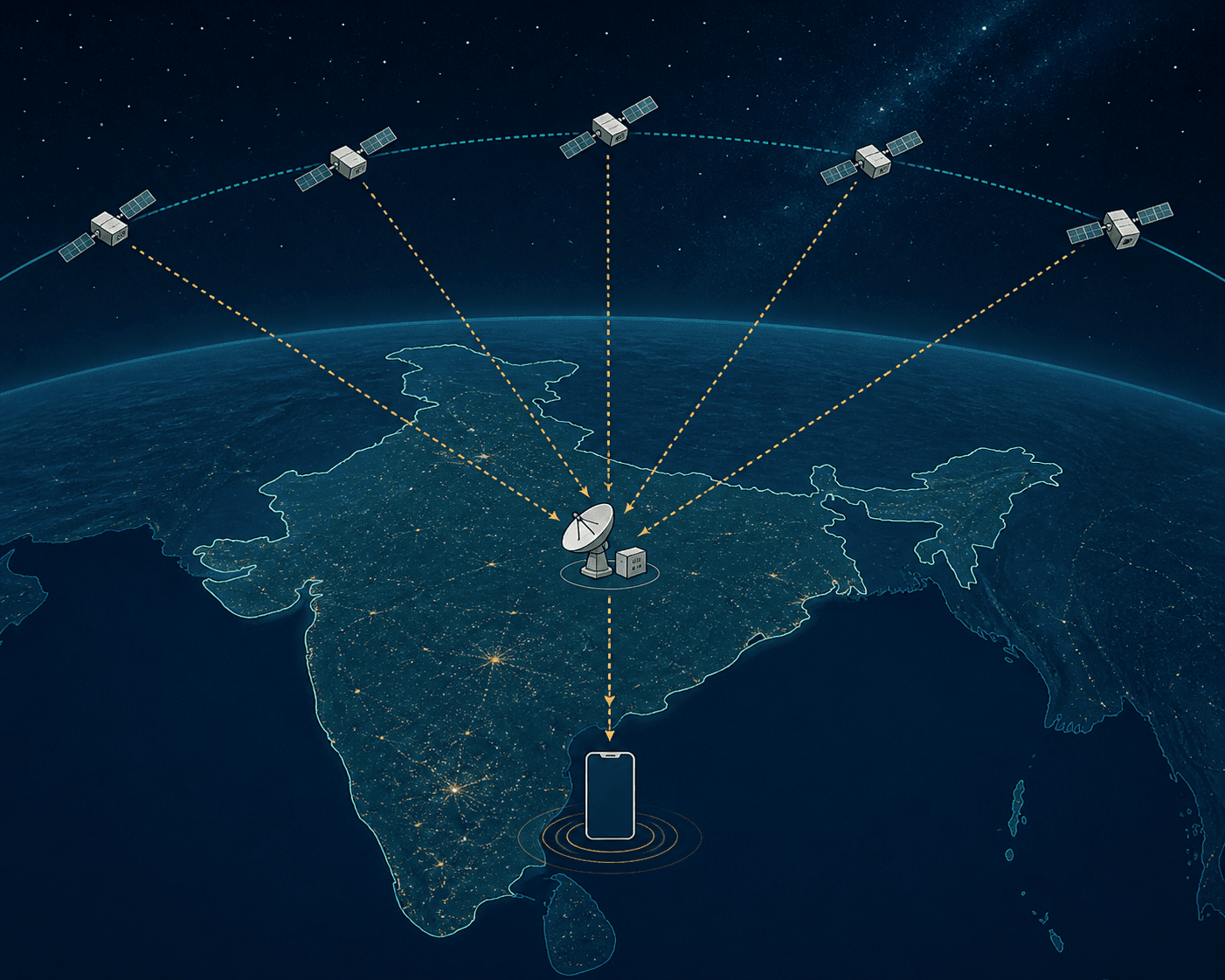
Starlink has reapplied to India’s space regulator, IN-SPACe, for authorisation of its Gen 2 satellite constellation, including direct-to-device capability, according to reporting published on 20 August by The Economic Times. The reported filing is a new space-side decision in the company’s India pathway: it concerns whether a much larger constellation may provide capacity in the country. It is not, by itself, permission to start selling a service to customers. Separate telecom, spectrum and security processes still sit between an application and a commercial launch.
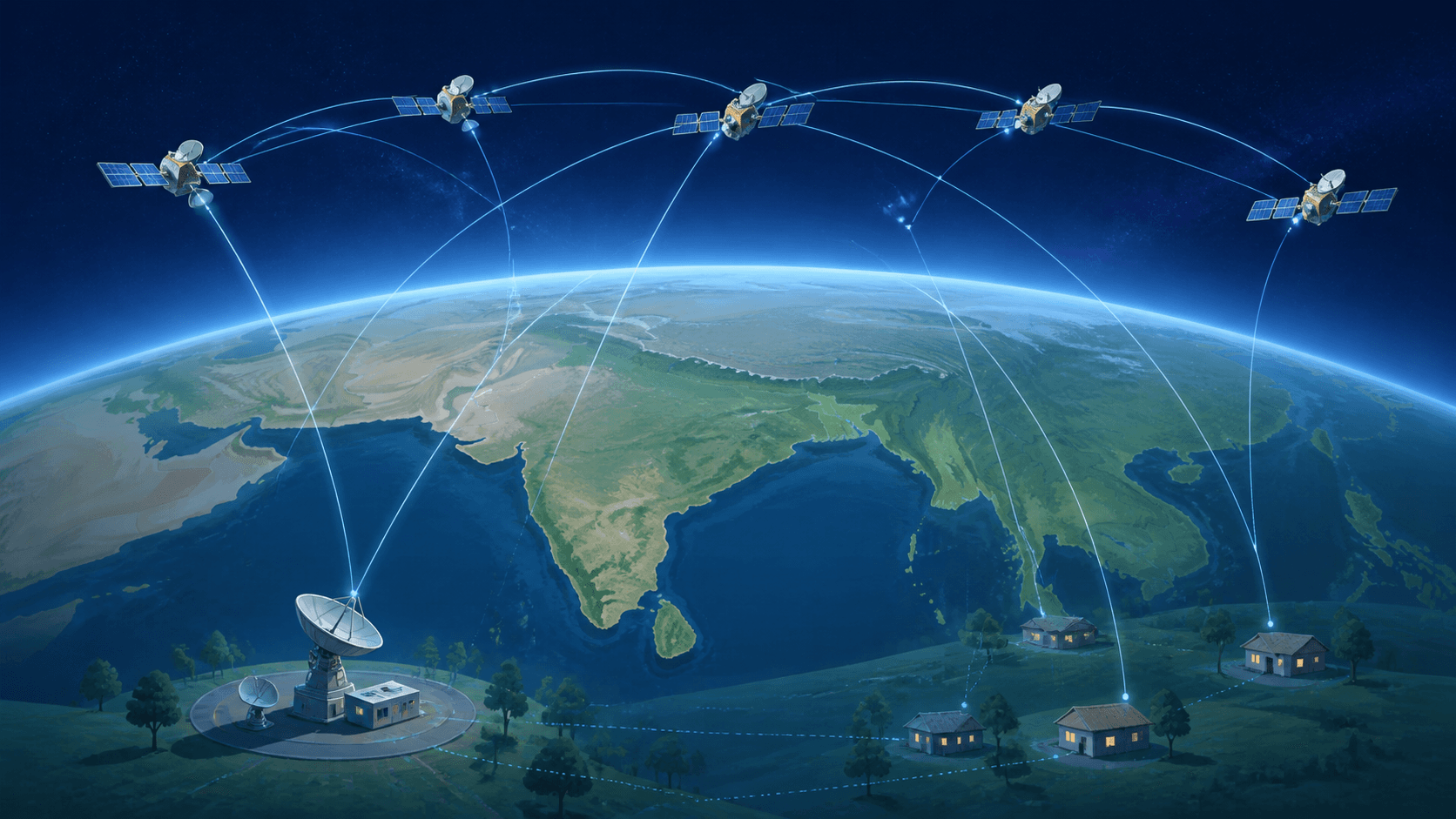
The Economic Times reported that Starlink seeks authorisation for nearly 30,000 low-Earth-orbit satellites at 340–615 kilometres, after an earlier Gen 2 application was rejected for non-conformity in certain features and spectrum bands. The report said IN-SPACe approved only Starlink’s Gen 1 constellation, comprising 4,408 satellites, in July 2025. SpaceX and IN-SPACe did not respond to the newspaper’s queries, so the filing details and its status remain reported rather than publicly confirmed by either party.
What the Gen 2 application would decide
IN-SPACe’s published norms place a non-Indian geostationary or non-geostationary constellation that wants to provision capacity in India in a distinct authorisation category. The norms say an authorised representative or dealer of a non-Indian entity can seek that approval. They also say IN-SPACe assesses matters including registration, security, geopolitical considerations, ownership and national or strategic requirements. That framework makes the reported Gen 2 request more than a routine update to a customer-service licence: it is an application focused on the satellite system whose capacity Starlink would offer in India.
The Department of Telecommunications’ GMPCS service page connects that space-side approval to the telecom side. It says a GMPCS licensee must obtain satellite capacity from the Department of Space or NewSpace India Limited, or from a provider authorised by DoS or IN-SPACe. If the reported Gen 2 application is granted, it would therefore expand the constellation capacity that an Indian licensee could seek to use. It would not automatically authorise every service feature described in the application, nor would it turn a capacity approval into a retail launch announcement.
Why commercial service remains a separate question
The same DoT page states that a licence does not confer a right to assign or use spectrum; a separate, specific frequency assignment from the Wireless Planning and Coordination wing is required. It also states that security compliance is required under the licence conditions. Those two published requirements are independent of the reported constellation filing. A favourable IN-SPACe decision would address one part of the chain—access to capacity from a satellite system—not the radio frequencies and operating conditions needed to provide a service on the ground.
Moneycontrol reported on 20 August that Starlink and Eutelsat OneWeb had yet to meet all security requirements for commercial launches, citing official sources. The report said the final process involved the Ministry of Home Affairs and other security agencies, and identified signal spillover, lawful interception, traffic routing and protection of Indian users’ data among the issues being addressed. It also reported that Starlink’s 100% foreign-direct-investment structure was an additional hurdle. These are reported accounts of an inter-agency process, not published final conditions or a timetable for clearance.
Direct-to-device, often shortened to D2D, is the conspicuous addition in the reported Gen 2 proposal. The Economic Times said India may allow features such as D2D while opening more satellite-communications bands, and that TRAI was consulting on the subject. That does not establish that Starlink may offer mobile connectivity directly to Indian handsets now. A capability listed in a constellation application and a permitted consumer service are different regulatory questions, especially where spectrum, handset compatibility and telecom obligations have not been publicly resolved.
A longer pathway, not a launch signal
The practical change is therefore specific. Before the reported filing, Starlink’s public India discussion could be framed around the Gen 1 constellation, a GMPCS authorisation and a pending commercial-service process. The Gen 2 request adds a bid to authorise a larger system with different capabilities. It can matter for the scale and type of capacity Starlink eventually seeks to offer, but it does not replace the other approvals already in view. That distinction also prevents a reported application from being misread as a decision by IN-SPACe.
The next verifiable milestones are clear even though their dates are not: an IN-SPACe decision on the Gen 2 request, final spectrum assignment, stated completion of the applicable security requirements, and an operator announcement that customer service has started. The Economic Times reported that none of the non-geostationary operators it named, including Starlink, had begun commercial services, mainly because of security clearance and spectrum allocation. Until one of those later steps is confirmed, the Gen 2 filing is evidence of a broader India plan, not evidence that Starlink service or direct-to-device connectivity is available in India.
Reporting trail
Primary sources
The Economic TimesET Exclusive: Elon Musk's Starlink reapplies for India approval of satellite network with direct-to-device techeconomictimes.indiatimes.com
IN-SPACeNorms, Guidelines and Procedures for Implementation of Indian Space Policy 2023inspace.gov.in
Department of TelecommunicationsGMPCS Servicedeveservices.dot.gov.in
MoneycontrolSecurity compliance gaps delay satellite broadband launch by Starlink, OneWeb in Indiamoneycontrol.com
For an image post, download the card and copy this suggested caption.
A reported application to IN-SPACe would seek authority to provide Gen 2 capacity in India, but it does not settle the separate spectrum and security steps before customer service can begin. Read the full report: https://www.spaceexploration.in/news/starlink-gen2-india-application #SpaceExplorationNews #SpaceNews #SpacePolicy