Swift Observatory
Swift approaches likely October cutoff for science observations
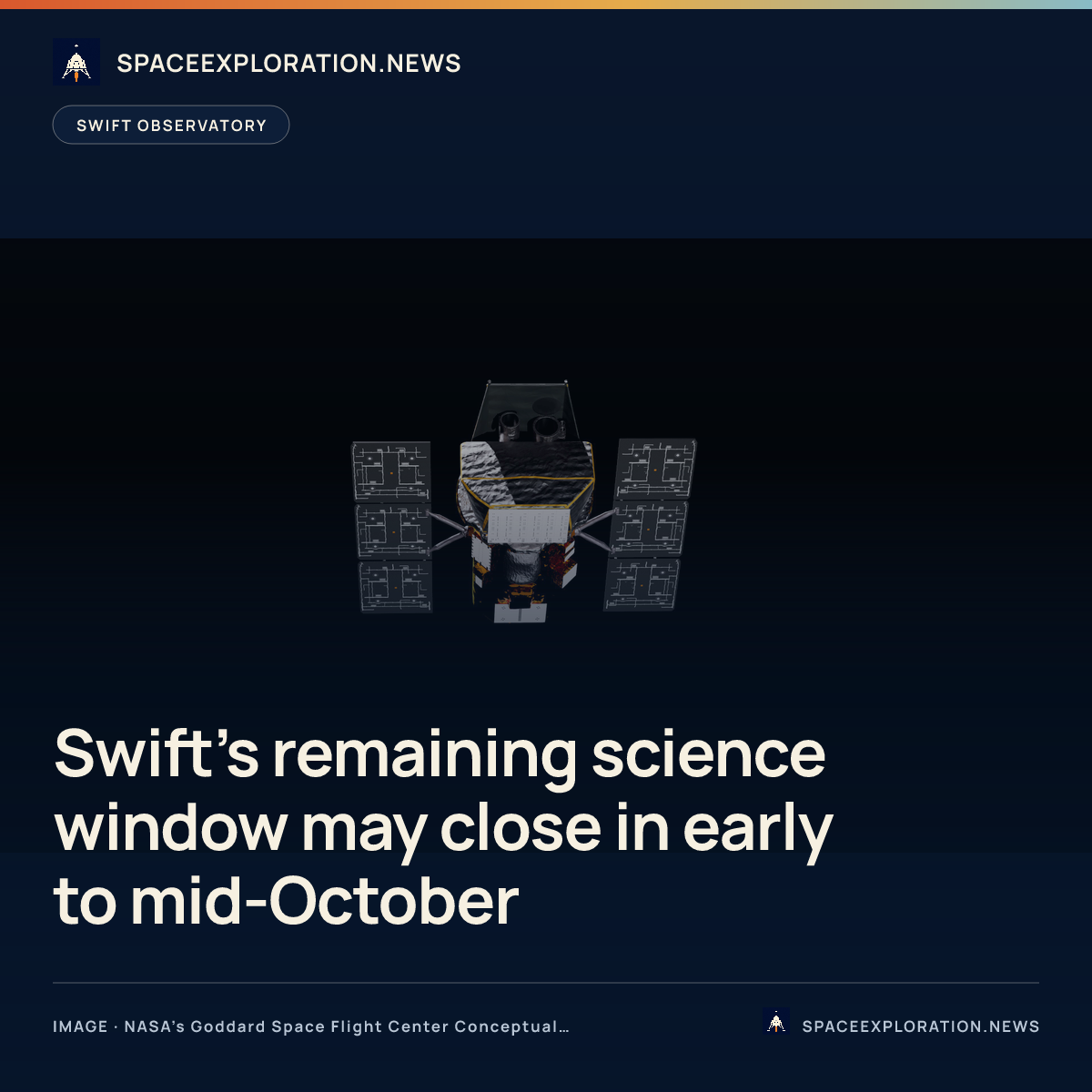
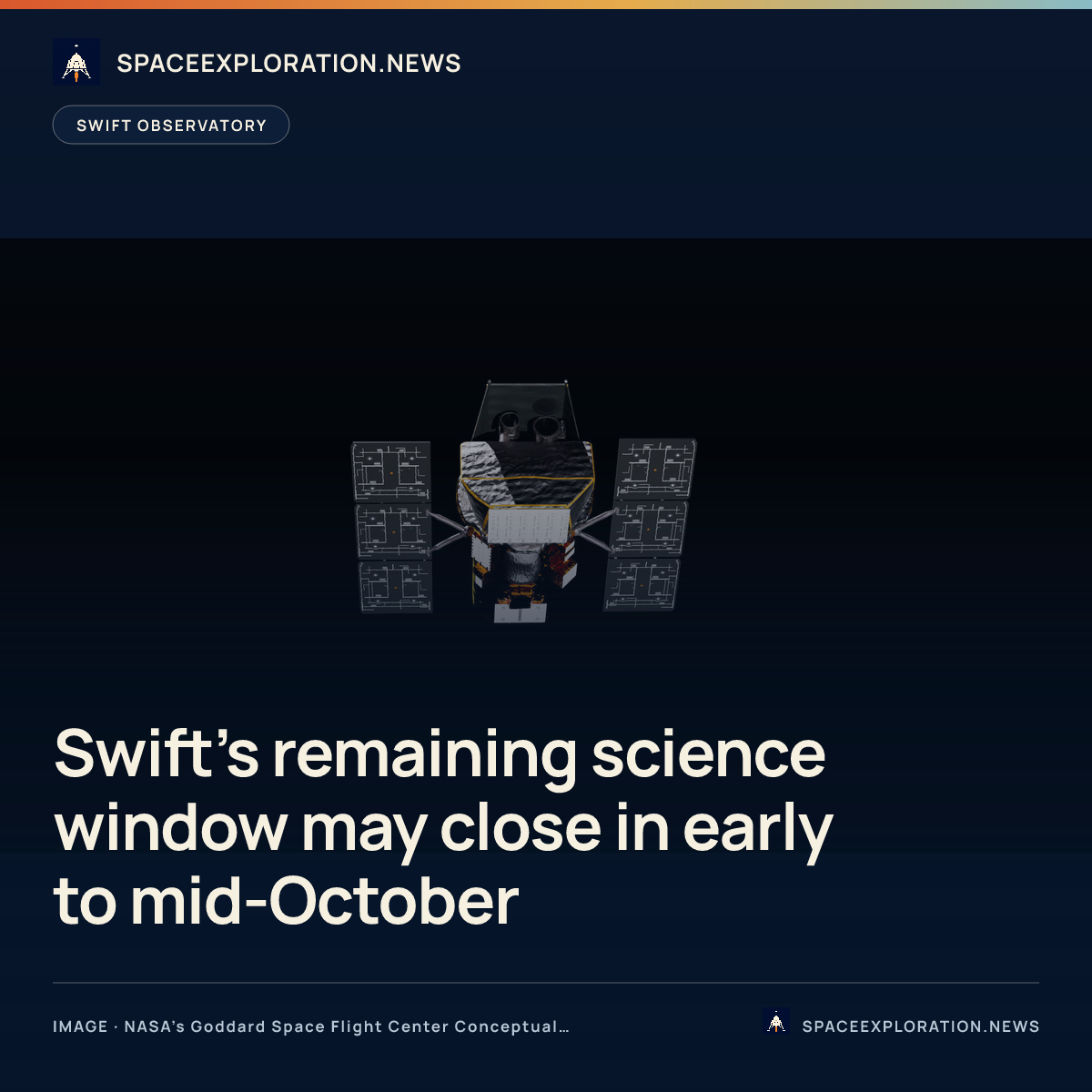
NASA’s September 25 forecast places the likely end of observations in early to mid-October; the estimate is not a re-entry date.
Add us as a preferred source on Google Add us as a preferred source on Google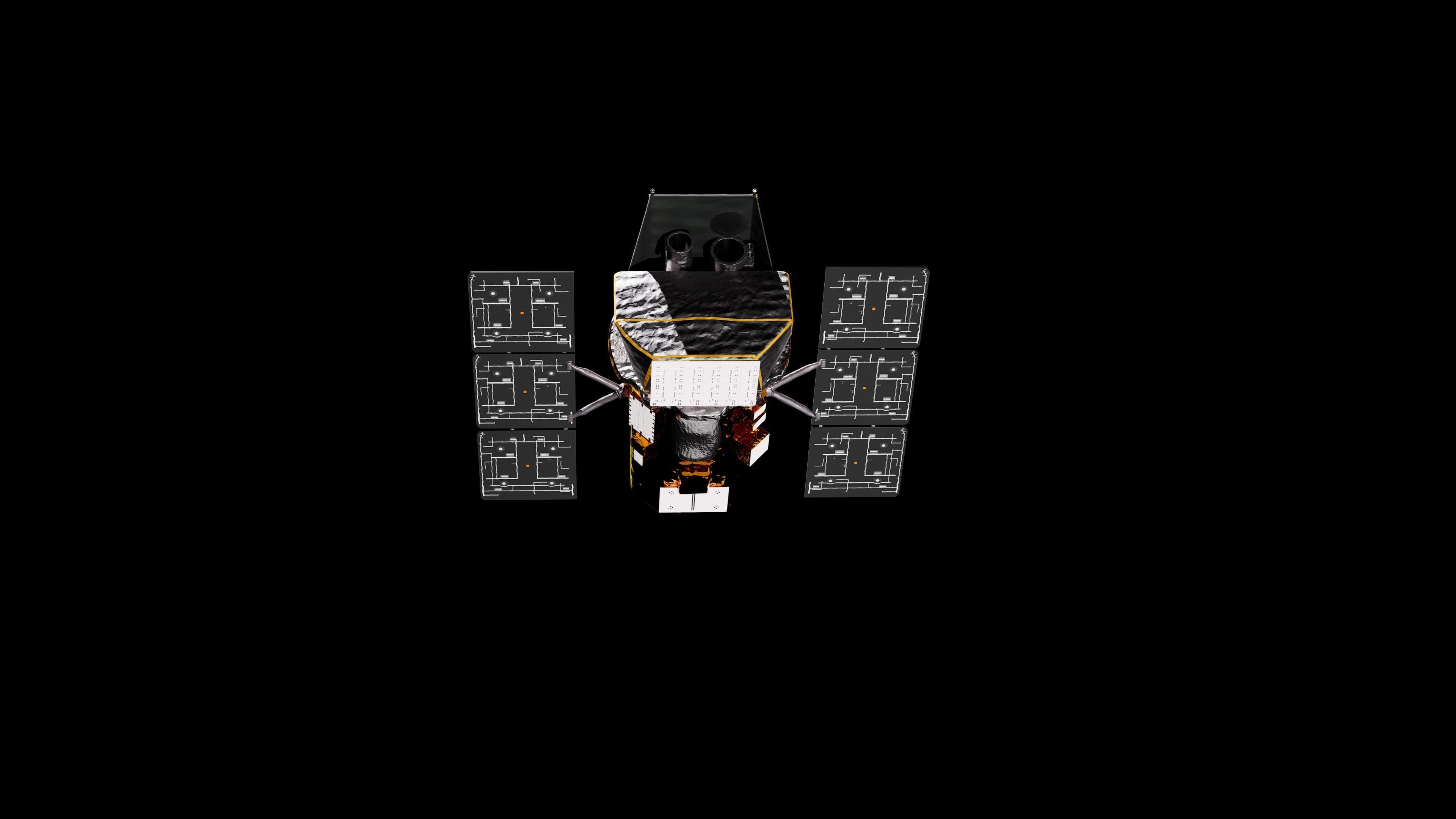
NASA forecasts that science observations by the Neil Gehrels Swift Observatory will likely cease in early to mid-October 2026 as its orbit falls. The agency’s September 25 update places Swift around 325 kilometres above Earth, approaching the roughly 300-kilometre altitude at which spacecraft operations become more difficult.
NASA dates the Burst Alert Telescope’s calibration and gamma-ray detection to September 18, and the restart of automatic repointing to September 21. These instrument milestones preceded the new altitude forecast.
When the gamma-ray telescope detects a flash, Swift can interrupt its observing plan and turn its X-ray and ultraviolet/optical telescopes toward the outburst. NASA attributes the renewed rapid orbital descent to the return to science operations.
Swift’s mission documentation describes burst alerts distributed to researchers around the world within seconds to minutes. Those preliminary positions and other data help ground-based observers decide whether to point their telescopes at the event; fuller data arrive later.
The mission’s quick-look service distributes calibrated images and other science products to the research community. Its processing documentation also describes long-term archiving and data delivery to centres in the United Kingdom and Italy.
NASA’s October estimate concerns the altitude at which science observations become difficult and likely stop. The September 25 update does not give a firm shutdown day or a re-entry date.
Reporting trail
Primary sources
For an image post, download the card and copy this suggested caption.
NASA’s September 25 forecast places the likely end of observations in early to mid-October; the estimate is not a re-entry date. Read the full report: https://www.spaceexploration.in/news/swift-october-science-threshold #SpaceExplorationNews #SpaceNews #SpaceMissions