Industry
VinSpace plans first satellites for 2027 SpaceX Transporter launch
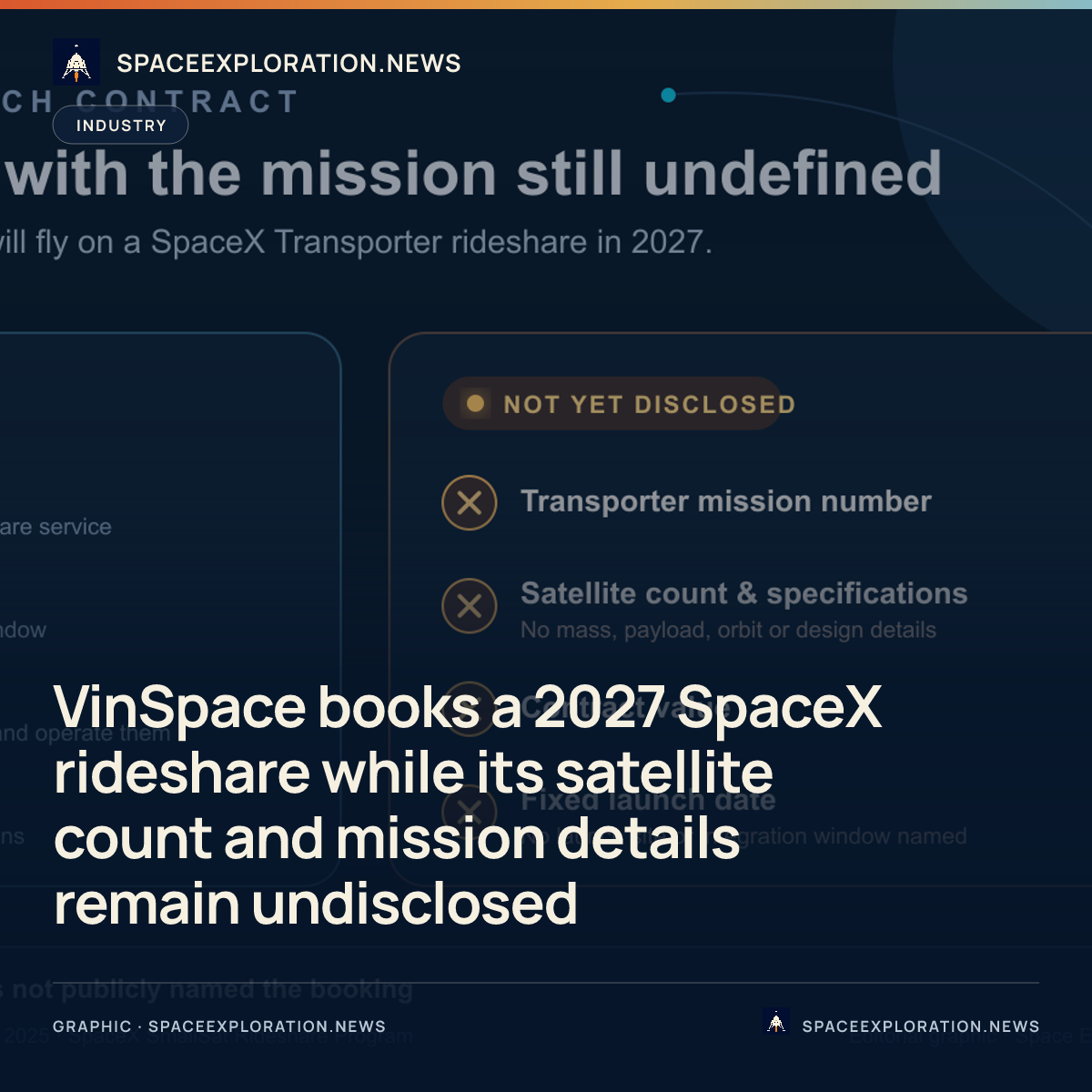
The contract gives the young Vietnamese venture a named route to orbit, but no mission number, spacecraft count or specifications, price, or fixed launch date is public.
Add us as a preferred source on Google Add us as a preferred source on Google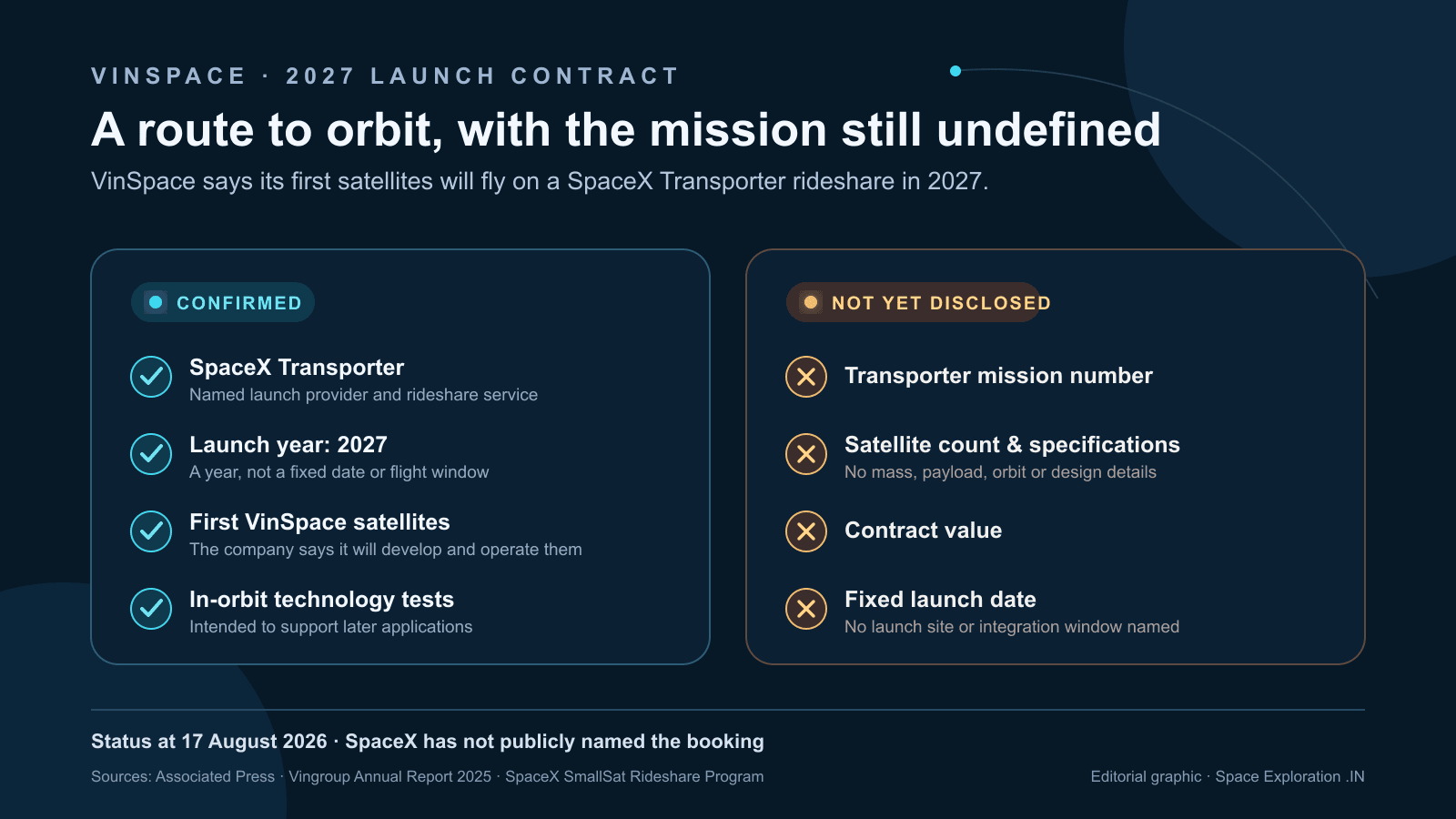
Vietnamese satellite venture VinSpace says it has signed a contract with SpaceX to place its first satellites in orbit on a Transporter rideshare mission in 2027, the Associated Press reported on August 11. The agreement gives the company a named launch provider and service after months of stating only a target year. It does not yet amount to a public mission profile: no Transporter flight number, spacecraft count or specifications, contract value, or fixed launch date was disclosed.
AP said its account was based on a VinSpace statement, and quoted chief executive Thu Vu saying, “Reliable access to space is fundamental to turning satellite innovation into operational missions.” SpaceX’s public rideshare page did not name VinSpace or list the booking when reviewed on August 17, and the contract itself was not available. The central development therefore remains a customer-announced agreement reported by AP rather than a booking independently documented by the launch provider.
From a target year to a named launch service
Vingroup’s 2025 annual report, issued in April 2026, said VinSpace planned to build and launch its first nanosatellites by 2027. The new announcement keeps that year but adds two procurement details: SpaceX as the provider and Transporter as the rideshare programme. That is a concrete access-to-orbit step because it identifies how the spacecraft are meant to fly. It does not show that the satellites are complete, have passed qualification or have been assigned to a particular launch manifest.
VinSpace told AP that it would develop and operate the satellites, use them to test its technology in orbit and support later commercial applications. Vingroup’s annual report describes a wider plan for Vietnamese-made nanosatellite constellations serving telecommunications, remote sensing and other applications. Those are programme-level aims, not specifications for the spacecraft covered by the SpaceX contract; the reviewed disclosures do not identify which application the first flight will test.
The company was established in November 2025, making the announced flight a target set within roughly two years of its formation. Vingroup said VinSpace was developing cleanroom facilities, test equipment and ground-station systems while pursuing research partnerships inside and outside Vietnam. A launch contract addresses one part of that chain. The annual report and AP account do not provide completion dates for the manufacturing, testing or ground infrastructure needed before the first spacecraft can operate.
What a Transporter booking provides
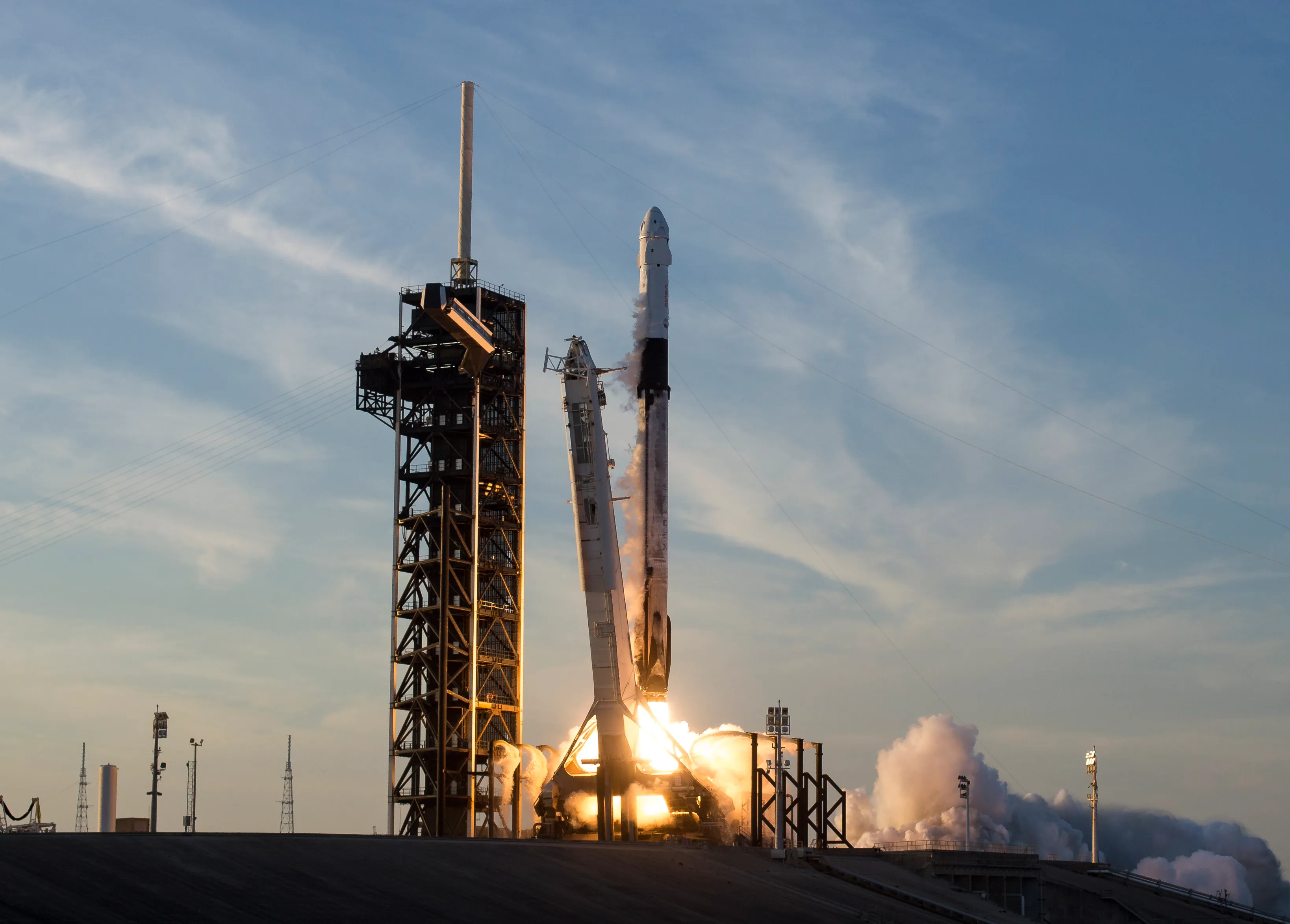
SpaceX markets Transporter as part of its SmallSat Rideshare Program, in which multiple customers share a Falcon 9 rather than buy an entire launch. Its current page advertises dedicated rideshare missions to sun-synchronous orbit about every four months, with other inclinations available. The cadence gives customers recurring opportunities, but it is not a schedule for VinSpace. AP reported only a 2027 Transporter flight and did not specify the orbit, launch site or window purchased.
The same SpaceX page lists a base price of $350,000 for up to 50 kilograms to sun-synchronous orbit and $7,000 for each additional kilogram. It offers quarter-, half- and full-plate interfaces with included masses ranging from 50 to 300 kilograms, plus custom arrangements. Those advertised terms cannot be used to calculate the VinSpace deal: neither VinSpace nor AP disclosed the satellites’ combined mass, selected interface, extra services, orbit or negotiated price.
SpaceX also says rideshare customers normally deliver payloads to the launch site around 30 days before liftoff and may rebook a delayed payload, subject to a fee under its advertised terms. That flexibility is another reason a contract year is not the same as a fixed launch date. The reviewed VinSpace material does not state an integration deadline, delivery date or whether the company’s agreement uses SpaceX’s standard rebooking provisions.
The first mission remains mostly undefined
AP consistently referred to VinSpace’s first “satellites” in the plural but reported that the company withheld their number and specifications. Vingroup’s earlier use of “nanosatellites” and “constellations” establishes the programme’s intended class and longer-term direction, not the configuration of this booking. No reviewed source gives the individual spacecraft mass, dimensions, payloads, communications bands, design life, deployment method or target orbit.
The missing mission number also prevents the announcement from being matched to a specific SpaceX manifest, launch site or calendar window. SpaceX’s general service page offers recurring flights but does not identify VinSpace as a customer. A Transporter designation from SpaceX, a payload manifest, or a VinSpace spacecraft release would provide the evidence needed to connect the contract to a particular launch and evaluate how far satellite development has progressed.
The contract sits within a wider Vietnamese effort to expand space capability. AP reported that Vietnam launched telecommunications satellites in 2008 and 2012, opened a space science and technology centre in Hanoi in March 2026, and aims to become a mid-level space power in Southeast Asia by 2030. VinSpace is a private Vingroup venture within that landscape; its first mission would test company-built technology, but the contract announcement alone does not demonstrate an operational satellite or service.
For VinSpace, the agreement is meaningful because it replaces an unspecified launch ambition with a named commercial route to orbit. Its limits are equally clear. The strongest public claim as of August 17 is that VinSpace says its first satellites are booked for an unspecified SpaceX Transporter mission sometime in 2027. The spacecraft, price and exact flight remain undisclosed, and SpaceX has not publicly attached VinSpace to a mission manifest.
Reporting trail
Primary sources
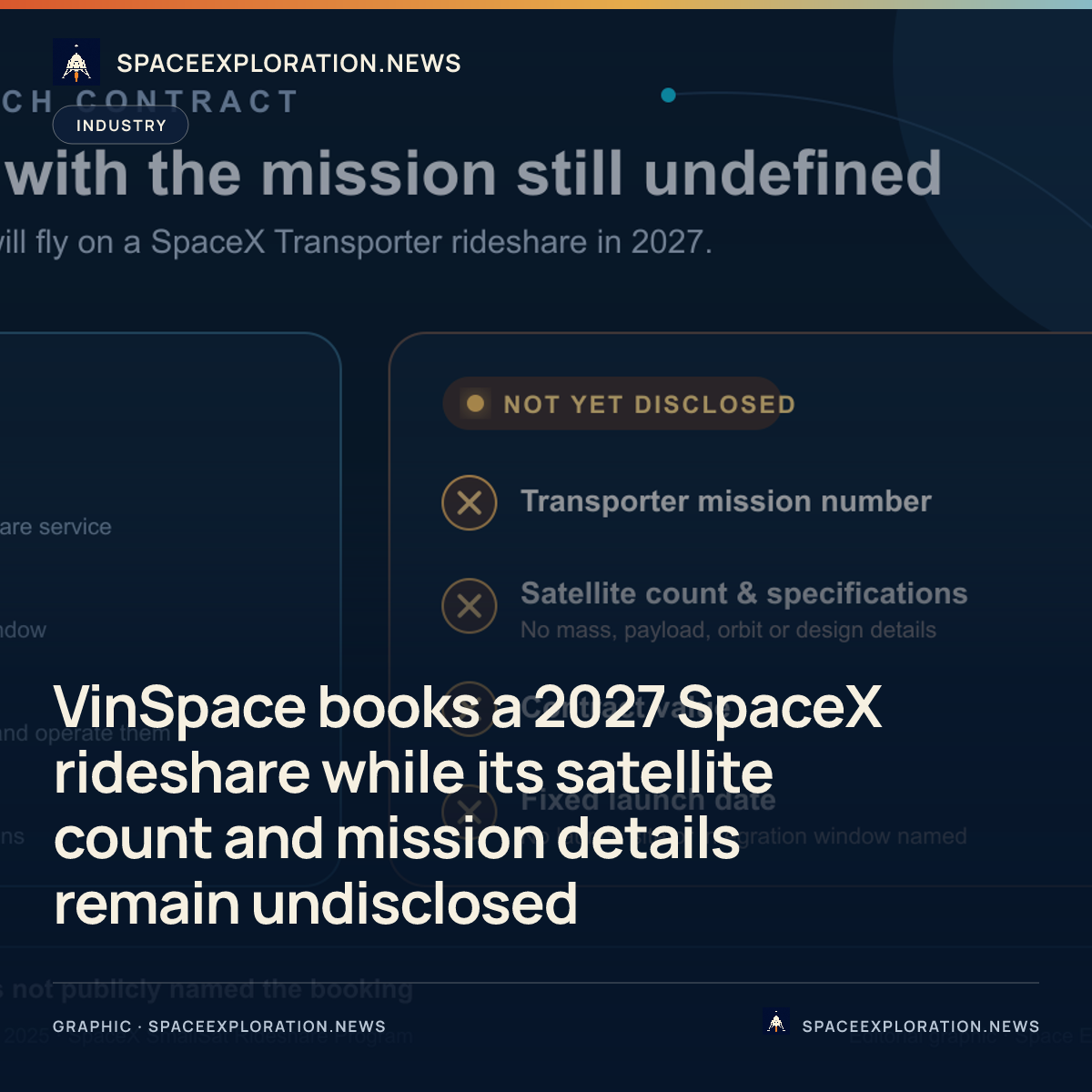
For an image post, download the card and copy this suggested caption.
The contract gives the young Vietnamese venture a named route to orbit, but no mission number, spacecraft count or specifications, price, or fixed launch date is public. Read the full report: https://www.spaceexploration.in/news/vinspace-spacex-transporter-2027-contract #SpaceExplorationNews #SpaceNews #SpaceIndustry