Suborbital research
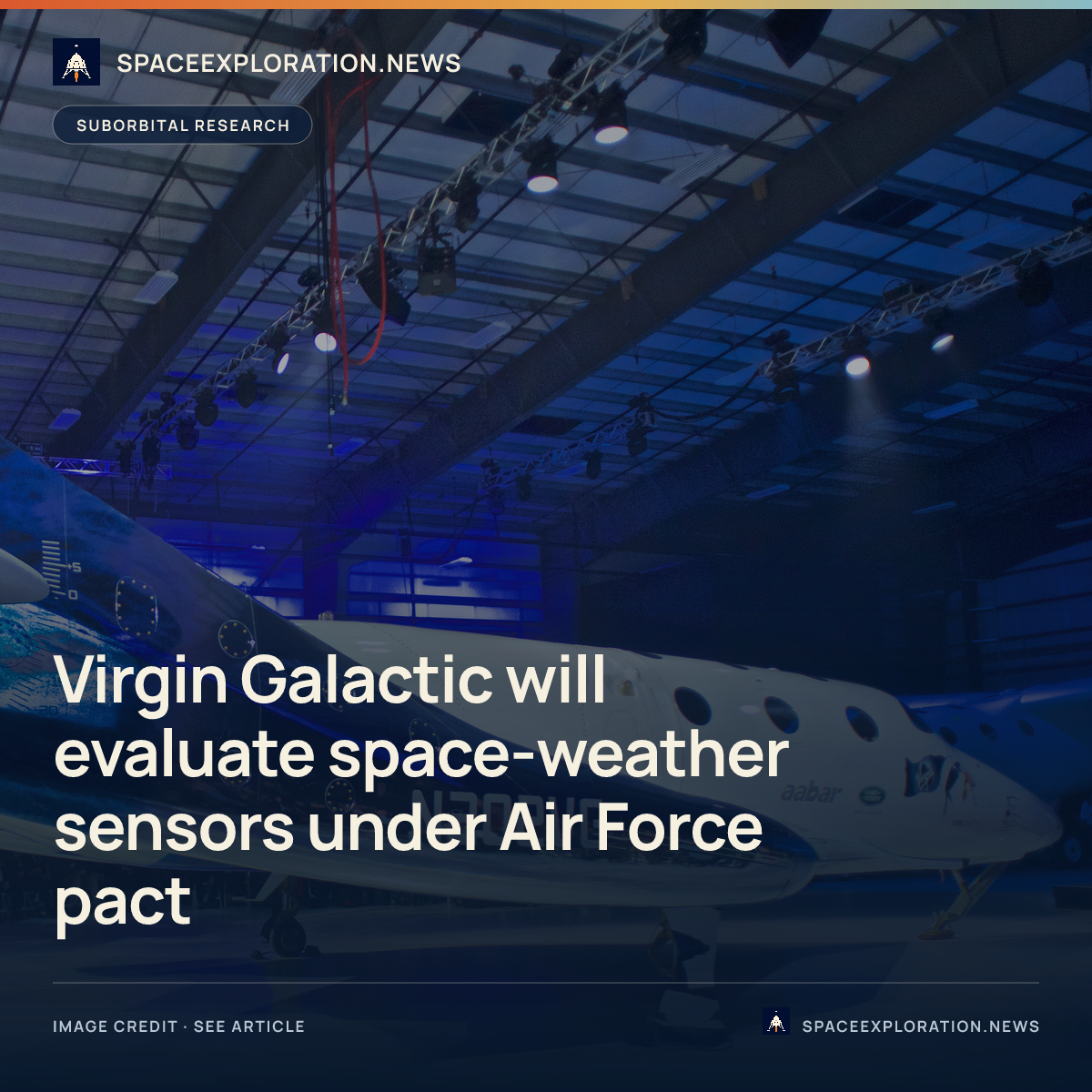
Virgin Galactic enters Air Force space-weather research agreement
The company announced a 24-month sensor evaluation for its next-generation spaceship; no instrument flight or research results were disclosed.
Add us as a preferred source on Google Add us as a preferred source on Google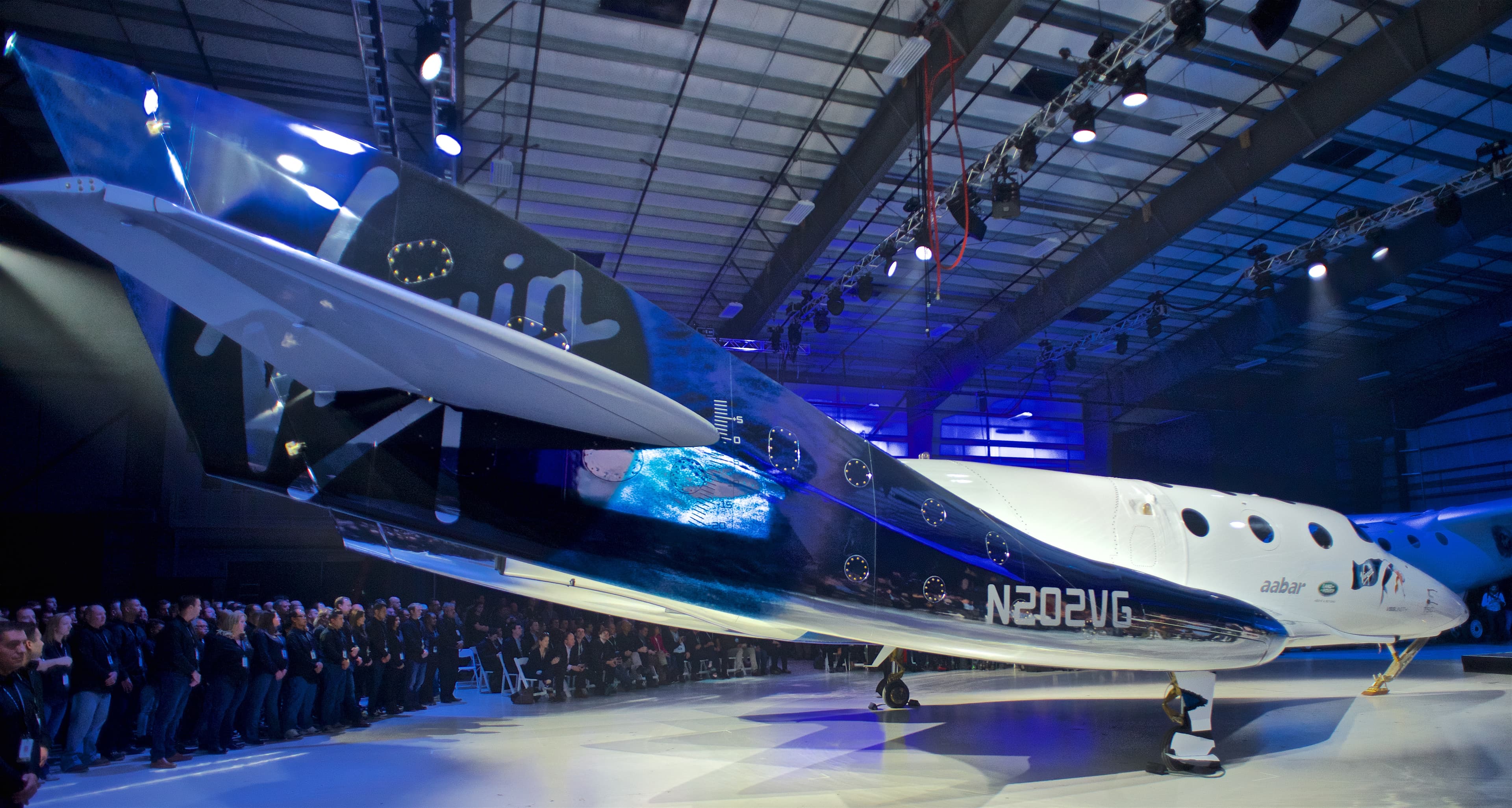
Virgin Galactic announced a 24-month research agreement with the U.S. Air Force Research Laboratory on October 14 to evaluate its next-generation spaceship as a platform for space-weather observations. The company said researchers would assess how to integrate sensors with the vehicle to collect data during flight. The agreement does not announce a completed sensor installation or a research result.
The Cooperative Research and Development Agreement is with the laboratory’s Space Warfare Directorate at Kirtland Air Force Base in New Mexico, according to Virgin Galactic’s announcement. Its stated purpose is to improve understanding of the space environment and its effects on infrastructure in orbit.
The proposed observations concern the mesosphere and lower thermosphere, a region of the upper atmosphere. Shaun Ard, a senior research chemist at the laboratory, said in the company’s release that consistent, high-quality observations there remain limited at scale. Air & Space Forces Magazine reported that the region lies roughly 60 to 110 kilometres above Earth, below the operating altitudes of satellites, and that its space-weather conditions can affect navigation signals and communications.
The public announcement leaves the hardware and flight plan open. It does not name a sensor, specify a first flight under the agreement or present measurements already collected through the collaboration. Its operative step is an evaluation of sensor integration with a future flight platform.
Virgin Galactic has previously carried researchers and experiments on suborbital flights. Its annual report records that VSS Unity made its final commercial flight in June 2024, after which the company paused commercial service to concentrate resources on its next-generation spaceship programme. That earlier flight experience is separate from the proposed Air Force sensor work.
The new vehicle still has a test programme ahead of commercial service. Courtney Albon reported in Air & Space Forces Magazine on October 14 that SpaceShip had been undergoing integrated ground testing and that company officials expected flight testing to begin in New Mexico that month. The report put the company’s first commercial-flight target at February 2027. That remains a schedule expectation; the agreement announcement gives no date for an Air Force research flight.
Reporting trail
Primary sources
Virgin GalacticVirgin Galactic and the Air Force Research Laboratory Enter Agreement to Advance Space Weather Scienceinvestors.virgingalactic.com
Air & Space Forces MagazineAFRL Partners with Virgin Galactic to Gather Data on Space Weather Dataairandspaceforces.com
Virgin Galactic via SECAnnual Report for the year ended December 31, 2025sec.gov
 Wikimedia CommonsVSS Unity rollout photograph by Ron Rosanocommons.wikimedia.org

For an image post, download the card and copy this suggested caption.
The company announced a 24-month sensor evaluation for its next-generation spaceship; no instrument flight or research results were disclosed. Read the full report: https://www.spaceexploration.in/news/virgin-galactic-afrl-space-weather-agreement #SpaceExplorationNews #SpaceNews #SpaceIndustry