Agencies & public sector
JAXA
Japan's national space agency, formed in 2003 from three merged bodies; it flies the H3 rocket from Tanegashima and runs the HTV-X, MICHIBIKI and MMX programmes.
- Space industry
- International space
- Space organisations
- Aerospace
- Space agencies
- Space policy
The Japan Aerospace Exploration Agency was formed on 1 October 2003 by merging three bodies: the National Space Development Agency of Japan, the Institute of Space and Astronautical Science and the National Aerospace Laboratory of Japan. It became a National Research and Development Agency in April 2015, answers to the Ministry of Education, Culture, Sports, Science and Technology, and is headquartered in Chōfu, Tokyo. Its stated philosophy is 'Explore to Realize', described as using space and the sky for a safe and affluent society. Hiroshi Yamakawa is president, and the agency's recorded annual budget was ¥215.5 billion in Japanese fiscal 2023. Launches fly from the Tanegashima Space Center in Kagoshima Prefecture, with the Institute of Space and Astronautical Science at Sagamihara and further centres at Tsukuba and Uchinoura.
The H3 is the agency's flagship rocket, built with Mitsubishi Heavy Industries around LE-9 first-stage engines and SRB-3 solid boosters, in configurations taking two or three engines and zero, two or four boosters. Its record is mixed. The debut flight on 7 March 2023 failed when the second-stage engine did not ignite, losing the ALOS-3 observation satellite, and the eighth flight failed on 22 December 2025 when the second stage's second ignition shut down prematurely and MICHIBIKI No. 5 could not be put into its planned orbit. JAXA set up a special task force under President Yamakawa, and by 20 January 2026 had traced the failure to a payload fairing separation anomaly: the satellite's mounting section was damaged, the satellite came loose, and debris cut the second stage's fuel tubing. Through August 2026 the vehicle has flown nine times, with seven successes and two failures.
Flying resumed in 2026. The lightest H3-30 configuration made its first flight from Tanegashima at 09:53:59 JST on 12 June 2026, reached its predetermined orbit, and separated the PETREL and STARS-X satellites about 16 minutes and 4 seconds after liftoff. On 11 August 2026 flight No. 9 lifted off at 4:23:31 a.m. JST and put MICHIBIKI No. 7, the seventh Quasi-Zenith Satellite System spacecraft, into its predetermined orbit about 29 minutes and 4 seconds later. Before both, flight No. 7 had carried HTV-X1, the new unmanned cargo transfer spacecraft, which JAXA astronaut Kimiya Yui captured with the Canadarm2 robotic arm and which berthed to the International Space Station at 20:10 JST on 30 October 2025. Yamakawa said Japan had 'entered a new chapter in next generation space transportation and exploration'.
Two other programmes shape the near term. The Epsilon solid-fuel launcher, which first flew on 14 September 2013 carrying the HISAKI satellite and lifts 1,200 kg to low Earth orbit in its standard configuration, is being upgraded to Epsilon S, and JAXA set up an investigation team in November 2024 after a combustion anomaly during a static firing test of the Epsilon S second-stage motor. That engine exploded 49 seconds into a planned two-minute test at the Tanegashima Space Center on 26 November 2024, just over a year after an earlier Epsilon S engine explosion caused by damage to the engine's ignition system; Epsilon project manager Takayuki Imoto said the team was 'very sorry to have failed to live up to expectations'. The Martian Moons eXploration spacecraft, a roughly 4,000 kg probe carrying instruments from NASA, CNES, DLR and ESA, arrived at Tanegashima on 31 March 2026 for a launch no earlier than November 2026 on an H3-24L, with Phobos samples due back on Earth in 2031.
What they build and operate
- H3 Launch Vehicle · Launch vehicle · Operational
Flagship rocket developed with Mitsubishi Heavy Industries around LE-9 engines and SRB-3 boosters; nine flights through August 2026, with seven successes and two failures.[5][2] - Epsilon Launch Vehicle · Launch vehicle · In development
Solid-fuel small launcher carrying 1,200 kg to low Earth orbit in standard configuration; the Epsilon S upgrade has been held up since a November 2024 second-stage motor anomaly.[6][7] - HTV-X · Spacecraft · Operational
New unmanned cargo transfer spacecraft; HTV-X1 flew on H3 flight No. 7 and berthed to the International Space Station on 30 October 2025.[8][2] - Quasi-Zenith Satellite System (MICHIBIKI) · Constellation · Operational
Regional navigation satellites; JAXA reported that MICHIBIKI No. 7 reached its predetermined orbit on 11 August 2026 and that MICHIBIKI No. 5 was lost in the December 2025 H3 failure.[12][9] - Martian Moons eXploration · Spacecraft · In development
Roughly 4,000 kg Phobos sample-return probe carrying NASA, CNES, DLR and ESA instruments, due to launch on an H3-24L no earlier than November 2026 and to return samples in 2031.[3]
Milestones
- 01 October 2003
Formed by merging the National Space Development Agency of Japan, the Institute of Space and Astronautical Science and the National Aerospace Laboratory of Japan.[1] - 14 September 2013
Epsilon-1 made the solid-fuel launcher's first flight, carrying the HISAKI satellite.[6] - April 2015
Became a National Research and Development Agency under Japanese law.[4] - 07 March 2023
H3 debut flight failed when the second-stage engine did not ignite, and the ALOS-3 observation satellite was lost.[2] - 26 November 2024
An Epsilon S second-stage engine exploded 49 seconds into a planned two-minute test at the Tanegashima Space Center, the second such failure in just over a year.[7][6] - 30 October 2025
HTV-X1 berthed to the International Space Station at 20:10 JST after capture by the Canadarm2 robotic arm.[8] - 22 December 2025
H3 flight No. 8 failed when the second stage's second ignition shut down prematurely, and MICHIBIKI No. 5 could not be put into its planned orbit.[9] - 20 January 2026
Traced the flight No. 8 failure to a payload fairing separation anomaly that damaged the satellite mounting section and cut second-stage fuel tubing.[10] - 31 March 2026
The Martian Moons eXploration spacecraft arrived at the Tanegashima Space Center ahead of its launch window.[3] - 12 June 2026
The lightest H3-30 configuration flew for the first time and separated the PETREL and STARS-X satellites into the predetermined orbit.[11] - 11 August 2026
H3 flight No. 9 put MICHIBIKI No. 7 into its predetermined orbit about 29 minutes and 4 seconds after liftoff.[12]
Facilities
- Tanegashima Space Center · Kagoshima Prefecture, Japan
Main launch site for the H3, and the site of the Epsilon S second-stage motor test explosion in November 2024.[5][7] - Uchinoura Space Center · Kagoshima Prefecture, Japan
Launch site for the solid-fuel Epsilon family.[1] - Sagamihara Campus · Sagamihara, Japan
Home of the Institute of Space and Astronautical Science.[1] - Tsukuba Space Center · Tsukuba, Japan
One of the agency's principal centres.[1]
Leadership
- Hiroshi Yamakawa
President, and head of the task force set up after the December 2025 H3 launch failure (as of 26 January 2026)[10][9][1] - Takayuki Imoto
Epsilon project manager (as of 26 November 2024)[7]
Sources
WikipediaJAXAen.wikipedia.org
WikipediaH3 (rocket)en.wikipedia.org
WikipediaMartian Moons eXplorationen.wikipedia.org
JAXAIntroduction of JAXAglobal.jaxa.jp
JAXAH3 Launch Vehicleglobal.jaxa.jp
JAXAEpsilon Launch Vehicleglobal.jaxa.jp
Phys.orgThe engine of Japan's flagship new small rocket explodes during a test for a second timephys.org
JAXASuccessful berthing of the HTV-X1 to the International Space Station (ISS)global.jaxa.jp
JAXALaunch Failure of the 8th H3 Launch Vehicle and Setting up a Special Task Forceglobal.jaxa.jp
SatNewsJAXA Trace H3 Flight 8 Failure to Payload Fairing Separation Anomalysatnews.com
JAXALaunch Result of H3 Launch Vehicle flight No.6, 30 configuration Test Vehicleglobal.jaxa.jp
JAXALaunch result of MICHIBIKI No. 7, Quasi-Zenith Satellite System (QZS-7) aboard H3 Launch Vehicle flight No.9global.jaxa.jp
Coverage of JAXA
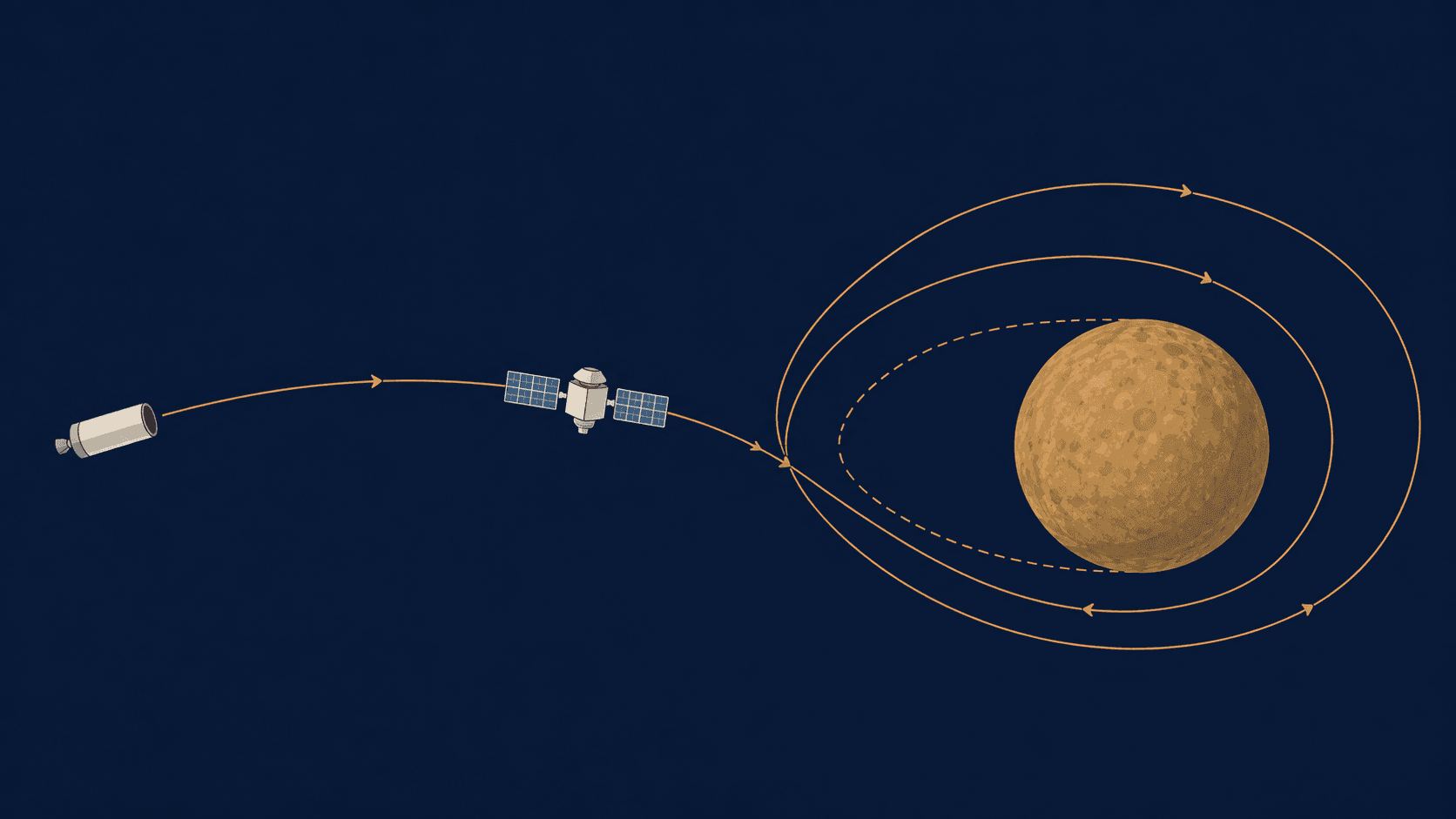
Planetary missions
BepiColombo sheds transfer module on approach to Mercury
The separation has started the mission's arrival phase, but Mercury orbit insertion, the split between its two science orbiters and science operations are still ahead.
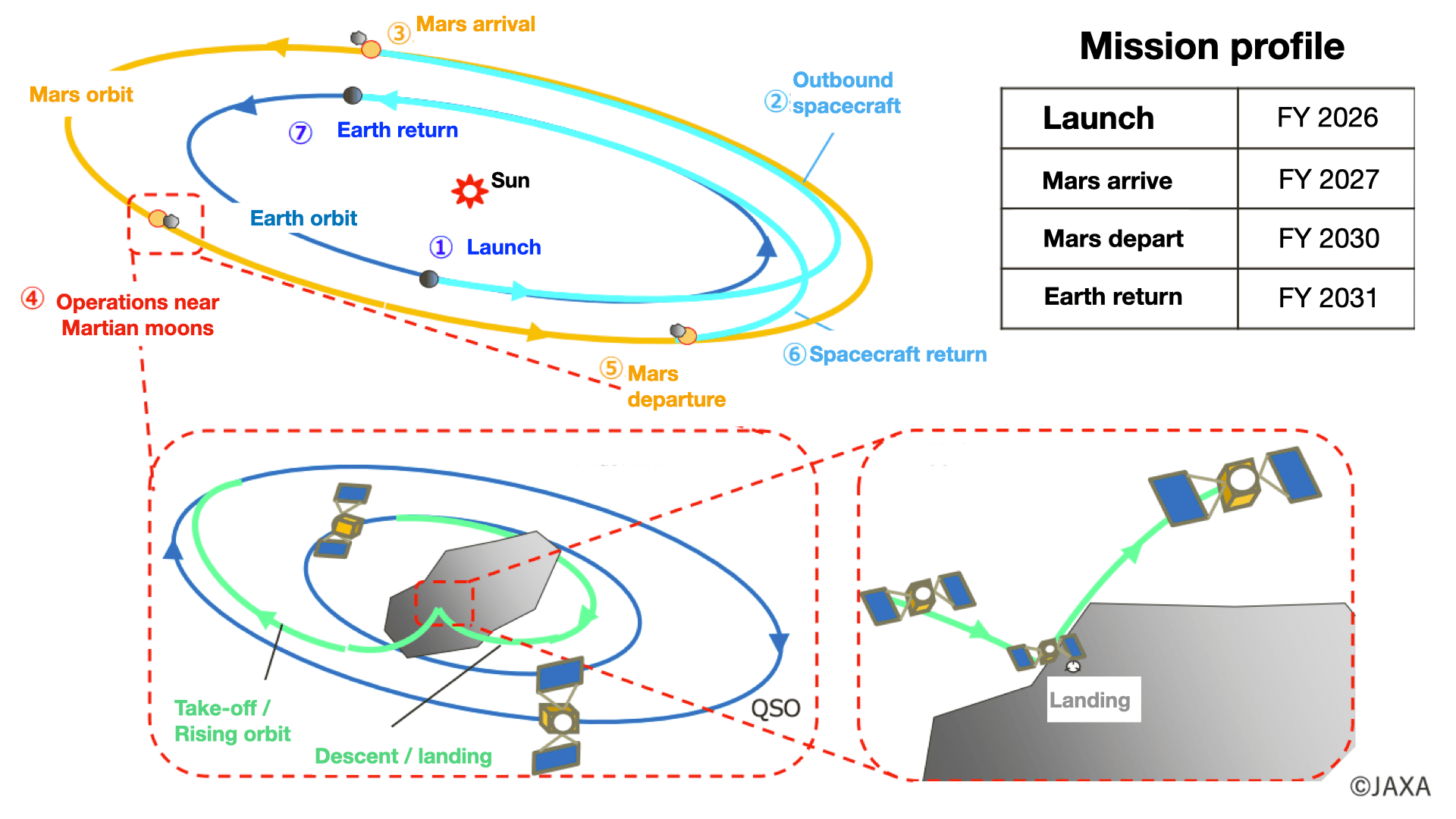
Mars exploration
JAXA sets October 20 launch date for Phobos sample-return mission
MMX is scheduled to leave Tanegashima on H3 Flight 10 at 04:41:03 JST. Launch would begin a five-year mission; arrival, landing, sampling and Earth return all remain ahead.
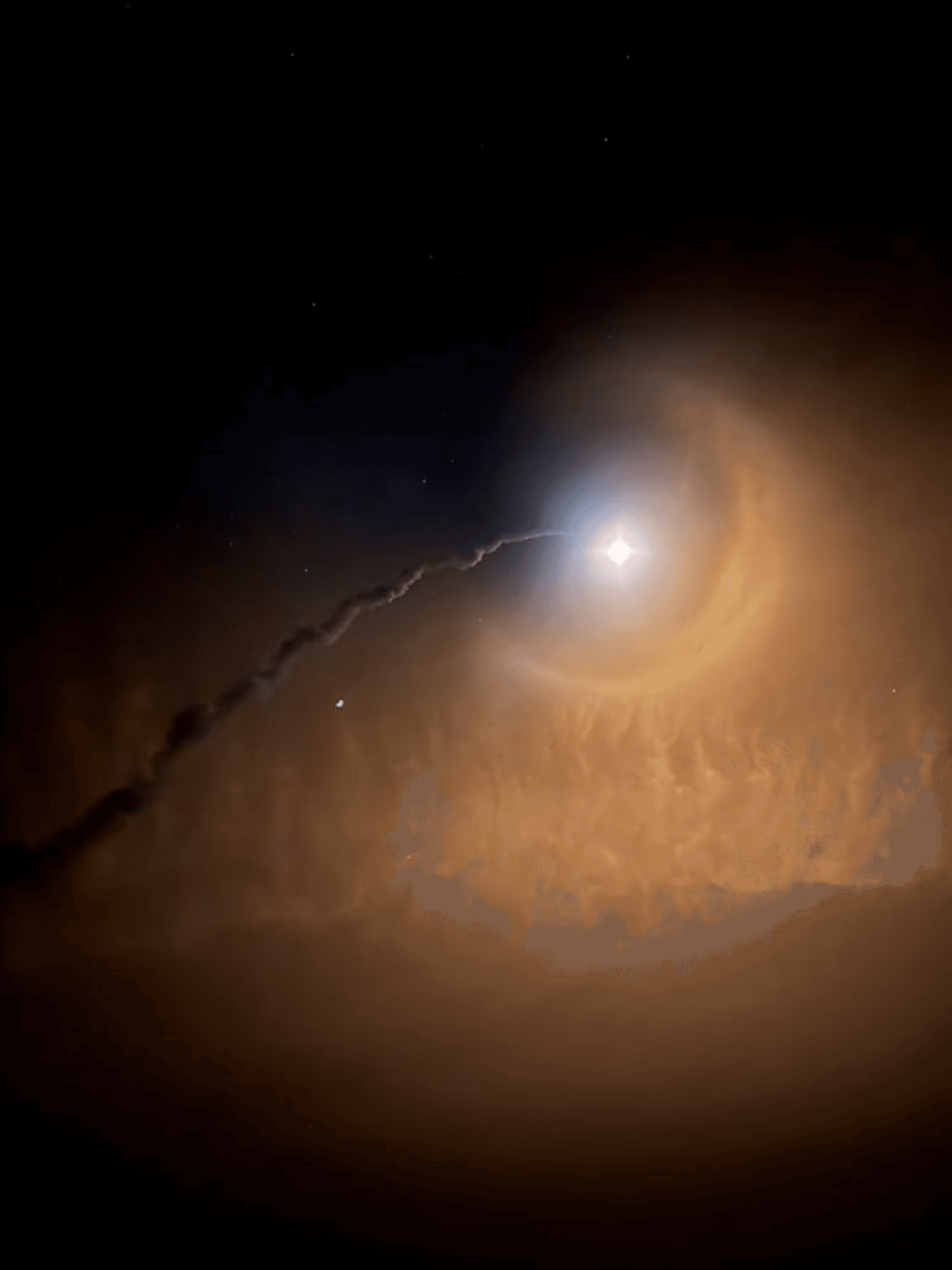
U.S.-Japan space security
U.S.-Japan GEO sensor pair is in orbit, but readiness remains unconfirmed
The second U.S. optical payload launched with Japan’s QZS-7, completing the two-launch plan. The Space Force named an operator and data destination but did not announce first light, checkout completion or operational acceptance.
Update this profile
Work at JAXA or represent it? If something here is wrong or missing, email contact@spaceexploration.news with a public source for the change. Every profile edit is verified before it is published.
Request a profile change