U.S.-Japan space security
U.S.-Japan GEO sensor pair is in orbit, but readiness remains unconfirmed
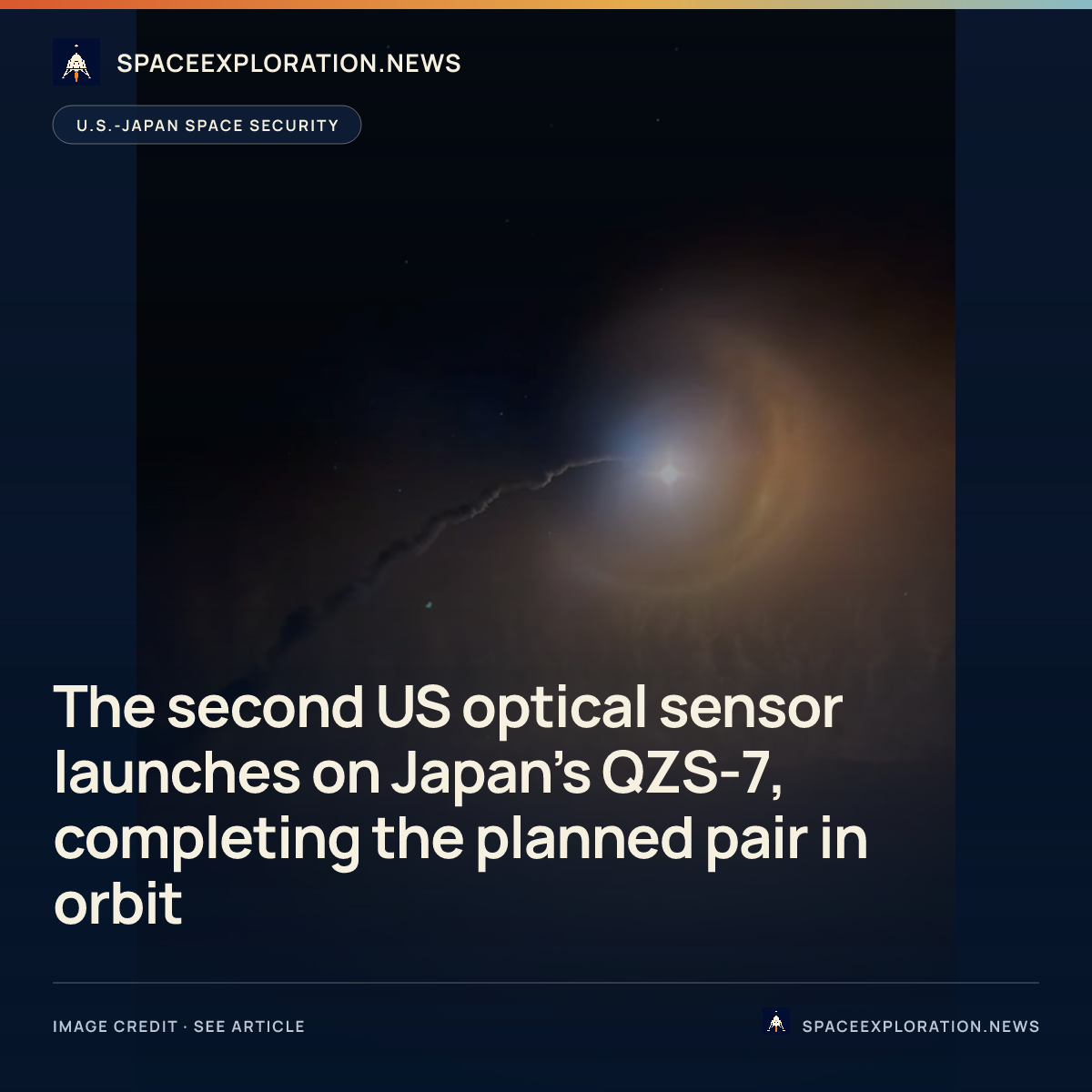
The second U.S. optical payload launched with Japan’s QZS-7, completing the two-launch plan. The Space Force named an operator and data destination but did not announce first light, checkout completion or operational acceptance.
Add us as a preferred source on Google Add us as a preferred source on Google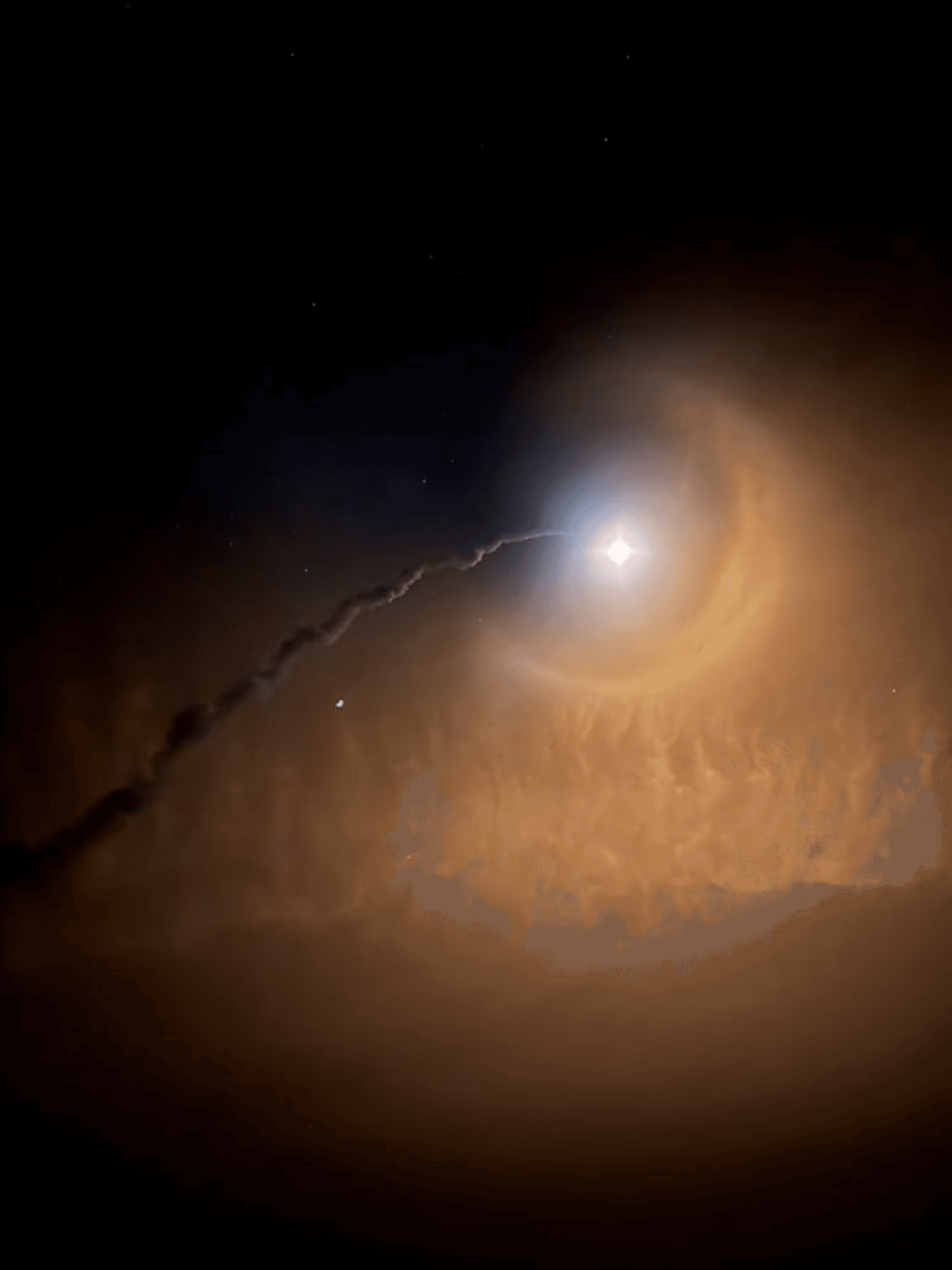
The United States and Japan have put the second of two U.S. space-domain-awareness sensors into orbit, completing the launch plan for their Quasi-Zenith Satellite System-Hosted Payload programme. JAXA says the H3 rocket lifted off from Tanegashima Space Center at 4:23:31 a.m. Japan Standard Time on August 11—7:23:31 p.m. UTC on August 10—and separated QZS-7 about 29 minutes later into the predetermined orbit.
That is a deployment milestone, not a published declaration that the two-sensor system is fully operational. Space Systems Command calls QZS-7 the second and final launch and says Mission Delta 2 will operate the payload and that it will deliver near-real-time data to the Space Surveillance Network. The August 14 release does not say that the QZS-7 sensor has achieved first light, finished on-orbit checkout, passed data verification or received operational acceptance.
SOFX described the arrangement on August 18 as a completed two-satellite surveillance network. The underlying official record supports the narrower conclusion that both planned hosted payloads have launched. It does not yet establish that both have completed the separate verification steps previously described by the sensor developer and Space Force programme authors.
How the hosted arrangement works
The programme joins American sensing hardware to Japanese navigation spacecraft rather than flying two dedicated U.S. satellites. Under a December 2020 agreement, Japan’s National Space Policy Secretariat agreed to host one U.S. payload on QZS-6 and another on QZS-7. MIT Lincoln Laboratory designed and built the sensors; Mitsubishi Electric built the Japanese host satellites, whose main job is to augment GPS positioning, navigation and timing services in the region.
“Hosted” describes a real division of spacecraft functions. Lincoln Laboratory says its Situational Awareness Camera Hosted Instrument, or SĀCHI, does not need its own solar power, battery, guidance, navigation or attitude-control system because it rides on the QZSS spacecraft. The Japanese satellite also supplies the radio-frequency path to the ground. A 2020 design account said the payload was allotted 2 kilobits per second, requiring much of the image processing to occur on board before tracks and observations were transmitted.
On the U.S. side, the current Space Force release assigns operations to Combat Forces Command’s Mission Delta 2 and says QZSS-HP uses the Multi-Mission Space Operations Center/Enterprise Command and Control–Schriever enclave in Colorado. The release says the sensor data are intended for the Space Surveillance Network. Japan continues to operate QZS-7’s navigation mission; the hosted sensor adds a U.S. mission to the same spacecraft rather than replacing the Japanese one.
What the sensors are meant to do
The payloads are electro-optical volume-search sensors aimed at the geosynchronous belt, roughly 35,800 kilometres above Earth. Lincoln Laboratory says their compact optical design passively surveys the sky. A 2025 AMOS conference paper by three Space Systems Command authors says the sensors scan large volumes on an automatic cadence and can tip and cue other sensors for closer observations.
The pair is meant to expand when the Space Force can search that belt. The AMOS authors describe east- and west-mounted payloads working together to extend coverage into late morning and early afternoon, narrowing what they call the “noon gap” affecting other ground- and space-based sensors. They characterize QZSS-HP as the first pair in a prototype approach; a proliferated version would require six pairs, or 12 payloads.
Lincoln Laboratory says most processing occurs on orbit and reduces the volume of data sent to the ground by three orders of magnitude. That design turns raw imagery into smaller observation and track products before downlink. Space Systems Command says the resulting near-real-time data are intended to improve U.S. understanding of activity in geosynchronous orbit above the Indo-Pacific.
What remains before operational readiness
The first payload shows why launch and readiness should not be collapsed into one event. QZS-6 launched on February 2, 2025. Lincoln Laboratory reported first light in May, then said its team was conducting on-orbit testing and would refine sensor parameters over the following months. The AMOS programme paper separately said the prototype’s data would be used operationally only after verification.
QZS-7 is earlier in that sequence. JAXA has confirmed launch, separation and insertion into the planned initial orbit. Japan’s Cabinet Office said the host spacecraft would next move to its prescribed orbit and undergo several months of testing before beginning its navigation service. That Japanese statement addresses QZS-7 as a navigation satellite, not the U.S. sensor, but it confirms that host-spacecraft commissioning was still ahead immediately after launch.
For the hosted payload, Space Systems Command’s August release uses future tense for operations and data delivery. It gives no date for QZS-7 first light, the end of developmental testing, data verification or operational acceptance, and it does not announce the two-sensor pair as operational. Those are the missing public milestones that would turn launch completion into a documented operational-readiness claim.
The completed launches still demonstrate the bilateral architecture the partners set out to build: two U.S. optical payloads integrated with two Japanese spacecraft, launched on Japanese H3 rockets and connected to U.S. ground and surveillance systems. They also provide the hardware basis for the paired search geometry described by the programme authors. What the public evidence supports on August 19 is a two-payload system in orbit with an operator and intended data path—not confirmation that every checkout and acceptance step is complete.
Most technical and status details in this account come from Space Systems Command, MIT Lincoln Laboratory and Japanese government sources, all participants in the programme. JAXA and Space.com independently confirm QZS-7’s launch and separation, while SOFX is the source of the August 18 “completed network” framing. None of the reviewed sources reports a QZS-7 first-light result or a formal declaration that the paired sensor system is fully operational.
Reporting trail
Primary sources
Space Systems CommandU.S. Space Force and Japan successfully launch U.S. sovereign space domain awareness payload aboard QZS-7 satellitessc.spaceforce.mil
JAXALaunch result of MICHIBIKI No. 7, Quasi-Zenith Satellite System (QZS-7) aboard H3 Launch Vehicle flight No.9global.jaxa.jp
Cabinet Office, Government of JapanStatement by Japan’s Minister for Space Policy on the launch of QZS-7 aboard H3 Flight 9qzss.go.jp
Space Systems CommandU.S. Space Force’s Space Systems Command and Japan launch First Bilateral Space Effortssc.spaceforce.mil
MIT Lincoln LaboratoryNewly launched Space Force optical sensing system will improve space domain awareness in collaboration with Japanll.mit.edu
MIT Lincoln LaboratoryLincoln Laboratory is designing a payload to integrate on Japanese satellitesll.mit.edu
AMOS Technical LibraryQuasi-Zenith Satellite System Hosted Payload (QZSS-HP): Pathfinder to Space Domain Awareness (SDA) Partnershipsamostech.space
Space.comJapanese H3 rocket launches 10,800-pound navigation satellite to high Earth orbit (video)space.com
SOFXSpace Force and Japan Complete GEO Watch Network as Orbital Rivalry Intensifiessofx.com
For an image post, download the card and copy this suggested caption.
The second U.S. optical payload launched with Japan’s QZS-7, completing the two-launch plan. The Space Force named an operator and data destination but did not announce first light, checkout completion or operational acceptance. Read the full report: https://www.spaceexploration.in/news/us-japan-qzss-geo-sensor-pair #SpaceExplorationNews #SpaceNews #SpacePolicy