Solar science
Aditya-L1 spectra suggest cooling behind delayed solar glow
A September 24 paper connects the green-line signal to a flare’s late emission, but its cooling interpretation needs tests across more events.
Add us as a preferred source on Google Add us as a preferred source on Google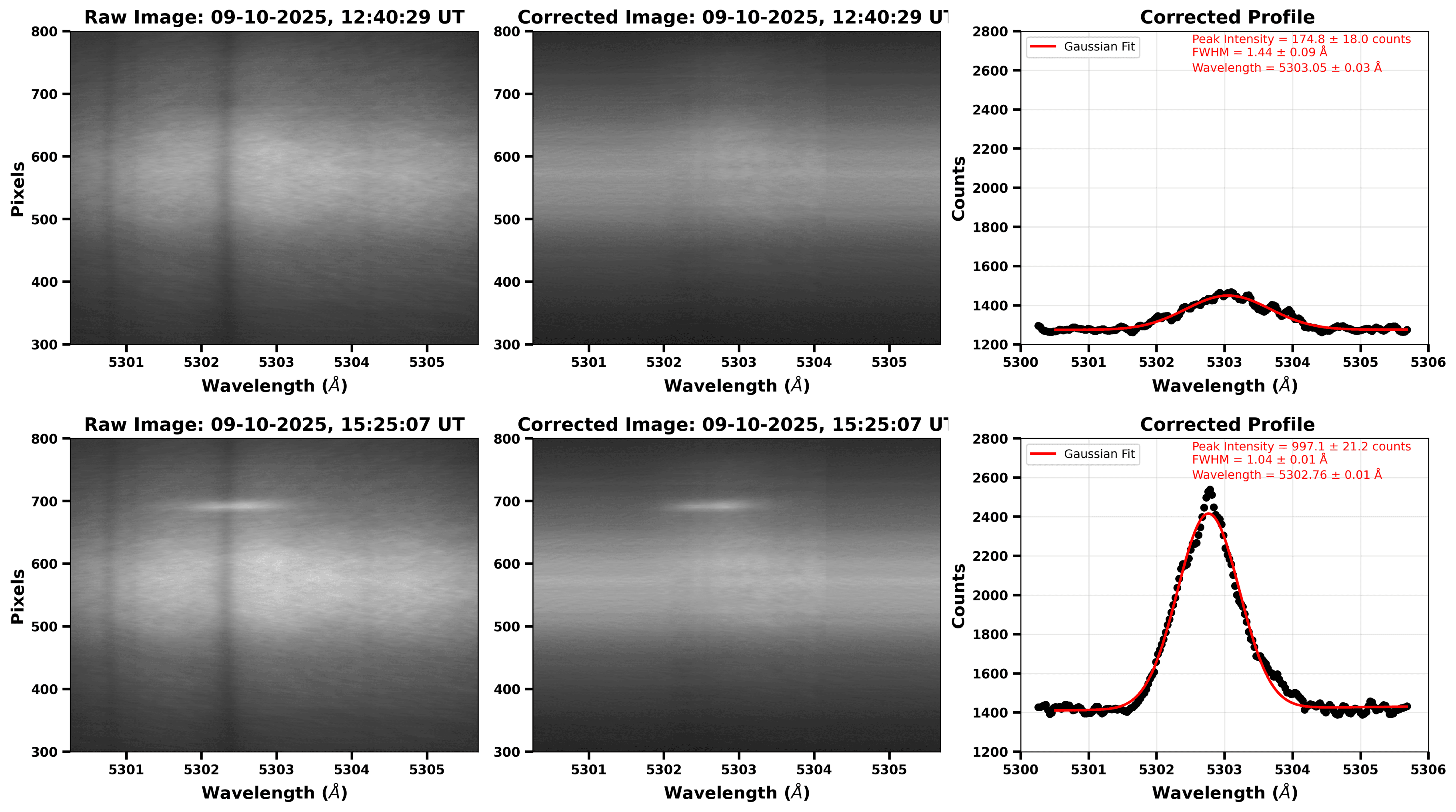
Researchers at the Indian Institute of Astrophysics link a solar flare’s delayed glow to cooling plasma in a paper released on arXiv on September 24, 2026. The analysis uses spectra from India’s Aditya-L1 observatory during an October 9, 2025 eruption.
The Visible Emission Line Coronagraph, or VELC, blocks light from the Sun’s bright disk to image its fainter outer atmosphere. The institute’s September 2023 launch release records that it integrated, tested and calibrated the instrument at Hosakote in collaboration with the Indian Space Research Organisation.
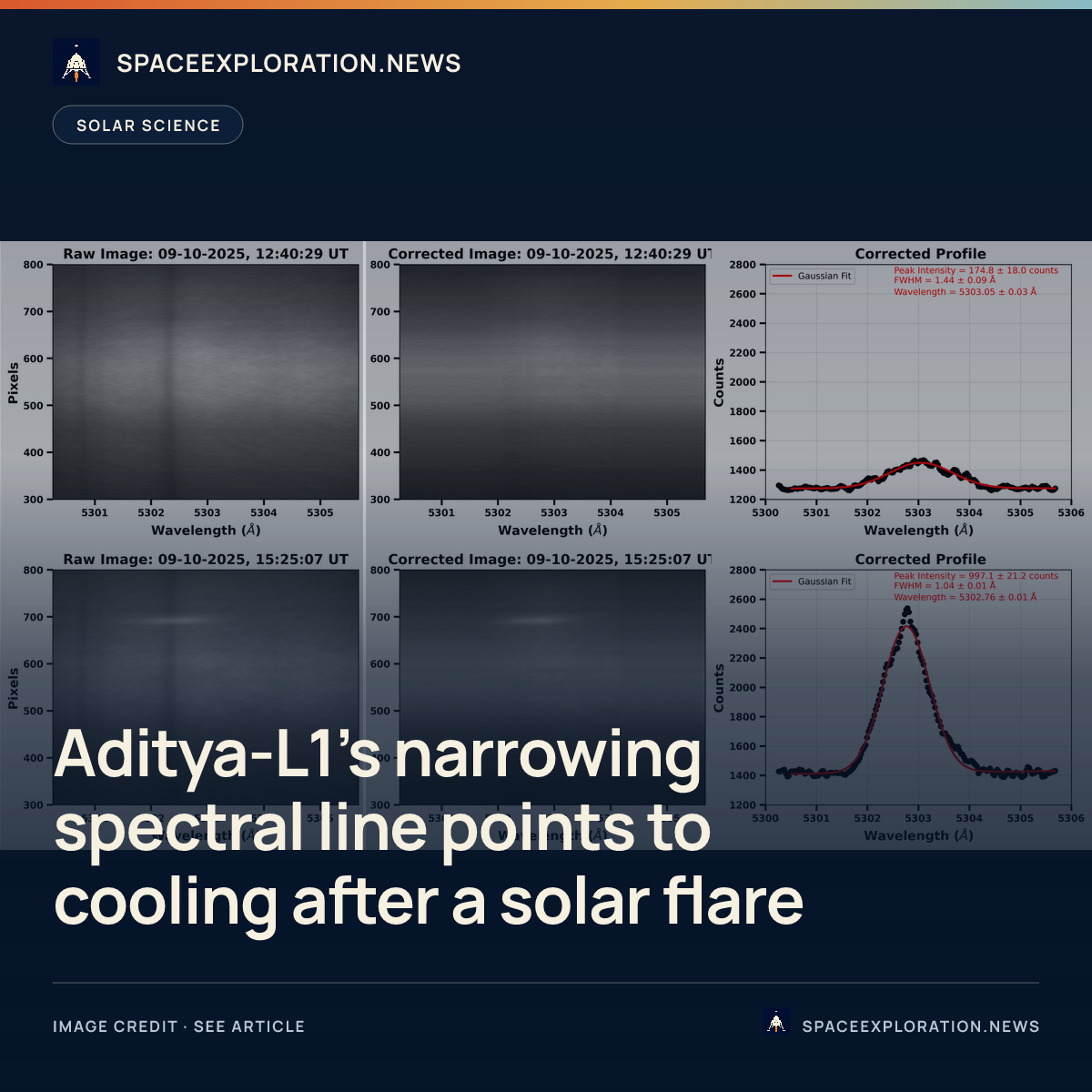
The authors report that the green-line peak followed the flare’s X-ray maximum by about 173 minutes, coinciding with late extreme-ultraviolet emission seen by NASA’s Solar Dynamics Observatory. The spectral line narrowed by about 28% approaching that delayed peak.
The team interprets this narrowing as evidence that cooling dominated the late emission, while weaker additional heating could still contribute. The arXiv record marks the manuscript accepted for The Astrophysical Journal. The authors call for observations of several more events to substantiate the cooling inference.
Reporting trail
Primary sources
arXivCoronal Green-Line Emission During a Solar Prominence Eruption: Spectroscopic Evidence of Its Correspondence with the EUV Late Phasearxiv.org
arXivCoronal Green-Line Emission During a Solar Prominence Eruption: Spectroscopic Evidence of Its Correspondence with the EUV Late Phase — full textarxiv.org
Indian Institute of AstrophysicsPress release for the launch of Aditya-L1velc.iiap.res.in
For an image post, download the card and copy this suggested caption.
A September 24 paper connects the green-line signal to a flare’s late emission, but its cooling interpretation needs tests across more events. Read the full report: https://www.spaceexploration.in/news/aditya-velc-late-phase-cooling #SpaceExplorationNews #SpaceNews #SpaceScience