Solar science
Aditya-L1 study traces small brightenings before major solar flares
Seven 2024 flare cases contained 102 ultraviolet transients before onset, but the observations do not yet establish a flare-forecasting method.
Add us as a preferred source on Google Add us as a preferred source on Google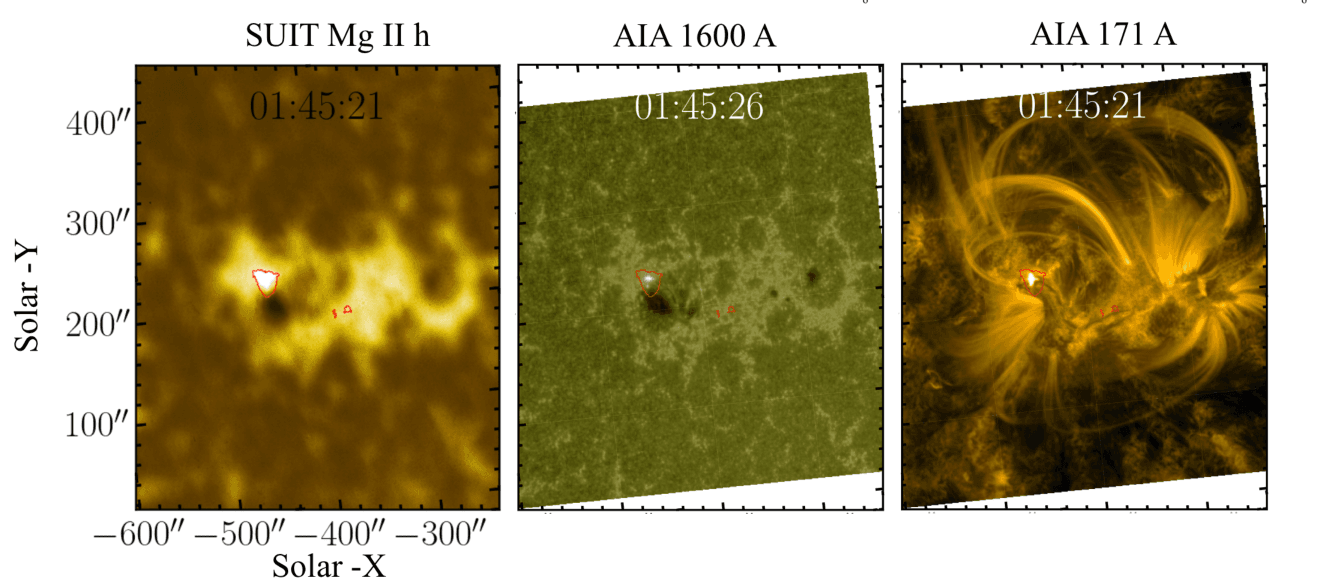
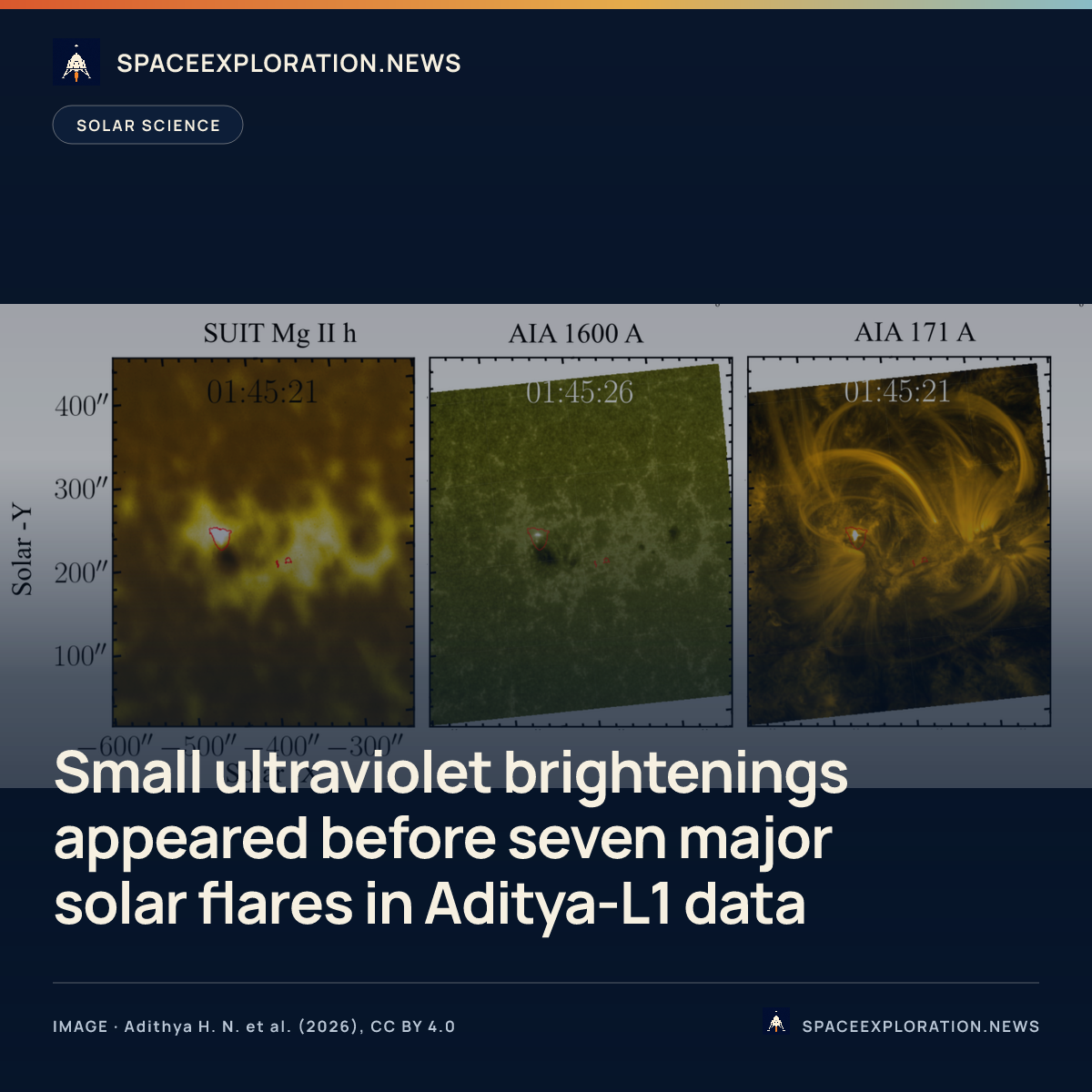
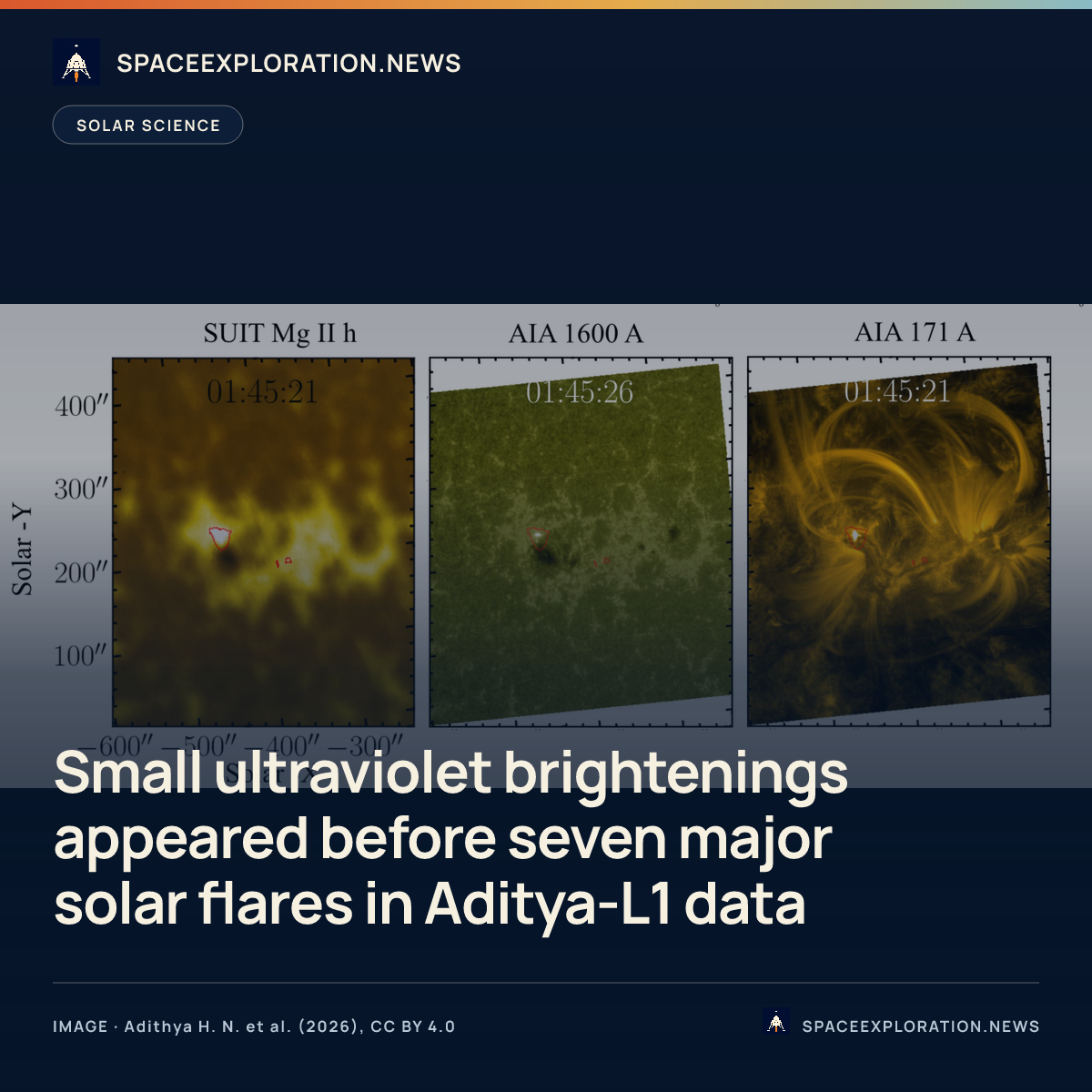
An Aditya-L1 study of seven M- and X-class solar flares found 102 small ultraviolet brightenings in the two hours before flare onset, the paper and an August 28 ISRO account report. The researchers observed the events with the mission’s Solar Ultraviolet Imaging Telescope, or SUIT, and simultaneous X-ray measurements. The transient brightenings were frequently concentrated near the active region that later flared, but the study does not demonstrate an operational flare-forecasting method.
The research, published in Monthly Notices of the Royal Astronomical Society, uses 2024 observations from India’s first dedicated solar observatory. ISRO’s account describes short-lived brightenings in the Sun’s chromosphere, the atmospheric layer above the visible surface. The study’s value is a structured look at activity before major flares across multiple wavelengths, rather than an alert system that predicts when a flare will occur.
What the instruments found
The team identified the events in SUIT’s magnesium-II h ultraviolet images. They found no comparable brightening in the continuum filters used in the analysis, which the authors say supports a chromospheric origin. In many cases, the transient activity was concentrated near magnetic polarity inversion lines and the region that later produced the flare; the paper also records events elsewhere in the active region.
X-ray evidence was more selective. Of the 102 ultraviolet transients, 49 coincided in time with a HEL1OS X-ray signal, but only 29—about 28% of the total—were traced to the same active region as the SUIT observation. The authors found that the other 20 co-temporal X-ray signals came from neighbouring regions. That separation matters because a Sun-as-a-star X-ray measurement can register activity away from the patch seen in ultraviolet.
A research signal, not a forecast
The observed pattern does not establish that the brightenings cause a subsequent flare. The paper describes a possible connection to magnetic processes that may progressively destabilise an active region, but says the origin of the transients and their association with flares need further study. It also reports that most ultraviolet events had no identified X-ray counterpart from the same region, and that the observations could not determine the mechanism or atmospheric height for all of them.
No forecast test, warning-time measurement or prediction-accuracy result appears in the paper or ISRO’s summary. The findings can inform research on what happens before a flare, but they do not show that an operator can use the reported ultraviolet signatures to issue a reliable warning. That distinction is important for space-weather applications, which require a method to be tested against flares that were not already known to the researchers.
The India connection is direct: Aditya-L1 is India’s dedicated solar observatory, and ISRO says the work was led by the Manipal Centre for Natural Sciences with scientists from ISRO and the Department of Space among the participants. The paper’s limited seven-flare sample means its statistical patterns should be interpreted cautiously. Its next stated need is a larger event sample to test whether the observed pre-flare behaviour remains robust.
Reporting trail
Primary sources
Indian Space Research OrganisationAditya-L1 Catches the Sun’s Early Warning Signs Before Solar Flaresisro.gov.in
Monthly Notices of the Royal Astronomical SocietyMultiwavelength diagnostics of pre-flare evolution with Aditya-L1: from the solar chromosphere to the coronaacademic.oup.com
arXivMulti-Wavelength Diagnostics of Pre-Flare Evolution with Aditya-L1: From the Solar Chromosphere to the Coronaarxiv.org
For an image post, download the card and copy this suggested caption.
Seven 2024 flare cases contained 102 ultraviolet transients before onset, but the observations do not yet establish a flare-forecasting method. Read the full report: https://www.spaceexploration.in/news/aditya-l1-preflare-study #SpaceExplorationNews #SpaceNews #SpaceScience