Astrochemistry
ALMA detects fully deuterated methanol around a young star
The first robust identification of CD3OD challenges chemical models, while uncertainty in the reference methanol abundance complicates the comparison.
Add us as a preferred source on Google Add us as a preferred source on Google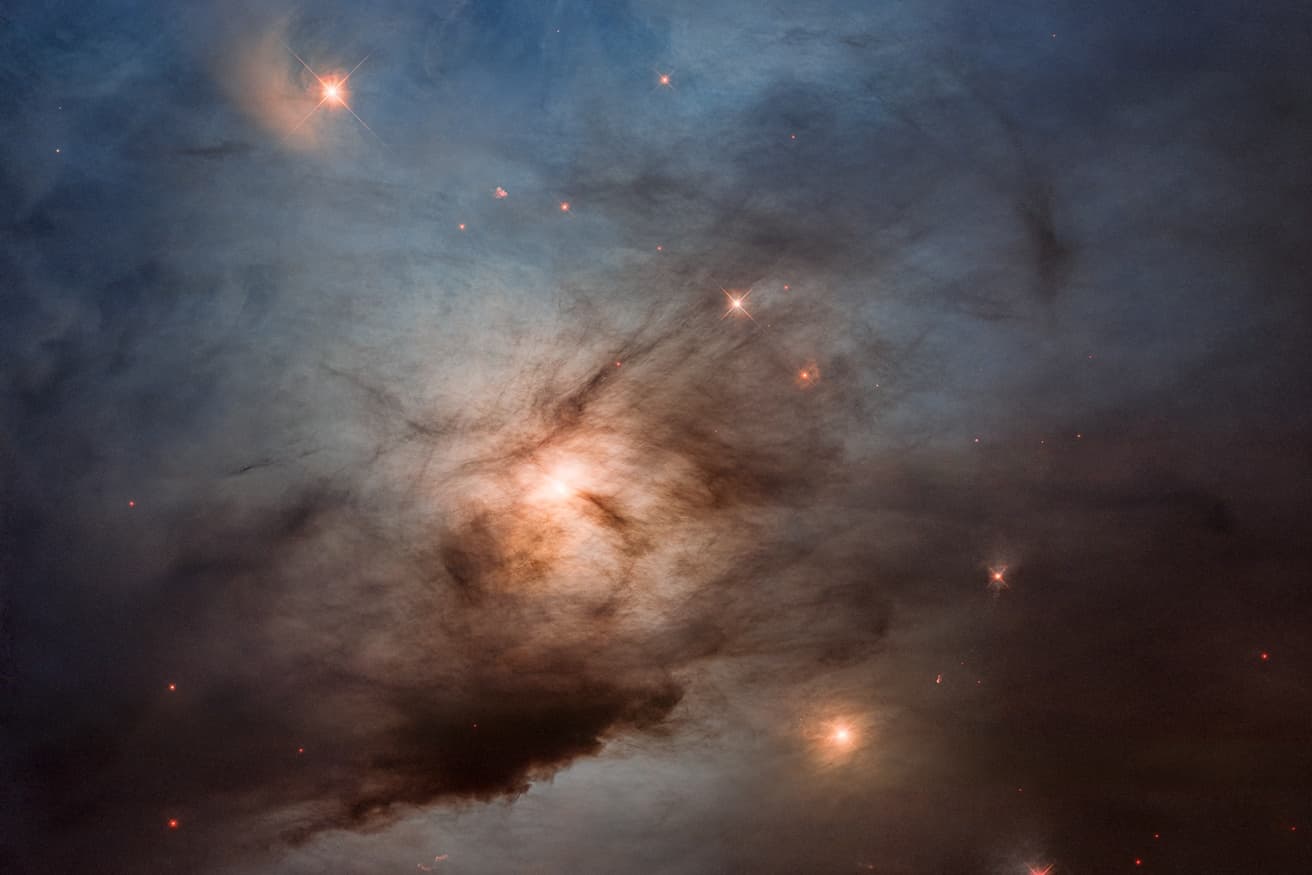
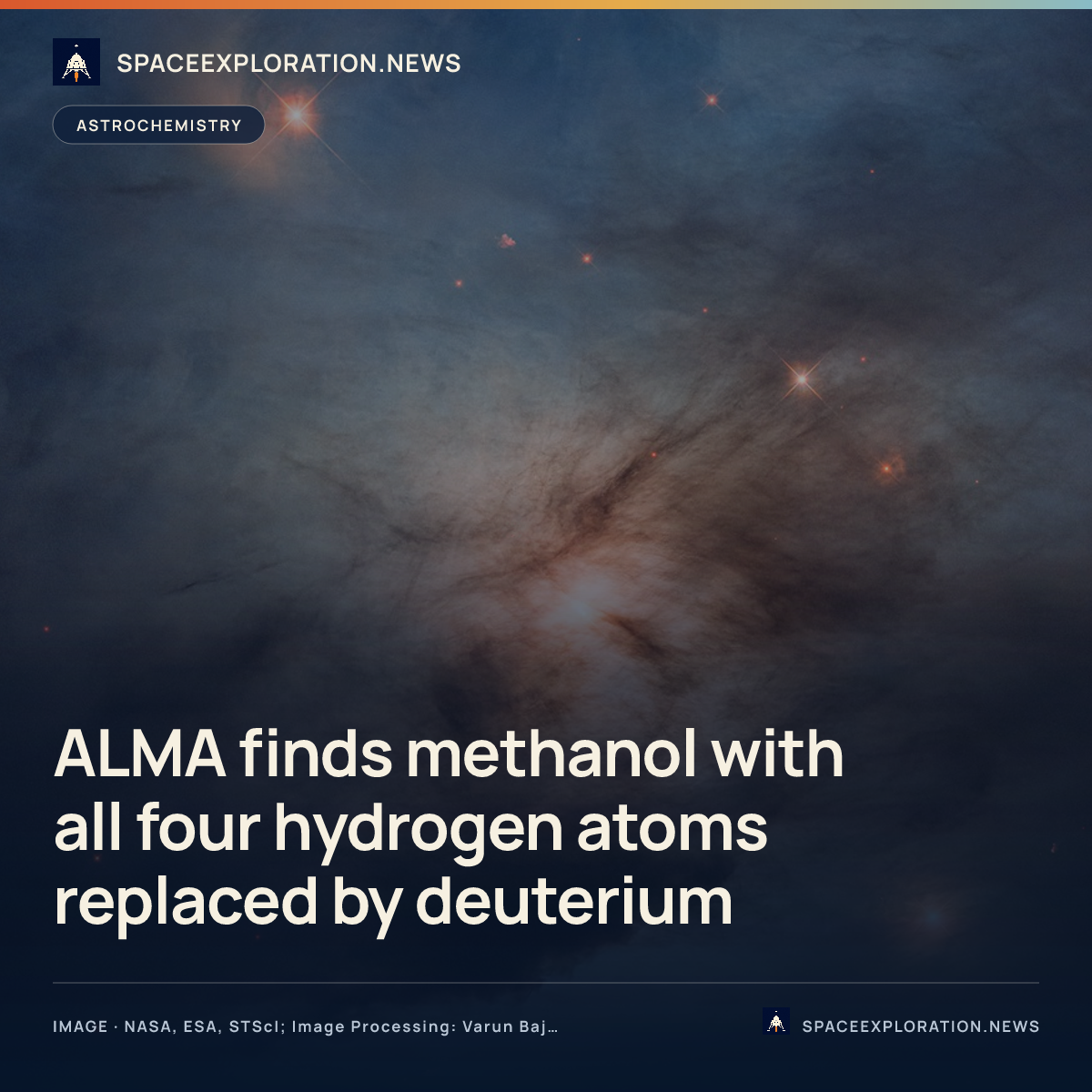
Observations with the Atacama Large Millimeter/submillimeter Array (ALMA) have identified fully deuterated methanol around the young star IRAS4A2 in the NGC 1333 molecular cloud. A study led by Arnaud Belloche reports the first robust interstellar detection of this molecule, CD3OD, adding a measurement that existing chemical models struggle to reproduce. The paper was submitted on October 5 and announced by the Max Planck Institute for Radio Astronomy on October 7.
In ordinary methanol, CH3OH, four hydrogen atoms accompany carbon and oxygen. In CD3OD, all four are replaced by deuterium, a heavier form of hydrogen. The institute describes the result as the first detection of an interstellar molecule with four such replacements. It places IRAS4A2 in the Perseus molecular cloud, roughly 1,000 light-years away.
The paper identifies ten spectral lines of CD3OD toward IRAS4A2, although two are partly contaminated by emissions from other molecules. Its preliminary analysis does not detect CD3OD in the other COMPASS targets. ALMA’s October 7 account describes the wider survey as more than 100 hours of observations covering 11 young stellar systems.
The institute’s release summarizes the fully deuterated molecule’s abundance as about 100 times higher than theoretical predictions. The paper compares several chemical models and finds that they do not reproduce the observed pattern of methanol variants quantitatively; the size of the discrepancy depends on the model. The result leaves the production of the more heavily deuterated forms unexplained.
The abundance comparison also depends on assumptions used to interpret the spectra. Belloche and colleagues suspect their estimate of ordinary methanol is too low and discuss unresolved clumps as a possible explanation. They use rarer carbon- and oxygen-bearing variants to estimate that reference abundance. Higher-resolution observations would be needed to investigate the proposed clumpy structure.
Other spectral lines in the same data remain unidentified. The institute says some may belong to methanol variants with two or three deuterium substitutions, but laboratory measurements are still needed to confirm those assignments. That work continues separately from the reported CD3OD detection.
Reporting trail
Primary sources
Belloche et al. / arXivCOMPASS VII. First interstellar detection of fully deuterated methanolarxiv.org
Max Planck Institute for Radio AstronomyFirst detection of heavy methanol in spacempifr-bonn.mpg.de
ALMA ObservatoryCóctel cósmico: ALMA revela metanol exótico alrededor de estrellas jóvenesalmaobservatory.org
NASANGC 1333science.nasa.gov
For an image post, download the card and copy this suggested caption.
The first robust identification of CD3OD challenges chemical models, while uncertainty in the reference methanol abundance complicates the comparison. Read the full report: https://www.spaceexploration.in/news/alma-fully-deuterated-methanol-detection #SpaceExplorationNews #SpaceNews #SpaceScience