Fast radio bursts
Science publishes Manisha Caleb’s study of farthest radio burst
Webb observations reveal a young, star-forming host galaxy, but the study does not establish what generated the signal detected in 2024.
Add us as a preferred source on Google Add us as a preferred source on Google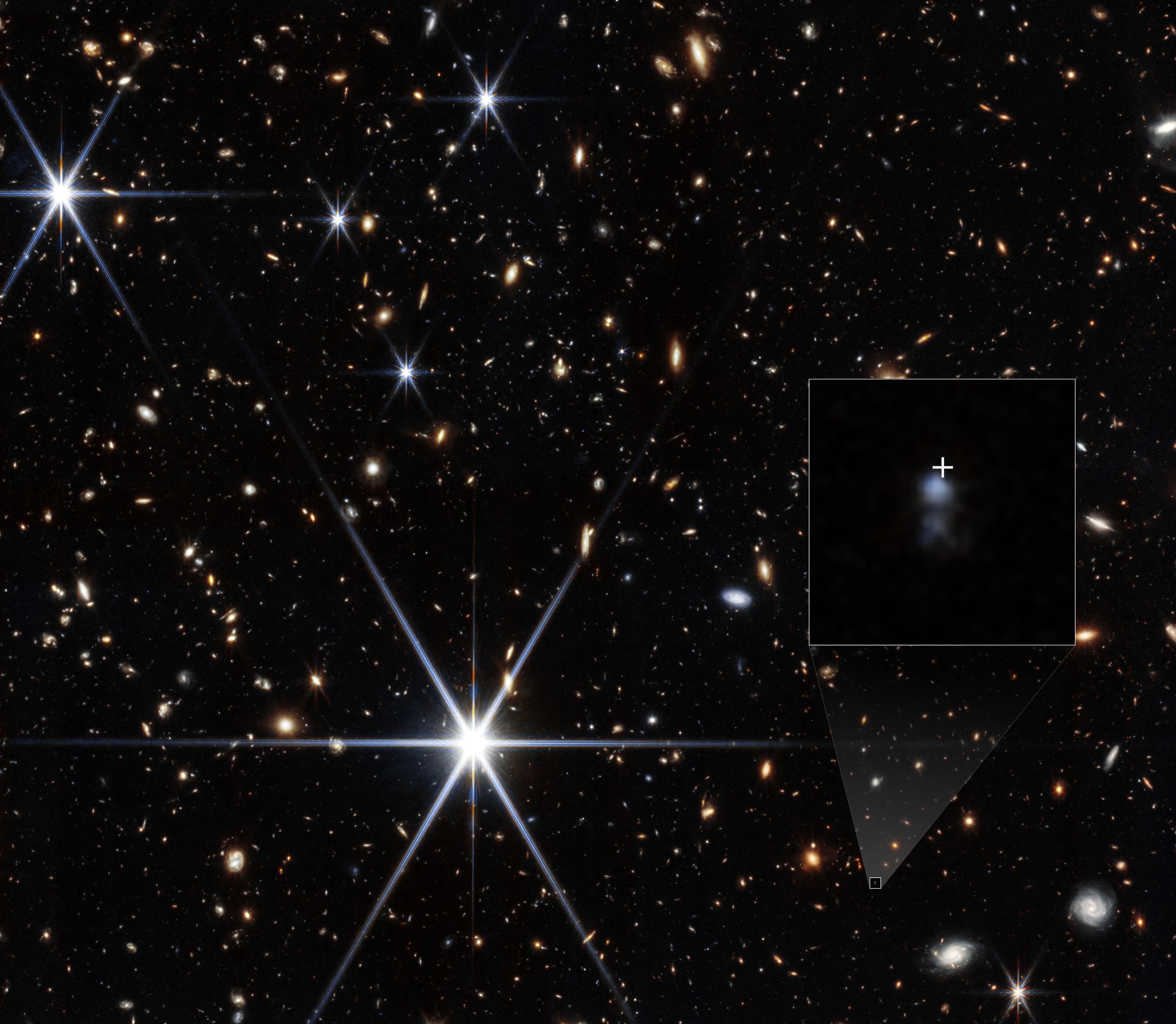
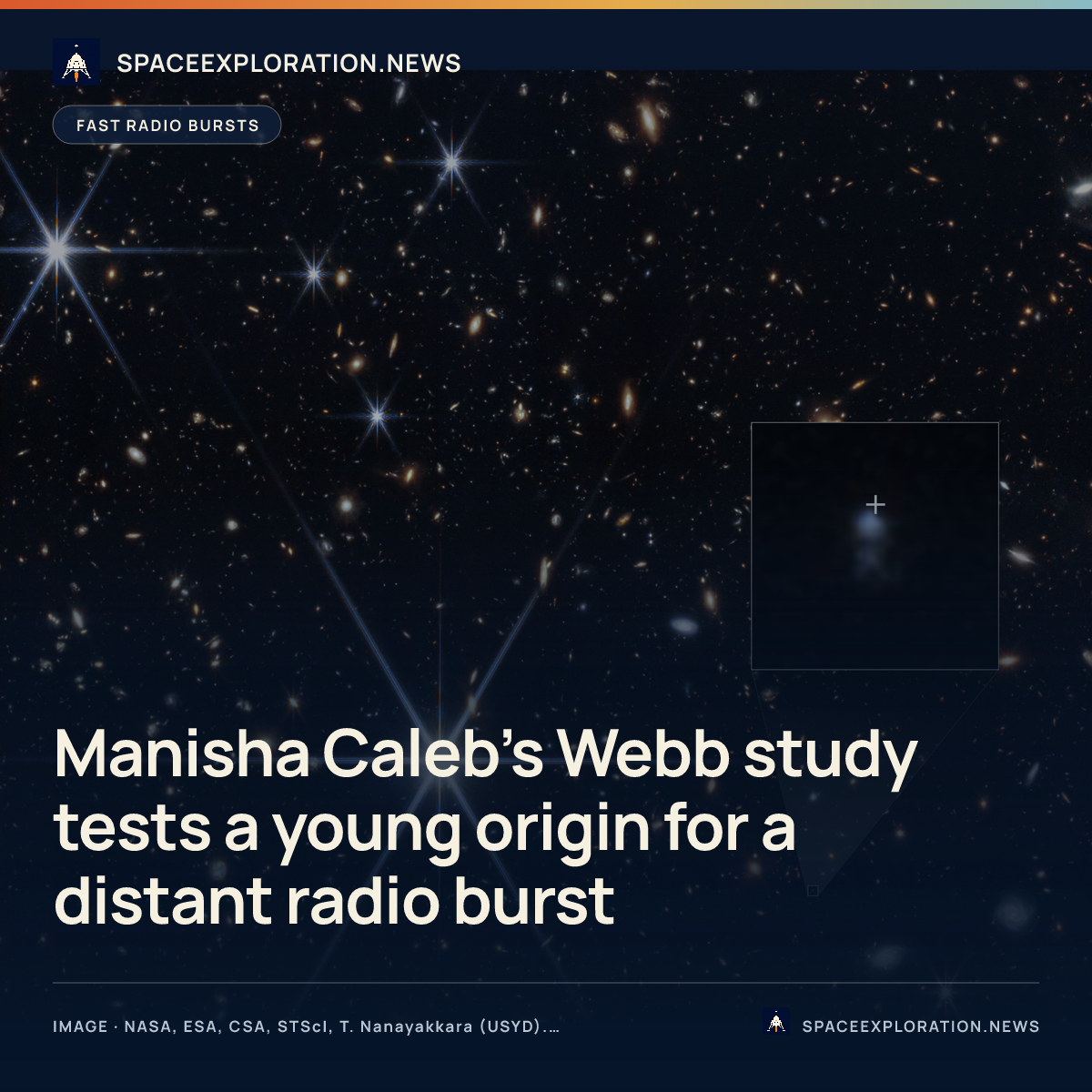
Science published a study led by University of Sydney astronomer Manisha Caleb on October 8, examining the host galaxy of the most distant known fast radio burst. NASA and the University of Oxford announced the publication that day. Webb observations place the burst’s source in a small, actively star-forming galaxy, helping the researchers assess which proposed origins fit its young stellar population.
Caleb, identified as being from Chennai in an NDTV interview published in April 2017, is the study’s lead author. The current NASA and Oxford accounts identify her affiliation as the University of Sydney. Her team’s work combines a radio detection with infrared observations of the galaxy hosting it.
The radio event itself predates the journal publication. The MeerTRAP team detected FRB 20240304B with South Africa’s MeerKAT telescope on March 4, 2024. Caleb and colleagues submitted a public preprint describing the result to arXiv on August 3, 2025. The October 8 development is its publication in Science, rather than a newly detected burst.
NASA explains that Webb’s Near-Infrared Camera found the host galaxy where ground-based telescopes had not detected one. Its Near-Infrared Spectrograph measured a redshift of 2.148, the stretching of light’s wavelength as the Universe expands. That places the galaxy at an epoch roughly three billion years after the Big Bang.
Oxford’s account describes a dwarf galaxy whose star-formation rate suggests that most of its stars may have formed within 30 million years. The young host makes a long delay between star formation and this burst less likely. The researchers use that constraint to assess a proposed origin involving two neutron stars gradually spiralling together before merging.
The authors favour an origin with a shorter delay, such as a young magnetar, a neutron star with a strong magnetic field. Caleb’s interpretation, relayed by NASA and Oxford, is that a merger is very unlikely for this burst. Neither account treats a magnetar as proven: the mechanism generating fast radio bursts remains uncertain.
Reporting trail
Primary sources
NASAWebb Measures Distance to Farthest Fast Radio Burst, Suggesting Originscience.nasa.gov
University of Oxford Department of PhysicsUK astronomers help reveal host galaxy of most distant fast radio burstphysics.ox.ac.uk
Caleb et al. / arXivA fast radio burst from the first 3 billion years of the Universearxiv.org
NDTVThe PhD Student Who Made India Proudndtv.com
ESA/WebbFRB 20240304B (NIRCam image)esawebb.org
For an image post, download the card and copy this suggested caption.
Webb observations reveal a young, star-forming host galaxy, but the study does not establish what generated the signal detected in 2024. Read the full report: https://www.spaceexploration.in/news/webb-manisha-caleb-distant-radio-burst-paper #SpaceExplorationNews #SpaceNews #SpaceScience