Gravitational-wave astronomy
NASA assigns L3Harris an all-glass LISA test telescope
The engineering unit precedes flight hardware for the gravitational-wave observatory; NASA has not announced its delivery date.
Add us as a preferred source on Google Add us as a preferred source on Google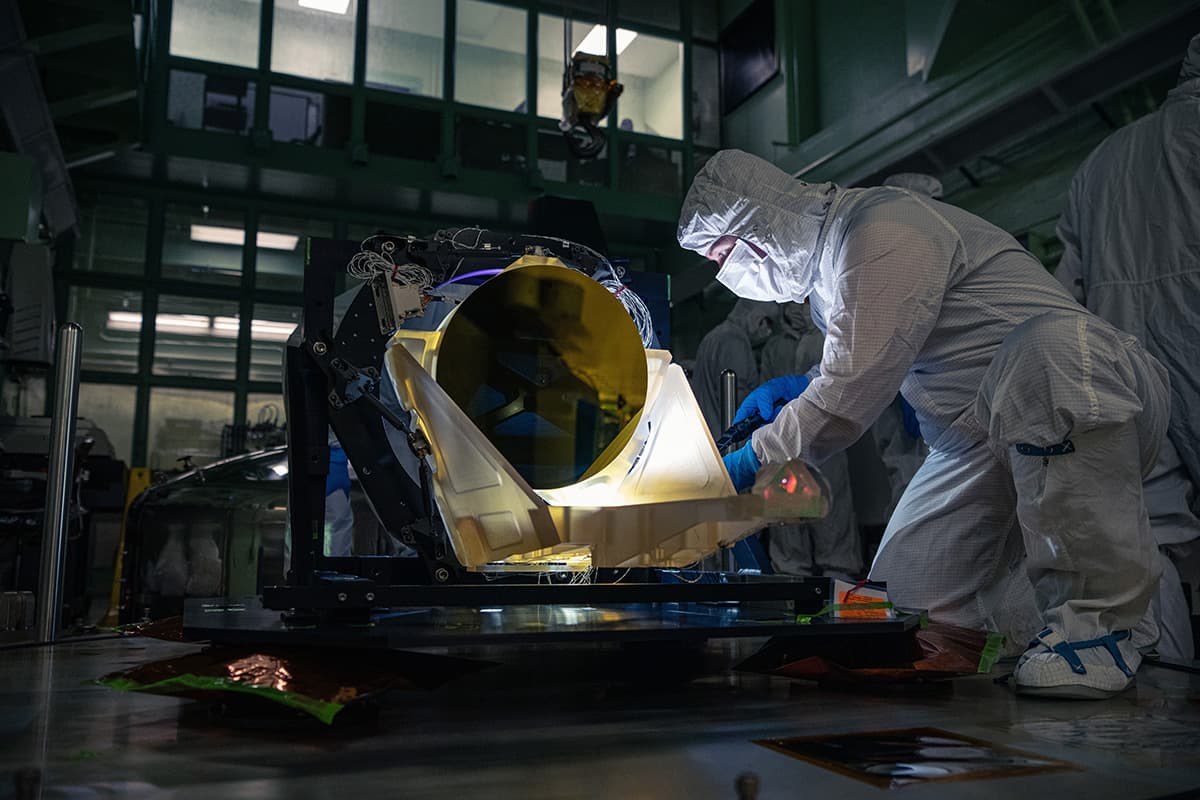
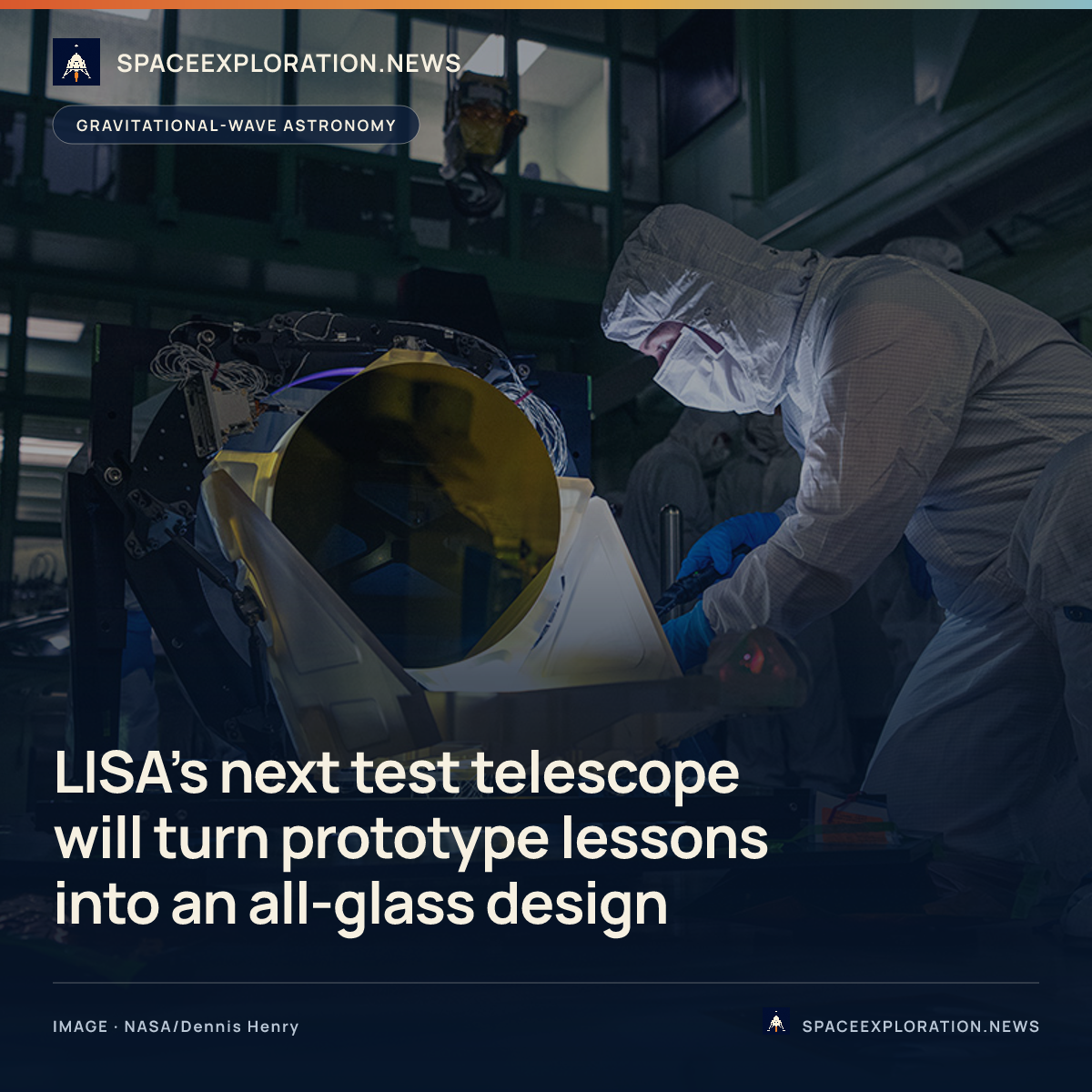
NASA announced on October 8 that L3Harris Technologies will design, assemble and integrate an all-glass test telescope for the Laser Interferometer Space Antenna (LISA). The agency describes the Engineering Test Unit as its final pre-flight unit before production of the mission’s flight telescopes.
The new unit follows a prototype delivered to NASA in May 2024 and a metal structural model delivered in June 2026. NASA telescope programme lead Ritva Keski-Kuha describes it as the programme’s first optical telescope delivery to the European Space Agency (ESA). The announcement does not give a delivery date or contract value.
NASA explains that the telescope will use Zerodur, a glass-ceramic material that resists changes in shape as temperatures vary. NASA describes a mission with two telescopes on each of three spacecraft, using laser beams to measure changes in their separation. The planned triangular formation spans 2.5 million kilometres on each side.
LISA is an observatory led by ESA targeting launch in the mid-2030s, with NASA supplying telescopes and other hardware. It is designed to measure low-frequency gravitational waves: distortions in space-time from moving masses, including merging black holes. The new telescope assignment concerns instrument development, rather than an observation or a completed flight instrument.
ESA’s September 2023 definition study describes a planned public archive for LISA data following its early-release science phase, with regular releases thereafter and immediate public alerts for transient sources. That provides a route for researchers beyond the mission teams to use its measurements. The study flags its science-management provisions as subject to approval; the telescope announcement is not a data release.
Reporting trail
Primary sources
For an image post, download the card and copy this suggested caption.
The engineering unit precedes flight hardware for the gravitational-wave observatory; NASA has not announced its delivery date. Read the full report: https://www.spaceexploration.in/news/lisa-all-glass-engineering-test-telescope #SpaceExplorationNews #SpaceNews #SpaceScience