Science
Euclid opens a billion-object archive for worldwide research
The November 12 release is drawing fresh attention to its research uses. Higher-level products for measuring dark matter and cosmic expansion are expected in mid-2027.
Add us as a preferred source on Google Add us as a preferred source on Google
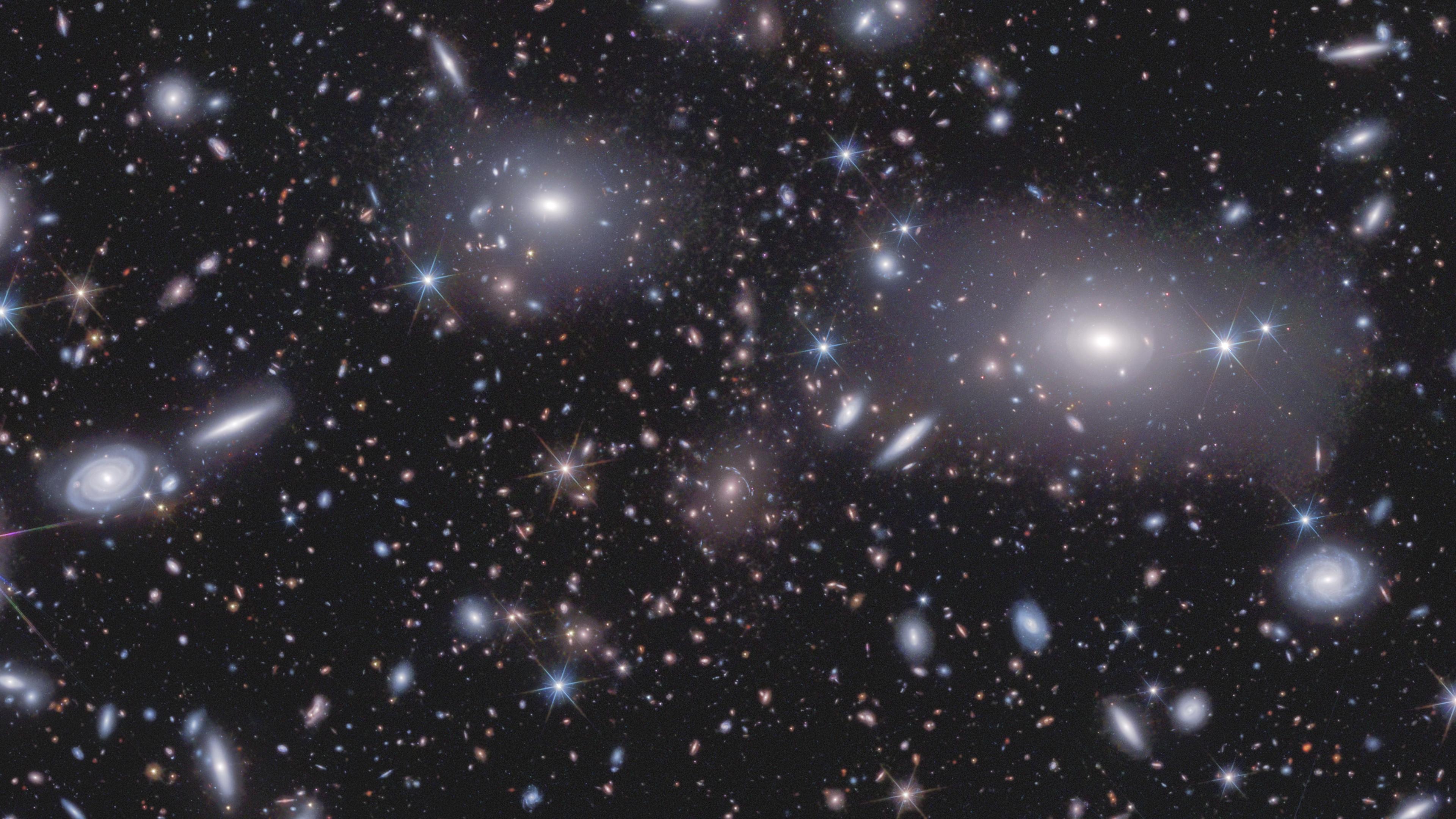
The European Space Agency’s Euclid telescope has opened its first major public survey archive, giving researchers worldwide access to images, catalogues and spectra covering more than a billion objects. The release took place on November 12; it provides observations for constructing a three-dimensional cosmic map, rather than a completed map or a new verdict on dark matter.
Research teams are now describing how they can use the archive. In a November 16 account, the University of Oxford outlined work that recovers maps of star formation from Euclid’s near-infrared spectroscopic observations. MDR’s November 13 radio coverage also highlighted the data’s role in building the cosmic map.
The European Space Agency lists more than 900 million galaxies, about 15,000 strong gravitational-lensing candidates, more than 60 million quasar candidates and spectra from over 160 million sources in the release. The observations span around 13 months and roughly 1,900 square degrees of the wide survey.
The archive is named Data Release 1 Foundation. ESA directs users to its Euclid Data Space platform to explore, visualise and analyse the observations. The agency describes the released area as about 14 per cent of that planned for Euclid’s survey.
The remaining products are important to the mission’s central cosmology work. The archive documentation schedules the complete Data Release 1 for mid-2027, adding higher-level products for galaxy-clustering and weak-lensing studies. These measurements will study how galaxies are distributed and how gravity distorts their apparent shapes.
Reporting trail
Primary sources
European Space AgencyEuclid lays the foundation for its best-ever 3D map of the Universeesa.int
University of OxfordExciting new discoveries from the Euclid satellite’s first major data releaseox.ac.uk
MDRWissenschaftler wollen größte 3-D-Karte des Weltalls erstellenmdr.de
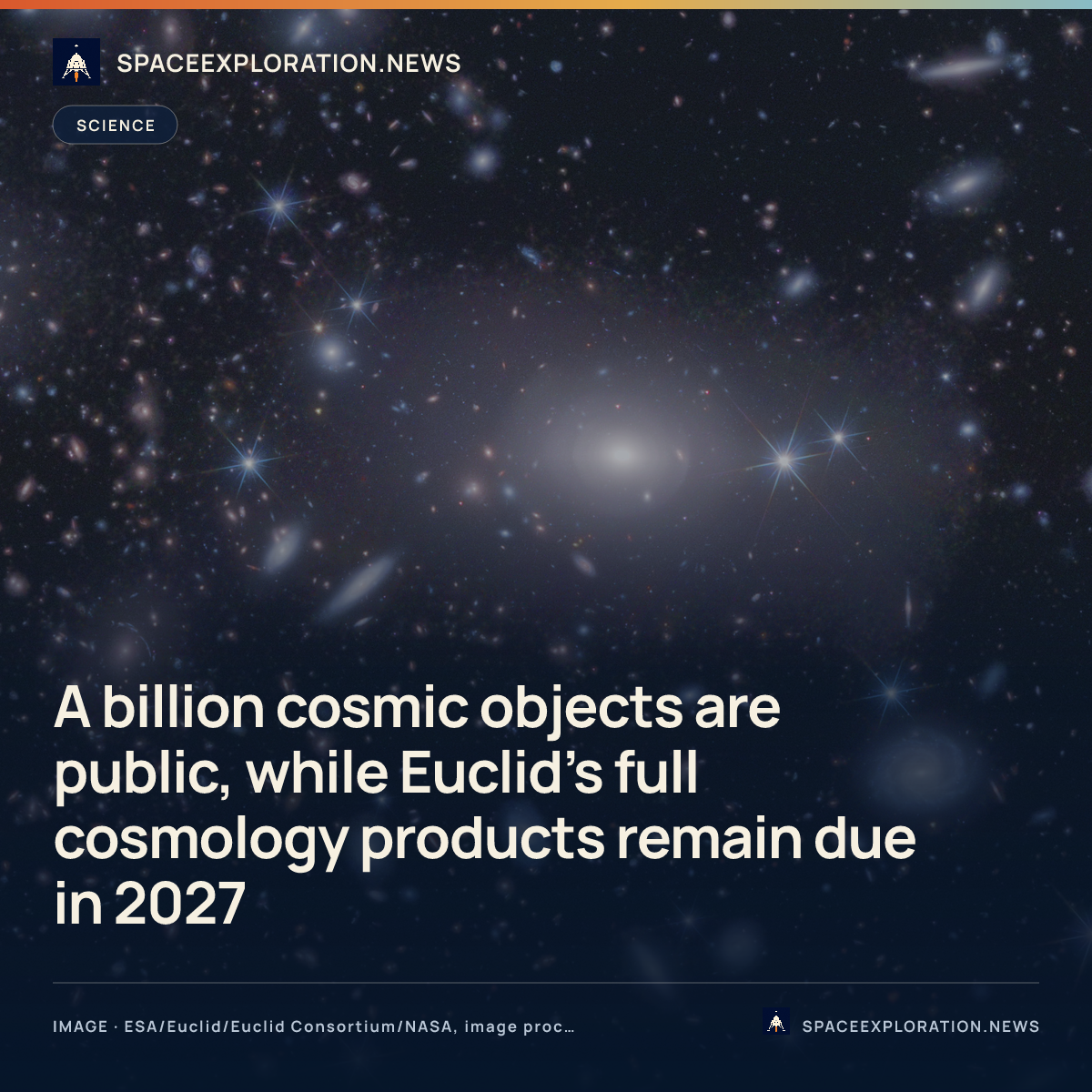
European Space AgencyEuclid’s view of rich galaxy cluster Abell 3128esa.int
For an image post, download the card and copy this suggested caption.
The November 12 release is drawing fresh attention to its research uses. Higher-level products for measuring dark matter and cosmic expansion are expected in mid-2027. Read the full report: https://www.spaceexploration.in/news/euclid-first-public-survey-data #SpaceExplorationNews #SpaceNews #SpaceScience