Space safety
India’s orbital traffic report, decoded
ISSAR-2025 shows how a record launch year translated into more conjunction alerts, more manoeuvre reviews and a heavier operational burden for spaceflight safety.
Add us as a preferred source on Google Add us as a preferred source on Google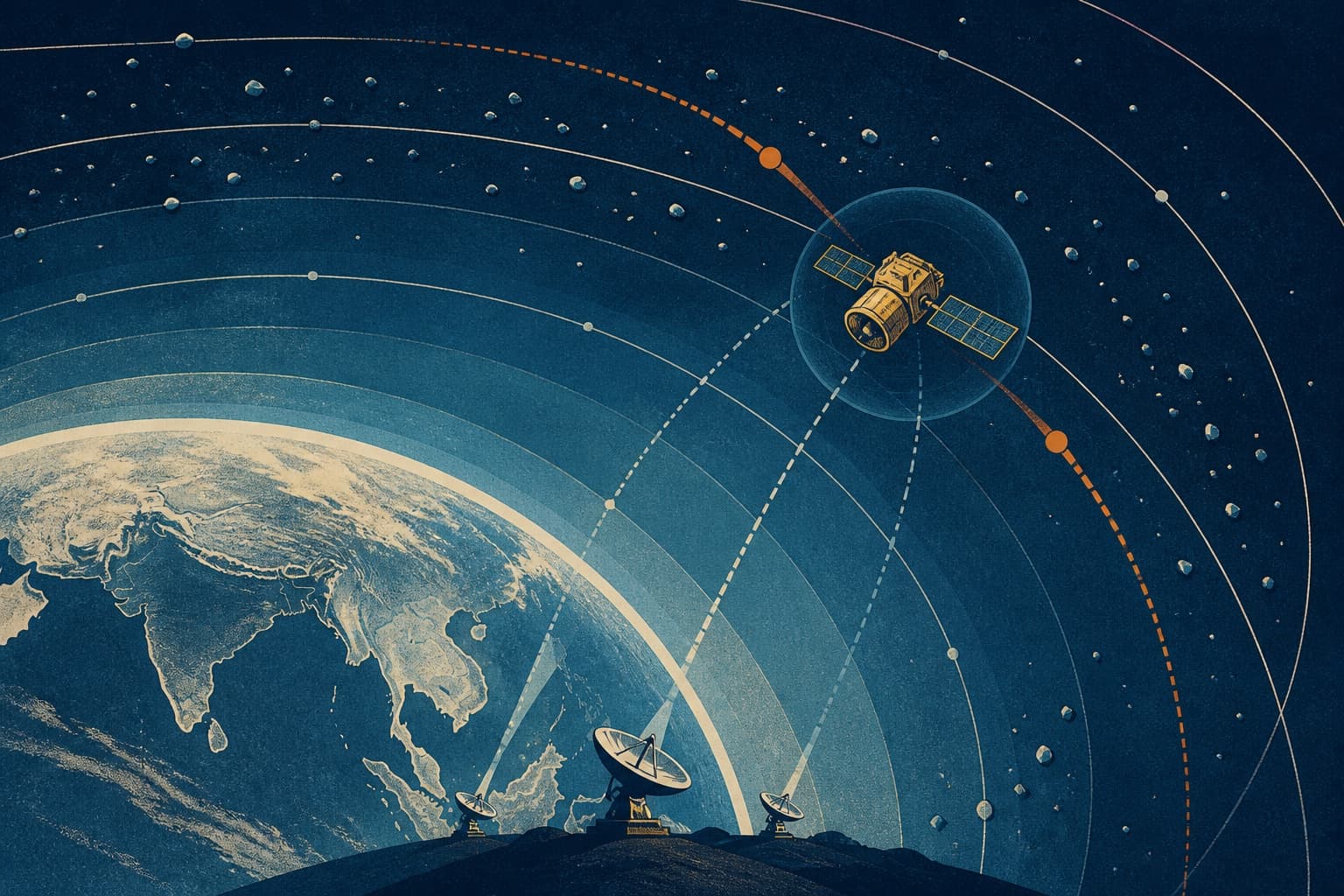
The annual Indian Space Situational Awareness Report turns an abstract warning—low Earth orbit is getting crowded—into operational numbers. During 2025, ISRO teams analysed more than 150,000 alerts issued for the agency’s Earth-orbiting satellites and carried out 18 collision-avoidance manoeuvres across low and geosynchronous orbits.
Alerts are only the first filter
An automated close-approach alert is not the same as a collision forecast. Flight-dynamics teams refine the geometry with better orbital data, assess uncertainty and decide whether a planned manoeuvre already provides enough separation. The report says 82 planned low-Earth-orbit manoeuvres were revised to prevent new close approaches after the burn.
The global environment is changing quickly
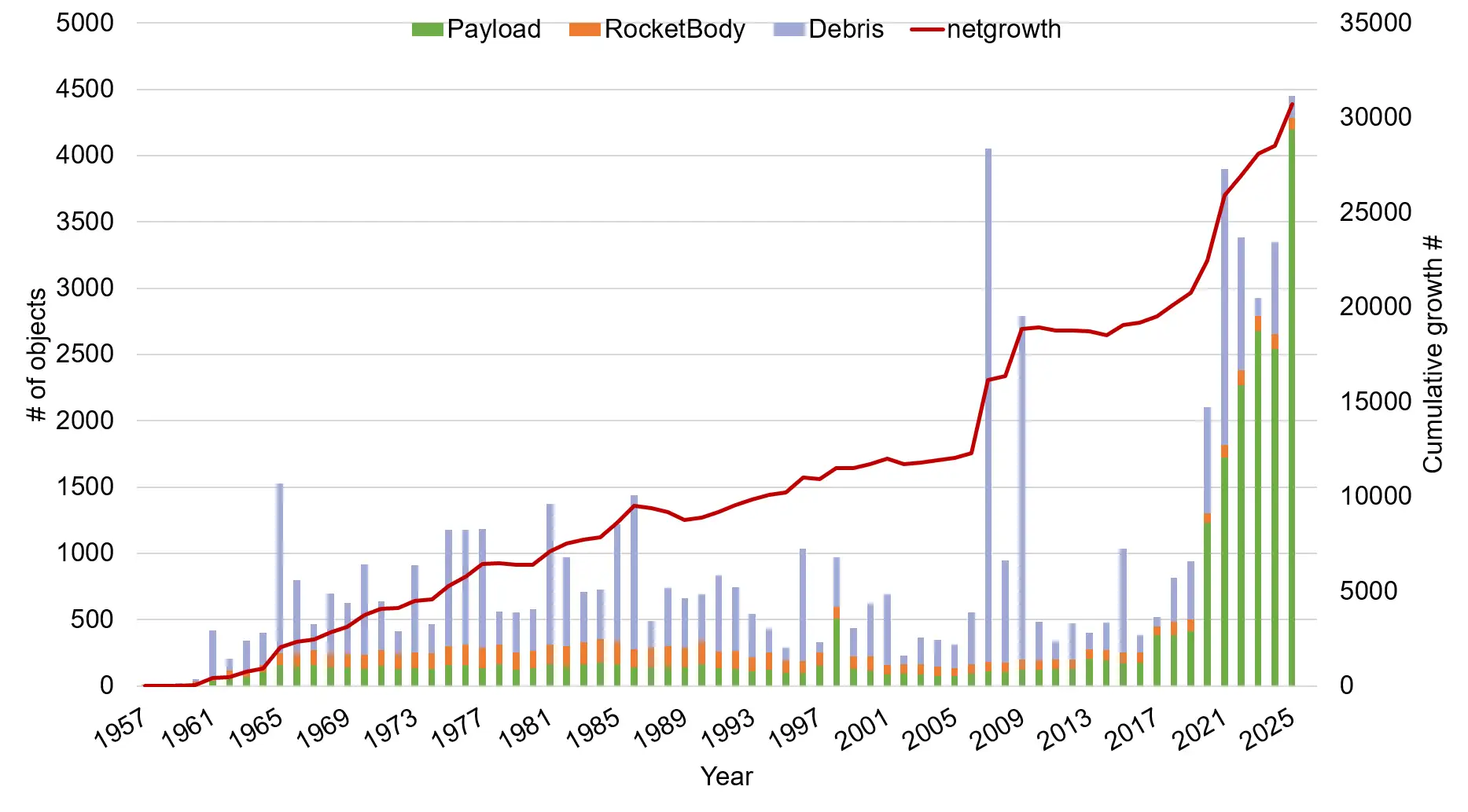
ISRO counted 328 launch attempts worldwide in 2025, with 315 successful launches placing 4,198 known operational satellites. About 160,000 close-approach alerts were generated globally. Large constellations and rideshare missions are increasing both the number of active spacecraft and the coordination work required to operate them safely.
India’s response spans operations and infrastructure. IS4OM coordinates safety work, while the NETRA programme is developing additional optical and radar tracking capability. The longer-term policy target is a debris-free approach for Indian government and private missions by 2030, including disposal planning before a spacecraft ever reaches the pad.
Reporting trail
Primary sources
For an image post, download the card and copy this suggested caption.
ISSAR-2025 shows how a record launch year translated into more conjunction alerts, more manoeuvre reviews and a heavier operational burden for spaceflight safety. Read the full report: https://www.spaceexploration.in/news/issar-2025-orbital-traffic #SpaceExplorationNews #SpaceNews #SpacePolicy