Space safety
India documents start of debris-removal precursor demonstrations
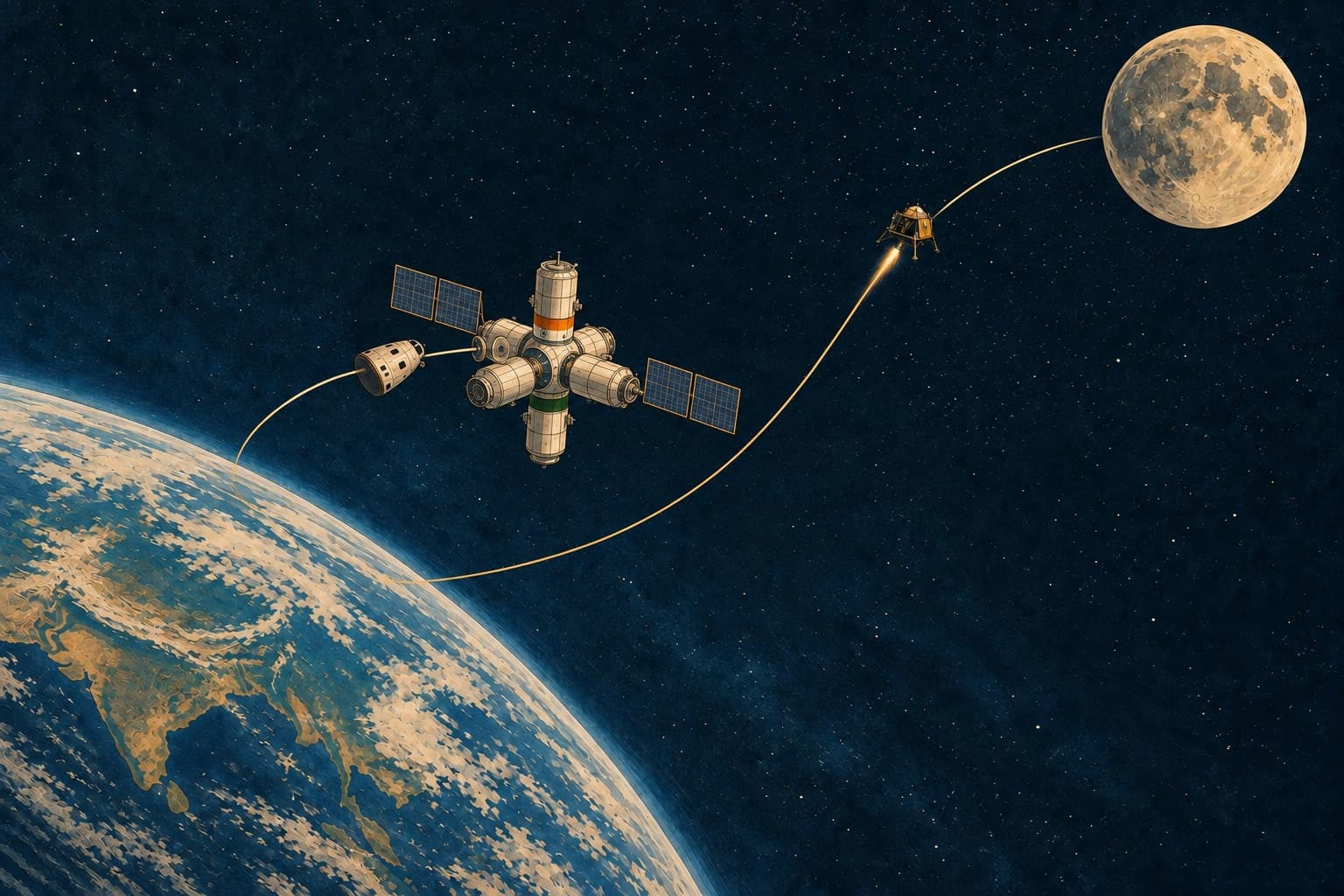
The August 13 parliamentary reply connects policy and on-orbit trials, but names no target object, removal attempt, operational system or timetable.
Add us as a preferred source on Google Add us as a preferred source on Google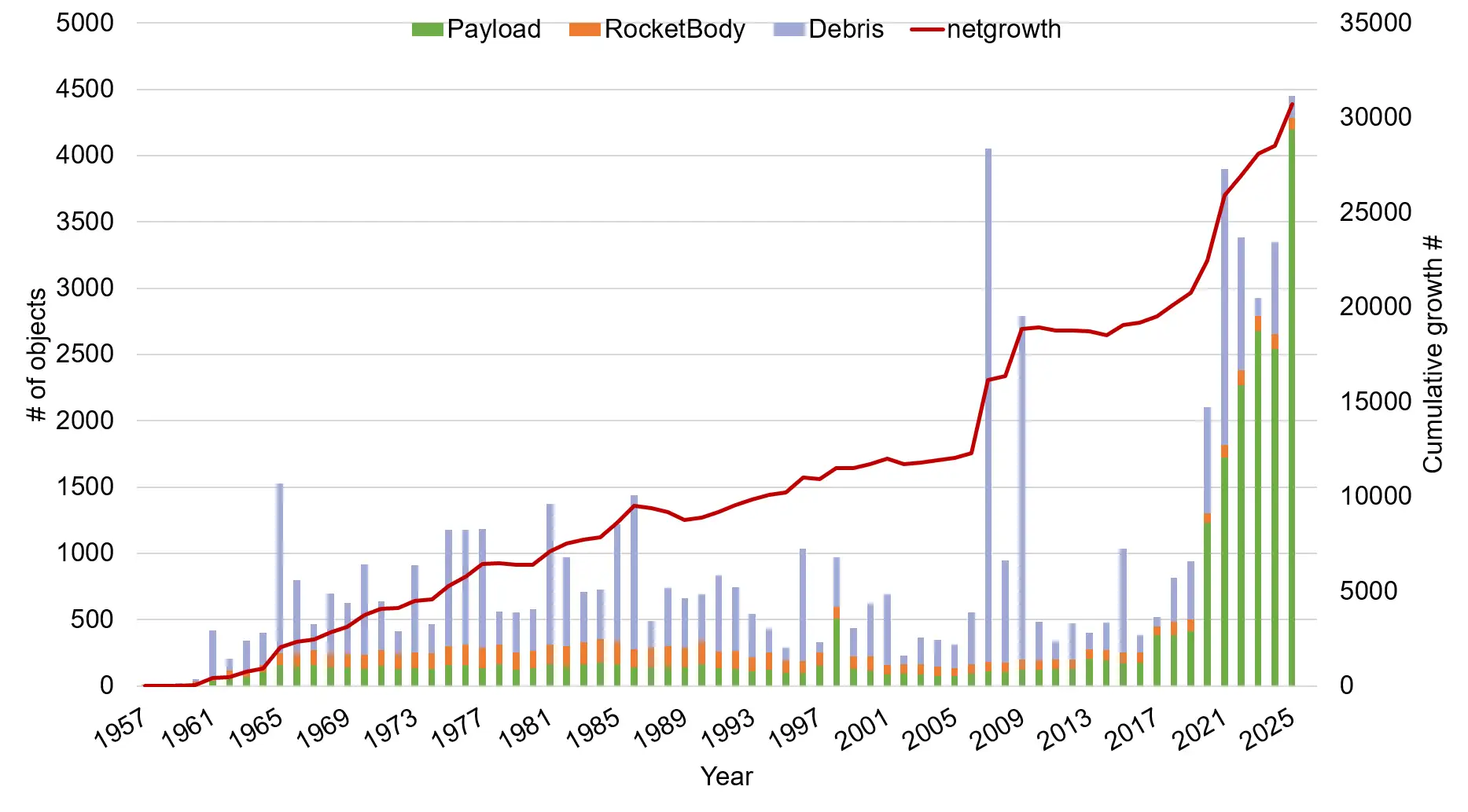
India’s Department of Space told the Rajya Sabha on August 13 that the Indian Space Research Organisation has begun on-orbit demonstrations serving as precursors to active debris removal (ADR). The reply said those activities were expected to mature over time. It did not say that ISRO had removed an orbital object, completed an end-to-end removal test or fielded an operational service.
The disclosure adds a sharper status marker to Space Exploration .IN’s April coverage of the Indian Space Situational Awareness Report for 2025 (ISSAR-2025). That report linked the Space Docking Experiment (SpaDeX) and robotic work on the PSLV Orbital Experimental Module-4 (POEM-4) to future debris removal. The August reply now describes already-initiated on-orbit work explicitly as ADR precursors; neither document describes a completed debris-removal mission.
The disclosure stops short of removal
A NASA review helps define the missing step. It says a debris-removal service commonly uses a separate spacecraft to rendezvous with an object, capture it by attachment or docking, then place it in a lower orbit for re-entry. Autonomous navigation, rendezvous and proximity operations, and robotics are enabling technologies for that sequence. Demonstrating one or more of those functions does not by itself establish an end-to-end removal capability.
The August parliamentary release does not identify the demonstrations, a target object or a capture method. It does not say whether any test approached an uncontrolled object, changed a debris object’s orbit or carried it to disposal. It also gives no development schedule or operational date. The Policy Edge reached the same narrow reading in its August 14 account: preparatory activities have begun, while an operational capability and timetable remain unspecified.
What India demonstrated in orbit
A March 18 Lok Sabha reply supplies earlier technical context. The Department of Space said studies were under way on robotic arms, rendezvous and proximity operations as ADR precursors. It cited SpaDeX’s autonomous rendezvous, docking and undocking and successful operations of a relocatable robotic arm and robotic manipulator on POEM-4. That answer still described debris removal as a future use of the technologies, not an accomplished mission.
ISRO’s POEM-4 payload page draws the boundary more precisely. The Debris Capture Robotic Manipulator was designed to capture tethered debris using visual servoing and object-motion prediction. Before launch, ISRO said successful completion would enable work toward capturing free-floating debris in future POEM missions. ISSAR-2025 later reported successful robotic-manipulator operations, but did not report capture or disposal of a pre-existing, uncontrolled object.
SpaDeX was likewise a controlled technology demonstration, built around two small spacecraft designated Chaser and Target. ISRO reported rendezvous, docking and undocking in a circular low Earth orbit during 2025. Those operations tested capabilities relevant to servicing and removal, but the two mission spacecraft were not derelict debris and the reviewed record does not say the test removed either one from orbit.
Prevention remains the operative policy
The policy framework is further along than removal technology. Indian Space Policy 2023 assigns the Department of Space responsibility for a safe and sustainable operations framework that complies with relevant international debris-mitigation guidelines. The policy applies to space activity to or from Indian territory or within India’s jurisdiction, while allowing the government to grant case-by-case exemptions. The August reply summarised this as a mandate to adopt internationally recognised guidelines, including end-of-life disposal.
IN-SPACe’s May 2024 Norms, Guidelines and Procedures turn that framework into operator-facing requirements. Launch and satellite operators must follow the 2007 debris-mitigation guidelines of the United Nations Committee on the Peaceful Uses of Outer Space. Satellite-registration applications request fuel budgets for collision avoidance and post-mission disposal, a detailed disposal and passivation plan, and a declaration of compliance or reasons for seeking a waiver. Operators must also notify IN-SPACe when disposal begins and ends, including the final orbit or controlled-re-entry impact point.
The Debris Free Space Mission (DFSM) adds dated design goals rather than proof of removal capacity. ISRO’s April 2024 note set a 2030 target for debris-free missions by government and non-government Indian actors. It called for post-mission disposal with a success probability above 99%, using controlled re-entry or an orbit with less than five years of remaining life, and said implementation would start in 2025 through mission planning, fuel budgeting and disposal design. Annual progress was assigned to ISRO’s space-safety system, IS4OM.
Why the distinction matters
The same records show why India is developing both prevention and removal technologies. The August reply said internet constellations can contain thousands of satellites, while failed spacecraft may no longer be able to manoeuvre and small debris may be too difficult to track or shield against. ISSAR-2025 recorded about 160,000 close-approach alerts globally in 2025. ISRO teams analysed more than 150,000 alerts for the agency’s Earth-orbiting satellites and carried out 18 collision-avoidance manoeuvres across low and geosynchronous orbits.
Taken together, the public record supports three distinct levels of activity. India has operating systems for tracking, conjunction assessment and post-mission reporting; a 2030 policy programme aimed at preventing new long-lived debris; and research demonstrations for technologies that could eventually remove existing objects. Only the third level is new in the August disclosure, and it remains pre-operational. A future claim of removal capability would need evidence such as a named target, capture and orbit-change results, and an operational timeline.
Update note
This article was published on August 20, 2026 to update Space Exploration .IN’s April 16 ISSAR-2025 coverage with the August 13 Rajya Sabha disclosure, which entered this newsroom run through The Policy Edge’s August 14 report. The update does not treat precursor demonstrations as an operational debris-removal capability.
Reporting trail
Primary sources
Press Information BureauISRO measures for debris risks from LEO satellite constellationspib.gov.in
The Policy EdgeISRO Advances Debris-Removal Precursors as Satellite Constellations Raise Collision Riskspolicyedge.in
Press Information BureauParliament Question: Space Debris Managementpib.gov.in
Indian Space Research OrganisationIndian Space Situational Awareness Report 2025isro.gov.in
Indian Space Research OrganisationPOEM-4 in PSLV-C60 / SpaDeX Missionisro.gov.in
Indian Space Research OrganisationSpaDeX Missionisro.gov.in
Indian Space Research OrganisationIndia’s Intent on Debris-Free Space Missionsisro.gov.in
IN-SPACeNorms, Guidelines and Procedures for Implementation of Indian Space Policy-2023inspace.gov.in
Indian Space Research OrganisationIndian Space Policy 2023isro.gov.in
NASASmall Spacecraft Technology State-of-the-Art: Deorbit Systemsnasa.gov
For an image post, download the card and copy this suggested caption.
The August 13 parliamentary reply connects policy and on-orbit trials, but names no target object, removal attempt, operational system or timetable. Read the full report: https://www.spaceexploration.in/news/india-active-debris-removal-precursors #SpaceExplorationNews #SpaceNews #SpacePolicy