Launch
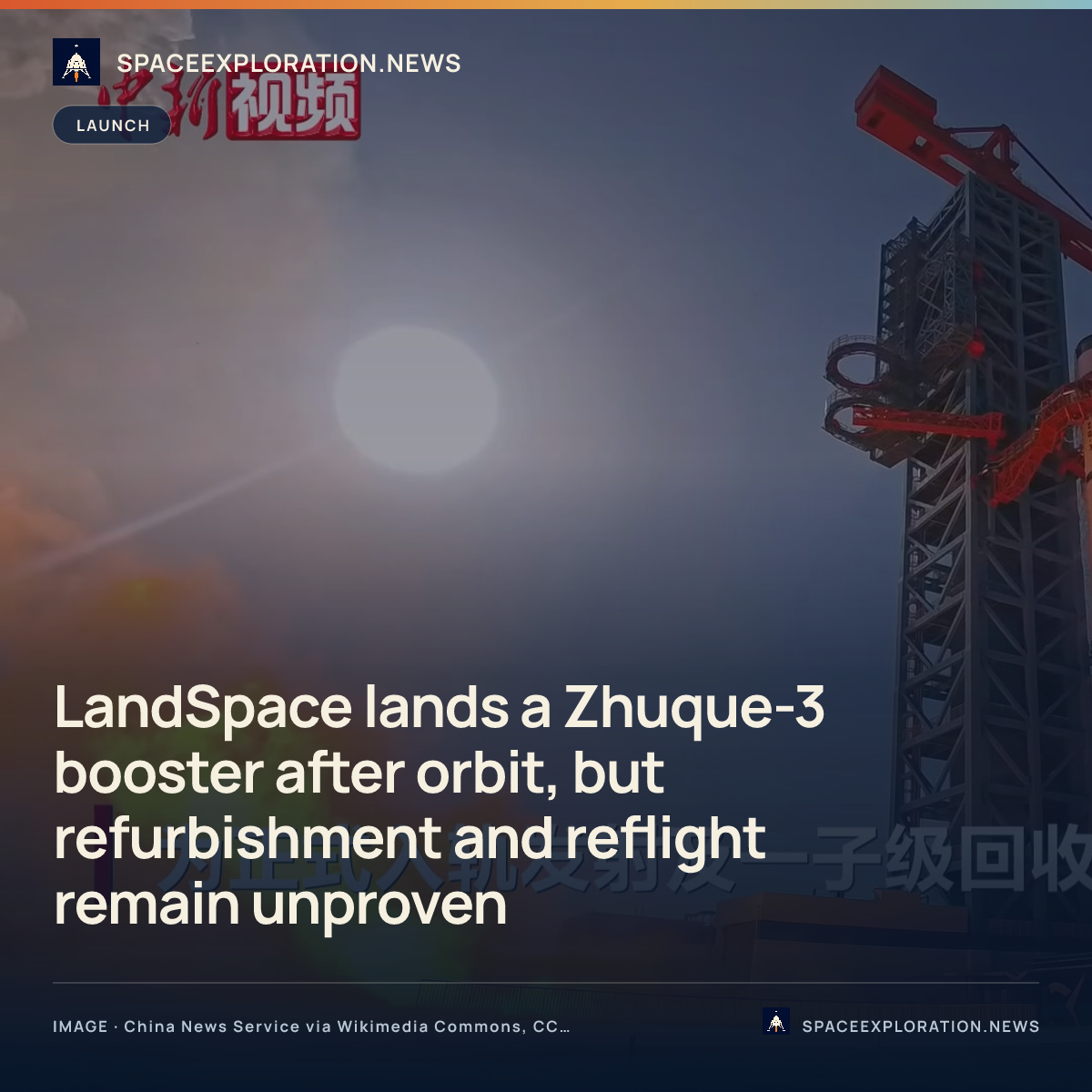
LandSpace lands Zhuque-3 booster after orbital launch
The Y2 flight put Honghu 03 into orbit and returned its first stage to a pad in Gansu. The landing proves recovery on this mission, not yet refurbishment or reflight.
Add us as a preferred source on Google Add us as a preferred source on Google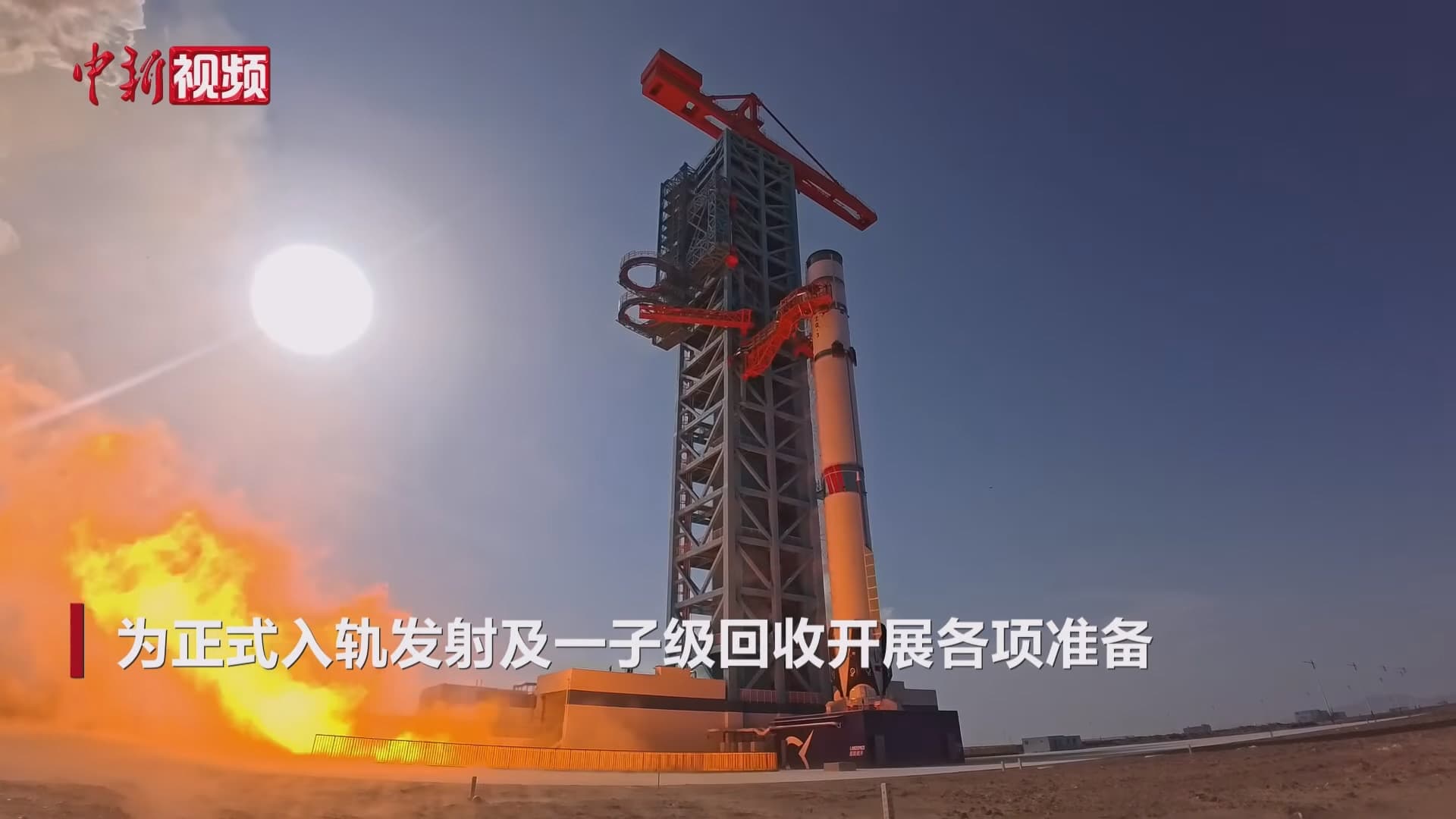
LandSpace launched its Zhuque-3 Y2 rocket from the Dongfeng commercial space innovation pilot zone in northwest China on Wednesday, August 19, and recovered the first stage on land minutes later. The company reported the launch and touchdown in a post on X; The Associated Press, citing China's Xinhua news agency, separately reported the first-stage recovery and described it as the country's first rocket-stage recovery on land.
LandSpace said liftoff occurred at 7:35 a.m. China Standard Time (11:35 p.m. UTC on August 18). The first and second stages separated about 137 seconds later. The second stage continued toward orbit and delivered Honghu 03, a satellite developed by Hongqing Technology, to its designated orbit, while the first stage returned to LandSpace Landing Site No. 1 in Minqin County, Gansu province. The company placed the soft touchdown at about 7:41 a.m., roughly six minutes after launch.
What the recovery means
The hardware brought back was the rocket's first stage, not the complete two-stage vehicle. It had already supplied the initial thrust and separated before the second stage carried Honghu 03 onward. The recovery therefore tested the return of a stage used in an orbital launch, rather than recovery of the payload or upper stage. Wednesday's result establishes that this particular booster completed the planned return and soft touchdown once.
AP reported that the landing was China's first rocket-stage recovery on land and its first use of deployable landing legs in such a recovery. That wording matters. China had already recovered an orbital rocket first stage on July 10, when a Long March-10B booster returned after separation and was caught by a net on a platform at sea, according to Xinhua. Zhuque-3 used the land-and-legs route, so it was not China's first controlled booster recovery of any kind.
LandSpace itself drew the line between recovery and reuse in February. Xinhua reported then that, if a first stage were recovered, the company planned to refurbish it and use it on a subsequent Zhuque-3 launch. The August 19 landing completes the recovery part of that sequence. The available post-launch statements do not report an inspection result for the Y2 stage, say that refurbishment has begun, identify a later mission for the hardware or show that it has flown a second time.
In the same February account, LandSpace aimed to attempt a recovery-and-reflight mission in the fourth quarter of 2026, based on the results of a then-planned second-quarter recovery test. The successful recovery ultimately occurred on August 19, outside that earlier test window. LandSpace's launch-day post did not confirm whether the fourth-quarter reflight target still stands. Until the company inspects and reflights a recovered stage, Zhuque-3 has demonstrated recovery, not routine stage reuse.
A second attempt after the 2025 landing failure
Zhuque-3's first orbital launch on December 3, 2025, reached its designated orbit, but the booster did not land. Xinhua reported that the first stage suffered anomalous combustion during recovery and failed to make a soft touchdown on the landing pad. At that point LandSpace said the cause was under investigation. The Y2 flight turns the landing objective from an uncompleted test on the maiden mission into a recovered stage on the rocket's second reported orbital flight.
The recovery hardware described before Y2 included a reaction-control system, grid fins and landing legs on the first stage. Xinhua's February report said those systems were intended to guide and land the liquid-oxygen-and-methane booster vertically after liftoff. AP's August 19 account said deployable legs were used in the successful landing. The outcome verifies that the integrated return system carried one booster through touchdown; it does not by itself disclose the condition of the engines, tanks, legs or thermal-protection hardware afterward.
What comes next
The immediate mission had two separate outcomes: Honghu 03 reached its designated orbit on the second stage, and the first stage reached the recovery pad in Gansu. LandSpace has not released orbital parameters for the satellite in the cited announcement, and the AP report did not add them. Nor do the cited launch-day reports provide a post-landing inspection, a recovery accuracy figure or a schedule for moving the stage from the pad.
The next reuse claim can be tested against concrete events: inspection of the recovered booster, disclosure of any refurbishment, assignment of that stage to another mission and a second launch. A later landing by newly built hardware would add another recovery, but only a reflight of recovered hardware would demonstrate reuse. For August 19, the supported result is narrower and clear: LandSpace says Zhuque-3 placed Honghu 03 in orbit, while both the company and AP report that its first stage made China's first land recovery of an orbital-class rocket booster.
Reporting trail
Primary sources
AP NewsChina recovers rocket stage on land for first time, after earlier recovery at seaapnews.com
XinhuaChina's LandSpace plans new recovery test for Zhuque-3 reusable rocket in 2026english.news.cn
XinhuaChina launches reusable rocket, second stage enters planned orbitenglish.news.cn
XinhuaUpdate: China achieves first-ever controlled rocket recovery in Long March-10B maiden flightenglish.news.cn
For an image post, download the card and copy this suggested caption.
The Y2 flight put Honghu 03 into orbit and returned its first stage to a pad in Gansu. The landing proves recovery on this mission, not yet refurbishment or reflight. Read the full report: https://www.spaceexploration.in/news/landspace-zhuque-3-first-stage-recovery #SpaceExplorationNews #SpaceNews #RocketLaunch