Launch infrastructure
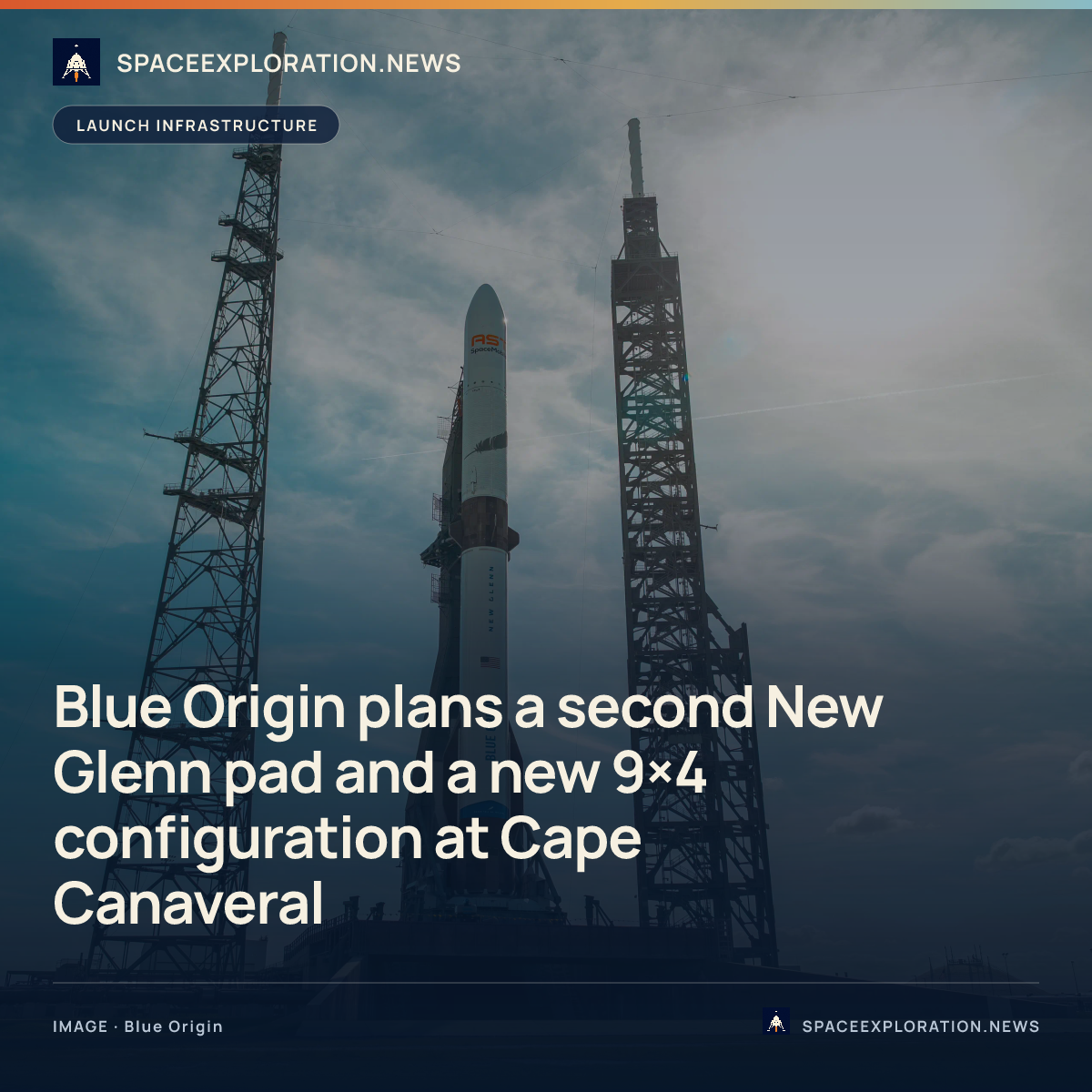
Blue Origin outlines second LC-36 pad for New Glenn 9x4
LC-36B, new processing buildings and a hybrid integration flow would divide work between two pads. Neither 9x4’s debut nor the repaired LC-36A’s next launch has an exact date.
Add us as a preferred source on Google Add us as a preferred source on Google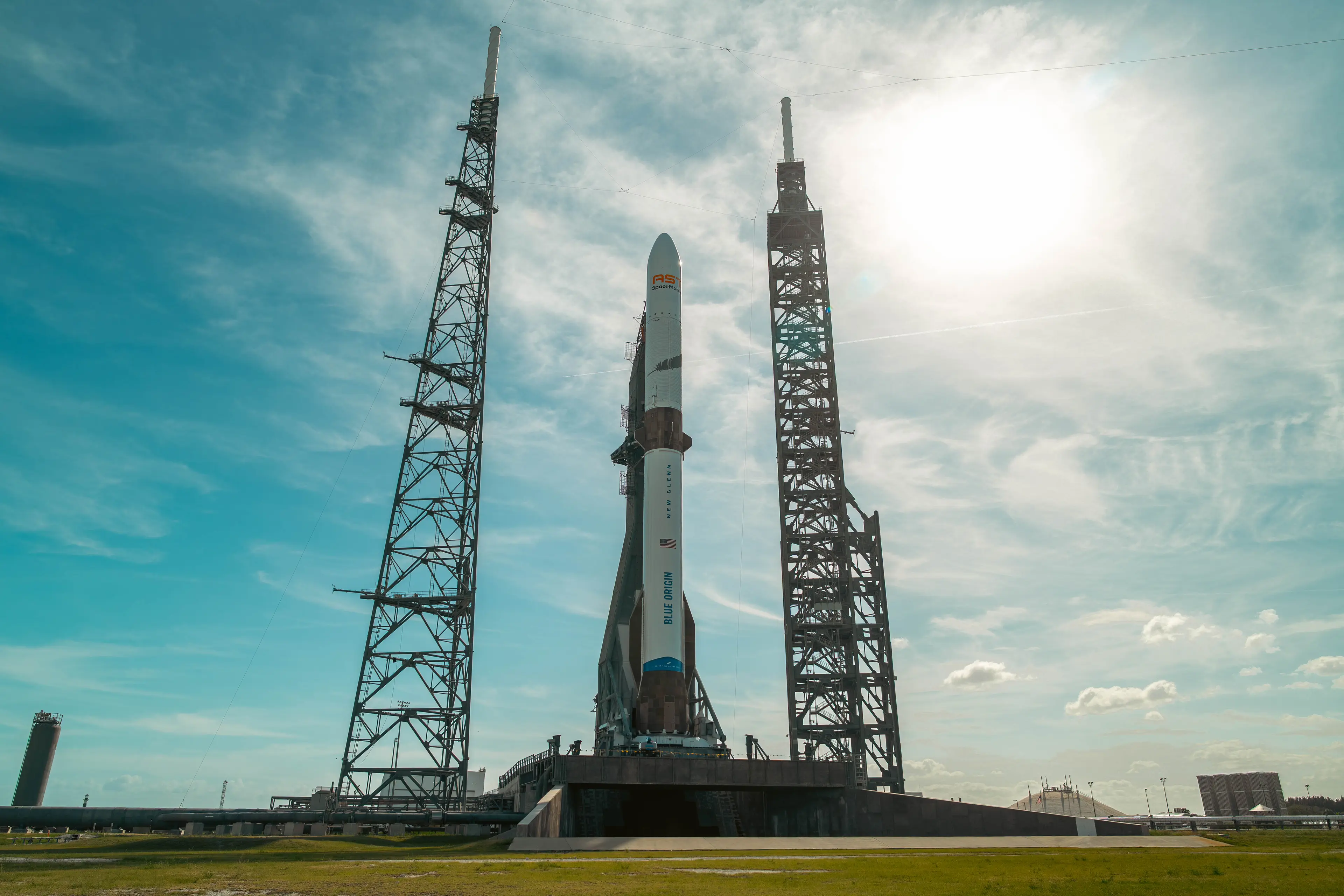
Blue Origin says it has begun developing a second New Glenn launch pad at Cape Canaveral, assigning the planned LC-36B to its larger 9x4 variant while LC-36A remains the base for the current 7x2. The August 12 announcement adds a separate vertical-integration building and a shared payload-processing facility to the site plan, but gives no completion date for the pad or debut date for the new rocket.
The published division would give each New Glenn configuration a designated pad. Blue Origin describes the two-pad plan as a way to support higher cadence and infrastructure resiliency, but it has not disclosed a launch-rate target, pad turnaround time, construction schedule or staffing plan for the expanded complex. A second concrete launch position therefore changes the planned operating layout; the announcement alone does not establish when two pads will be usable or whether they can support overlapping campaigns.
What the second pad changes
The pad plan also carries forward a new launch flow developed after the May 28 hotfire accident at LC-36A. Blue Origin’s June 30 recovery plan says the first and second stages will be joined horizontally in the existing Integration Facility, rolled to the pad on a transporter, turned upright by crane and placed on the launch table. The payload would then travel separately to the pad and be lifted onto the vertical rocket. This replaces the transporter-erector that was lost in the accident.
Blue Origin says the same horizontal/vertical concept of operations, or CONOPS, will be used across both pads. The company presents that common flow as a step towards pad interchangeability, but its August infrastructure announcement still gives LC-36B and LC-36A different home vehicles. It does not say whether 36B will be able to launch a 7x2, whether 36A will eventually handle a 9x4 or what modifications would be required for either crossover.
The additional buildings divide work as well as launch positions. Blue Origin identifies a new Vertical Integration Facility for 9x4 and a Payload Processing Facility, built with the U.S. government, that is intended to serve both New Glenn variants and other National Security Space Launch providers on the Eastern Range. The company has not explained how the vertical facility fits with the horizontally mated stages in its common CONOPS, or whether the shared payload facility is sized for overlapping campaigns.
Space.com reported that Blue Origin chief executive Dave Limp said LC-36B would use up to 2,500 tons of steel and include a 700-foot (213-metre) launch tower. Those figures describe the scale of planned structures, not the state of construction. Blue Origin’s own August 12 release says development has begun but publishes no foundation, steel-erection or commissioning milestone, and it does not give a date when LC-36B can host a vehicle.
A bigger rocket, still without a debut date
The 9x4 name identifies the engines on each stage: nine BE-4 engines on the reusable booster and four BE-3U engines on the upper stage. Blue Origin says the vehicle is designed to carry more than 70 metric tonnes to low Earth orbit, more than 14 tonnes directly to geosynchronous orbit and more than 20 tonnes to trans-lunar injection. Its fairing is planned to be 8.7 metres across.
That is a substantial step up from the current 7x2, which Blue Origin lists at 45 tonnes to low Earth orbit with a seven-metre fairing. The larger vehicle is meant for only a subset of missions requiring extra volume or performance. Blue Origin said in November 2025 that 7x2 and 9x4 would serve the market concurrently, a statement now reflected in the separate-pad assignments rather than a plan to replace the flying configuration.
Neither Blue Origin’s November vehicle announcement nor its August site announcement identifies the first 9x4 mission or customer. The earlier release gives performance targets but no development schedule; the later one says what the complex is intended to support, not when the vehicle will be ready. Starting LC-36B construction therefore does not establish that the rocket, four-engine upper stage or enlarged fairing has reached flight readiness.
LC-36A repairs are a separate clock
LC-36A is on a different schedule because it must first recover from the May 28 accident. Blue Origin says the hotfire destroyed the test vehicle, lightning tower, transporter-erector and hydraulic cylinders, while the tank farm, existing Integration Facility, vehicle access tower and water tower remained usable. Its June 30 roadmap marked site security and cleanup complete, but listed major repairs as in work, with systems integration and flight readiness still ahead.
On August 5, Limp said the investigation had traced the anomaly’s origin to the main oxygen valve on one BE-4 engine, citing recovered hardware and inspections. He said component and engine hotfire testing had informed small valve modifications, with updated hardware expected by the end of August, while the remaining fault-tree analysis continued. These are company findings; Blue Origin has not published an investigation report or independent review in the material cited here.
Blue Origin continues to target a 7x2 return to flight by the end of 2026, but neither the August 5 investigation update nor the August 12 pad announcement gives a launch date. The next concrete evidence will be completion of the remaining failure analysis, repaired-pad systems integration and a mission-specific flight announcement, alongside dated construction and commissioning milestones for LC-36B. Until those records appear, the supported conclusion is limited: Blue Origin has disclosed a two-pad operating plan and says it has begun infrastructure work, while both the 9x4 debut and the exact 7x2 return date remain open.
Reporting trail
Primary sources
Blue OriginReturning Launch Complex 36 to Two Pads: Blue Origin Begins Construction of LC-36Bblueorigin.com
Blue OriginNew Glenn Return to Flightblueorigin.com
Blue OriginGS1-3 Hotfire Updatesblueorigin.com
Blue OriginNew Glenn Updateblueorigin.com
Space.comBlue Origin adding second pad to Cape Canaveral launch complex amid rocket explosion repairsspace.com
For an image post, download the card and copy this suggested caption.
LC-36B, new processing buildings and a hybrid integration flow would divide work between two pads. Neither 9x4’s debut nor the repaired LC-36A’s next launch has an exact date. Read the full report: https://www.spaceexploration.in/news/blue-origin-lc-36b-new-glenn-9x4 #SpaceExplorationNews #SpaceNews #RocketLaunch