Solar science
Solar Orbiter traces a magnetic switchback to hot solar loops
An October 8 study links one large solar-wind reversal to magnetic reconnection; the authors call for broader studies before generalising the result.
Add us as a preferred source on Google Add us as a preferred source on Google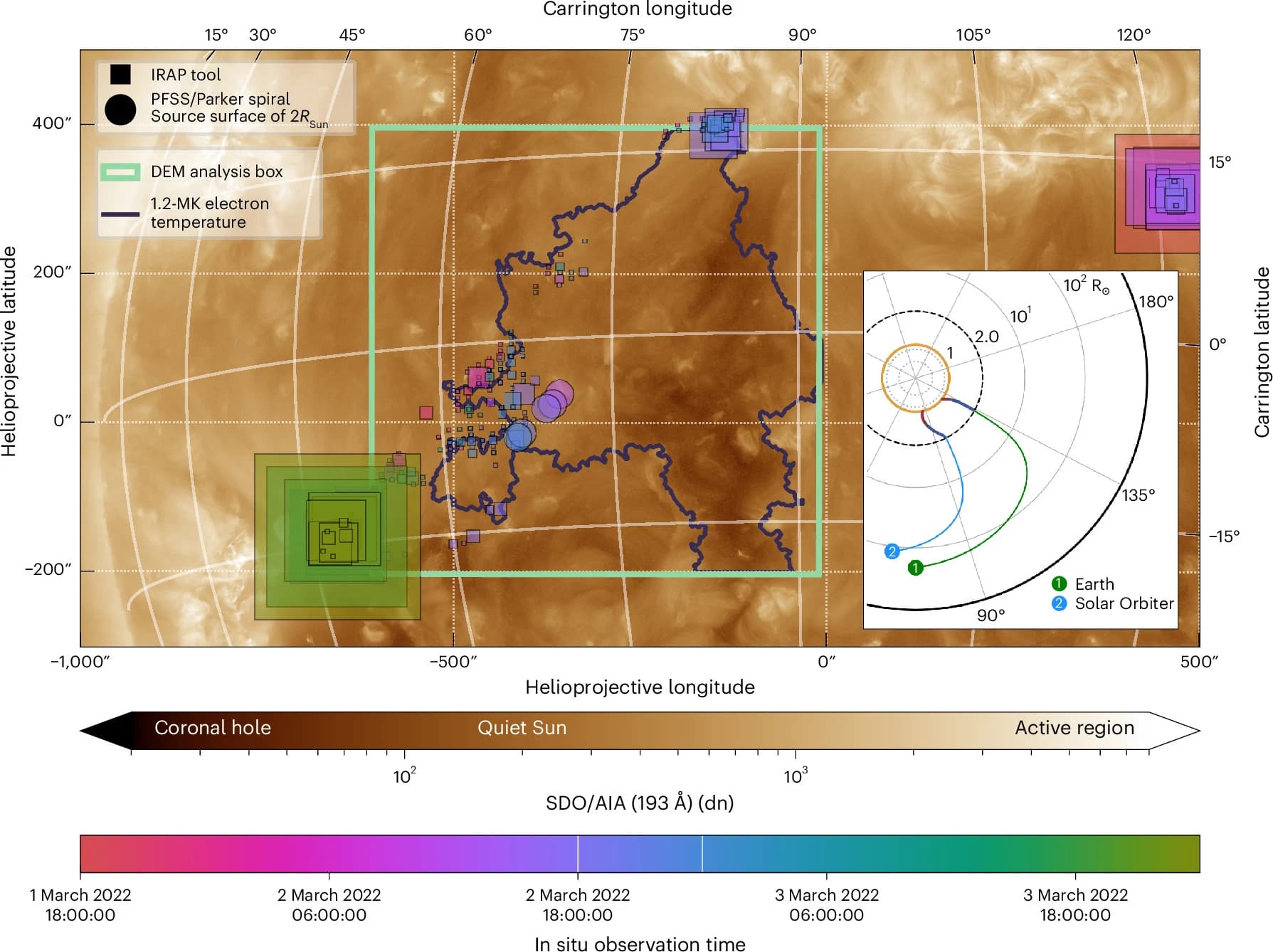
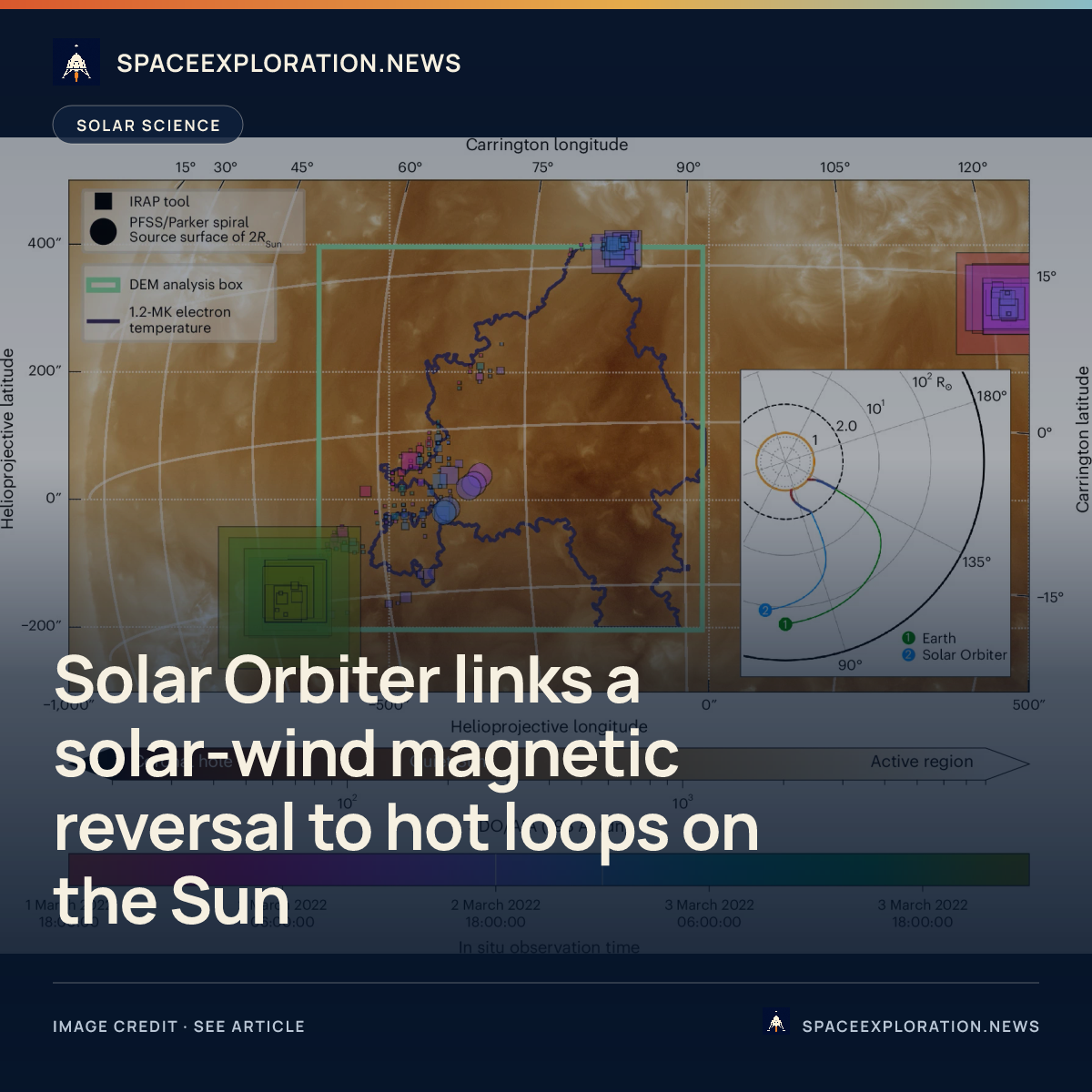
Solar Orbiter measurements have linked a large magnetic switchback in the solar wind to hot loops in the Sun’s atmosphere. A paper led by Jesse Coburn and published in Nature Astronomy on October 8 connects the plasma’s composition to its coronal source, while separating the proposed formation process from the waves that shape its later travel.
The spacecraft sampled the event on March 2, 2022, at about 0.55 times the Earth–Sun distance. The paper reports increased oxygen and carbon charge-state ratios and less helium relative to protons inside the large reversal. The authors interpret that combination as plasma released from hot, closed magnetic loops.
A switchback is a sharp fold in the magnetic field carried outward by the solar wind. ESA’s October 8 account explains the proposed origin as interchange reconnection: magnetic lines that return to the Sun interact with lines extending into space, reconnecting and releasing material previously trapped in a loop.
Co-author Stephanie Yardley of Northumbria University explains in ESA’s account that waves and turbulence appear to govern the switchback after it leaves the Sun. The team’s interpretation places reconnection and wave effects at different stages, rather than choosing one mechanism to explain its entire lifetime.
The result remains a case study. The paper’s model constrains the source to a coronal-hole boundary or loops within the hole; its magnetic mapping guides that estimate rather than locating a unique origin. The authors call for larger statistical studies and future heavy-ion measurements to test the connection across more events.
ESA project scientist Daniel Müller places the finding in research on the solar wind and extreme space weather. He links better understanding of that flow to protecting space infrastructure from solar storms. The reported result supplies a physical tracing method; the announcement describes no tested improvement in storm forecasts.
Reporting trail
Primary sources
For an image post, download the card and copy this suggested caption.
An October 8 study links one large solar-wind reversal to magnetic reconnection; the authors call for broader studies before generalising the result. Read the full report: https://www.spaceexploration.in/news/solar-orbiter-switchback-coronal-origin #SpaceExplorationNews #SpaceNews #SpaceScience