Human spaceflight
The motor test shaping Gaganyaan’s next escape trials
SOLVE turns modified PSLV hardware into a flexible test bed for India’s crew-module parachute system. Here is what the first firing proved—and what comes next.
Add us as a preferred source on Google Add us as a preferred source on Google
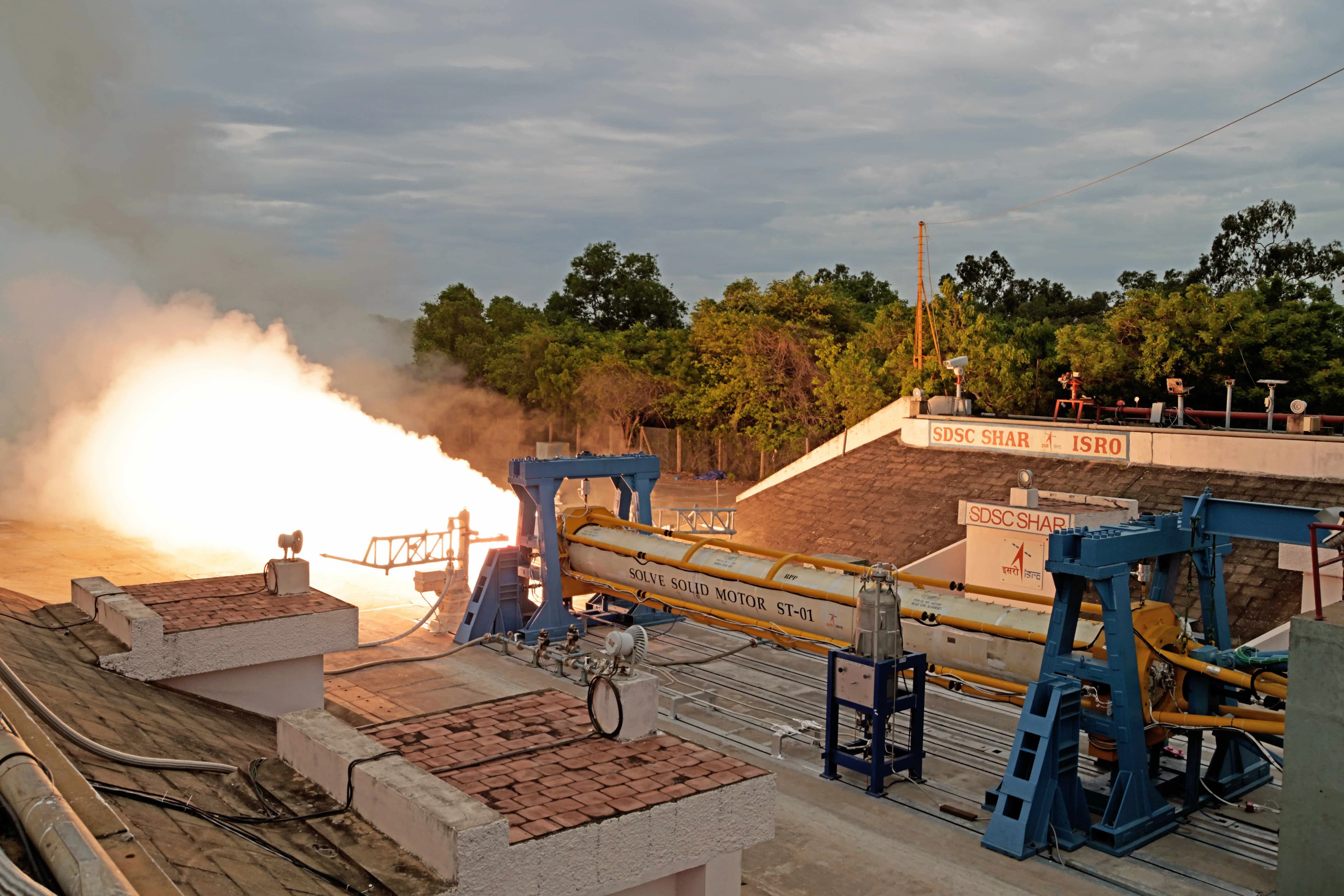
A successful motor firing at Sriharikota has opened a more flexible route for testing one of Gaganyaan’s least glamorous but most unforgiving systems: the parachute chain that must slow a returning crew module before splashdown. The firing validated the first solid motor for the Sub-Orbital Launch Vehicle for Experiments, or SOLVE.
A vehicle built around recovery tests
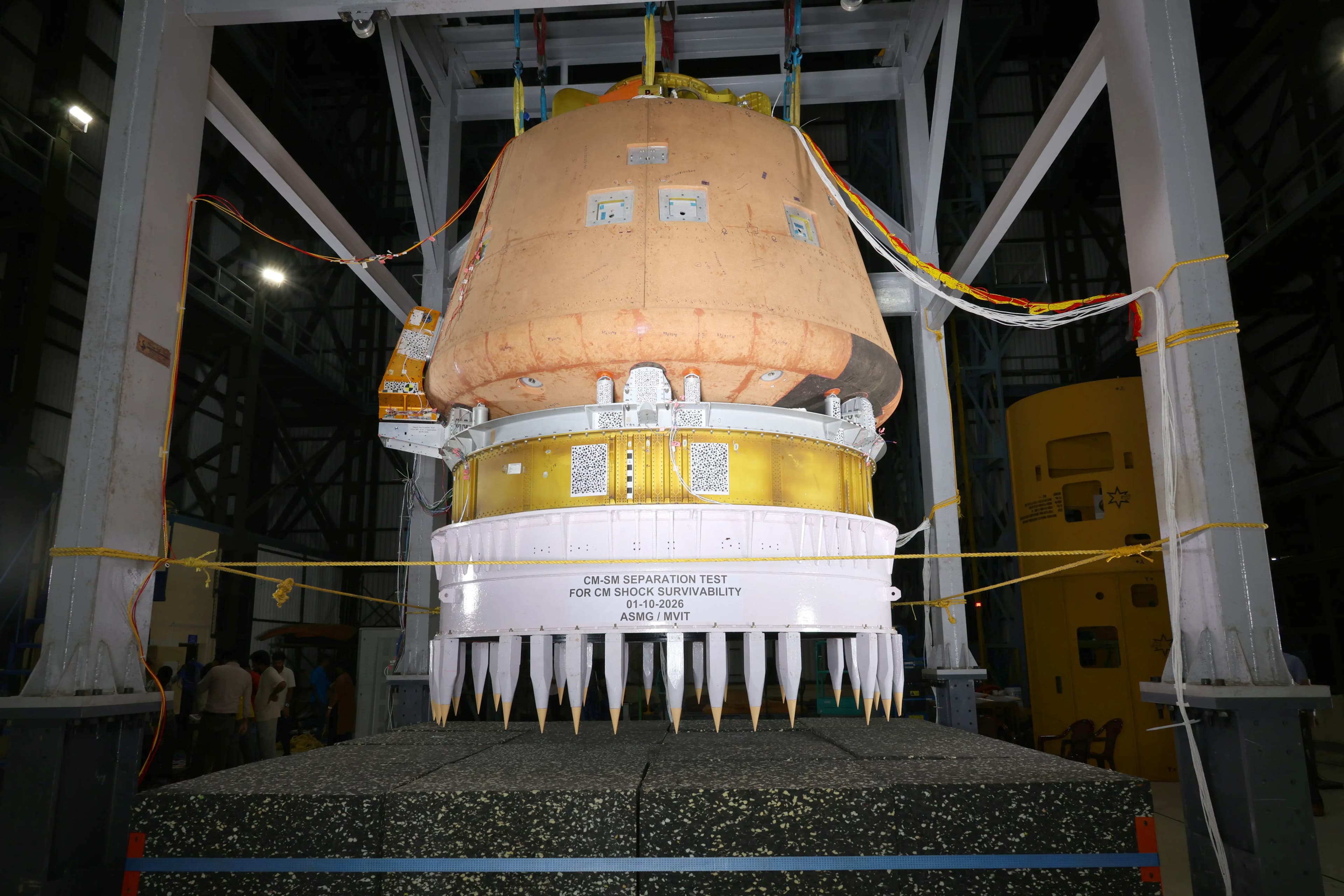
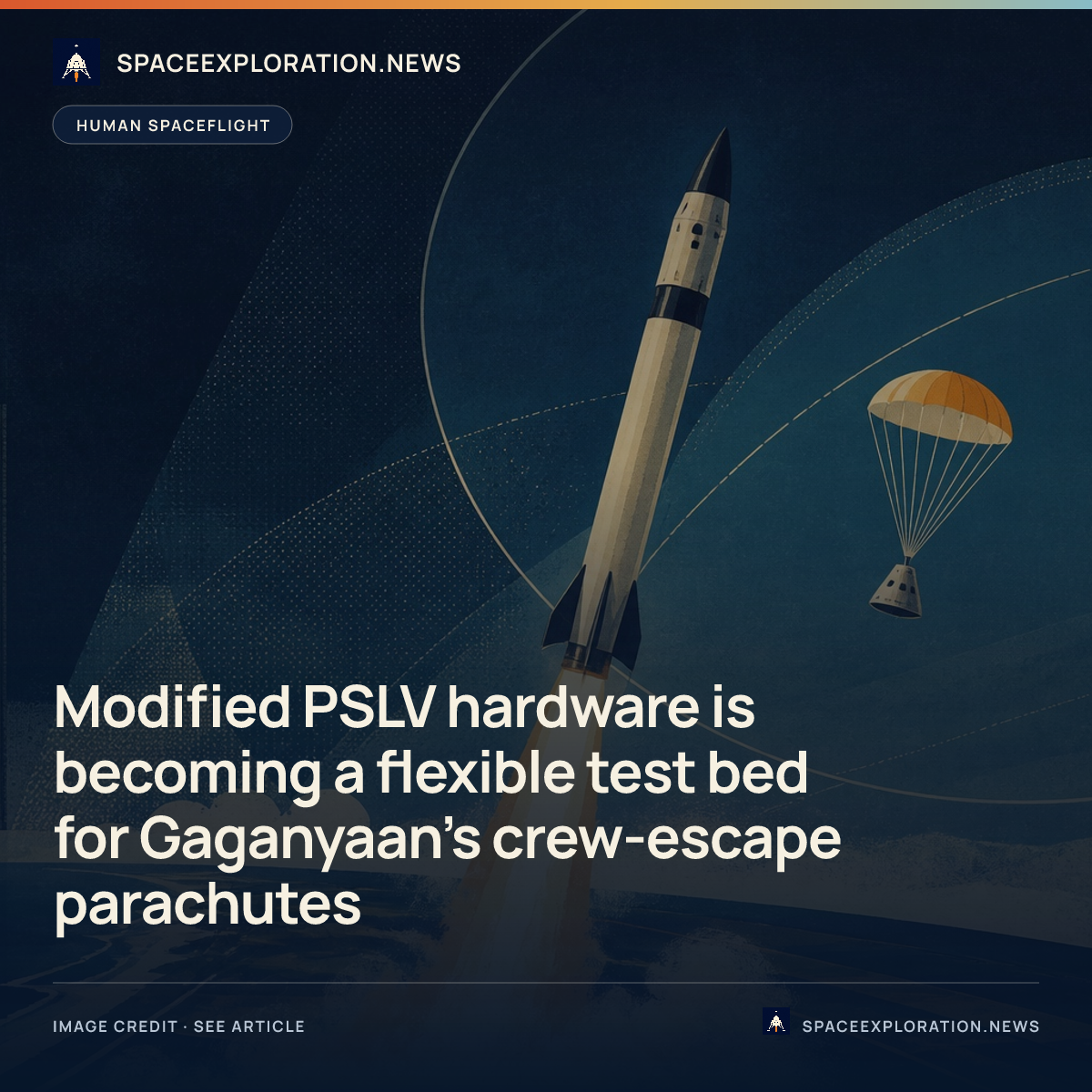
SOLVE is designed to carry a crew-module test article to an altitude between 10 and 17 kilometres. After separation, a sequence of ten parachutes is intended to progressively reduce the capsule’s speed before it reaches the sea. Repeating that profile under different conditions lets engineers examine deployment timing, loads and recovery behaviour without assigning a full human-rated launch vehicle to every trial.
Why familiar hardware matters
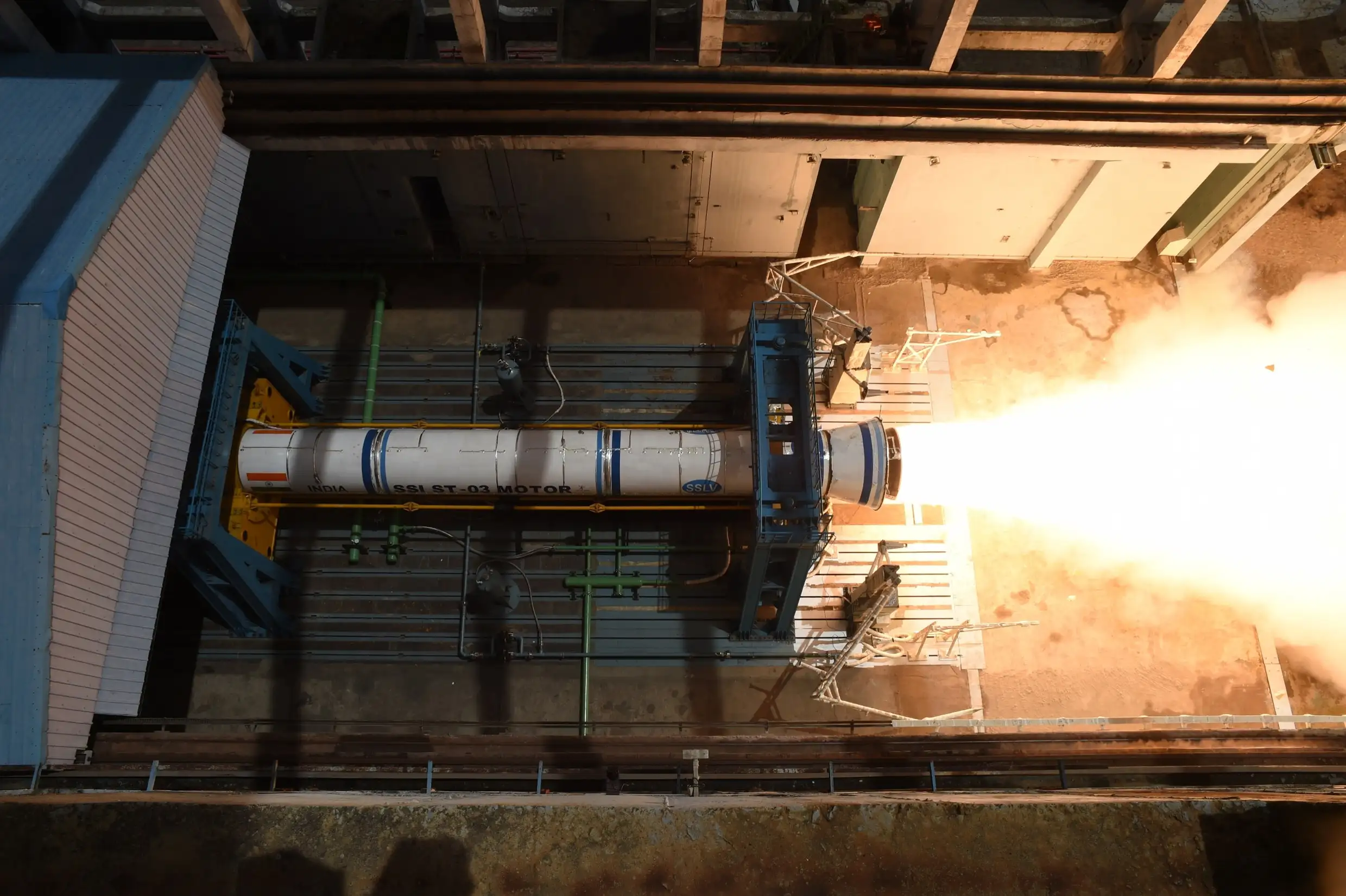
The solid stage inherits its basic architecture from a PSLV strap-on motor, but it is not a stock booster. ISRO says the configuration uses a slower-burning propellant and a straight nozzle with secondary-injection thrust-vector control. The combination adapts proven manufacturing heritage to the lower, more tightly shaped trajectory needed for parachute qualification.
The first firing established that the motor’s measured performance matched expectations; it did not by itself qualify the complete parachute sequence.
Space Exploration .IN analysis
The distinction matters. ST-01 was a ground test of the propulsion element. Integrated flights must still combine the motor, guidance, separation event, representative crew module, parachute chain and maritime recovery operation. SOLVE’s value is that it gives the programme a reusable test architecture for working through those linked events one campaign at a time.
Reporting trail
Primary sources
For an image post, download the card and copy this suggested caption.
SOLVE turns modified PSLV hardware into a flexible test bed for India’s crew-module parachute system. Here is what the first firing proved—and what comes next. Read the full report: https://www.spaceexploration.in/news/solve-gaganyaan-escape-trials #SpaceExplorationNews #SpaceNews #SpaceMissions