Launch
ISRO tests improved SSLV first stage for 100 kg payload gain
The SS1 firing exercised a higher propellant burn rate in two segments, revised thermal protection and nozzle-production changes, but the gain has not yet been demonstrated in flight.
Add us as a preferred source on Google Add us as a preferred source on Google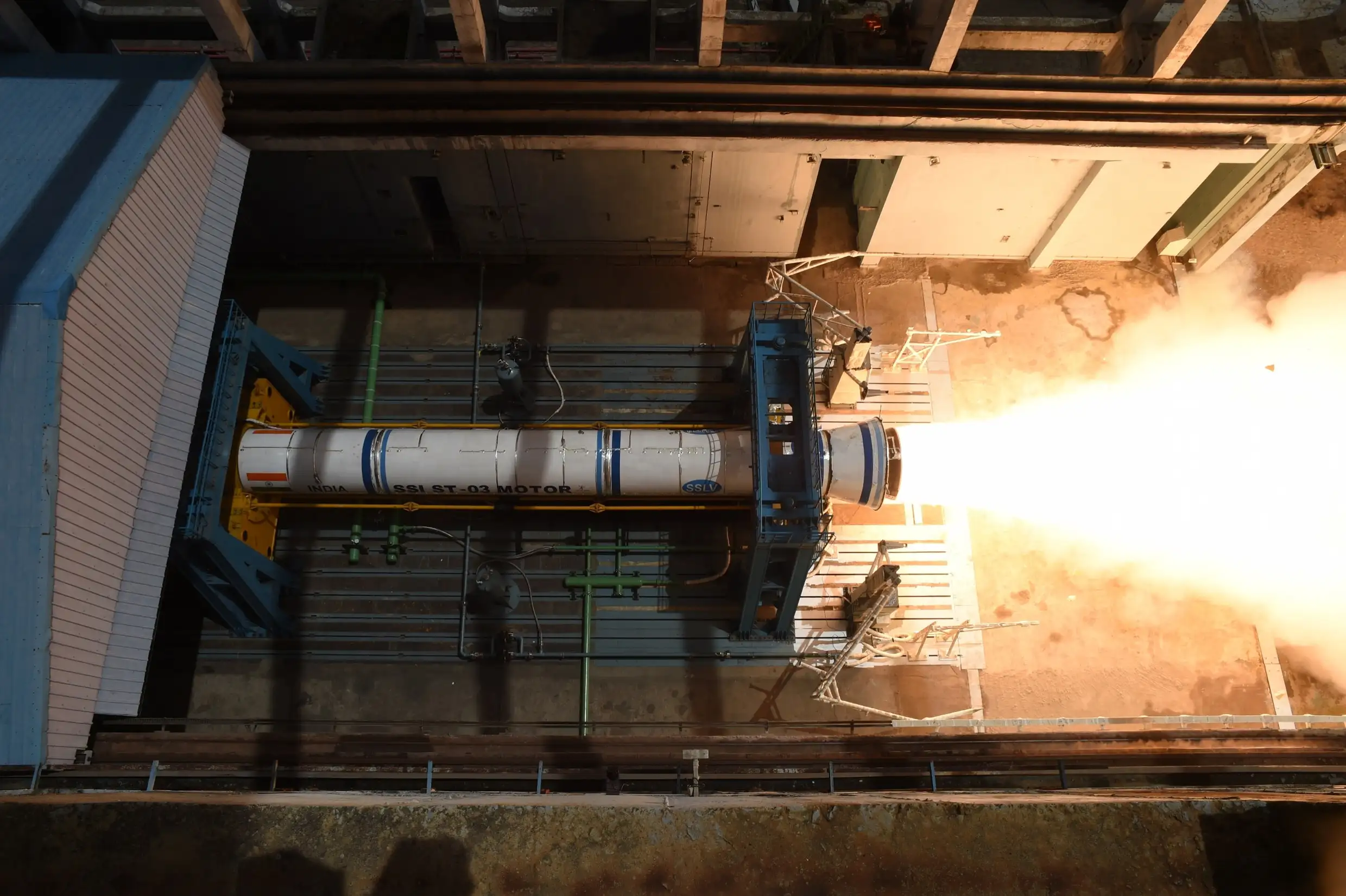
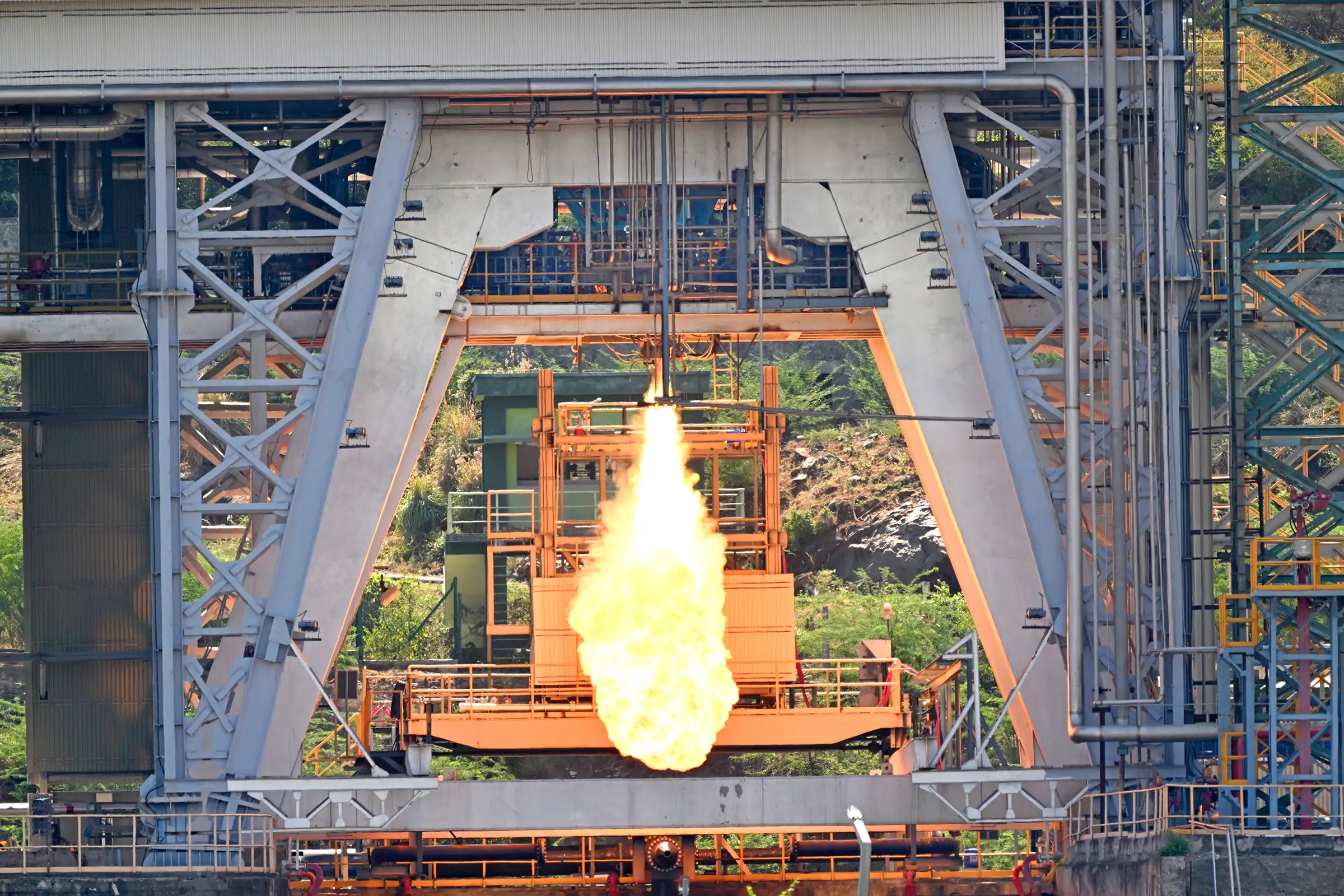
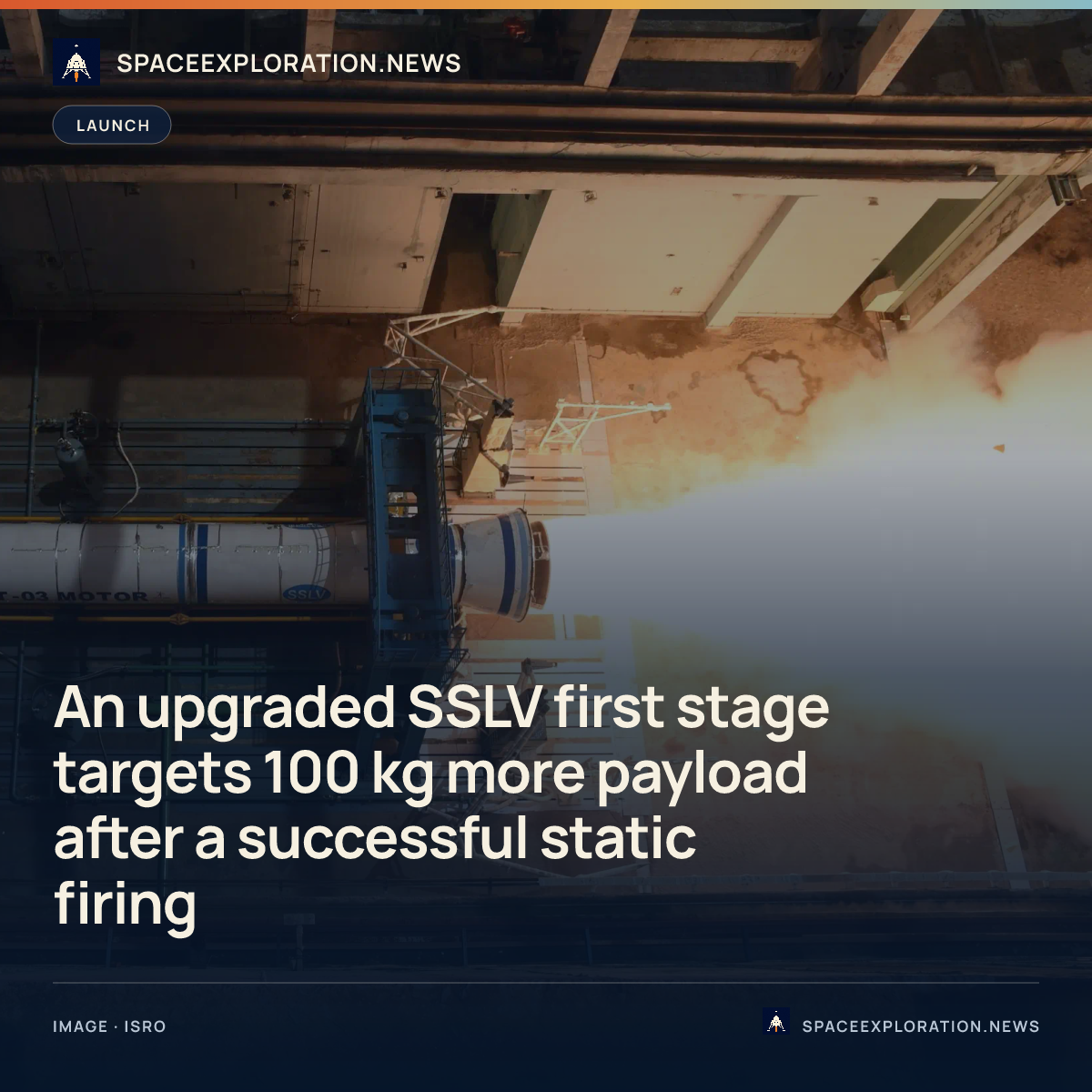
The Indian Space Research Organisation says an improved first-stage motor for its Small Satellite Launch Vehicle performed close to predictions in a ground static firing at Sriharikota on August 11, qualifying a defined set of design and production changes. The agency estimates that using the modified SS1 stage would raise SSLV payload capability to low Earth orbit by about 100 kilograms, but no vehicle has yet flown that configuration.
In this case, qualification applies to the changes incorporated in the SS1 motor that was fired under instrumentation at the static test facility. The test did not exercise an ascent, stage separation, guidance, the other SSLV stages or orbital injection. It therefore supports induction of the revised motor into a future vehicle; it does not establish a 100-kilogram increase through a launch.
What changed inside SS1
ISRO identified a higher propellant burn rate in two motor segments, an optimised thermal-protection system, process changes in the nozzle subsystem intended to ease production, and reduced mass. Its release did not state the old and new burn rates, identify which two segments were changed, quantify the mass removed, or specify whether the nozzle work altered materials, geometry, tooling or assembly. The result is a qualification of the disclosed configuration, not a public design record detailed enough for an outside performance calculation.
The baseline SS1 was already a three-segment solid motor. In its account of a March 14, 2022 ground test, ISRO said that version used bond-free joints between the segments, an optimised igniter, a high-power electromechanical actuator with digital control electronics and simultaneous casting of all three propellant segments. The August 2026 release does not say those features changed. It names burn-rate, thermal-protection, nozzle-process and mass improvements layered onto SS1, so describing the test article as a completely redesigned stage would go beyond the published evidence.
More than 600 measurements covered ignition, internal ballistics, structural behaviour, thermal conditions, dynamics and acoustics, according to ISRO. The agency says the resulting motor performance was close to predictions. It did not publish a thrust-time curve, burn duration, pressure history, thermal margins or acceptance limits for the August test, leaving no public dataset with which to measure the margin between observed and predicted performance independently.
ISRO explicitly says the firing qualifies the design improvements implemented in SS1. It does not say the entire SSLV was requalified, that serial production has begun for the revised motor, or that the test article was flight hardware. The release also gives no date for its first launch. Those omissions define the present status: the improved motor has completed the reported ground qualification, while vehicle-level induction and flight performance remain ahead.
How to read the 100-kilogram estimate
The payload number is conditional. ISRO says capability is estimated to increase by about 100 kilograms to low Earth orbit when the improved SS1 is inducted. The agency describes SSLV elsewhere as a vehicle for satellites weighing up to 500 kilograms in low Earth orbit, but the new release gives no reference altitude, inclination or revised maximum. It therefore does not support relabelling SSLV as a verified 600-kilogram launcher or treating the estimate as a 20% gain for every low-Earth-orbit mission.
There is a second unresolved baseline. ISRO static-tested an improved SS3 third stage on December 30, 2025 and attributed an estimated 90-kilogram payload gain to its lighter carbon-epoxy motor case. The SS1 announcement does not say whether its new 100-kilogram figure is additional to that earlier estimate, replaces it, or assumes both upgraded stages. Adding the two figures to claim a 190-kilogram improvement would therefore be unsupported.
The August test itself carried no payload and reached no orbit. ISRO associates the projected gain with the improved first-stage design, whose changes include both motor performance and mass reduction, but it does not divide the 100 kilograms among those changes or publish the vehicle-performance analysis behind the estimate. The number is a development projection informed by the qualified configuration, not a measurement of extra payload delivered in flight.
Where the upgraded motor enters the programme
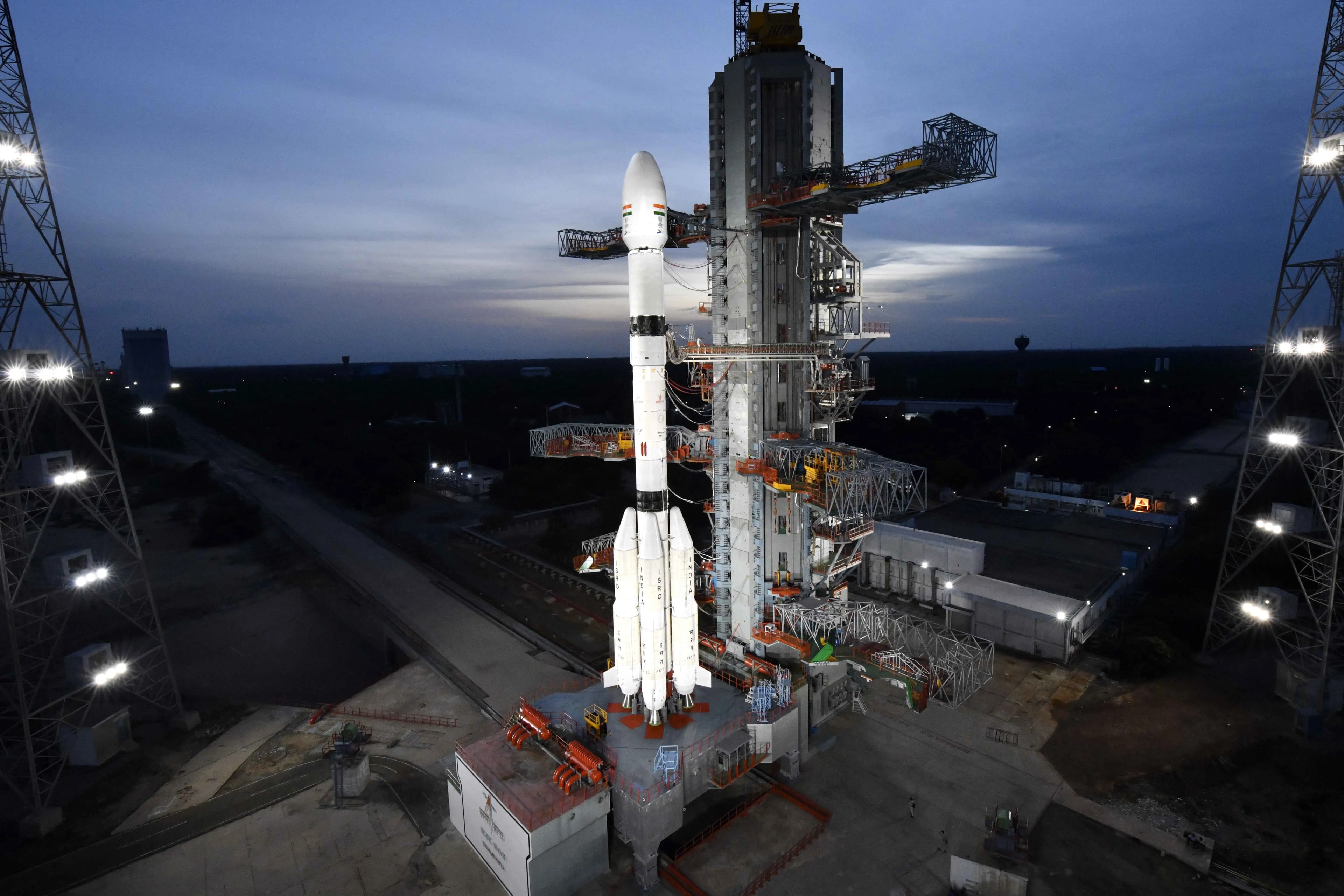
SSLV uses three solid propulsion stages, SS1, SS2 and SS3, followed by a liquid-propellant Velocity Trimming Module for final orbit corrections. ISRO described the first development vehicle as using stages of about 87 tonnes, 7.7 tonnes and 4.5 tonnes respectively, making SS1 the largest propulsion stage in the stack. The August firing tested that first-stage motor on the ground, not the four-part propulsion chain as an integrated launch vehicle.
The distinction is visible in SSLV's flight record. The first development mission in August 2022 failed to place its satellites in a stable orbit after a separation shock affected the navigation system, even though ISRO reported normal performance from the solid stages. SSLV-D2 reached orbit in February 2023, and SSLV-D3 followed in August 2024, completing the development project. The basic launcher has successful flights; the SS1 configuration tested this month does not yet have flight heritage.
Industrial production is part of the reason the nozzle-process change matters. NewSpace India Limited, ISRO, the Indian National Space Promotion and Authorisation Centre (IN-SPACe) and Hindustan Aeronautics Limited signed an SSLV technology-transfer agreement in September 2025, and ISRO says that transfer is under way. Neither the August release nor the transfer announcement says whether the improved SS1 is already part of the industrial production baseline, who will build the revised motor, or when it will enter serial manufacture.
The central August result remains a claim from ISRO, the organisation that designed and tested the motor. The agency has not released raw test data or an independent qualification report, and no independent account reviewed for this article supplied separate measurements from the firing. Spaceflight Now independently reported SSLV-D2's successful orbital mission in 2023, but that flight predates the current SS1 changes and cannot verify their performance.
What the test changes is precise but limited: ISRO has accepted ground-test performance for higher burn rate in two SS1 segments, revised thermal protection, production-oriented nozzle work and a lower-mass configuration. What it does not change is the flown record. The next decisive evidence will be a mission that identifies the improved SS1 and demonstrates the resulting vehicle performance; ISRO has not announced when that flight will occur.
Reporting trail
Primary sources
ISROISRO tests an improved version of the first stage of Small Satellite Launch vehicle (SSLV)isro.gov.in
ISROGround testing of Solid Booster Stage (SS1) for Small Satellite Launch Vehicle (SSLV)isro.gov.in
ISROSSLV-D1/EOS-02 Missionisro.gov.in
ISROSSLV-D2/EOS-07 Mission: Second Developmental Flight of SSLVisro.gov.in
ISROSSLV-D3/EOS-08 Missionisro.gov.in
ISROISRO conducts Ground Test of SSLV Third Stageisro.gov.in
ISROTechnology Transfer Agreement signed for Small Satellite Launch Vehicle (SSLV)isro.gov.in
Spaceflight NowIndia's Small Satellite Launch Vehicle successful on second test flightspaceflightnow.com
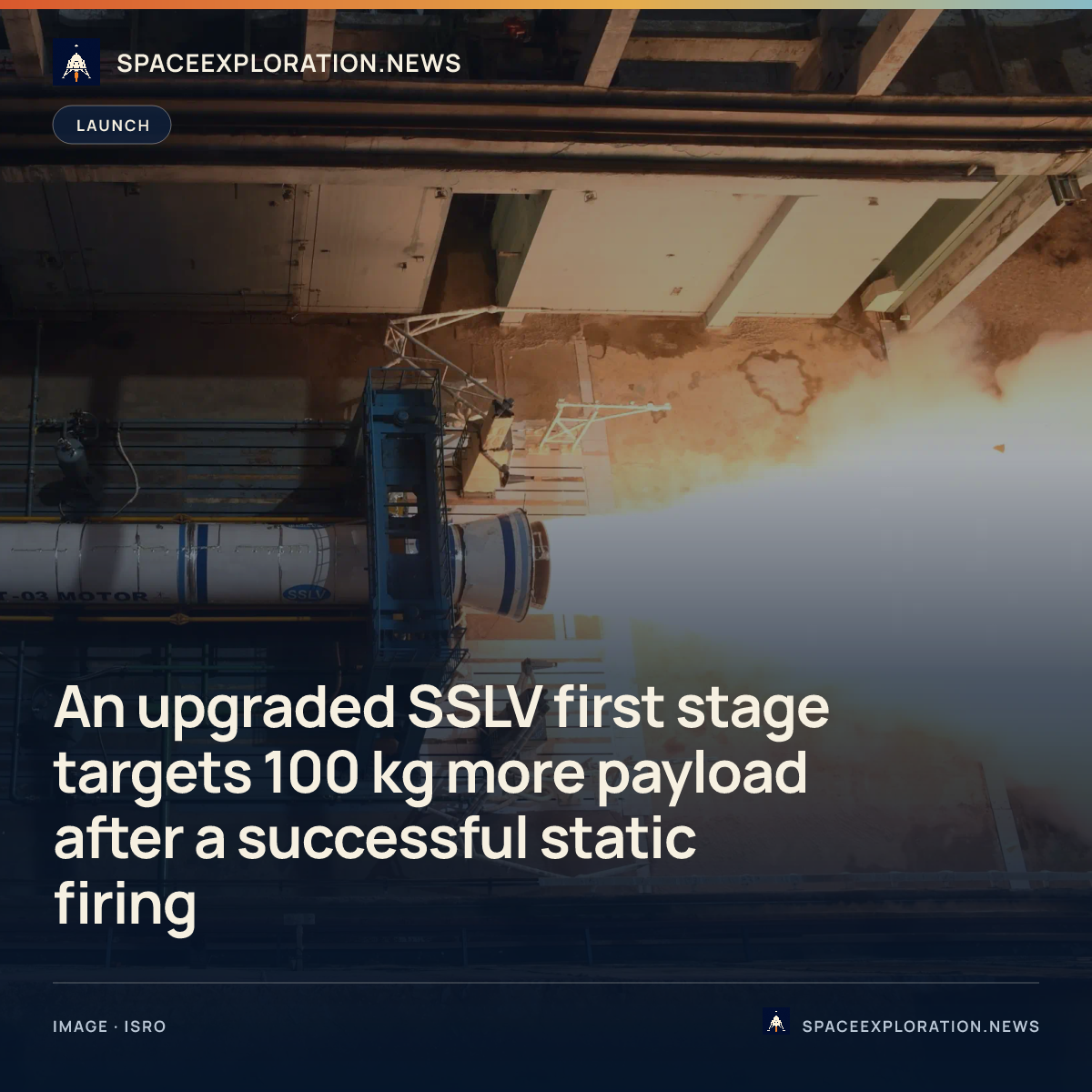
For an image post, download the card and copy this suggested caption.
The SS1 firing exercised a higher propellant burn rate in two segments, revised thermal protection and nozzle-production changes, but the gain has not yet been demonstrated in flight. Read the full report: https://www.spaceexploration.in/news/isro-sslv-ss1-improved-static-test #SpaceExplorationNews #SpaceNews #RocketLaunch