The 2047 dossier
From Gaganyaan to an Indian station in orbit
A mission-by-mission guide to the approved modules, return technologies and launch systems connecting today’s crew programme to Bharatiya Antariksh Station and a lunar landing.
Add us as a preferred source on Google Add us as a preferred source on Google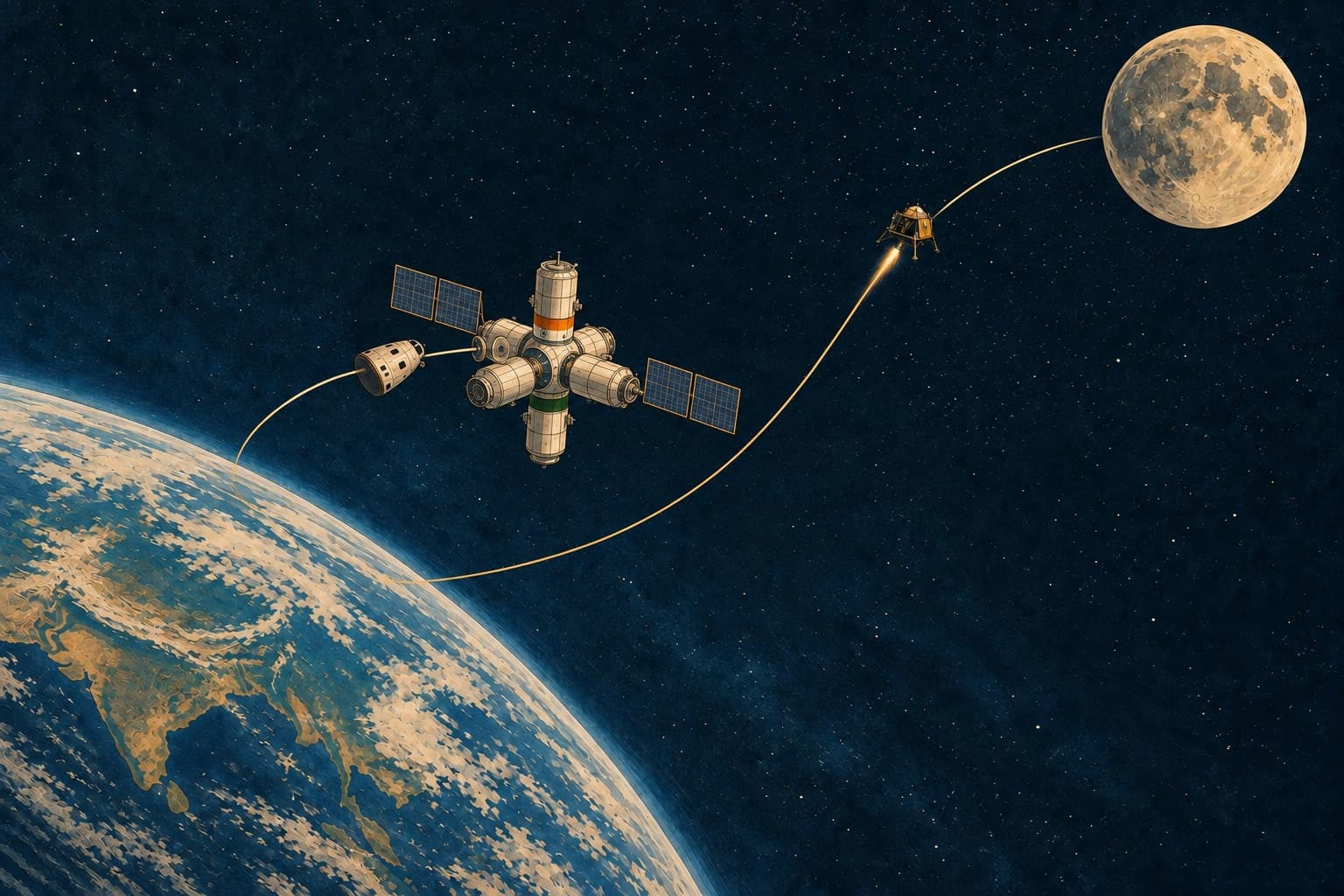
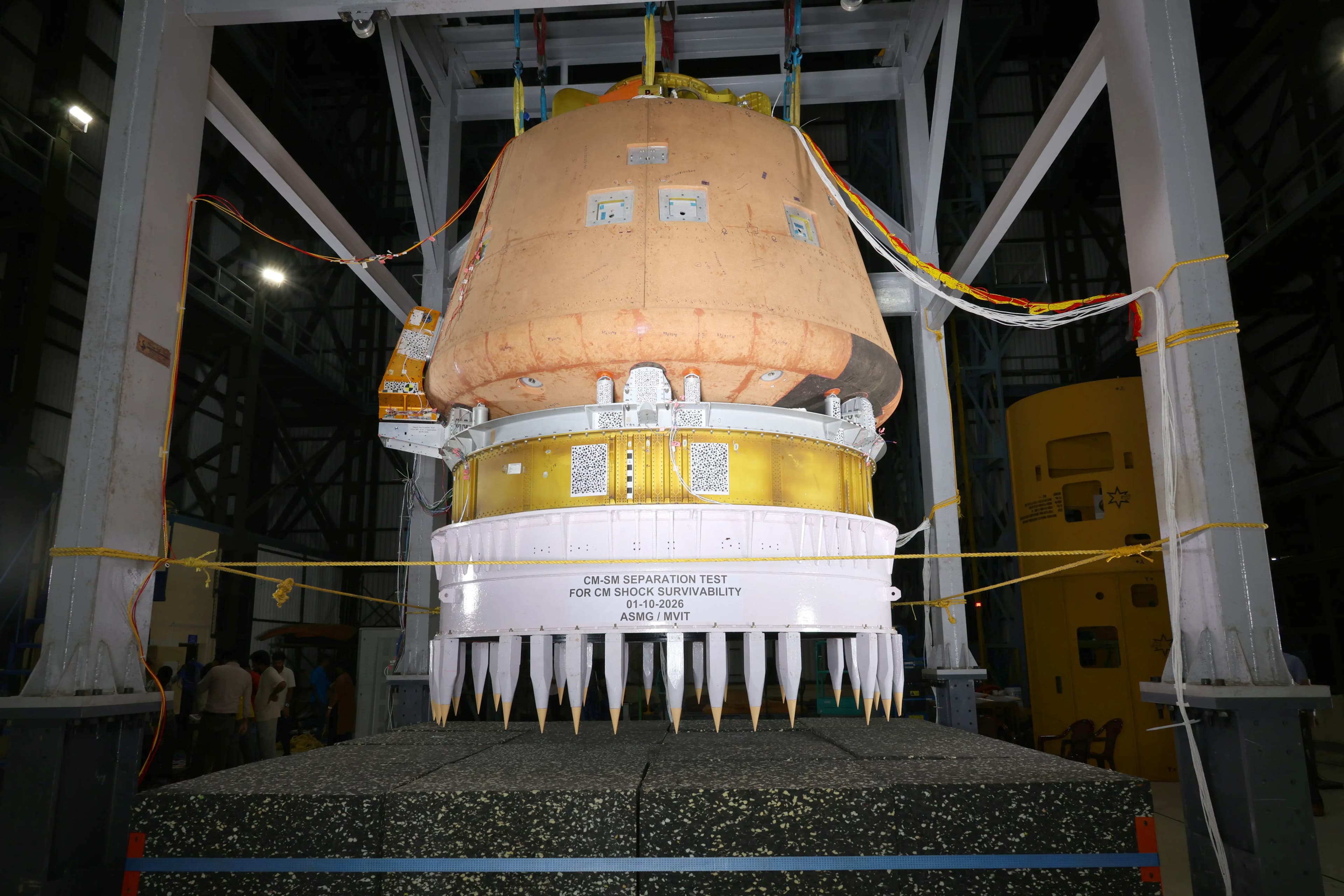
India’s Space Vision 2047 is best read as a dependency map, not a list of isolated launch dates. Gaganyaan establishes human-rated launch, crew systems, recovery and flight operations. Follow-on missions extend duration and capability. A first Bharatiya Antariksh Station module then becomes a platform for learning how to assemble, supply and operate a sustained presence in low Earth orbit.
The 2028 hinge point
The Department of Space annual report places the first BAS module in 2028, alongside Gaganyaan follow-on missions. That target demands more than a habitable pressure vessel: docking, power, thermal control, communications, guidance, launch integration and repeatable crew and cargo logistics all have to mature together.
Robotic missions close human-flight gaps
Chandrayaan-4 is aimed at demonstrating lunar landing, ascent, Earth return and sample recovery technologies. Those are robotic objectives, but they exercise parts of the transport chain needed for more ambitious lunar operations. The Venus Orbiter Mission develops a different branch of deep-space capability: long-duration cruise, demanding thermal conditions and sustained science operations.
A station needs a transport system
The Next Generation Launch Vehicle is targeted for development by 2032. A larger, more operationally efficient launcher would support station assembly and later exploration architectures in ways that one-off mission vehicles cannot. Ground infrastructure expands in parallel, including a third launch pad at Sriharikota.
The annual report targets a complete BAS by 2035 and an Indian crewed lunar landing by 2040. These dates express programme intent, not guarantees. Funding, test outcomes, launcher readiness, industrial capacity and lessons from each precursor mission will reshape the route. The durable part of the roadmap is its sequence: master return, extend duration, assemble in orbit, then push beyond it.
Reporting trail
Primary sources
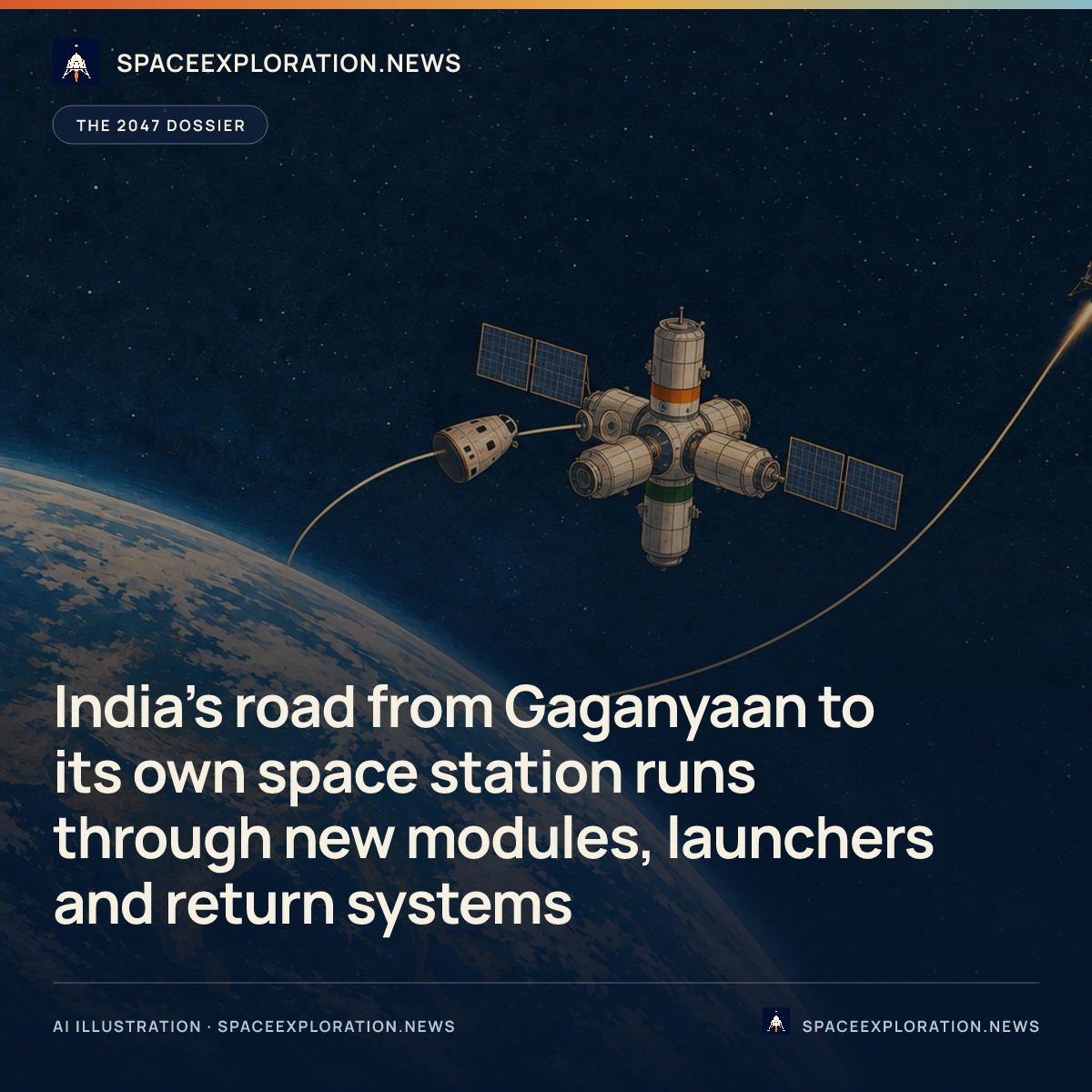
For an image post, download the card and copy this suggested caption.
A mission-by-mission guide to the approved modules, return technologies and launch systems connecting today’s crew programme to Bharatiya Antariksh Station and a lunar landing. Read the full report: https://www.spaceexploration.in/news/space-vision-2047-roadmap #SpaceExplorationNews #SpaceNews #SpacePolicy