Satellite finance
Lightspeed financing sits outside Telesat’s looming GEO debt
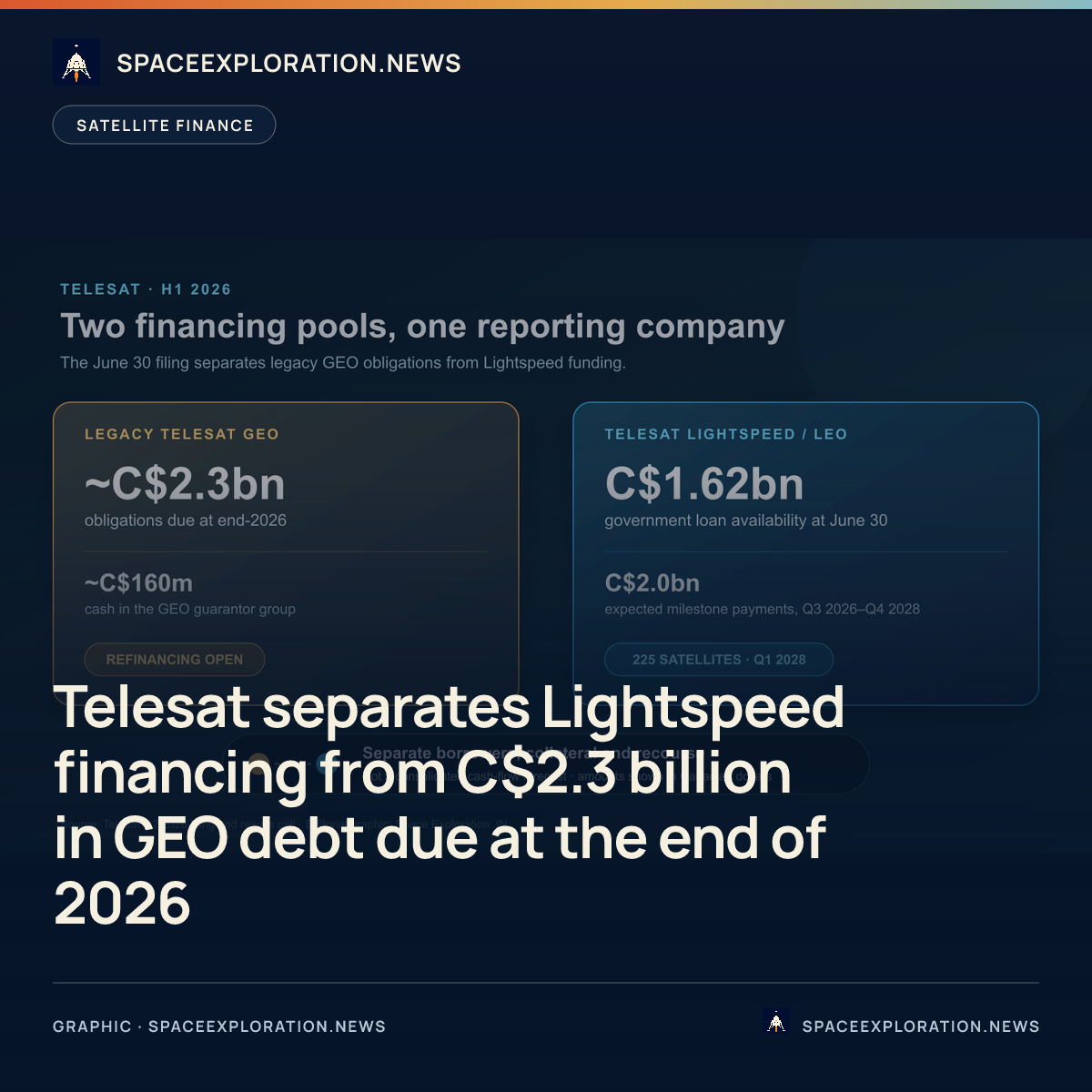
The first-half filing separates the LEO project’s financing from about C$2.3 billion of Telesat GEO obligations due at the end of 2026, while retaining a first-quarter 2028 service target.
Add us as a preferred source on Google Add us as a preferred source on Google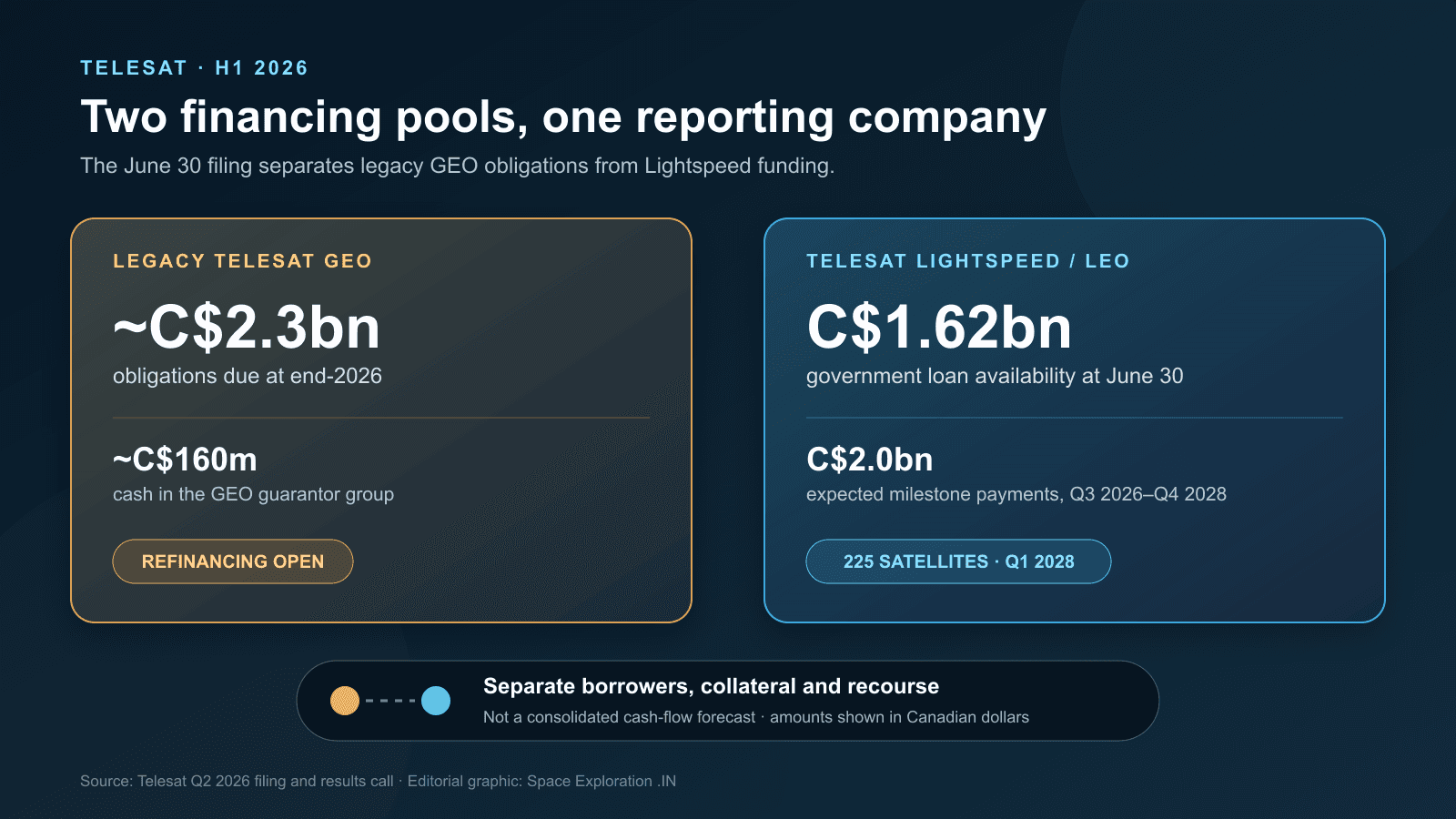
Telesat’s first-half results put two sharply different financing positions in the same filing. Management says the Telesat Lightspeed low-Earth-orbit network is fully funded through global service entry, yet the legacy Telesat GEO business has about C$2.3 billion of obligations due at the end of 2026 and has not completed a refinancing. The filing treats those as separate financing pools, but it also says the GEO maturity creates material uncertainty that casts substantial doubt on the company’s ability to continue as a going concern.
The timing needs a correction at the outset. Via Satellite’s daily-news feed carried the item on August 14, but its link opens a results story dated August 13. Telesat released its results and filed the accompanying report on August 13. The August 14 entry was therefore specialist recirculation of coverage from the previous day, not a second set of company results.
The first-half numbers
For the six months to June 30, Telesat reported C$167 million in revenue, down 25 per cent from the same period in 2025, and C$57 million in adjusted earnings before interest, taxes, depreciation and amortisation, down 55 per cent. Its net result moved from a C$24 million profit to a C$710 million loss. The company attributed that swing mainly to non-cash warrant remeasurement, a goodwill impairment, lower adjusted earnings and foreign-exchange movements; the net-loss figure is not a measure of Lightspeed cash spending by itself.
Lightspeed investment reached C$337 million in the half, comprising C$40 million recorded as operating expenditure and C$297 million of capital expenditure. After the August 4 Canadian military communications award expanded the planned constellation from 156 to 225 satellites, Telesat lifted its 2026 Lightspeed spending forecast from C$1.0–C$1.2 billion to C$1.3–C$1.5 billion. The company estimates total investment in the 225-satellite programme at about C$7 billion; that is a programme estimate, not spending already incurred in 2026.
The results also show the legacy satellite business shrinking while the new constellation absorbs capital. Second-quarter revenue was C$79 million and adjusted earnings were C$22 million, declines of 25 per cent and 62 per cent respectively. Telesat said lower service revenue drove the change. Those operating figures help explain the pressure around the older debt, but the filing does not say that the quarterly revenue decline withdrew money from the Lightspeed facilities.
Two financing pools, not one balance
At June 30, the company reported C$383.2 million of cash and short-term investments on a consolidated basis, with about C$160 million inside the Telesat GEO guarantor group. Its report says those resources are not expected to be sufficient for the roughly C$2.3 billion of obligations falling due at the end of 2026. Approximately C$2.7 billion of debt was classified as current after including other maturities and the refinancing requirement. Advisers had held discussions with creditor advisers during the preceding nine months, but Telesat gave no assurance that a consensual transaction would be completed.
Lightspeed sits outside that guarantor group. The filing identifies Telesat LEO as a non-guarantor, excludes its assets from the collateral securing the legacy notes, and says repayment obligations under the Lightspeed government financing do not extend to Telesat GEO. This legal and financial separation is why the debt deadline should not be described as a C$2.3 billion hole in the constellation budget. It does not resolve the legacy refinancing; it establishes that the two sets of obligations have different borrowers, assets and recourse.
The core Lightspeed facilities comprise a C$2.14 billion loan from the Government of Canada and a C$400 million loan from Quebec. Telesat reported C$1.62 billion still available to draw from those facilities at June 30. The expanded polar-capacity contract is expected to provide a further C$2.0 billion in milestone-based payments from the third quarter of 2026 through the fourth quarter of 2028. On the results call, the chief financial officer also identified US$325 million of vendor financing and said the package included a US$500 million contingency through global service entry.
The claim of full funding is therefore management’s assessment of a stack that includes undrawn loans, vendor financing and future contract payments, rather than a claim that the full programme cost is held as cash. The military payments depend on milestones, and the company’s filing warns that access to additional funding sources cannot be guaranteed. The current disclosures support the view that committed Lightspeed sources are separate from GEO creditors; they do not remove execution conditions from the build or provide a completed refinancing for the older business.
Deployment still runs through 2028
The Canadian Enhanced Satellite Communications Project – Polar award adds 69 satellites to Lightspeed, taking the planned network to 225. Telesat says the initial contract is worth about C$2.3 billion before tax and that two option periods take the potential total to C$2.7 billion. MDA Space has received a firm order for the additional spacecraft. The government describes the service as military Ka-band capacity for northern and global operations; the commercial network is intended to use the added coverage and capacity as well.
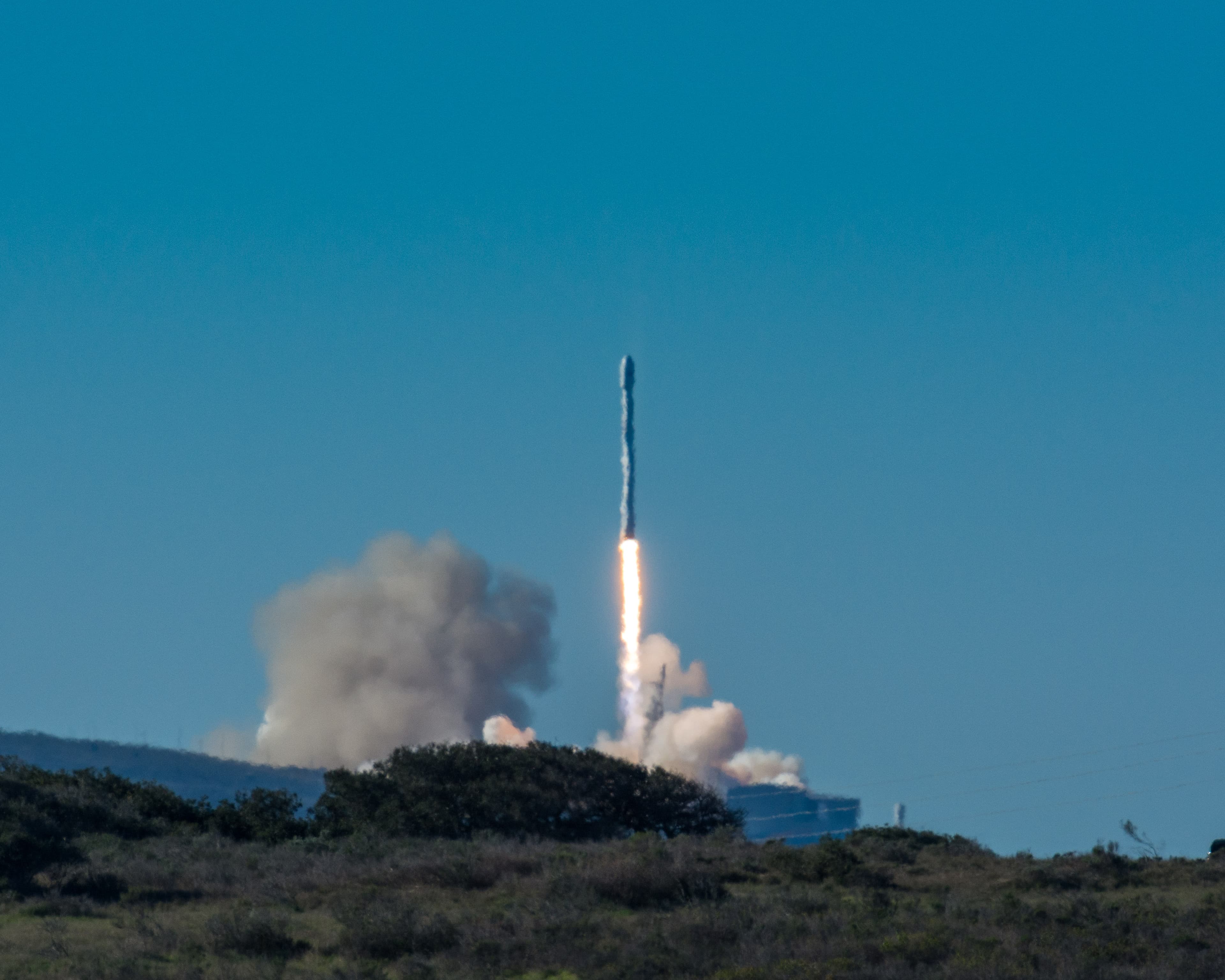
Launch procurement is almost, but not entirely, closed. Telesat said 14 of an estimated 15 Falcon 9 rockets were under contract and that an agreement for the last vehicle was being placed. It expects global commercial availability around the end of the first quarter of 2028 and all 225 satellites to be launched by the end of that year. Those remain forward-looking company targets. The August results did not announce a first-launch date, and the final launch agreement was not yet signed on the call.
The next public tests of Telesat’s two-track account are concrete. For the legacy business, it needs a consensual refinancing before the end-2026 maturity. For Lightspeed, the checkpoints are receipt of the first military-contract milestone payments, completion of the final Falcon 9 agreement and disclosure of a dated deployment sequence. Until then, the results support a narrower conclusion than either collapse or certainty: Telesat has identified segregated financing for a larger Lightspeed network and retained its 2028 service target, while a large and separately documented GEO refinancing remains unresolved.
Reporting trail
Primary sources
TelesatTelesat Reports Results for the Three and Six Months Ended June 30, 2026telesat.com
Telesat / U.S. Securities and Exchange CommissionQuarterly report for the period ended June 30, 2026sec.gov
TelesatSecond Quarter 2026 Financial Results Call Transcripttelesat.com
TelesatTelesat Secures $2.3 Billion Arctic Military SATCOM Contracttelesat.com
Government of CanadaThe Government of Canada awards a military communications contract to support Arctic sovereignty and national securitycanada.ca
Via SatelliteDaily News Feed 08-14-2026satellitetoday.com
Via SatelliteTelesat Remains Optimistic About Lightspeed Despite Shaky 1H26 Financial Results, Looming Debtsatellitetoday.com
For an image post, download the card and copy this suggested caption.
The first-half filing separates the LEO project’s financing from about C$2.3 billion of Telesat GEO obligations due at the end of 2026, while retaining a first-quarter 2028 service target. Read the full report: https://www.spaceexploration.in/news/telesat-lightspeed-funding-geo-debt #SpaceExplorationNews #SpaceNews #SpaceIndustry