Science
Webb study finds collision clues in 21 debris disks
Infrared spectra separate the disks into silica-rich and silica-poor groups; the proposed impact sizes remain interpretations, and only three older disks were sampled.
Add us as a preferred source on Google Add us as a preferred source on Google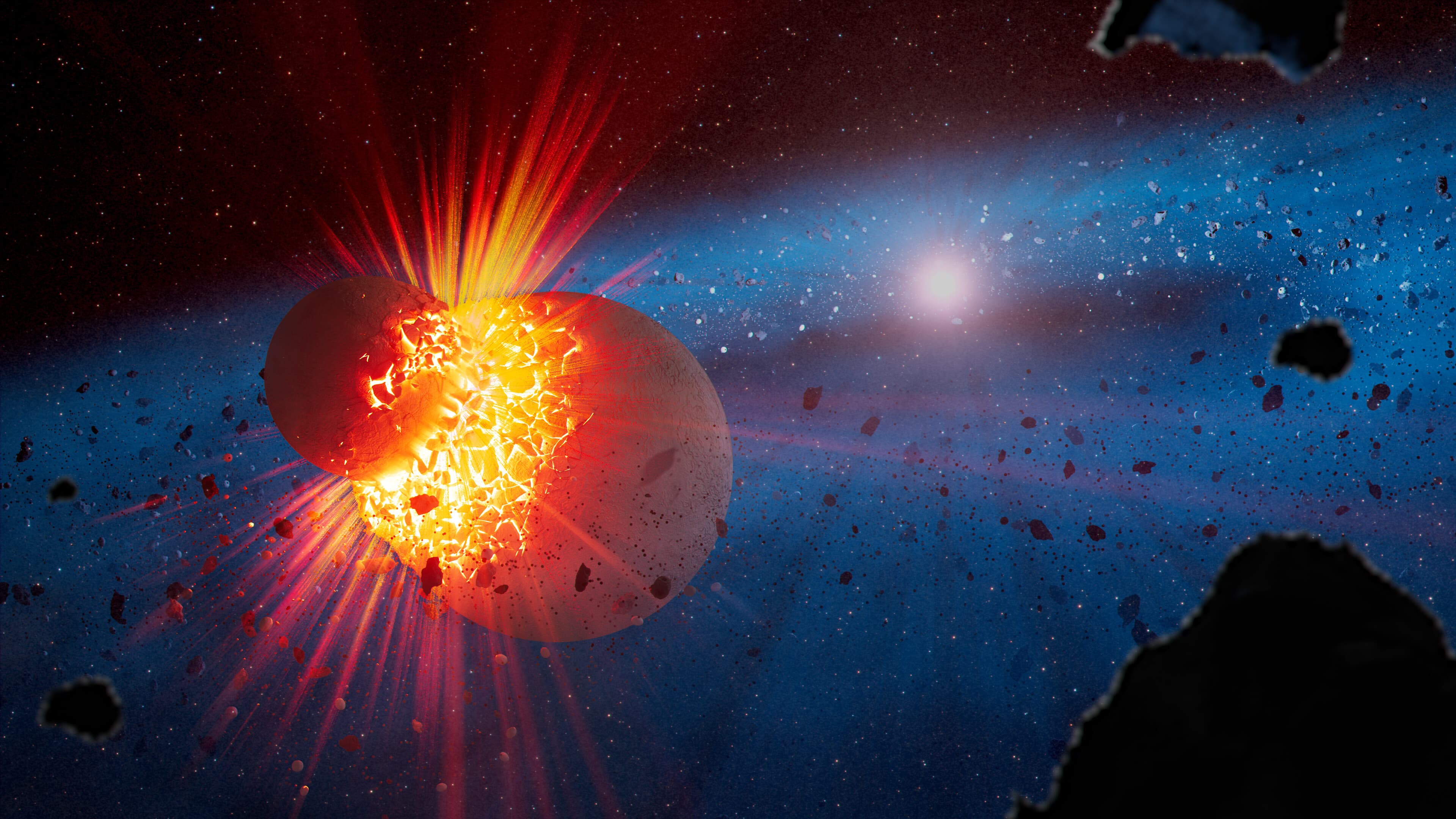
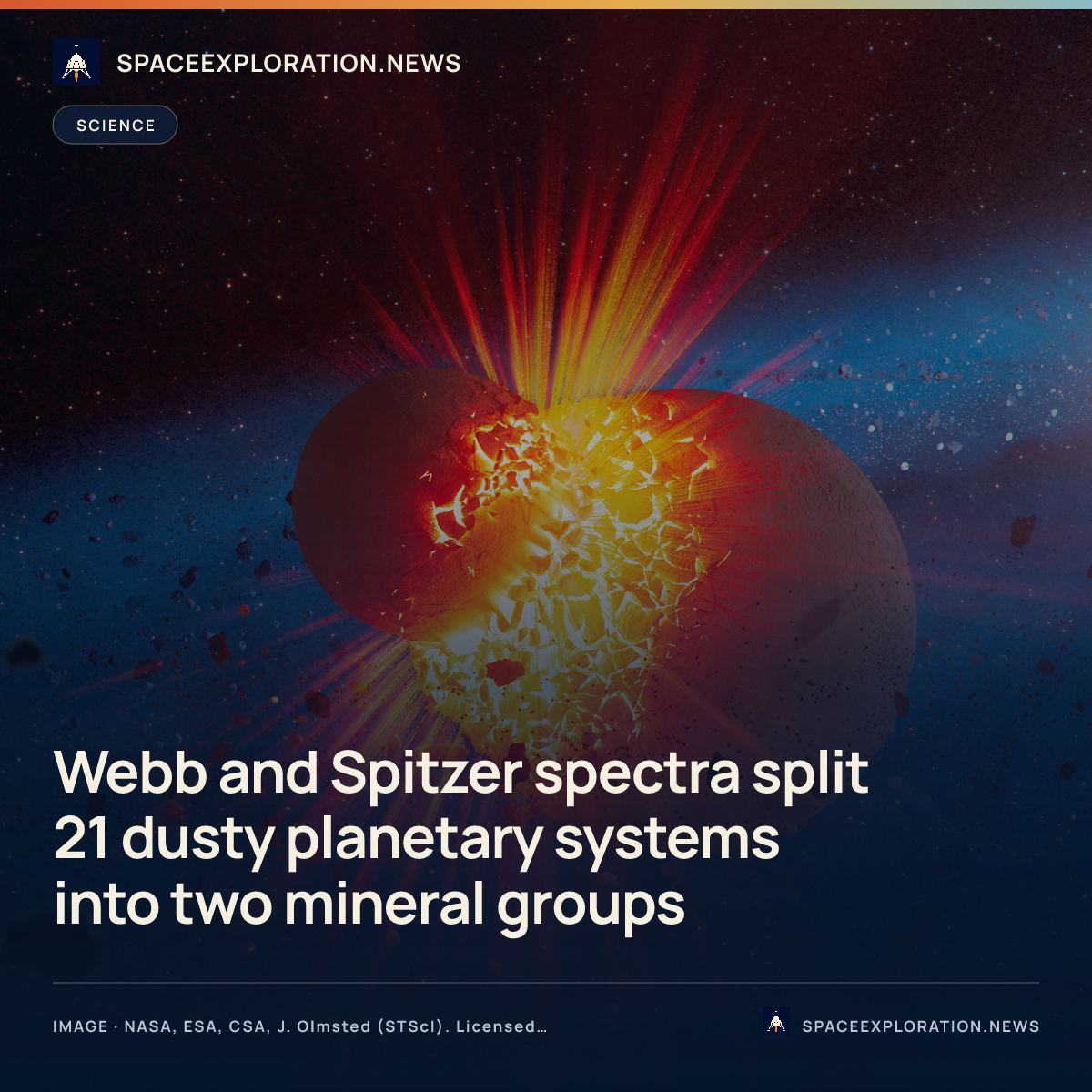
A study of 21 extreme debris disks around other stars finds two mineral patterns in their warm dust. Researchers used mid-infrared spectra from the James Webb and retired Spitzer space telescopes to distinguish silica-rich from silica-poor disks. The measured dust composition offers clues to collisions in developing planetary systems, but the collisions themselves were not observed.
NASA and ESA presented the findings on October 1, when they said the study had appeared in The Astrophysical Journal. The team had posted its preprint in July. It combined spectra for 16 disks observed by Webb with five from Spitzer’s archive; 12 of the Webb targets had not previously been observed at those wavelengths, according to the paper.
The researchers found small, thermally altered grains and unusually strong warm-dust emission in these systems. Eight disks were classed as silica-rich and 13 as silica-poor. The team interprets the silica-rich material as a possible trace of high-energy impacts involving Mars-sized bodies, while the silica-poor material may reflect less violent collisions involving Moon-sized bodies. Those sizes come from models of how impacts change rock, not a direct measurement of the colliding objects.
In this sample, silica-rich disks occur only around stars younger than 300 million years. Silica-poor disks span a wider age range and often show larger changes in infrared brightness. The authors suggest that continuing orbital and collisional changes in fresh debris could account for that variability.
The age pattern is provisional. NASA quoted coauthor Attila Moór saying only three disks in the sample meet the older-age criterion needed to test the absence of silica-rich systems there. More observations of older disks are needed before treating the pattern as a firm timeline for giant impacts.
The researchers compare the younger silica-rich group with the era in which a giant impact may have formed Earth’s Moon. They also discuss whether older silica-poor disks could reflect planetary-system instability. Those parallels are hypotheses about our solar system, not outcomes established by the 21 distant disks.
Reporting trail
Primary sources
For an image post, download the card and copy this suggested caption.
Infrared spectra separate the disks into silica-rich and silica-poor groups; the proposed impact sizes remain interpretations, and only three older disks were sampled. Read the full report: https://www.spaceexploration.in/news/webb-extreme-debris-disks-collision-chemistry #SpaceExplorationNews #SpaceNews #SpaceScience