Swift Boost Mission
LINK control problem ends planned capture and boost of Swift
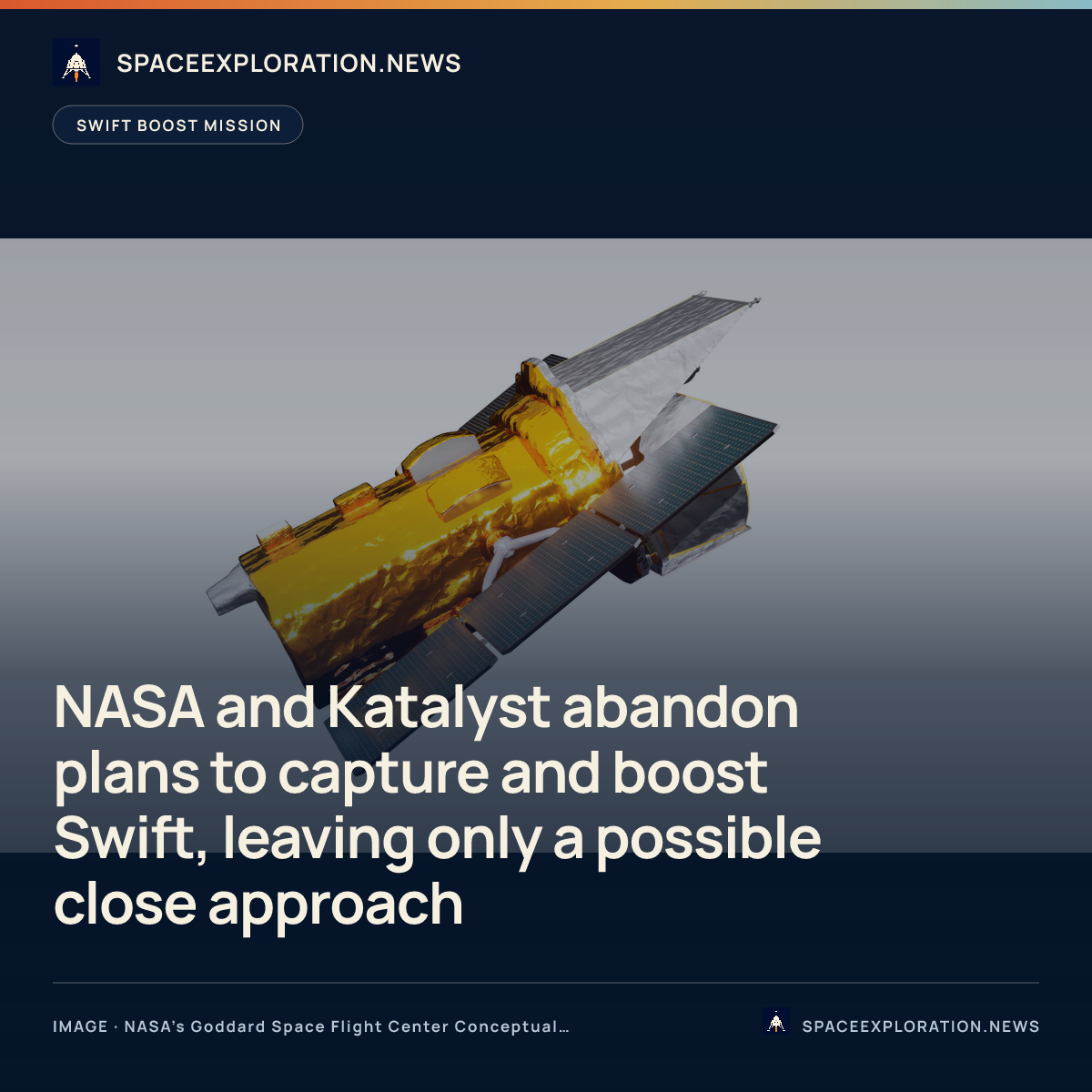
NASA and Katalyst ruled out grappling or raising the observatory. LINK may still attempt rendezvous and proximity operations, but neither organisation says those manoeuvres have begun.
Add us as a preferred source on Google Add us as a preferred source on Google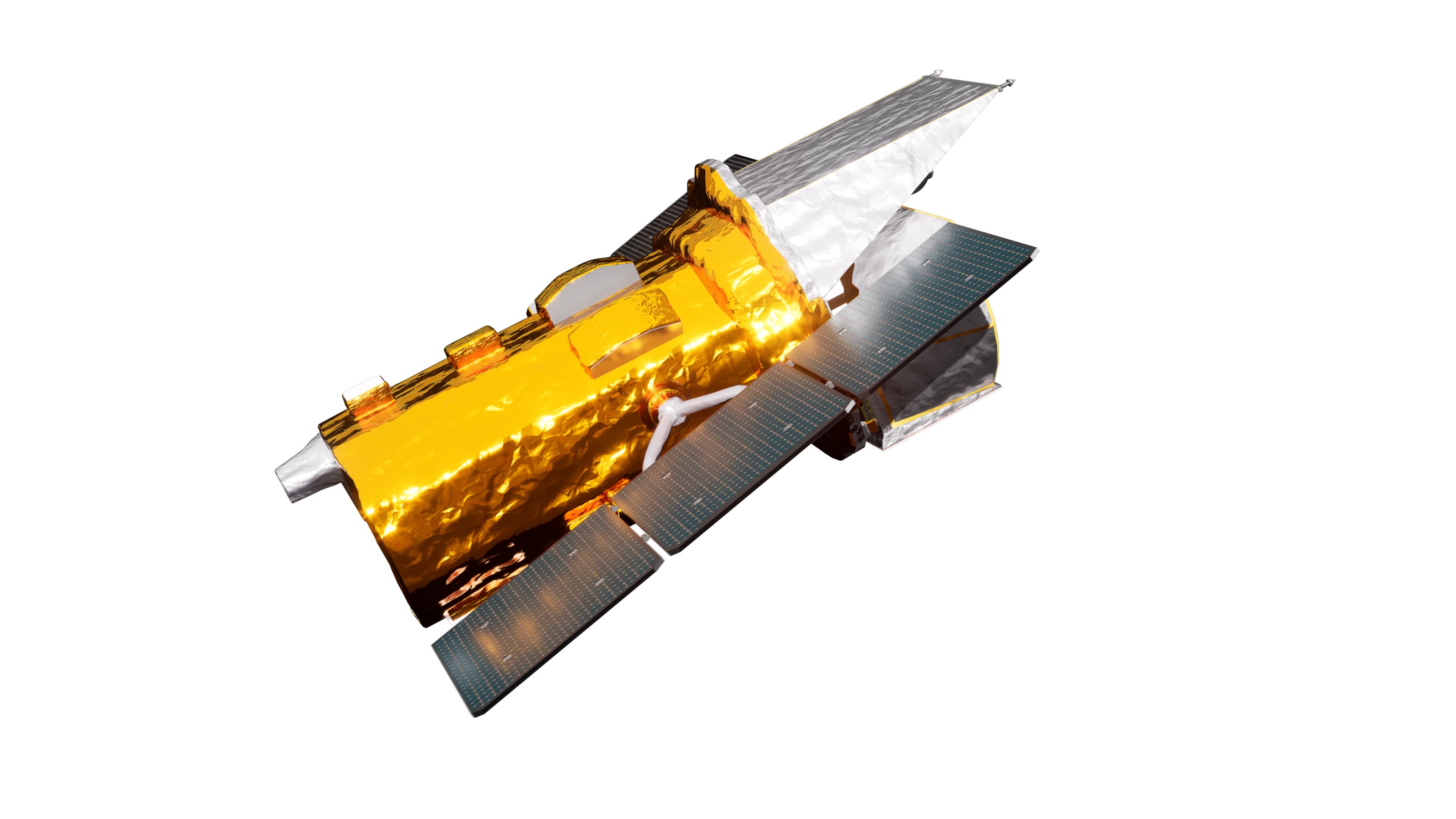
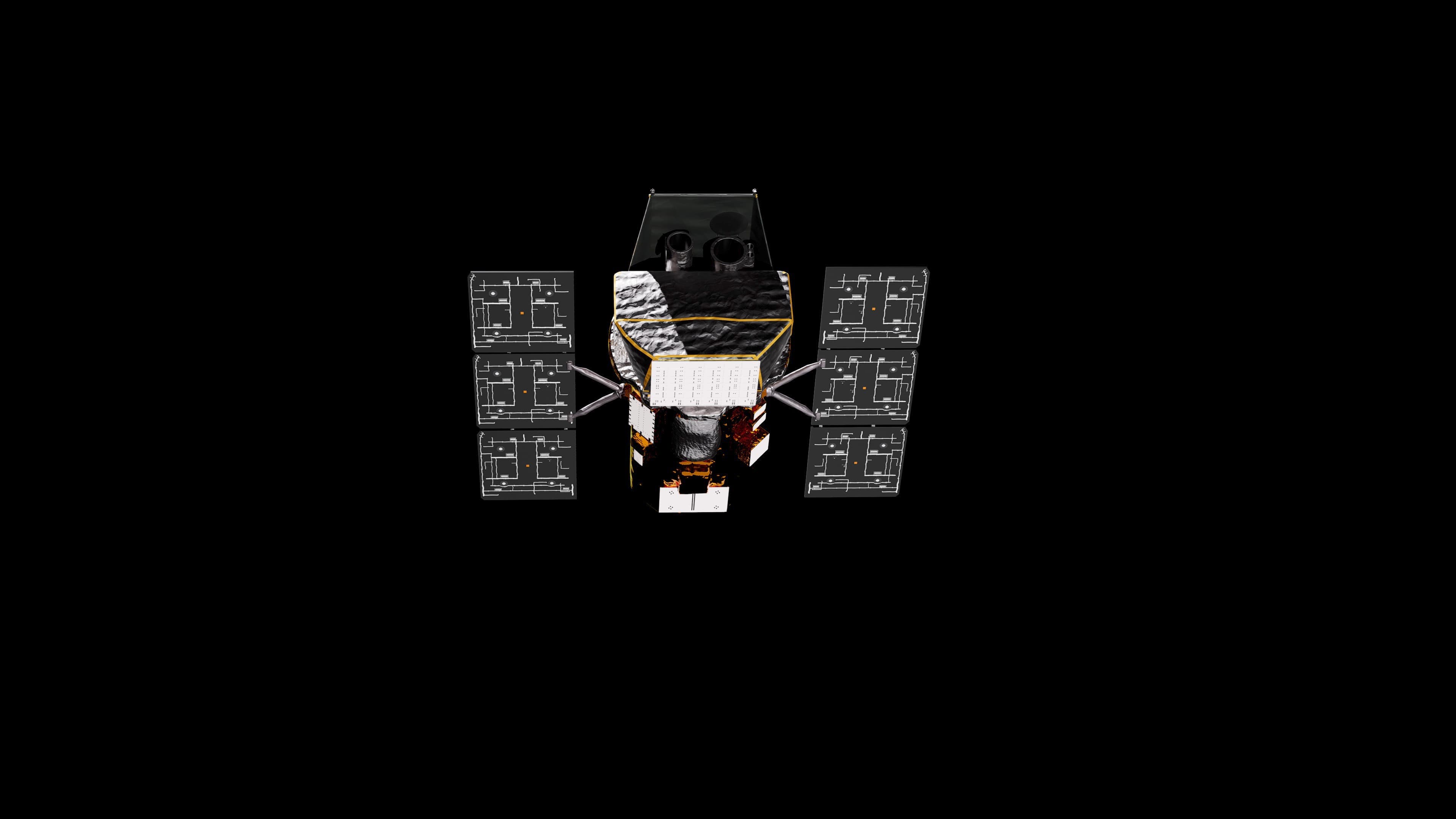
NASA and Katalyst Space have ruled out LINK’s planned capture and orbital boost of the Neil Gehrels Swift Observatory after an attitude-control problem persisted aboard the commercial servicing spacecraft. The two organisations announced the decision on August 19, removing the operations that could have extended Swift’s time in orbit. LINK may still attempt rendezvous and proximity work, but NASA and Katalyst did not report that an approach to Swift had begun or set a date for one.
The decision narrows the mission rather than ending all LINK activity. NASA said the spacecraft still would attempt rendezvous and proximity operations, while Katalyst qualified its plan as doing that work only where possible and exercising LINK to collect data. Both descriptions point to a remaining demonstration, not a completed rendezvous. NASA said the teams were assessing next steps, and Katalyst said they were still deciding which milestones remained.
The control problem outlasted the recovery work
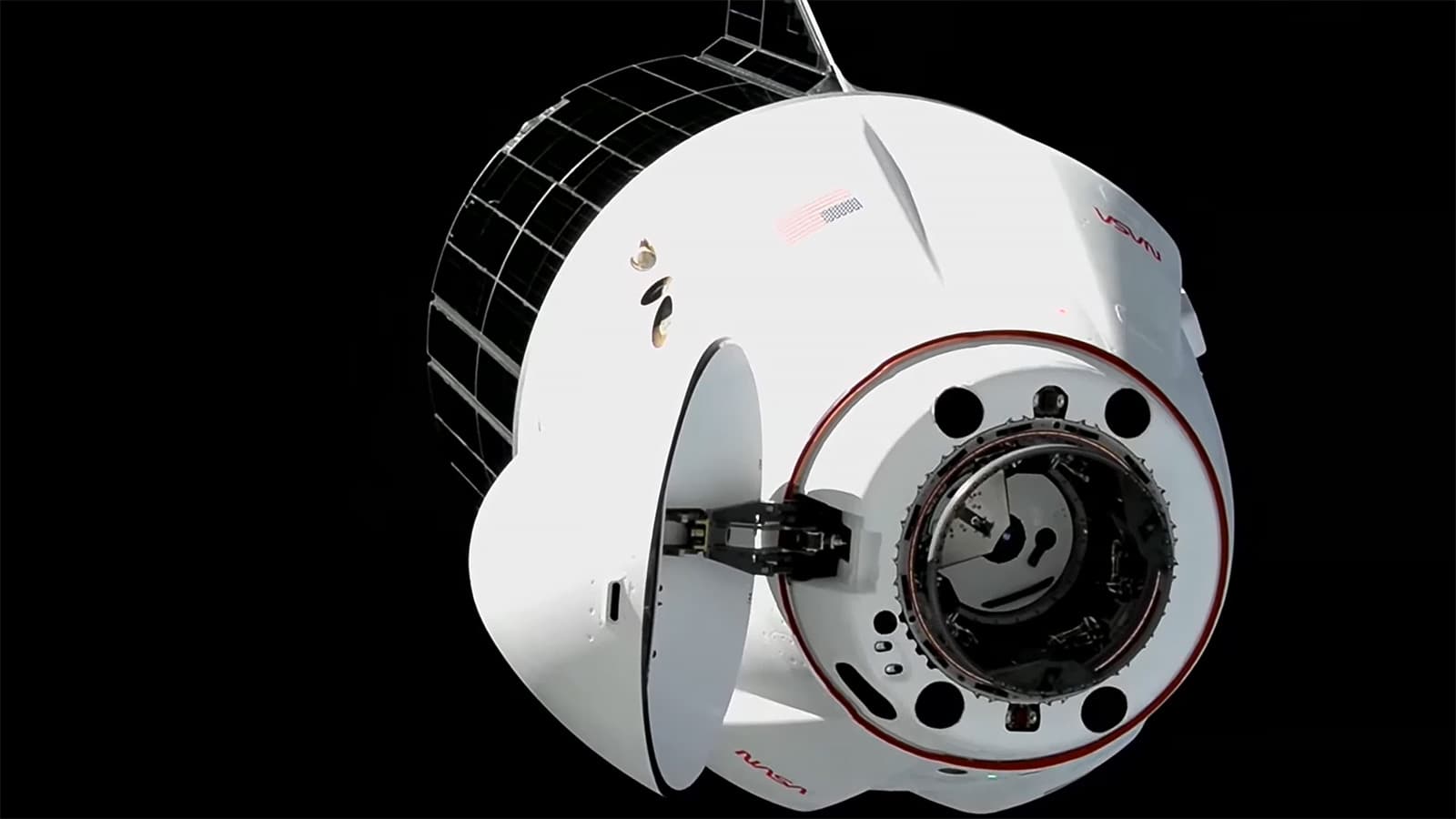
LINK launched from Kwajalein Atoll in the Marshall Islands on July 3 aboard a Northrop Grumman Pegasus XL rocket. NASA said teams established communications and conducted in-orbit checkouts over the following weeks. The spacecraft was still in commissioning—the process of checking and configuring its systems in orbit—when the attitude-control trouble emerged.
Katalyst’s July 28 update described a multi-axis spin that had caused a temporary loss of communications and a bus reset. Two of LINK’s three reaction wheels were disabled because of issues the company traced to the upstream bus electrical-power system, and its reaction-control system had only partial functionality. Katalyst said electric propulsion, robotic hardware, rendezvous sensors, power, and communications in the S and L radio bands remained functional. Those details are company-reported; NASA’s August 19 release referred more broadly to attitude-control issues.
The company then used an electric Hall-effect thruster on a two-axis gimbal to slow LINK. Katalyst reported that the spacecraft’s rotation fell from about 9 degrees per second to about 4 degrees per second by July 30, and to 1.47 degrees per second by August 5. It said the latter reduction used less than 100 grams of propellant, which it was trying to preserve for the rendezvous and boost phases.
On August 11, Katalyst said it had uploaded a flight-software update with new attitude controllers that incorporated the remaining actuators into a revised control scheme. The company expected that configuration to support rendezvous and said it was preparing burns to adjust LINK’s orbit relative to Swift. Eight days later, NASA and Katalyst concluded that the ongoing control issue meant the mission would not include capture or boost. Their August 19 updates did not say the revised controller had made physical contact safe.
Rendezvous remains possible, not accomplished
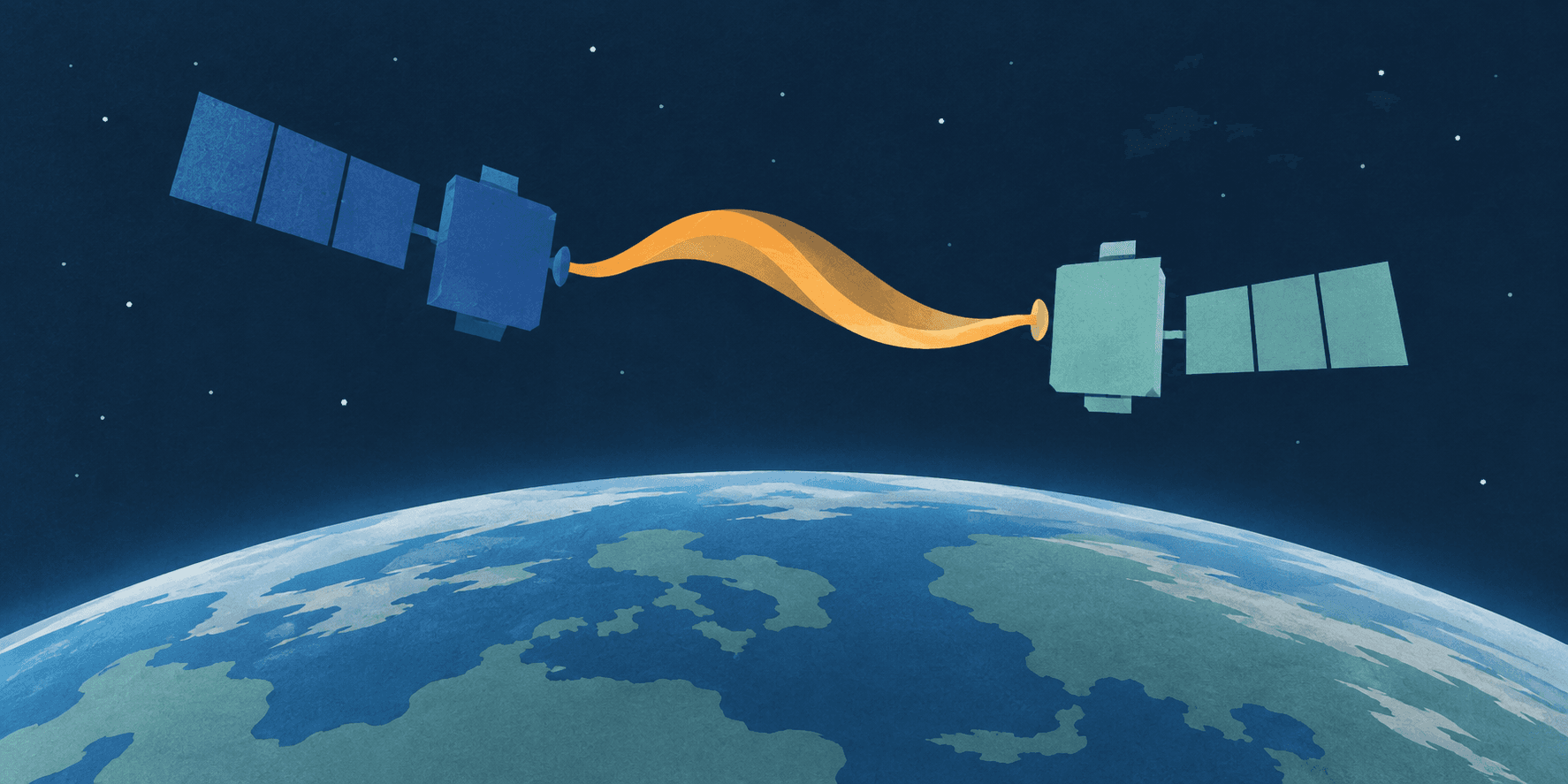
The original mission required a sequence of distinct steps: LINK would manoeuvre into Swift’s vicinity, conduct proximity operations, use its robotic system to capture an observatory that was not designed for servicing, and then raise Swift’s orbit. NASA had described a successful attempt as the first commercial robotic capture of an uncrewed United States government satellite not designed to be serviced. The August 19 decision removes the capture and orbit-raising objectives; it does not establish that the preceding approach has happened.
Katalyst’s July recovery plan placed co-elliptical manoeuvring and an inspection of Swift before any capture attempt. Those earlier activities could still provide data on LINK’s navigation, sensing and operations around a target without proceeding to physical contact. NASA and Katalyst, however, have not specified which activities will be attempted, how close LINK might approach, or when a demonstration could occur. The phrase will attempt rendezvous describes a future operation, not an achieved milestone.
Swift now faces the end of its mission
Without an orbit raise, NASA said Swift is likely to re-enter Earth’s atmosphere later in 2026. The agency did not assign an exact date in its August 19 announcement. Swift has no propulsion system to maintain its orbit, and NASA has said increased solar activity expanded the upper atmosphere and increased drag, accelerating the observatory’s descent. Orbital forecasts therefore remain sensitive to atmospheric and solar conditions rather than fixing re-entry to a single day.
Swift launched in 2004 to study gamma-ray bursts—the most powerful explosions in the universe—and other rapidly changing cosmic sources. NASA designed it for a two-year prime mission, but it completed 21 years of science operations. On February 11, NASA temporarily suspended most science observations so controllers could hold Swift in a lower-drag orientation while awaiting LINK. At that stage, the Burst Alert Telescope continued detecting gamma-ray bursts, but Swift stopped turning to follow them with its other telescopes.
NASA awarded Katalyst $30 million in September 2025 through a Phase III Small Business Innovation Research award to implement the boost mission on a compressed schedule. The plan sought both to extend Swift’s scientific life and to demonstrate servicing of a satellite that was not designed for in-space servicing. The August decision means the award will not produce the capture and orbit raise it was intended to attempt; NASA and Katalyst now say the remaining value must come from operating LINK and gathering data where its condition allows.
NASA said it would keep looking for ways to respond quickly to cosmic events and use current missions to help fill the gap, but its August 19 release did not name a direct replacement for Swift. LINK’s next milestone also remains an assessment rather than a scheduled manoeuvre: the teams must determine which proximity operations the spacecraft can safely attempt and what technical data it can collect during its remaining time in orbit.
Reporting trail
Primary sources
NASANASA Updates Next Steps for Commercial Swift Boost Missionnasa.gov
Katalyst SpaceLINK Updateskatalystspace.com
NASA ScienceNASA Updates Next Steps for Commercial Swift Boost Missionscience.nasa.gov
Associated PressRescue mission is called off for NASA’s aging Swift space telescopeapnews.com
AxiosNASA aborts attempt to save dying space telescopeaxios.com
NASANASA Awards Company to Attempt Swift Spacecraft Orbit Boostnasa.gov
NASA ScienceNASA’s Swift Mission Transitions Ops to Prep for Orbit Boostscience.nasa.gov
NASA ScienceNASA Predicts Swift Spacecraft’s Location for Boost Missionscience.nasa.gov
For an image post, download the card and copy this suggested caption.
NASA and Katalyst ruled out grappling or raising the observatory. LINK may still attempt rendezvous and proximity operations, but neither organisation says those manoeuvres have begun. Read the full report: https://www.spaceexploration.in/news/link-control-problem-swift-capture-boost #SpaceExplorationNews #SpaceNews #SpaceMissions