Launch industry
Industry-built PSLV targets March 2027 launch
The reported date is at least nine months later than a Q1 2026 target disclosed to Parliament, although first-stage stacking began in December. No reviewed source gives a cause.
Add us as a preferred source on Google Add us as a preferred source on Google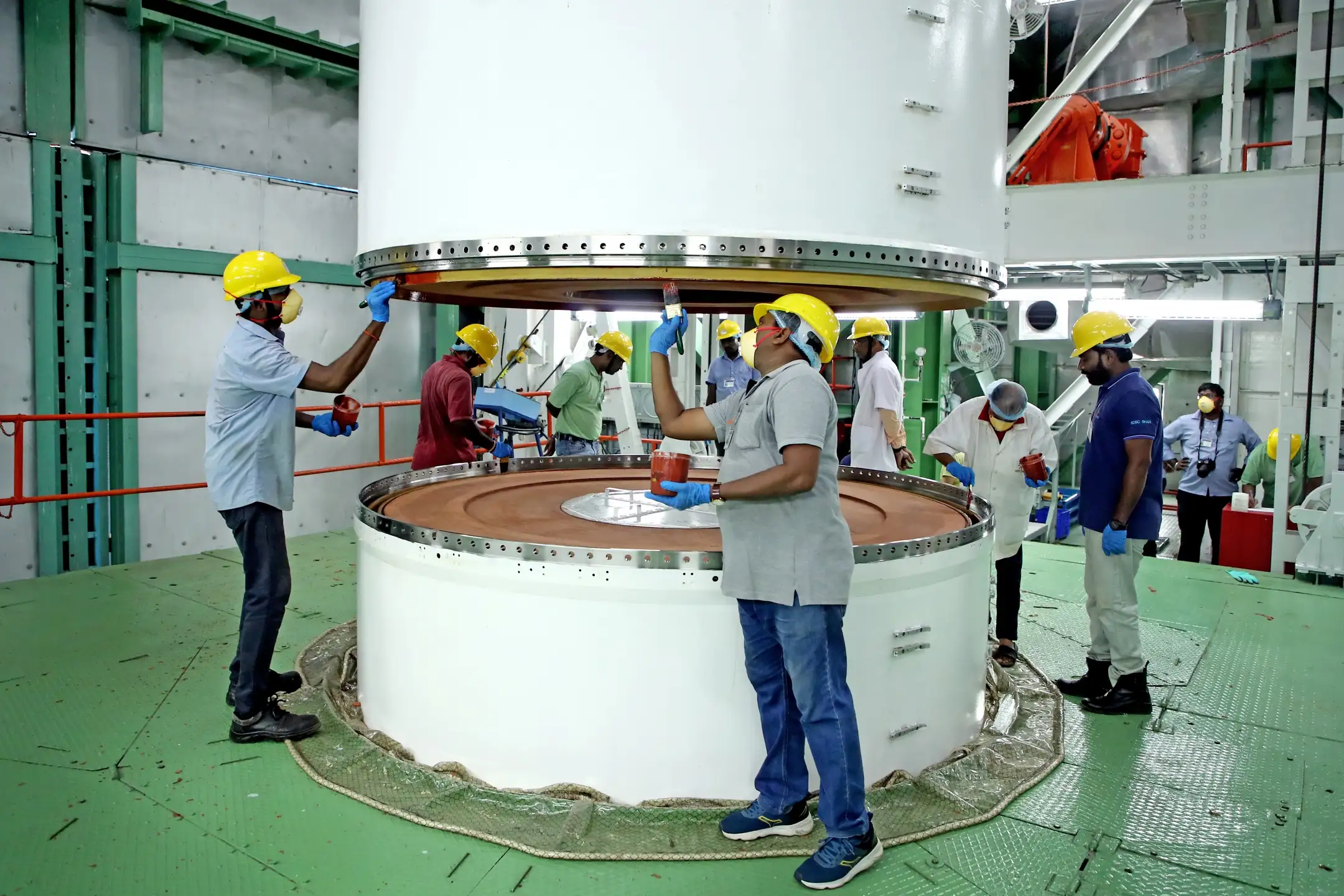
The first Polar Satellite Launch Vehicle assembled under NewSpace India Limited's industry-production contract is now expected to launch around March 2027, The Economic Times reported on Monday, August 17, citing people familiar with the matter. That timing is at least nine months later than the Q1 2026 target the Department of Space gave Parliament in January.
The government had already described physical work at the launch site. In a Rajya Sabha answer dated January 29, Minister of State Jitendra Singh said stacking of the industry-produced PSLV's first stage began at Satish Dhawan Space Centre, Sriharikota, on December 22, 2025. The August report is therefore not a shift that preceded assembly; it places the launch much later after stacking had started.
The new date remains a reported expectation, not an official launch notice. The Economic Times attributed it to unnamed people familiar with the matter and said the programme had undergone multiple schedule changes since the contract was awarded in 2022. The public documents reviewed for this article do not state why the Q1 target was missed, and no explanation has been assigned here.
A five-vehicle production order
NewSpace India Limited, the commercial arm of the Indian Space Research Organisation, commissioned five PSLV-XL vehicles from the Hindustan Aeronautics Limited-Larsen & Toubro consortium. The January parliamentary answer said the consortium had realised a majority of the launch-vehicle systems by then. L&T's 2025-26 annual report separately listed the joint production of India's first industry-manufactured PSLV among the company's achievements for the year.
Those records support a narrower description than the shorthand private PSLV. NewSpace India Limited remains the contracting public-sector company, ISRO supplied the established launcher design and Satish Dhawan Space Centre remains the stated launch site. The HAL-L&T consortium is taking responsibility for producing the contracted vehicles through the industrial supply chain; the reviewed material does not say that the consortium has independently selected the mission, payload or launch date.
The Economic Times described the production order as an estimated ₹860-crore contract. That number, like the March 2027 expectation, comes from the newspaper's reporting rather than a value stated in the January parliamentary answer or the L&T annual-report passage reviewed here. The official answer confirms the scope of five PSLV-XL vehicles but gives no contract value.
What first-stage stacking does—and does not—show
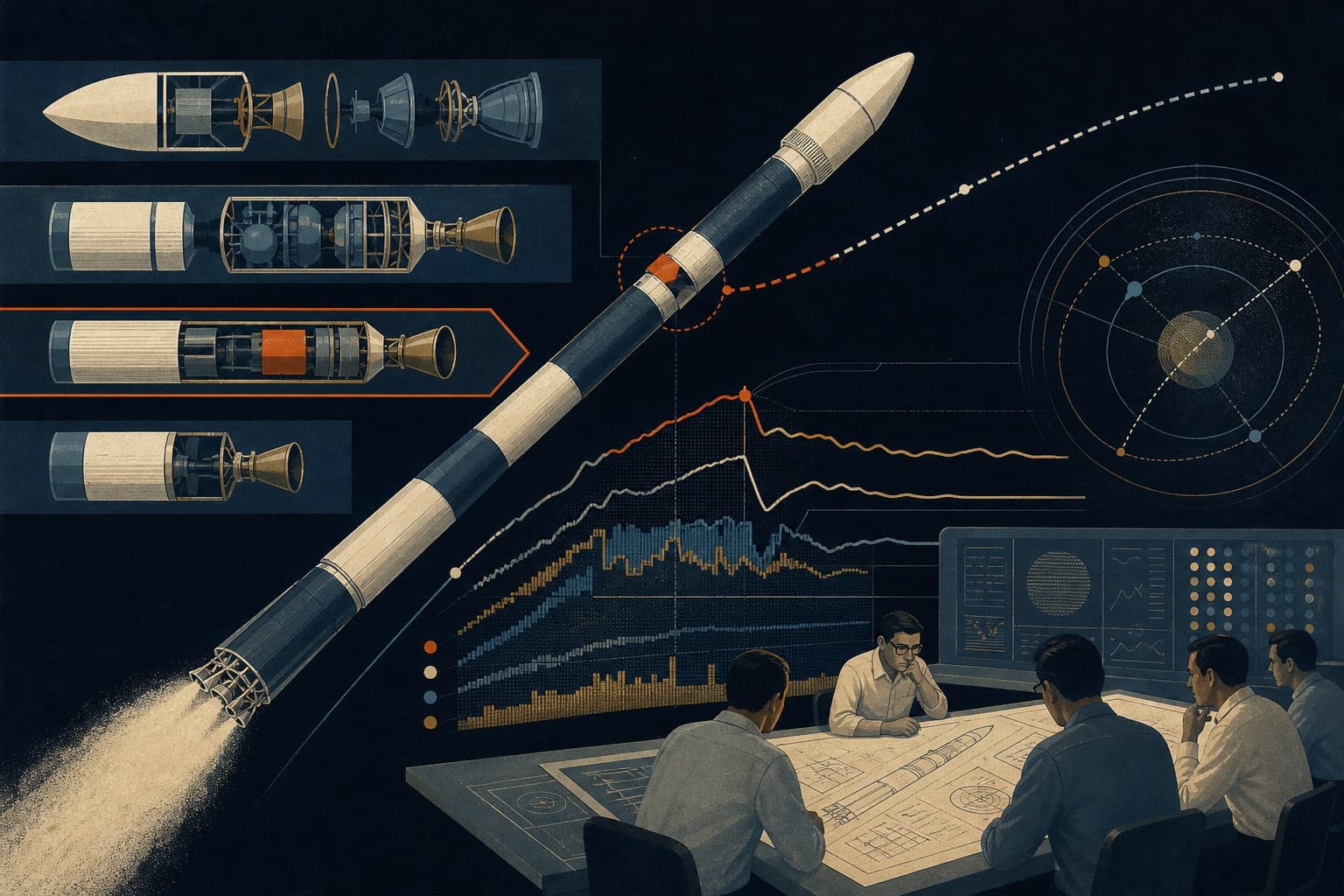
PSLV-XL is a 44.4-metre, four-stage launcher with a liftoff mass of about 320 tonnes, according to ISRO. Its first stage uses an S139 solid motor augmented by six solid strap-on boosters. The second stage uses a liquid-propellant Vikas engine, the third returns to solid propulsion, and the fourth uses two liquid engines. Multiple vehicle sections and propulsion systems must therefore come together after work begins on the first stage.
That architecture matters when reading the schedule. The January answer documented the start of first-stage stacking, not completion of the entire launch vehicle or clearance for flight. None of the reviewed sources gives a later stage-by-stage integration status, identifies a payload for the first consortium-built rocket or assigns it a PSLV mission number. Stacking is evidence that the campaign had entered launch-site assembly; it is not evidence that every subsequent milestone had been completed.
The government's phrase Q1-2026 also came without a definition of whether it meant the first calendar quarter or the first quarter of India's 2026-27 financial year. Those windows ended on March 31 and June 30, 2026, respectively. A launch around March 2027 would fall roughly a year after the calendar-quarter reading and at least nine months after the financial-quarter reading. The comparison is therefore directionally clear even though the earlier wording was imprecise.
What would turn the report into a launch schedule
Around March 2027 is not a launch window with a day, time or payload. The Economic Times report supplies the only reviewed source for that expectation, while the January Rajya Sabha answer remains the official comparison point. The article's sources do not include a revised calendar from NewSpace India Limited, ISRO, HAL or L&T, and they do not disclose whether March is a planning date, a range or a firm internal target.
The next documentary milestones are straightforward: an official mission designation, a named payload, confirmation of vehicle integration and a dated launch notice. Until one of the responsible organisations publishes those details, the supported conclusion is limited. India's first HAL-L&T-produced PSLV has moved well beyond its earlier stated target in the latest reporting, despite a stacking campaign that began in December 2025; the reason and exact launch date remain undisclosed.
Update note
This article was published on August 18, 2026 to reflect The Economic Times' August 17 report of an expected launch around March 2027. It compares that report with the Department of Space's January 29 statement to Parliament and does not treat the reported timing as an official launch notice.
Reporting trail
Primary sources
The Economic TimesFirst industry-built PSLV launch slips to March 2027m.economictimes.com
Rajya Sabha, Department of SpaceUnstarred Question No. 137: Contribution of Domestic Industrysansad.in
Larsen & ToubroIntegrated Annual Report 2025-26investors.larsentoubro.com
Indian Space Research OrganisationPSLVisro.gov.in
Indian Space Research OrganisationPSLV-C59/Proba-3 Missionisro.gov.in
Indian Space Research OrganisationPSLV-C59/Proba-3 Galleryisro.gov.in

For an image post, download the card and copy this suggested caption.
The reported date is at least nine months later than a Q1 2026 target disclosed to Parliament, although first-stage stacking began in December. No reviewed source gives a cause. Read the full report: https://www.spaceexploration.in/news/industry-built-pslv-march-2027 #SpaceExplorationNews #SpaceNews #RocketLaunch