Planetary science
Chandrayaan-3’s SHAPE shows how Earth can stand in for an exoplanet
A new preprint reports the instrument’s in-orbit performance and whole-Earth spectra, while leaving the calibrated science analysis for later papers.
Add us as a preferred source on Google Add us as a preferred source on Google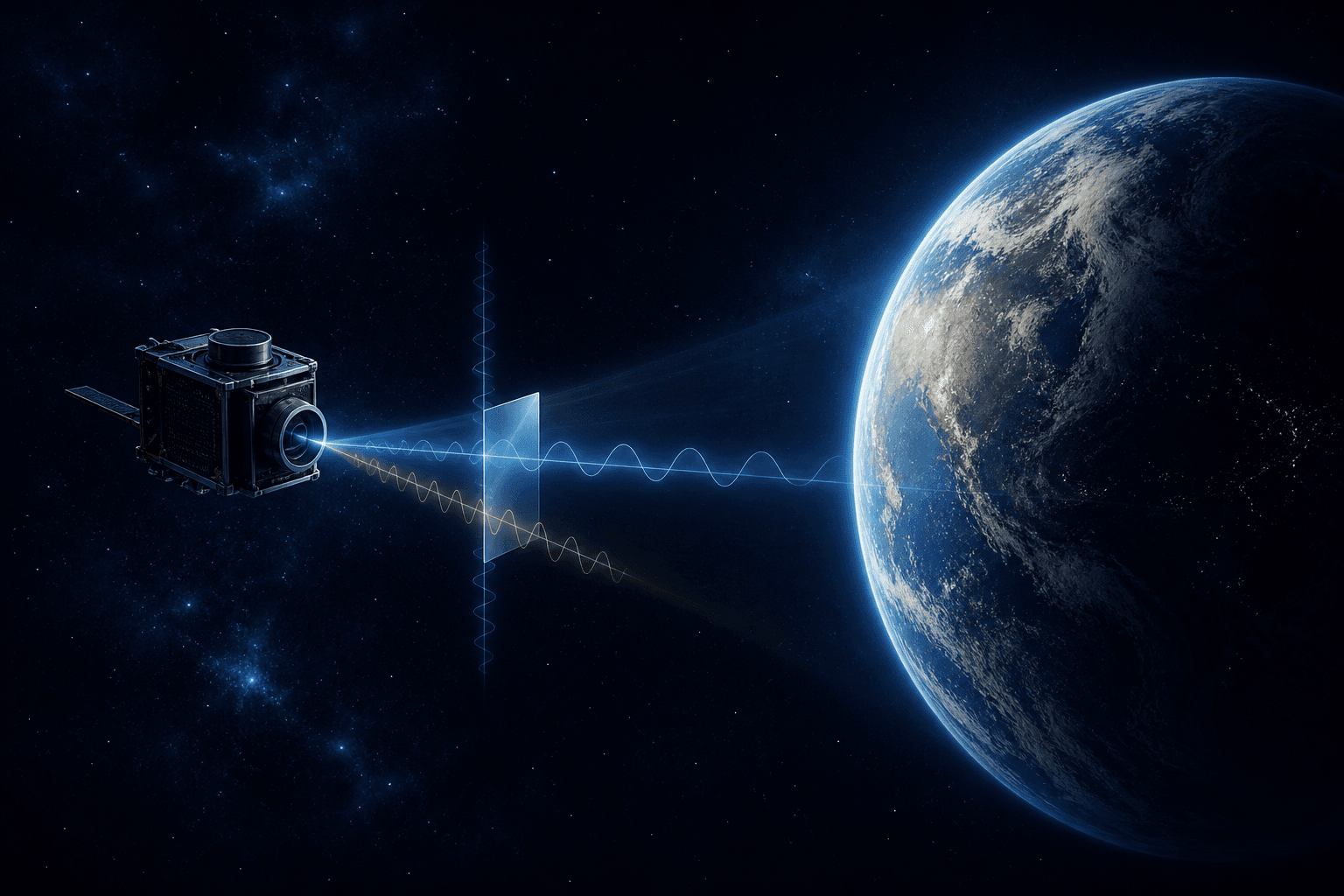
A Chandrayaan-3 team preprint posted to arXiv on August 19 reports that SHAPE, the mission’s Spectro-polarimetry of HAbitable Planet Earth payload, has made whole-Earth measurements from lunar and highly elliptical Earth-bound orbits. The paper is chiefly an instrument and operations report: it documents how SHAPE was built, tested and used in orbit, while presenting initial Earth spectra as evidence that the payload can observe our planet as an unresolved target—the way a distant telescope would encounter an Earth-like exoplanet.
A view of Earth as one pixel
For an exoplanet observer, Earth would not resolve into continents, oceans and weather systems. Its light would be combined across the visible disc. SHAPE is designed to take that kind of disc-integrated measurement while also recording linear polarization, the preferred orientation of the light wave. The team says the combination can track how an Earth-like planet’s integrated spectrum and polarization change with viewing geometry, rotation and clouds—quantities that help test methods intended for future exoplanet characterization.
SHAPE works in the near-infrared, using an acousto-optic tunable filter driven by an 80–135 MHz radio-frequency source. The filter selects light between 1.0 and 1.7 micrometres and splits it into two narrow beams with perpendicular linear-polarization states. The paper reports a roughly 2.6-degree field of view, indium-gallium-arsenide detectors and 2–4 nanometre spectral resolution. Those numbers define what the instrument can separate in wavelength; they are not, by themselves, a measure of how accurately an exoplanet atmosphere can be retrieved.
Why Chandrayaan-3 has the right geometry
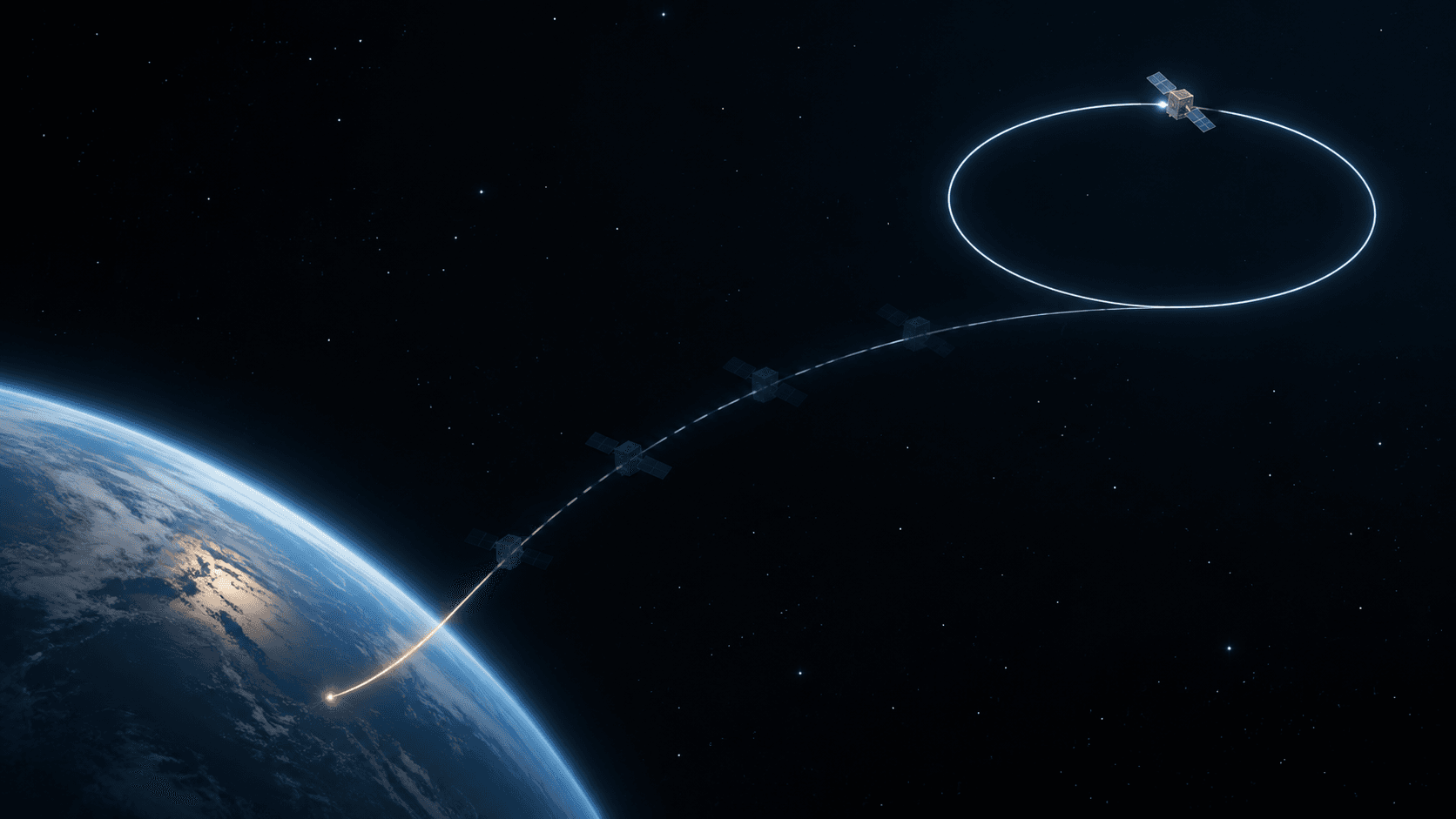
ISRO lists SHAPE as the propulsion module’s science payload, separate from the lander and rover experiments. After the lander separated, the module could point the payload toward Earth. The preprint says that the instrument observed from lunar orbit and later from highly elliptical Earth-bound trajectories, giving it views of Earth across different phase angles. The paper describes observation geometries from about 0 to 180 degrees; as the phase increases and the signal weakens, the planned response is to use longer integrations.
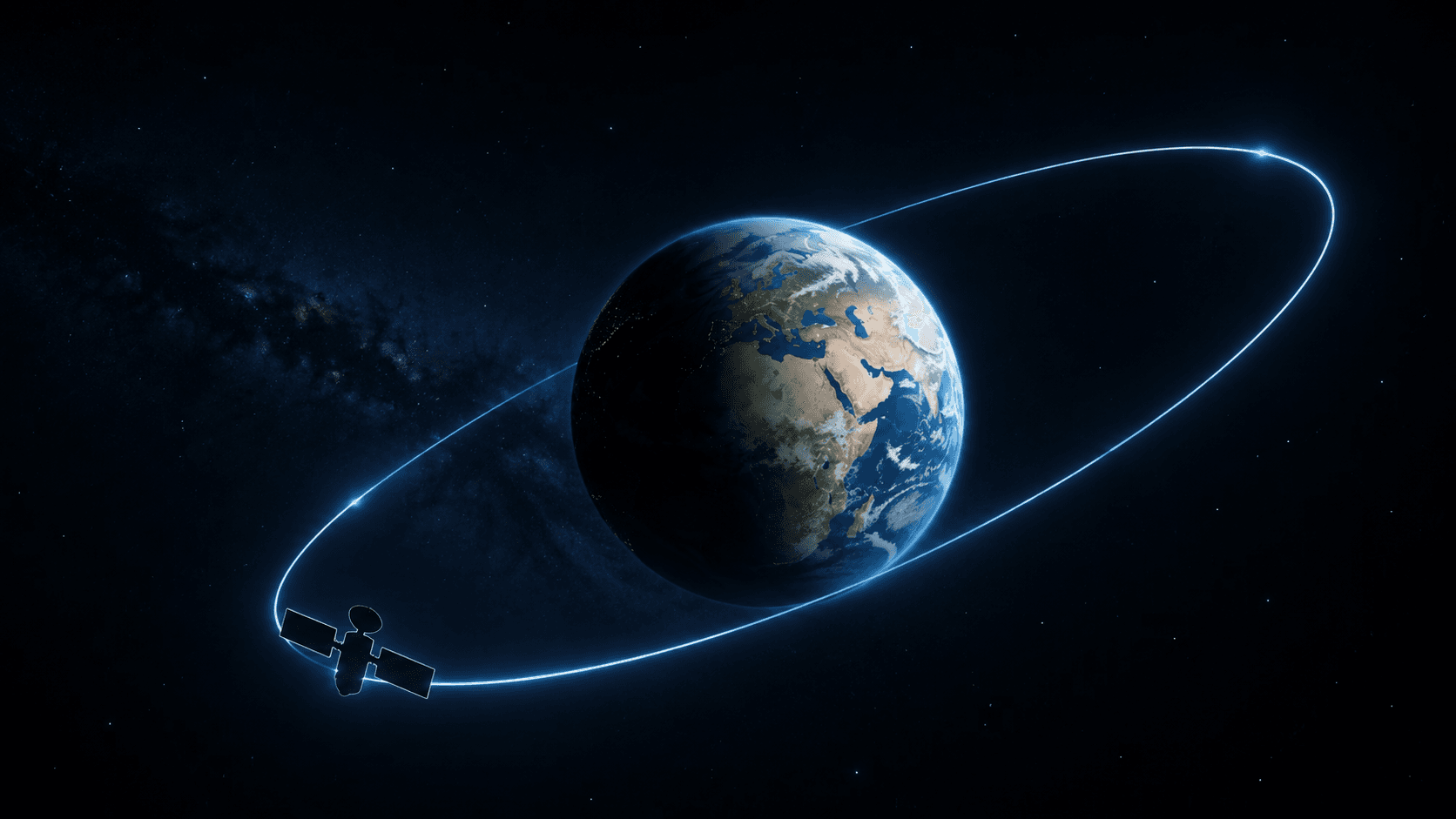
The record includes a lunar-orbit Earth spectrum from October 3, 2023, an Earth-bound highly elliptical orbit spectrum from April 17, 2025, and another from February 10, 2026. The paper says the propulsion module’s orbit was raised in October 2023 to an approximately 180,000 by 380,000 kilometre Earth-bound orbit, with a period of roughly 12 days; Earth was suitably small in SHAPE’s field of view only near apogee. The later February 2026 spectrum is labelled as coming from a 409,000 by 727,000 kilometre orbit.
What the paper actually establishes
The authors report more than 146 SHAPE operations and identify absorption bands associated with water vapour near 1.4 micrometres, oxygen near 1.27 micrometres, and carbon dioxide near 1.57 and 1.61 micrometres in disc-integrated Earth spectra. They estimate a signal-to-noise ratio above 100 in a region without significant atmospheric absorption. The reported bands are expected features of Earth’s atmosphere, not a new detection of life; the relevant result here is that the instrument recovered them from a whole-planet view at several geometries.
That makes SHAPE a useful exoplanet analogue in a specific sense. A distant planet’s spectrum mixes its atmosphere, clouds and surface into one changing signal, and the preprint says the depths and shapes of the reported Earth features vary with phase angle, cloud cover, surface reflectance and atmospheric path length. By observing a world whose atmosphere and surface are already independently known, the team can compare the combined signal with models. This is a calibration opportunity, not a claim that SHAPE can by itself identify an Earth twin around another star.
Where the report stops
The preprint deliberately stops short of a full science analysis. It says detailed observational trends and their physical interpretation are under investigation, and reserves the end-to-end data-processing pipeline, onboard-calibration procedures and first scientific analyses for forthcoming papers. It also notes that estimating the in-orbit field response is subject to significant limitations. Those boundaries matter: the article demonstrates that SHAPE operated and returned interpretable initial spectra, but it does not yet provide a finished, independently reviewed account of long-term Earth variability or a validated retrieval pipeline.
ArXiv records the submission at 18:39 UTC on August 19 and says it has been accepted by Advances in Space Research, but the accessible version remains a preprint. The next consequential result will be the dedicated analysis that connects calibrated spectra and polarization to particular cloud, atmospheric or surface conditions, and shows how those tests constrain a model used for an unresolved exoplanet. Until then, the strongest conclusion is operational: Chandrayaan-3’s propulsion module has supplied repeated whole-Earth observations from a vantage point few Earth-orbiting instruments can reproduce.
Reporting trail
Primary sources

For an image post, download the card and copy this suggested caption.
A new preprint reports the instrument’s in-orbit performance and whole-Earth spectra, while leaving the calibrated science analysis for later papers. Read the full report: https://www.spaceexploration.in/news/chandrayaan-3-shape-earth-exoplanet #SpaceExplorationNews #SpaceNews #SpaceScience