Mars exploration
NASA prepares Gold for powered Earth flyby towards Mars
Gold’s engine burn is scheduled for November 9. NASA’s latest published plan does not establish the outcome of Blue’s earlier scheduled departure.
Add us as a preferred source on Google Add us as a preferred source on Google
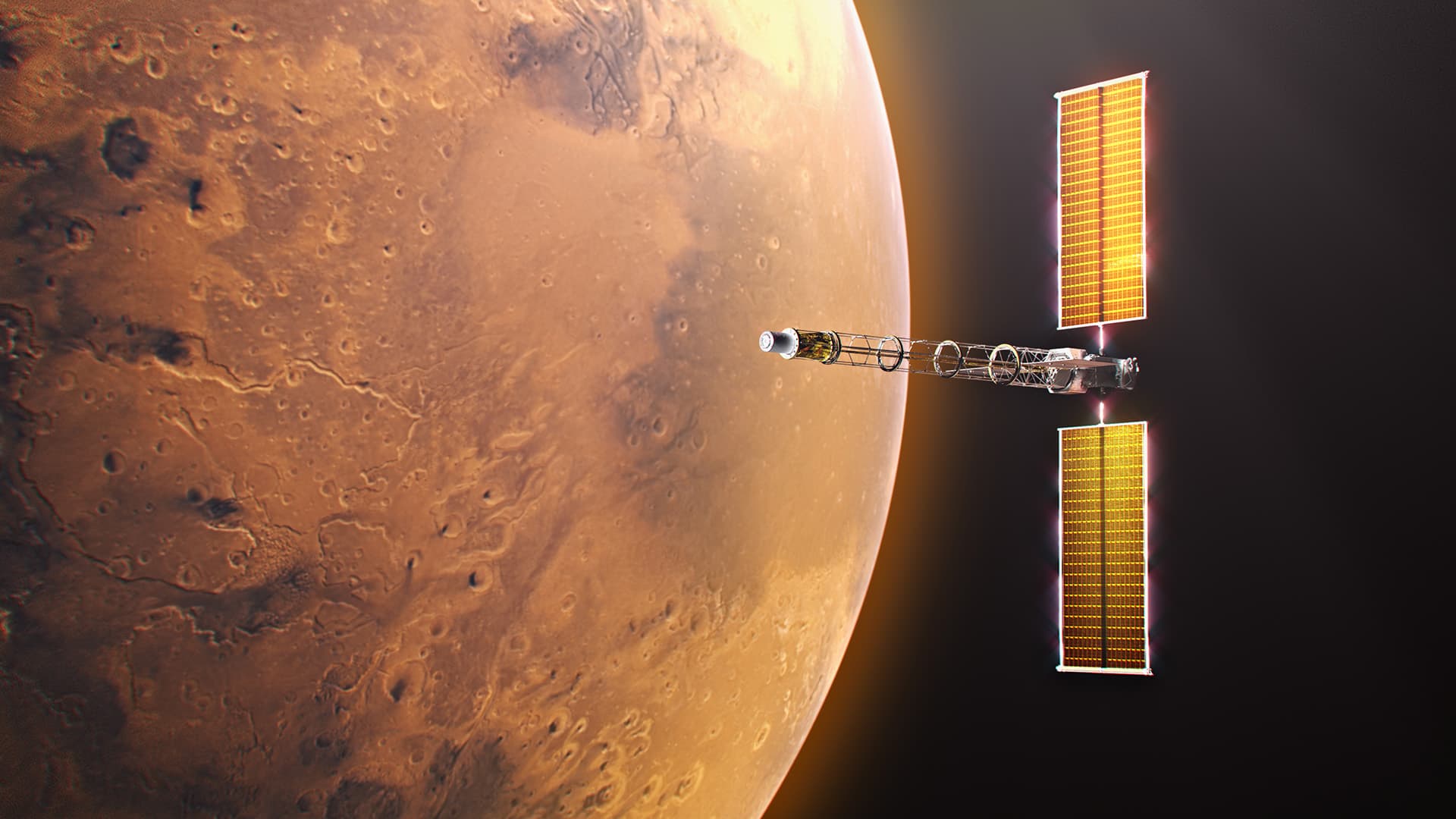
NASA’s Gold spacecraft is scheduled to fire its engine during an Earth flyby on November 9, combining the planet’s gravity with thrust to set off towards Mars. NASA’s November 2 plan puts the start of the roughly nine-minute burn at 5:51 a.m. EST, or 10:51 UTC, over southern Australia.
Its twin, Blue, had a departure burn scheduled for November 7. As of November 8, the NASA mission blog and partner material reviewed for this article did not provide a verified outcome for that burn. The published schedule should therefore not be read as confirmation that Blue has departed for Mars.
The planned manoeuvre adds an engine burn near Earth to the gravitational deflection of a flyby. NASA calls it a powered flyby, or Oberth manoeuvre, and expects the burn to add more than 1,000 miles per hour to each spacecraft’s speed. In its pre-flyby announcement, the agency said no Mars-bound spacecraft had successfully performed one.
Advanced Space published location-specific viewing-chart animations on November 6. The navigation company said it has provided launch strategies, trajectory design, mission design and navigation for the University of California, Berkeley’s Space Sciences Laboratory and NASA. Its new charts depict planned paths for Blue and Gold; they are preparation material rather than a record of either burn’s result.
Rocket Lab, which NASA identifies as the spacecraft designer and builder, has a support role in the departure operation. In its operations account, updated in January 2026, the company said Berkeley would take over direct manoeuvre operations after the early correction burns, while Rocket Lab would support the critical Mars-departure and Mars-arrival manoeuvres. That account establishes the planned division of work, not the outcome of the November burns.
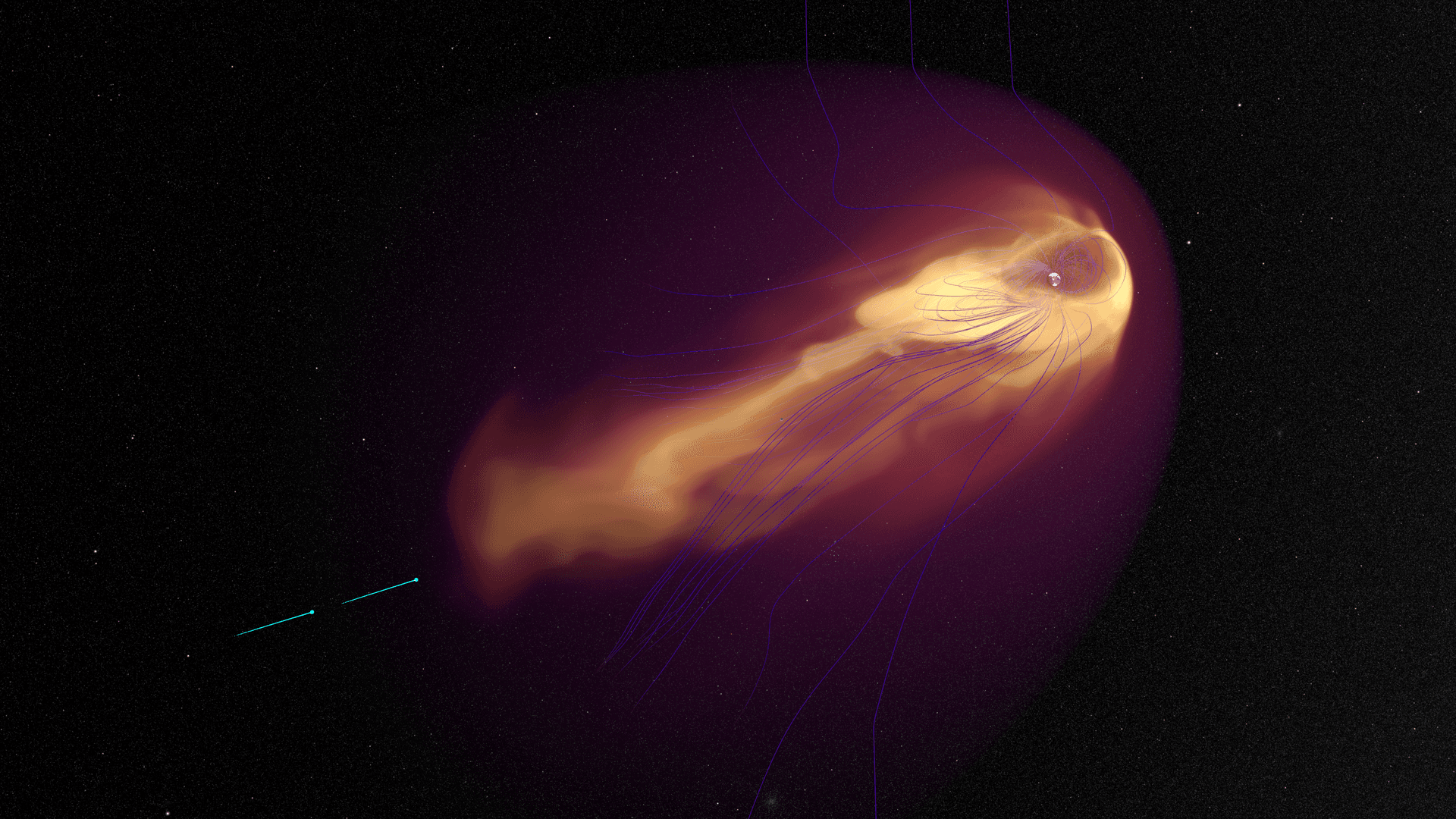
ESCAPADE launched on November 13, 2025, when Earth and Mars were not aligned for a direct transfer. NASA’s mission overview describes a loiter route around the Earth–Sun Lagrange point 2 before returning to Earth. The detour also took the probes through a distant part of Earth’s magnetotail, the region of its magnetic environment stretched away from the Sun. NASA’s November update reports observations there, with findings still to be shared.
At Mars, the Escape and Plasma Acceleration and Dynamics Explorers mission is intended to measure how the solar wind interacts with the planet’s magnetic environment and drives atmospheric loss. Berkeley leads the mission. NASA’s mission overview describes two science campaigns: closely spaced observations along a shared orbit, followed by measurements from different regions at the same time.
The next scheduled departure burn is Gold’s on November 9. NASA said the team would need several days after the burns to assess the accuracy of the Mars-bound trajectories, followed by further course corrections during the cruise. Arrival at Mars remains planned for September 2027.
Reporting trail
Primary sources
NASANASA’s Twin ESCAPADE Spacecraft to Slingshot Past Earth on Way to Marsscience.nasa.gov
NASAESCAPADE mission blogscience.nasa.gov
UC Berkeley Space Sciences LaboratoryMission Designescapade.ssl.berkeley.edu
Advanced SpaceESCAPADE Earth Flyby Star Chart Animations by locationadvancedspace.com
Rocket LabSo you’re in space and on the way to Mars, what next?rocketlabcorp.com
NASAMission Facts About ESCAPADEscience.nasa.gov
NASAESCAPADEscience.nasa.gov
NASA Scientific Visualization StudioESCAPADE Visits the Distant Magnetotailsvs.gsfc.nasa.gov

For an image post, download the card and copy this suggested caption.
Gold’s engine burn is scheduled for November 9. NASA’s latest published plan does not establish the outcome of Blue’s earlier scheduled departure. Read the full report: https://www.spaceexploration.in/news/escapade-earth-flyby-preparations #SpaceExplorationNews #SpaceNews #SpaceMissions