Launch analysis
What the PSLV-C62 anomaly review needs to answer
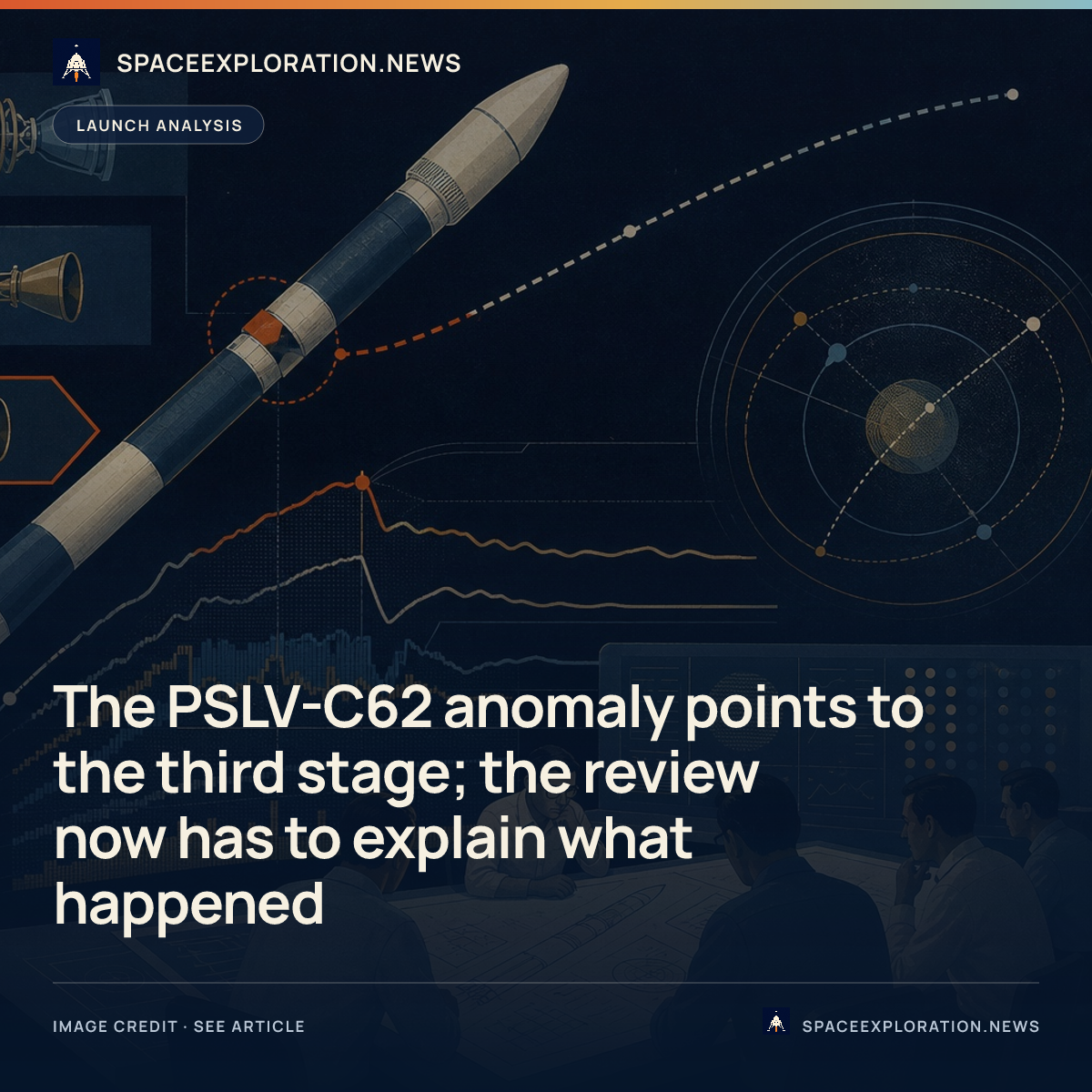
ISRO has located the mission anomaly near the end of the third stage and begun a detailed analysis. Until that work is published, the evidence supports questions—not conclusions.
Add us as a preferred source on Google Add us as a preferred source on Google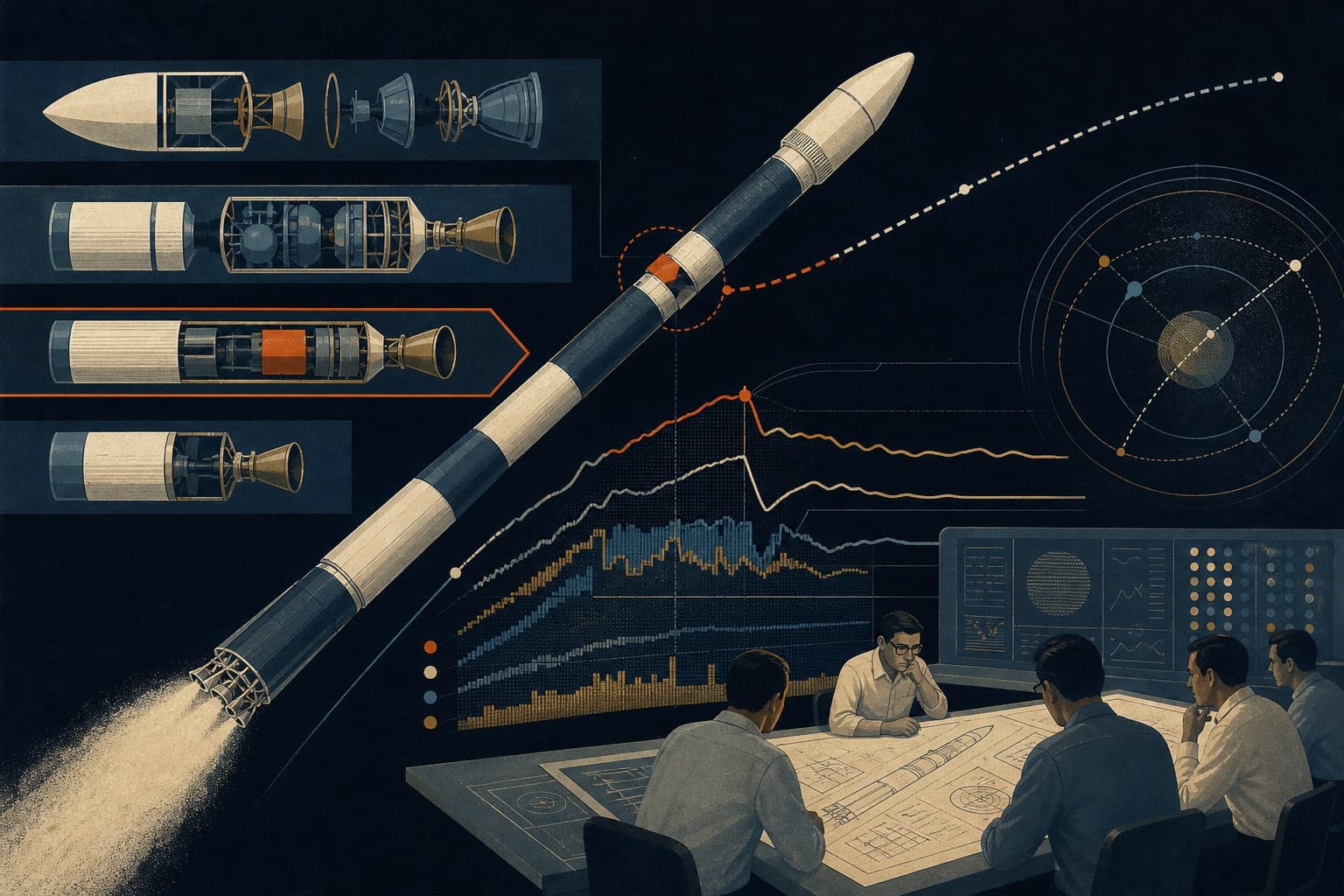
PSLV-C62 encountered an anomaly near the end of its third-stage operation, according to ISRO’s mission update. That is the most precise public boundary around the failure so far. The agency says a detailed analysis has begun; it has not publicly assigned a root cause.
What is established
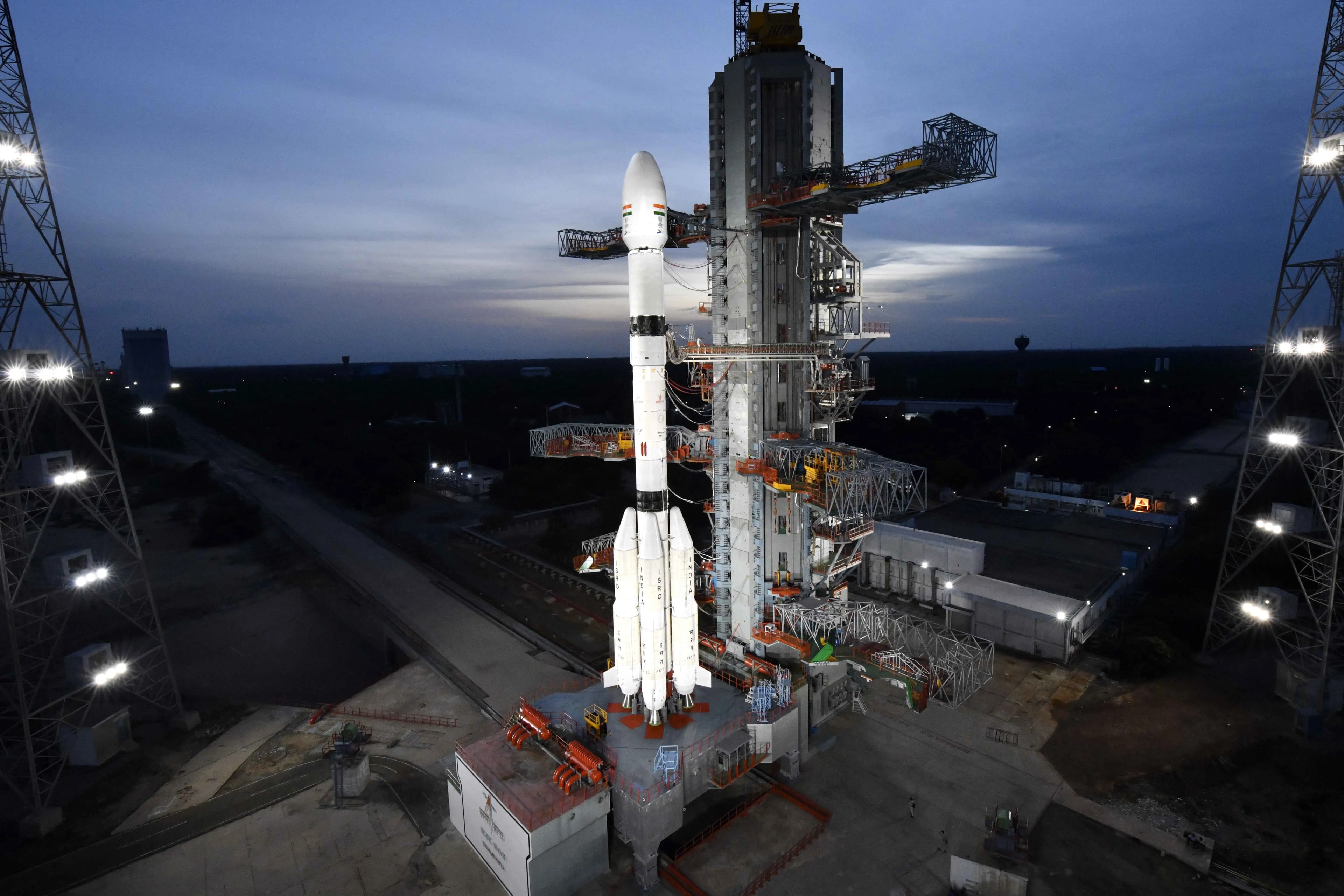
The mission used the two-strap-on PSLV-DL configuration and was intended to deploy the EOS-N1 Earth-observation satellite with 15 domestic and international co-passengers. It was also planned to carry the Kestrel Initial Technology Demonstrator, a small re-entry test article, as the final deployment. The mission was PSLV’s 64th flight and NewSpace India Limited’s ninth dedicated commercial mission.
What the review must separate
A root-cause investigation must distinguish the initiating fault from downstream effects. Engineers will examine propulsion performance, pressure and temperature histories, stage timing, guidance response, onboard events and ground telemetry quality. The useful question is not merely which parameter moved first, but why it moved and whether design, manufacturing, handling or operations allowed it.
No public evidence currently supports assigning the anomaly to a specific component or process.
Space Exploration .IN editorial note
PSLV’s long record makes the review more consequential, not less. A mature launcher earns trust by showing that anomalies are examined without relying on reputation as an explanation. The next meaningful update will be the evidence-backed finding and the corrective actions attached to it.
Reporting trail
Primary sources
For an image post, download the card and copy this suggested caption.
ISRO has located the mission anomaly near the end of the third stage and begun a detailed analysis. Until that work is published, the evidence supports questions—not conclusions. Read the full report: https://www.spaceexploration.in/news/pslv-c62-anomaly-review #SpaceExplorationNews #SpaceNews #RocketLaunch