Earth observation
Intuitive Machines outlines IM-300 role in EAGLE-VSWIR mission
The company would supply the spacecraft, integrate JPL’s imaging spectrometer and run ground and mission operations. NASA lists the Earth-observation launch no earlier than 2028.
Add us as a preferred source on Google Add us as a preferred source on Google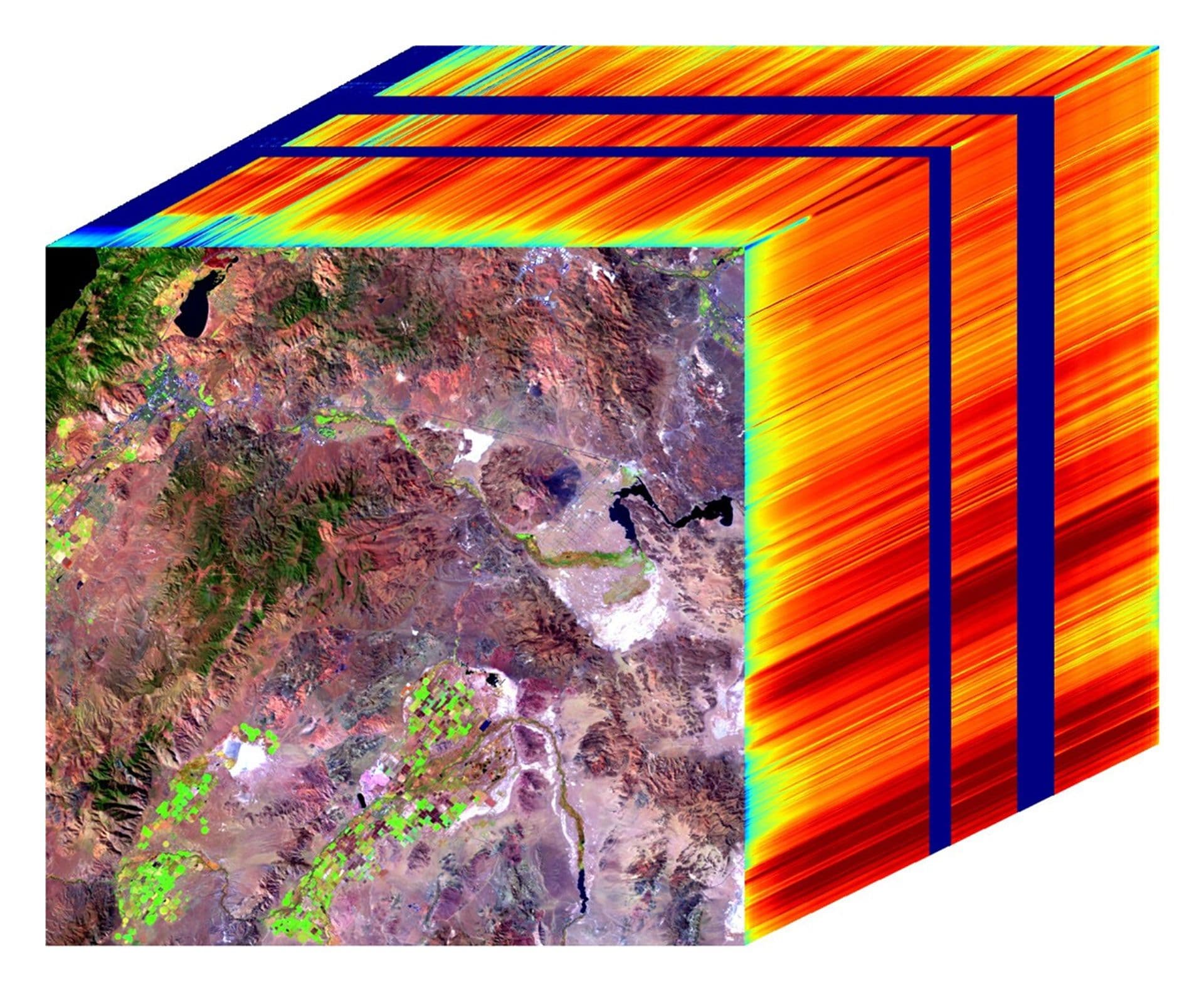
Intuitive Machines says NASA’s Jet Propulsion Laboratory has selected its IM-300 platform for EAGLE-VSWIR, an Earth-observation mission that NASA lists for launch no earlier than 2028. The company’s August 18 announcement assigns it the spacecraft, system-level integration, mission operations and ground segment. NASA’s public mission record confirms EAGLE-VSWIR’s schedule and science objectives but, as of August 19, does not name Intuitive Machines or independently confirm the selection.
The reported assignment places Intuitive Machines around the science payload rather than making it the instrument developer. The company says JPL is developing the visible-to-shortwave-infrared instrument, while the IM-300 will serve as its spacecraft bus. Intuitive Machines would also integrate the two at system level and manage the mission after launch. The announcement does not disclose the award’s value, contract type or period of performance.
A spacecraft-and-operations assignment
The release describes two separate hardware responsibilities. JPL’s instrument is the part designed to collect the measurements; the IM-300 is the platform on which it would fly. Intuitive Machines did not publish the selected spacecraft’s mass, power, propulsion, pointing performance or payload accommodation in the announcement. It also did not say which parts of the IM-300 configuration would be standard and which would be changed for EAGLE-VSWIR.
The company’s role would continue beyond delivering the bus. Its stated mission-operations and ground-segment scope covers the systems used to command and support the spacecraft from Earth, but the release gives no facility, antenna network, staffing plan or operations duration. It does not assign science-data processing, product generation or distribution to Intuitive Machines. Those details matter because operating the spacecraft and turning instrument measurements into science products are different parts of a mission.
Intuitive Machines calls EAGLE-VSWIR the second NASA low-Earth-orbit science mission it is supporting. The same release says the company was previously selected to provide an IM-500 bus and system-level integration for NASA’s Earth Dynamics Geodetic Explorer, or EDGE, which is managed by Goddard Space Flight Center. The comparison establishes a second company-reported civil-science platform assignment; it does not disclose whether the EAGLE-VSWIR and EDGE agreements have similar values, schedules or technical scope.
Several mission interfaces remain unpublished. Neither the company announcement nor NASA’s EAGLE page identifies a launch provider, exact launch date, orbit altitude or launch site. The pages do not provide spacecraft delivery, instrument integration, environmental test or commissioning milestones. NASA’s page was last updated on July 31, before the August 18 supplier announcement, and still identifies the launch only as no earlier than 2028.
What EAGLE-VSWIR is meant to measure
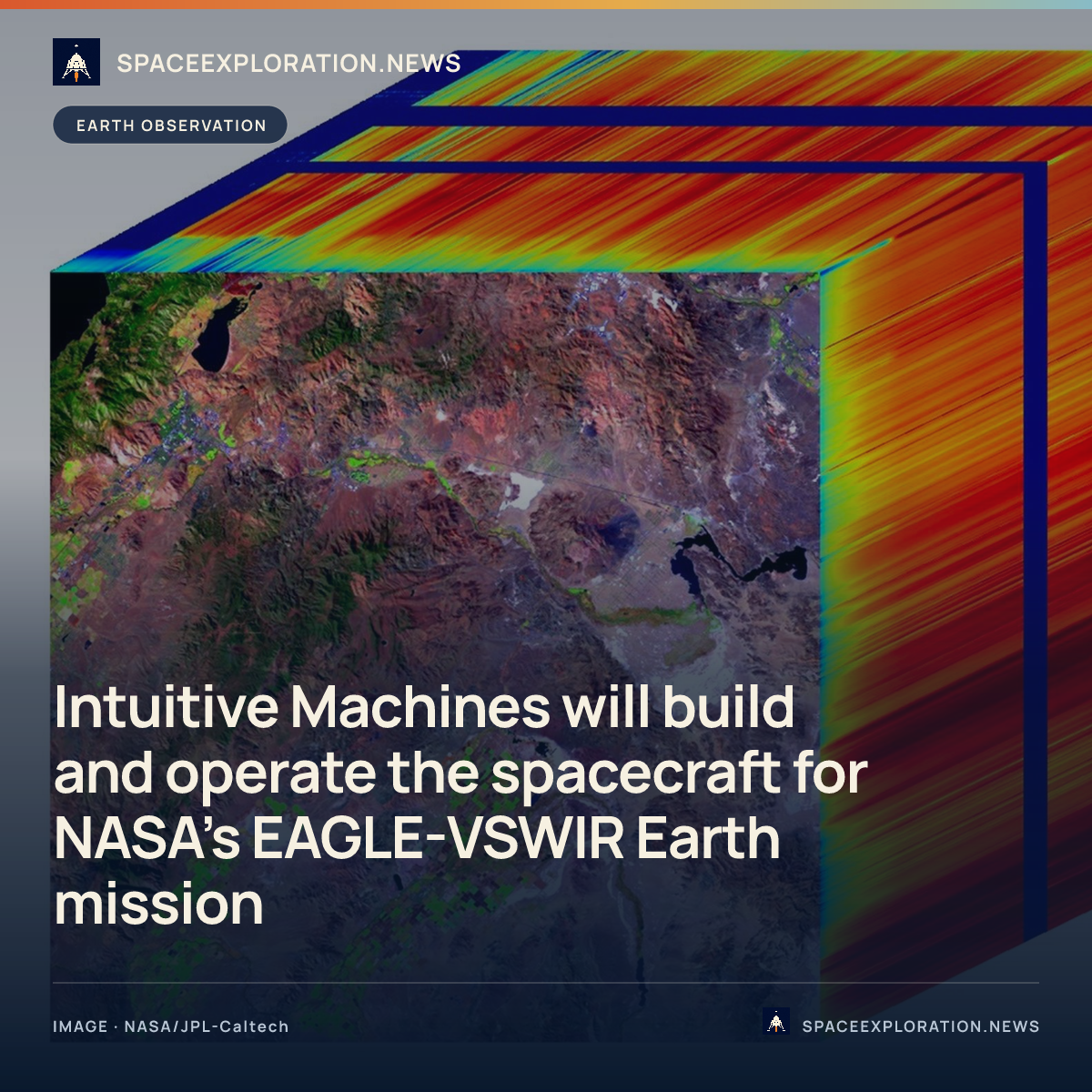
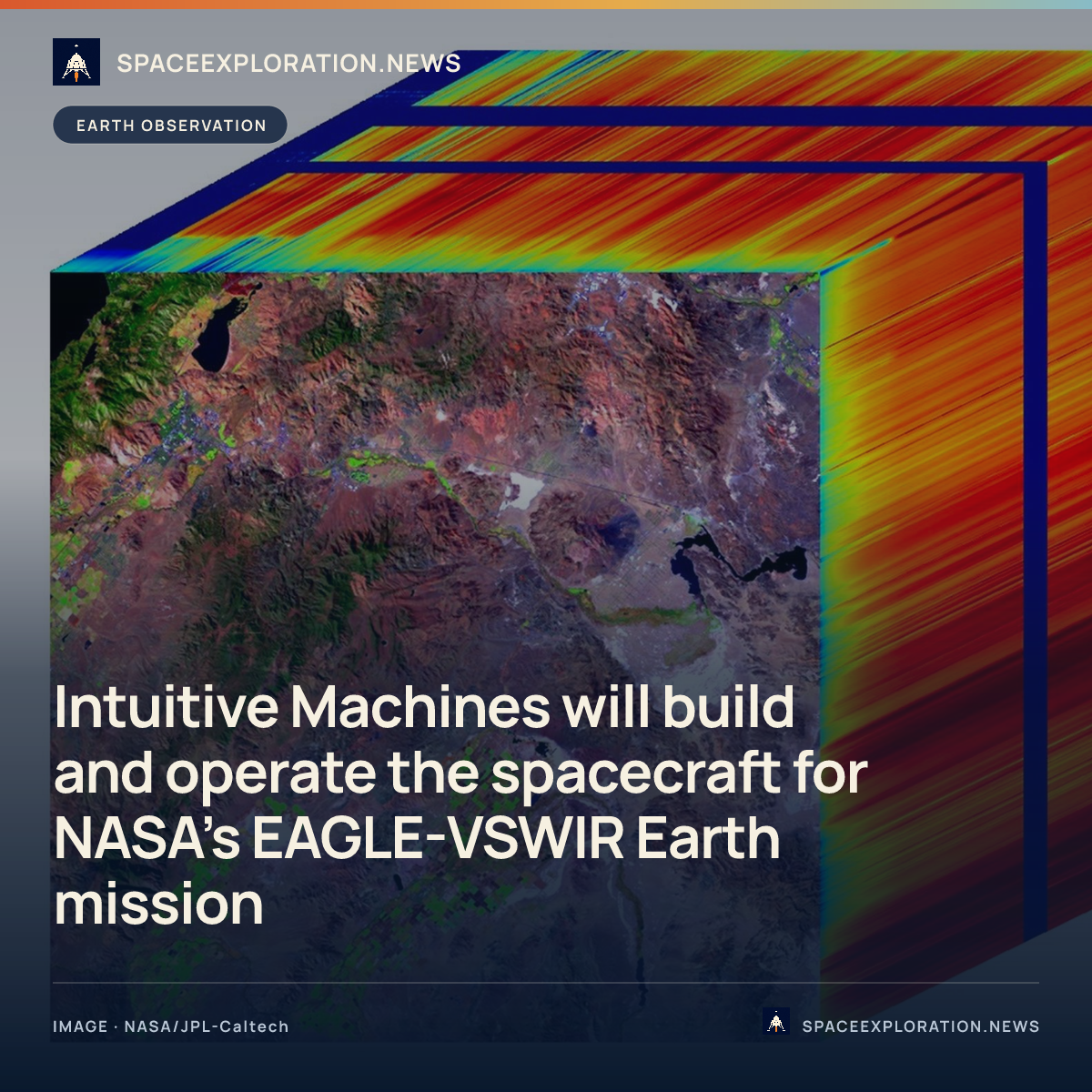
EAGLE stands for Explorer for Artemis Geology, Lunar, and Earth; VSWIR identifies the visible-to-shortwave-infrared part of the spectrum. NASA says the mission’s high-resolution imaging spectrometer will separate sunlight reflected from Earth’s surface into many wavelengths across the visible and infrared range. Patterns of absorbed and reflected light act as spectral fingerprints that scientists can use to identify material at the surface.
NASA says EAGLE-VSWIR is designed to observe Earth’s surface every 16 days. The agency lists potential uses including mapping critical and rare-earth mineral deposits, monitoring water quality and availability, supporting food security and wildfire prevention and recovery, and highlighting hazards such as oil spills and landslide risks. These are stated mission objectives for a future observatory, not results from a spacecraft already in orbit.
The agency presents EAGLE-VSWIR as a successor in capability to the Earth Surface Mineral Dust Source Investigation, or EMIT, which has operated from the International Space Station since July 2022. NASA says EMIT has characterised the mineral composition of arid lands, monitored ecosystem conditions and tracked hazards including methane leaks and acid mine drainage. Its EAGLE page says the new instrument will have 25 times more capability than EMIT, but does not define that multiplier with a resolution, swath, data-volume or other metric.
A 2028 mission inside a larger EAGLE programme
NASA unveiled EAGLE on March 24, 2026, as a series beginning with two Earth-orbiting missions. EAGLE-VSWIR would measure reflected light; a later EAGLE-TIR mission would measure emitted thermal energy with a multi-band radiometer. NASA says EAGLE-TIR is planned two to three years after EAGLE-VSWIR. The agency presents both as Earth-science missions whose measurement technologies could later help identify resources and assess potential landing areas at the Moon and Mars.
For now, the public record supports a narrower conclusion than the company’s full programme pitch: Intuitive Machines reports that it has the IM-300 spacecraft, integration and operations assignment, while NASA confirms the mission, instrument concept and no-earlier-than-2028 schedule. The next records needed to firm up the selection are a NASA or JPL procurement notice, contract details, dated spacecraft and instrument milestones, and a launch assignment. Until those appear, the supplier selection remains a company announcement attached to a NASA-documented future mission.
Reporting trail
Primary sources
For an image post, download the card and copy this suggested caption.
The company would supply the spacecraft, integrate JPL’s imaging spectrometer and run ground and mission operations. NASA lists the Earth-observation launch no earlier than 2028. Read the full report: https://www.spaceexploration.in/news/intuitive-machines-eagle-vswir-im-300 #SpaceExplorationNews #SpaceNews #SpaceMissions