Science
Models map lunar south-pole shadows where human-associated microbes may survive
A Science Advances study identifies cold, low-UV pockets at three prospective exploration areas. Viability means at least one Earth day in a dormant state, not growth or replication.
Add us as a preferred source on Google Add us as a preferred source on Google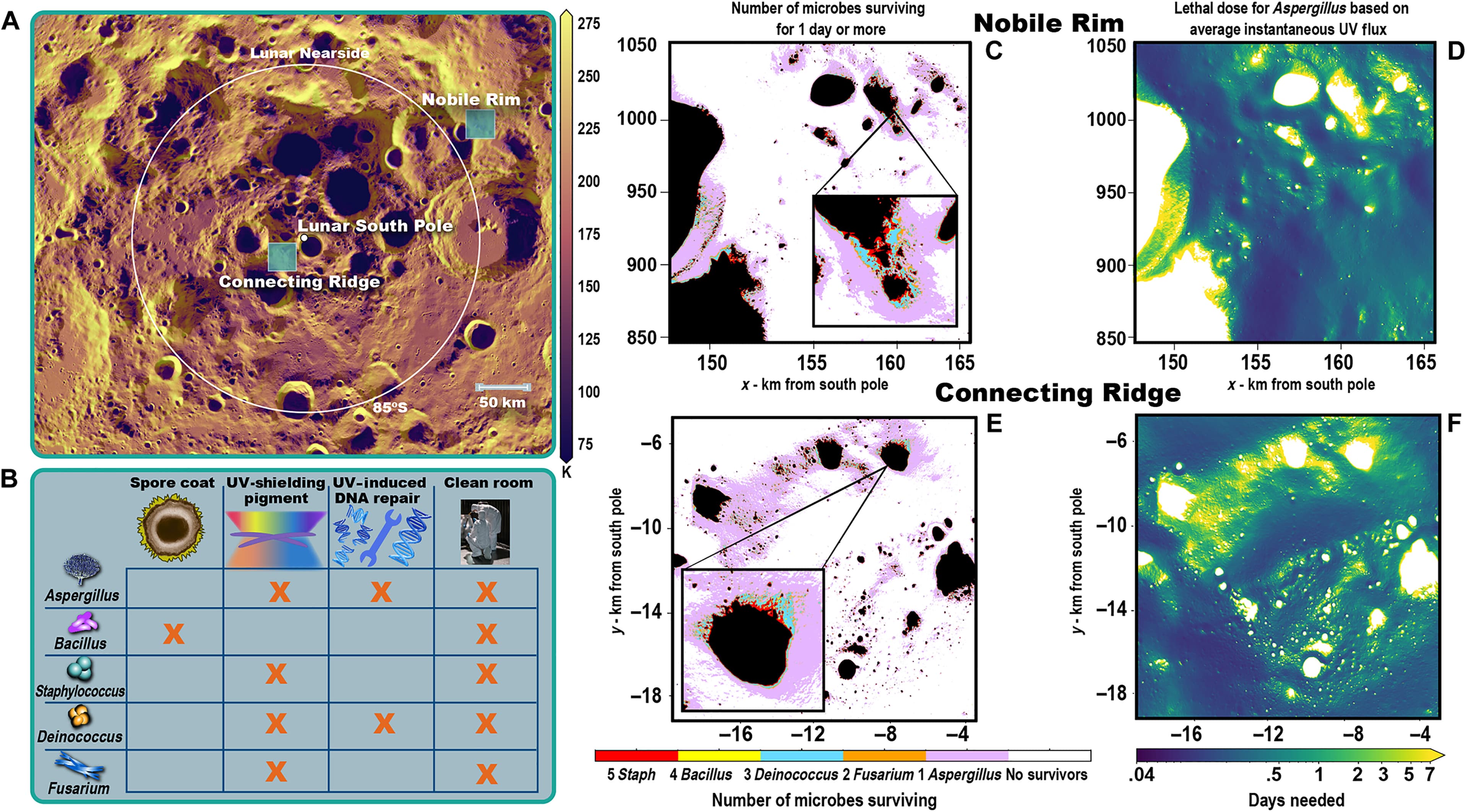
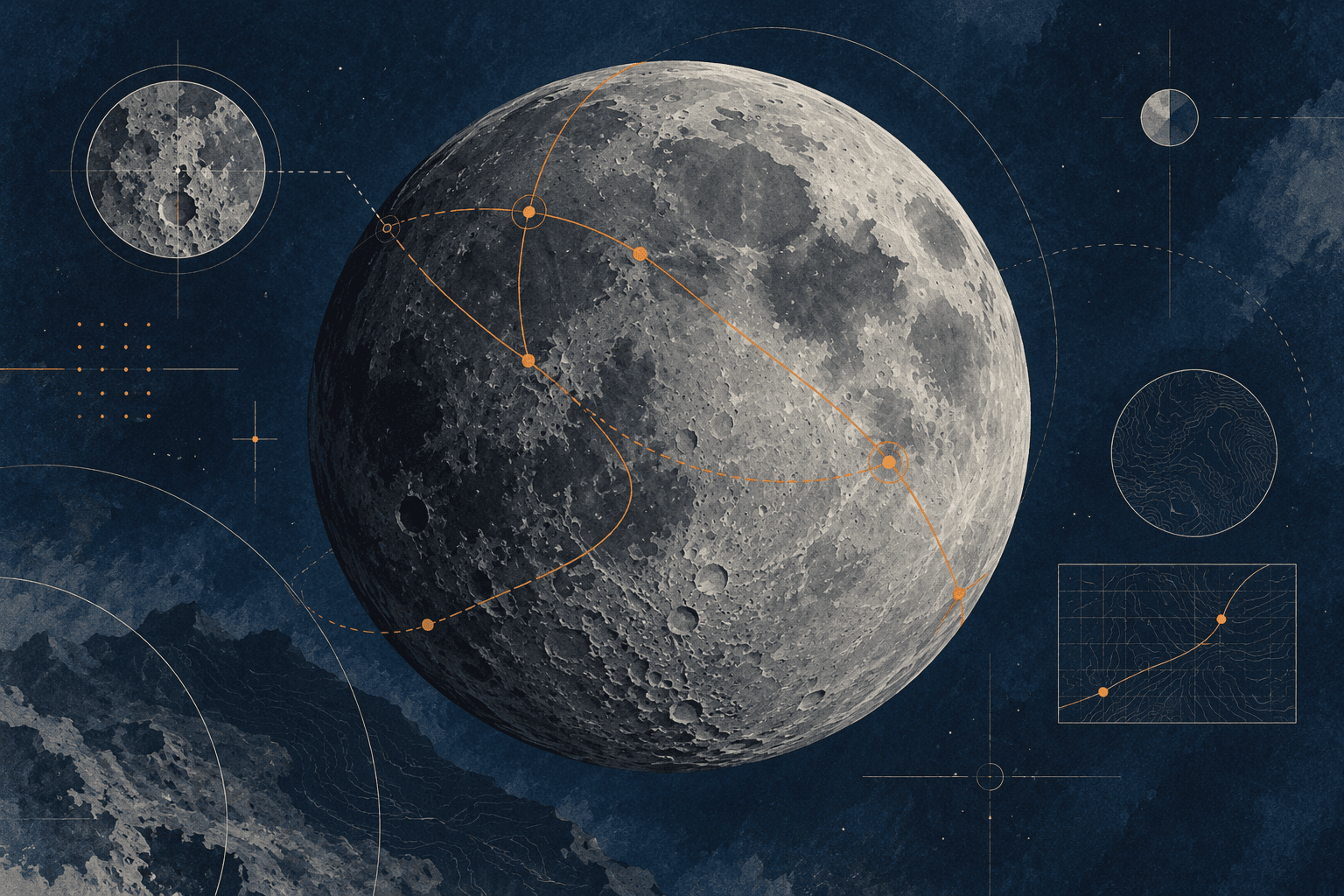
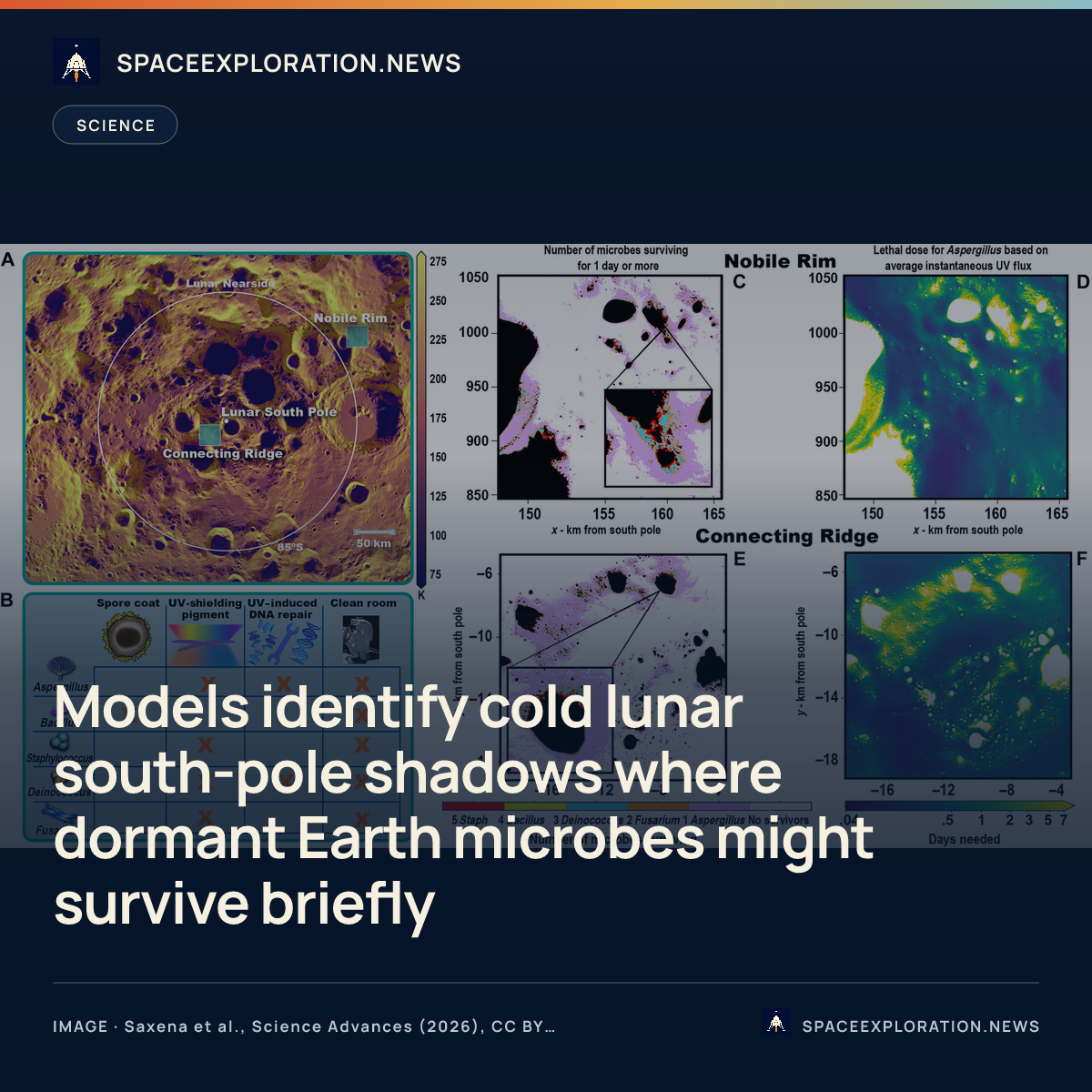
Cold, shaded patches at the Moon’s south pole could keep several microbes commonly carried by people and crewed spacecraft viable for at least one Earth day, according to a modelling study published in Science Advances on August 19. Using orbital temperature and topography data, the NASA team mapped potential niches at Nobile Rim 2, Connecting Ridge and De Gerlache Rim—areas that overlap the region being considered for crewed exploration. The result raises a practical planetary-protection question: how to preserve a chemical and biological baseline before repeated human visits change it.
The paper does not report microbes growing on the Moon, nor does it identify native lunar life. Its threshold was survival: a cell remaining viable for 24 hours after deposition, potentially in a spore or other cryptobiotic, or dormant, state. The authors chose one Earth day because it exceeds the longest interval between consecutive lunar extravehicular activities in the Apollo record. A surviving cell could become active if habitable conditions later appeared, but the model did not establish that those conditions exist.
Where the model puts the niches
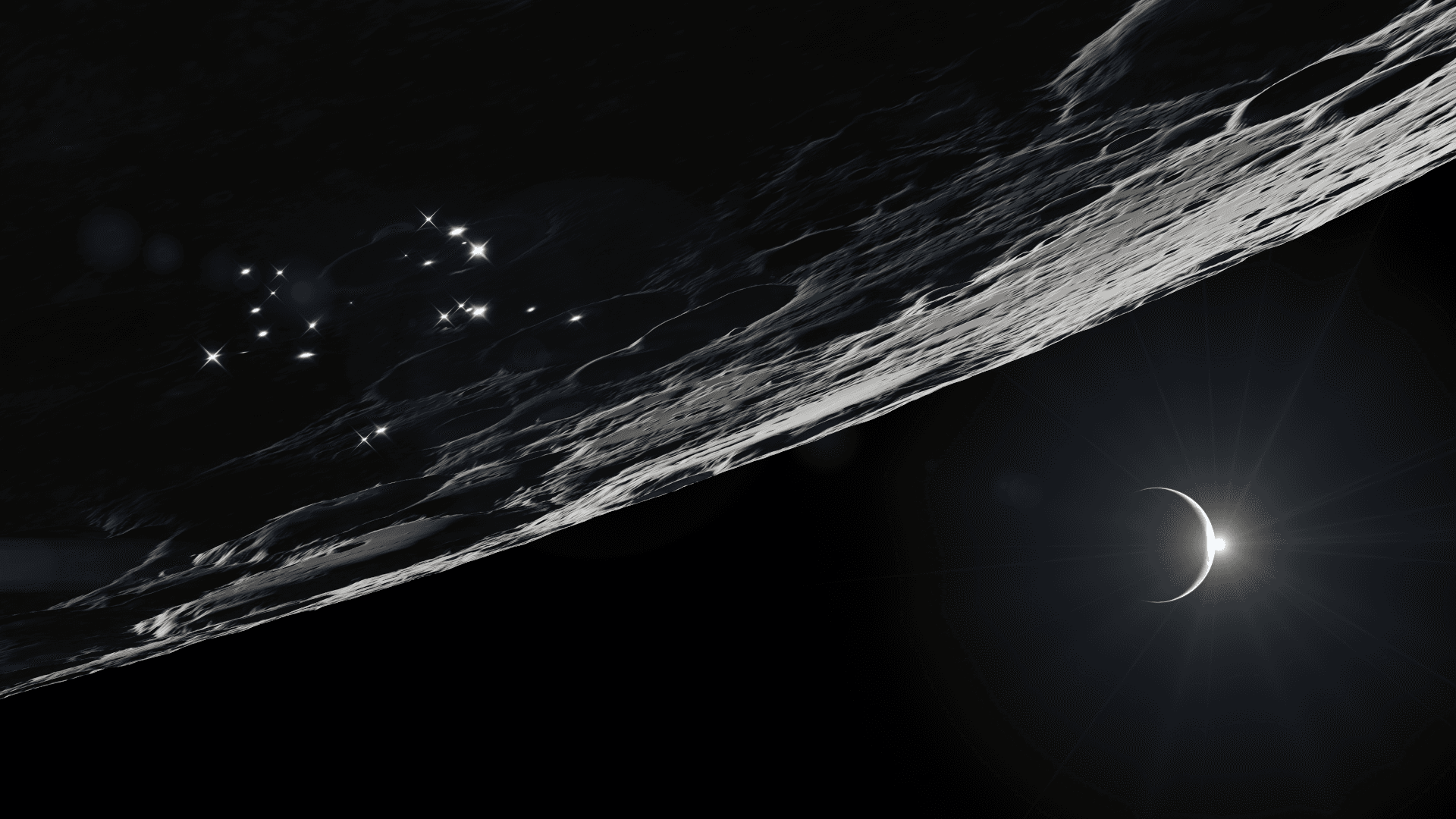
The south pole’s lighting geometry creates the refuge. Because the Sun stays only a few degrees above the local horizon, crater rims, ridges and much smaller bumps can screen parts of the surface from direct ultraviolet radiation. Those shadows are generally colder too. At the scale of the regional maps, candidate niches range from permanently shadowed crater floors to small patches; NASA’s summary says the fine-scale cases can be as small as an astronaut’s boot print.
The team first set laboratory-derived limits for five microbial groups that occur in human or spaceflight environments: Bacillus subtilis, Deinococcus radiodurans, Staphylococcus aureus, Aspergillus niger and Fusarium species. It compared their temperature and lethal ultraviolet-dose thresholds with Lunar Reconnaissance Orbiter observations. Diviner supplied maximum summer temperatures at 240 metres per pixel; illumination maps derived from Lunar Orbiter Laser Altimeter topography used 60-metre pixels regionally, while ray tracing resolved selected landing areas at five metres per pixel.
Ultraviolet light, not cold, emerged as the main short-term killer among the factors modelled. Aspergillus niger, a fungus found aboard the International Space Station and especially resistant to UV, had the widest predicted range. Across the three high-resolution sites, it could remain viable in 2% to 9% of the mapped non-permanently-shadowed area during summer and 15% to 30% during winter. Roughly 3% of each site supported modelled Aspergillus survival for at least seven days. The other four groups occupied smaller fractions.
Permanently shadowed regions were the most favourable in the direct-light calculation, but they are not free of radiation. A separate De Gerlache crater case included ultraviolet light scattered from nearby illuminated terrain—about 1% of direct flux in lit areas. The scattered light narrowed the predicted refuge, yet the model still found locations where all five groups could last longer than a week; Aspergillus remained the only one with widespread survival across that shadowed region. The authors say site-specific work needs finer spatial and time resolution.
Survival is not growth
In the study, survival covers several inactive outcomes: a dormant persister cell, a viable cell that may not grow in culture, or a spore. Growth is a higher bar. It requires active metabolism, and replication must be shown by an increasing population. The maps only ask whether local heat and cumulative UV exposure remain below limits inferred from experiments; they do not supply water, nutrients or an atmosphere.
The authors say the present lunar surface probably lacks stable, bioavailable liquid water because it has no dense, lasting atmosphere and no moderate-temperature environment to sustain it. They discuss the possibility that human operations could briefly alter local conditions—through venting, deposited organics or trapped water—but treat those ideas as questions for future experiments. Even a seven-day survival estimate therefore cannot be read as evidence that a microbial colony could establish itself.
This remains a model built from remote sensing and published survival experiments, not a test in lunar soil. The five modelled groups are a small sample of the microbes a crew could carry. The analysis treated high temperature and UV as the dominant short-term stresses, while assuming vacuum, low temperature and energetic-particle radiation would have limited additional effect over one day to one week. It did not fully model how stresses interact, and its finest terrain grid is still much larger than dust grains or many suit-made depressions. The paper calls for lunar-analogue tests and subcentimetre topography before operational predictions are made.
Why contamination controls matter
Human presence makes microbial delivery recurrent rather than exceptional. Airlocks and spacesuits can vent organisms and organic material, and filtration can reduce but not eliminate the release. Once traffic begins, researchers sampling a cold trap may need to distinguish indigenous lunar chemistry, ancient material delivered by impacts and contaminants deposited by a specific mission. The authors say a pre-activity baseline and records of what each expedition releases are essential to making that distinction.
Living cells are not the only concern. Dead cells and their molecules can persist and confuse instruments looking for prebiotic compounds or other volatile organics. A dormant cell also remains a precondition for later activity if conditions change. That makes the most shaded niches scientifically sensitive even if no microbe ever reproduces there, and it gives researchers a reason to sample some sites early rather than simply mark every potential refuge off-limits.
Current policy reflects a different level of concern from Mars. COSPAR says its 2026 planetary-protection standard applies no technical contamination constraints to one-way lunar missions or lunar sample return, although missions to the poles and permanently shadowed regions face more extensive documentation and organic-inventory requirements. The study’s authors argue that evidence for short-term viability should feed a review of those knowledge-based provisions. Their result does not itself set a new rule.
The immediate task is measurement, not an assumption that the Moon is habitable. Crews and robotic precursors can characterise background organics before disturbance, track airlock and suit releases, and revisit mapped shadows to see what remains viable. Those observations would test the model on the Moon while improving the contamination controls needed when human exploration moves on to Mars, where distinguishing a terrestrial hitchhiker from a local organism is central to the search for life.
Reporting trail
Primary sources
For an image post, download the card and copy this suggested caption.
A Science Advances study identifies cold, low-UV pockets at three prospective exploration areas. Viability means at least one Earth day in a dormant state, not growth or replication. Read the full report: https://www.spaceexploration.in/news/lunar-south-pole-microbial-survival-niches #SpaceExplorationNews #SpaceNews #SpaceScience