Launch
Othisis publishes 3D-printed cryogenic engine hot-fire results
The Bengaluru startup now calls the liquid-oxygen/methane unit a nominal 5 kN engine after earlier reporting 4.5 kN, while test data and a reusable-vehicle demonstration remain undisclosed.
Add us as a preferred source on Google Add us as a preferred source on Google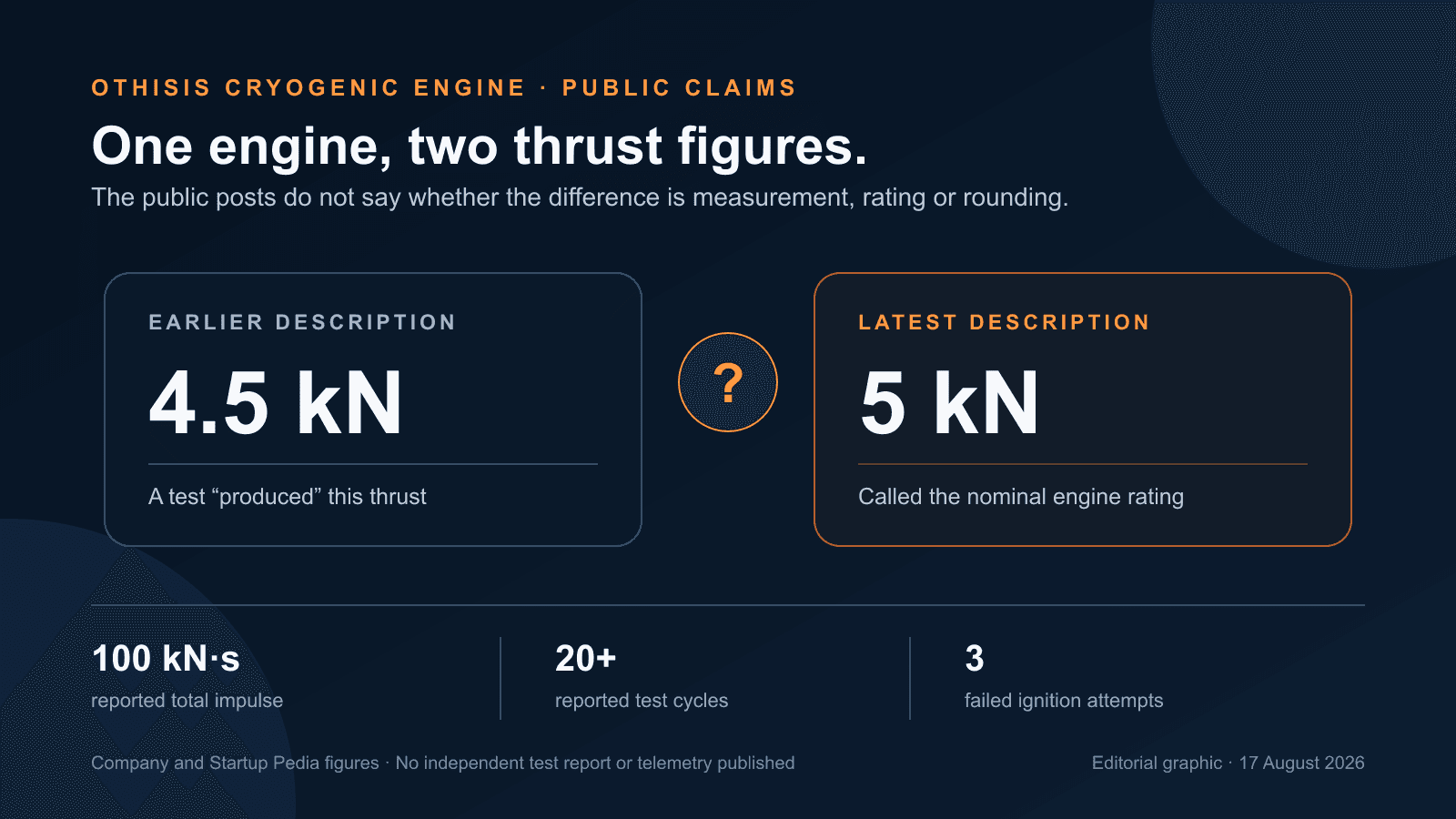
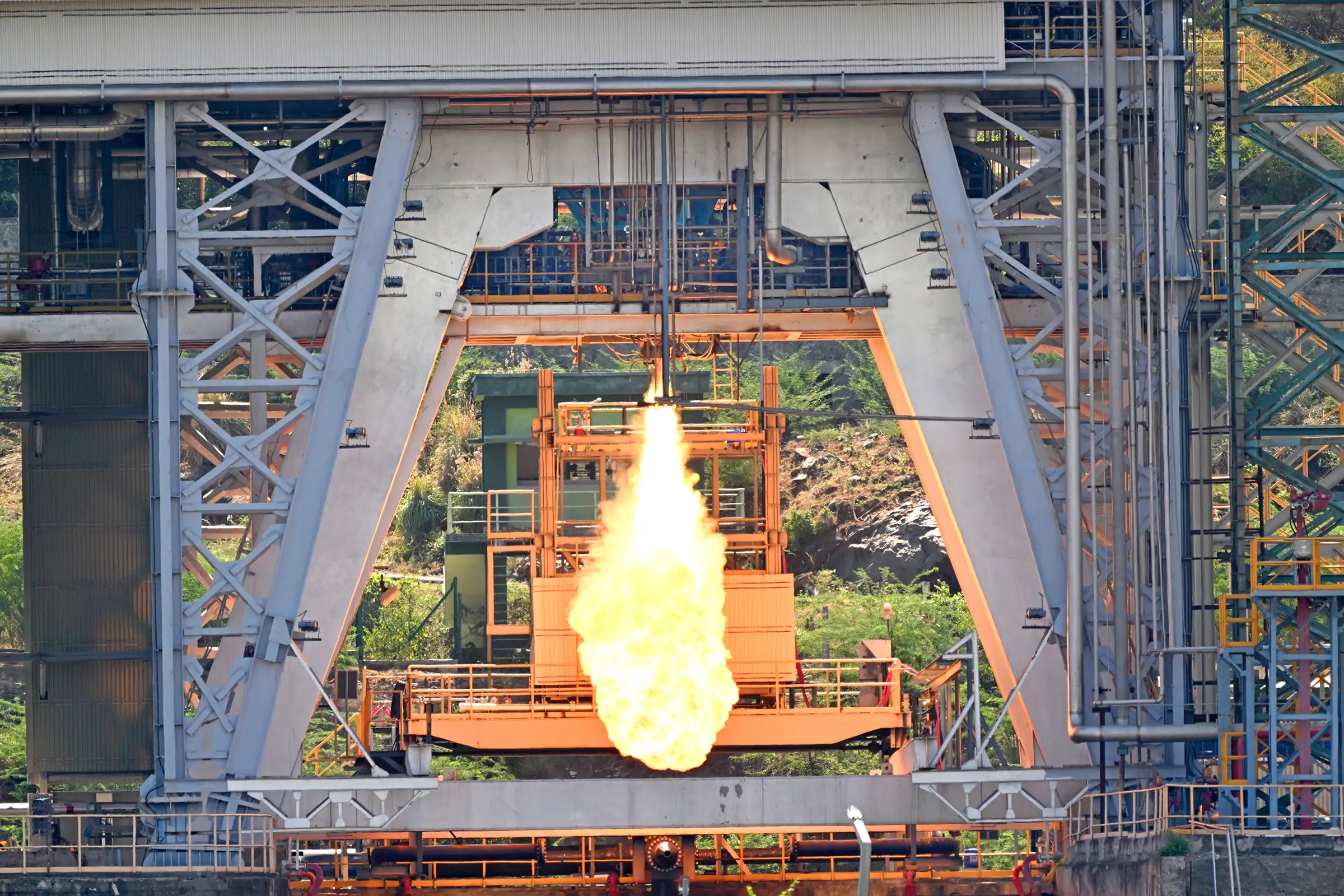
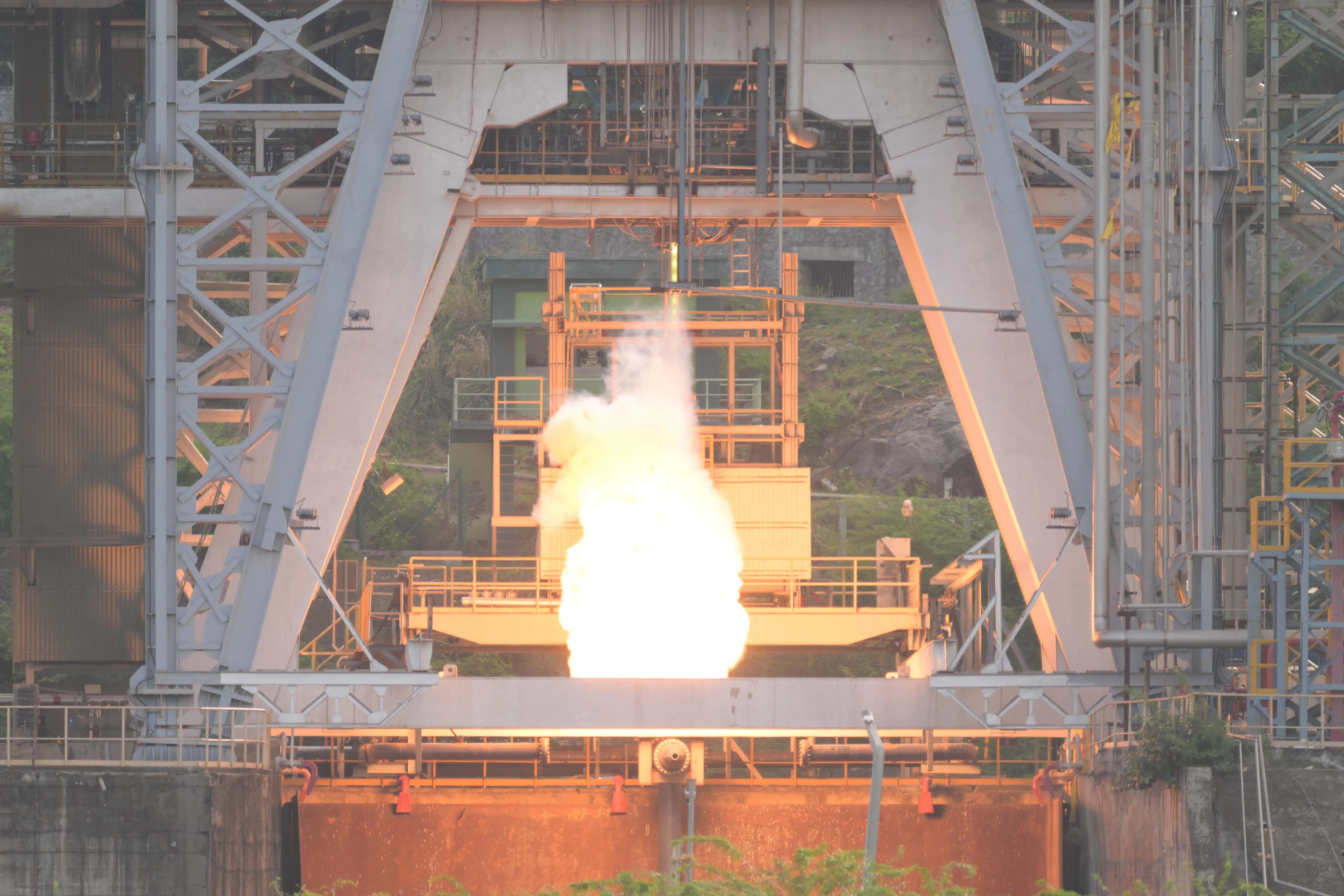
Bengaluru startup Othisis Systems says it has completed a sustained hot-fire of a fully 3D-printed cryogenic rocket engine using liquid oxygen and methane. The company now describes the unit as a 5-kilonewton engine with 100 kilonewton-seconds of total impulse, while Startup Pedia reported a 35-bar design chamber pressure and a successful burn after more than 20 test cycles and three failed ignition attempts. No independent test report or telemetry was available in the material reviewed for this article.
The result is the first publicly disclosed hot-fire of this cryogenic engine, but it is not Othisis's first disclosed liquid-engine firing. An Othisis-branded progress deck uploaded to Scribd records hot-fire successes in May and June 2025 for a different bipropellant design using nitrous oxide as oxidizer and pressurant and isopropyl alcohol as fuel. The deck's uploader is not identified as Othisis, so it is useful as a dated program record rather than independent verification.
What Othisis says it tested
Startup Pedia described the latest engine as regeneratively cooled and fitted with a modular pintle injector whose replaceable element can adapt the platform to different thrust levels. Othisis had separately called the 4.5 kN configuration regenerative and film-cooled. In its later post, the company said the engine was intended for the upper stage of its reusable launch vehicle and would go into a vehicle demonstration later in 2026. Startup Pedia instead described it as the core propulsion unit for a vertical-takeoff, vertical-landing launcher. Neither source published a vehicle configuration that resolves those descriptions.
The 100 kN·s figure is total impulse, not another thrust rating. NASA defines total impulse as average thrust multiplied by firing time, or more generally as the area under the thrust-time curve. If the engine averaged exactly 5 kN, 100 kN·s would correspond to about 20 seconds of firing. Othisis and Startup Pedia call 5 kN nominal thrust, however, and neither published the measured average thrust, burn duration or thrust-time trace. The reported total impulse therefore cannot establish an exact firing time from the public figures alone.
Startup Pedia said the team completed more than 20 test cycles and endured three failed ignition attempts before the sustained burn. Othisis's preceding update described more than 20 pre-flight flow tests, not 20 hot-fires. Startup Pedia also said the team built its test facility from an empty plot in nearly three months, including the propellant-feed system, in-house control and data-acquisition electronics and firmware. Its account says the team had to source and validate a cryogenic-rated valve after multiple component failures.
The 4.5 kN and 5 kN figures remain unreconciled
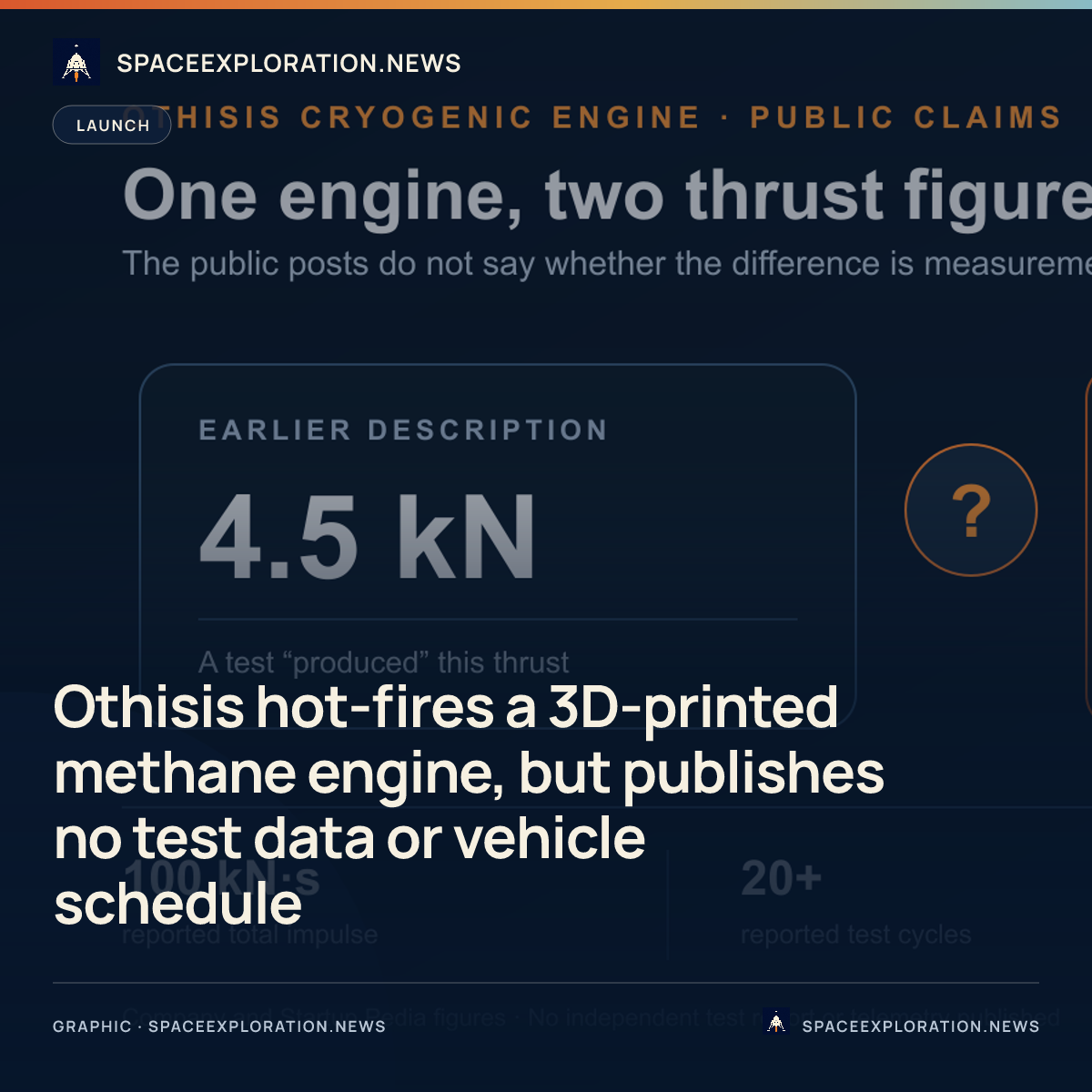
Othisis's public feed contains two descriptions of the cryogenic engine. An earlier post says a test produced 4.5 kN of thrust. A later post calls the engine a 5 kN unit and gives the 100 kN·s total impulse; Startup Pedia calls 5 kN its nominal thrust. The wording could reflect achieved thrust versus a nominal rating, but the sources do not say that, nor do they identify a hardware change, a separate firing or a rounding convention. The two numbers should therefore remain distinct.
The same limitation applies to the 35-bar chamber-pressure figure. Startup Pedia calls it the design chamber pressure but does not publish a measured pressure for the sustained burn. Othisis has not released a test date, acceptance limits, propellant mixture ratio, mass-flow data, a thrust calibration method or post-test inspection results. Those omissions do not negate the firing the company reports; they limit what an outside reader can conclude about whether the engine met its design point and for how long.
A ground firing is not yet a reusable vehicle
The disclosed evidence concerns an engine restrained on a ground test stand. It supports Othisis's claim that the engine ignited and sustained combustion, subject to the company's data. It does not demonstrate a vehicle leaving the pad, an upper stage operating in flight, a controlled descent, a landing or a second use of recovered hardware. The reviewed sources disclose no integrated stage hot-fire, restart series, throttle range, engine-life campaign or flight test for the proposed reusable launcher.
Startup Pedia reported that Othisis has payload memoranda of understanding, is onboarded with the Indian National Space Promotion and Authorisation Centre and is targeting a commercial launch from Sriharikota in the coming months. Othisis's own post gives a nearer but different milestone: a vehicle demonstration later in 2026. The agency describes its role as authorizing and supervising private space activities, including launch-vehicle development. None of the reviewed sources supplied an Othisis launch authorization, a customer identity, a mission date or a booked Sriharikota range slot.
A dated thrust trace and burn duration would answer the immediate performance questions, including whether 4.5 kN was measured output from a nominal 5 kN design. Repeat firings, restart and life data would address the engine's claimed reuse role. An integrated stage test and then a vehicle demonstration would move the program beyond the test stand. Until Othisis publishes those results, the defensible conclusion is narrower: the company reports a sustained liquid-oxygen/methane hot-fire, while the engine's exact achieved performance and the launch vehicle built around it remain unverified.
Reporting trail
Primary sources
For an image post, download the card and copy this suggested caption.
The Bengaluru startup now calls the liquid-oxygen/methane unit a nominal 5 kN engine after earlier reporting 4.5 kN, while test data and a reusable-vehicle demonstration remain undisclosed. Read the full report: https://www.spaceexploration.in/news/othisis-cryogenic-engine-hot-fire #SpaceExplorationNews #SpaceNews #RocketLaunch