Launch
ISRO publishes 175-tonne semi-cryogenic power-head test result
The 88%-thrust firing exercised ignition build-up, steady-state operation and the main turbopumps, but a full-power power head, complete engine and flight stage still remain.
Add us as a preferred source on Google Add us as a preferred source on Google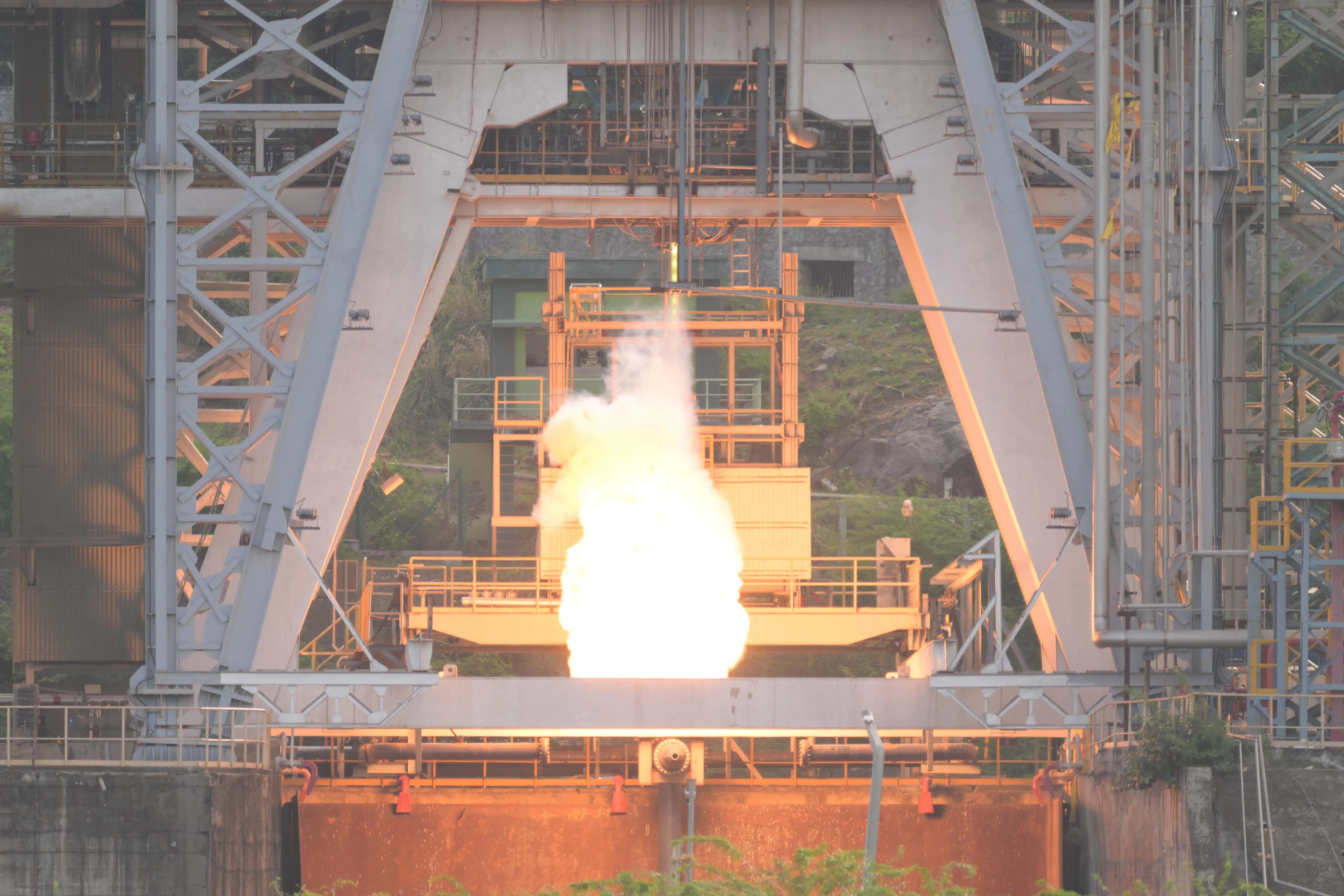
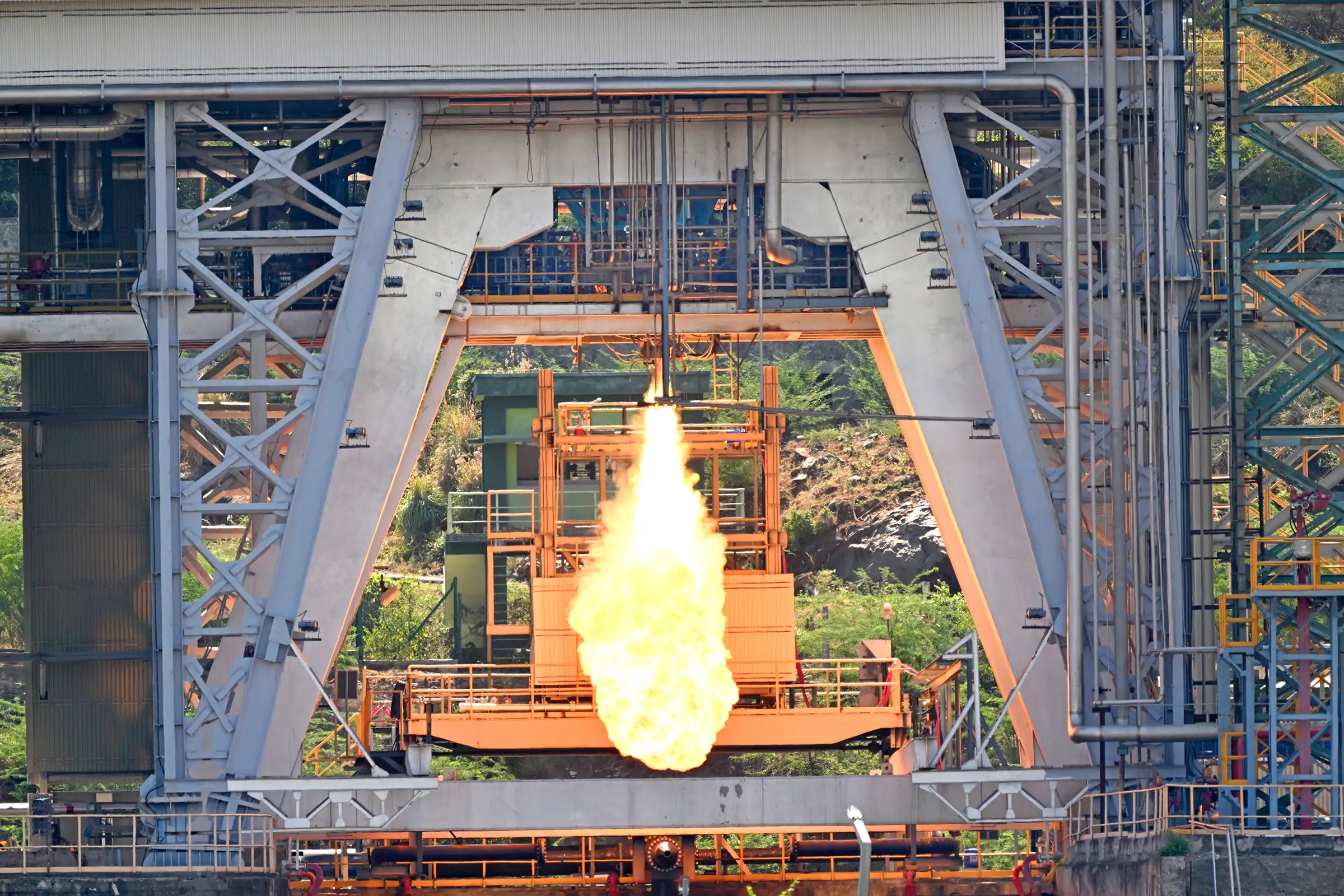
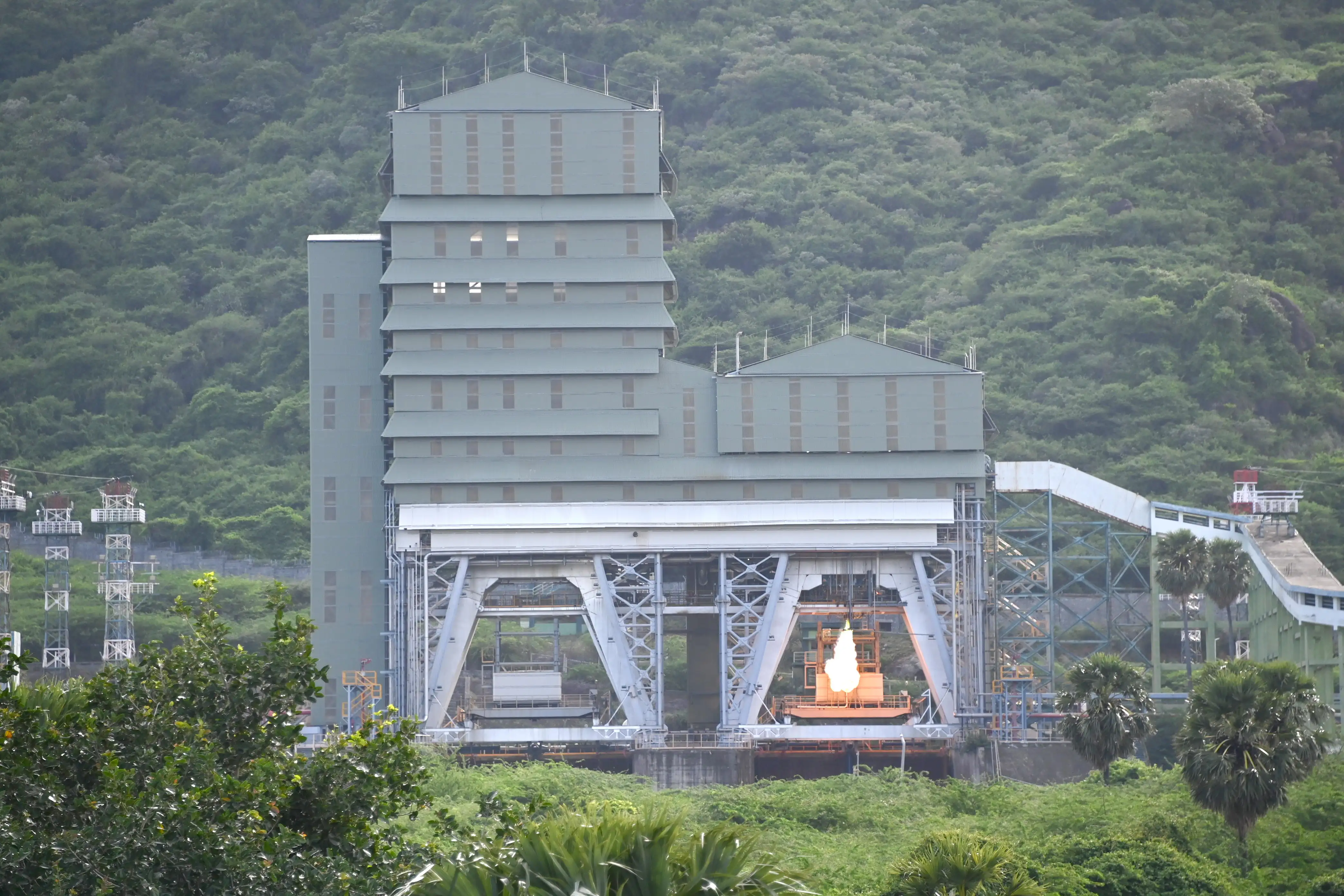
The Indian Space Research Organisation says its semi-cryogenic Engine Power Head Test Article reached 175 tonnes of thrust, or 88% of its 200-tonne target, during a June 24 firing at the ISRO Propulsion Complex in Mahendragiri, Tamil Nadu. Announced on June 27, the run is the highest thrust level ISRO has reported for this test article and moves the programme toward a full-power power-head demonstration.
That achievement is substantial but specific. A Power Head Test Article, or PHTA, contains the engine systems that create and feed high-pressure propellant flow, including the pre-burner, turbopumps, start system and controls, but it excludes the thrust chamber. The June firing therefore tested the machinery upstream of the chamber; it was not a hot test of a complete SE2000 engine and did not qualify the SC120 flight stage.
What the 175-tonne firing established
ISRO identified two objectives for the eighth PHTA hot test: studying the build-up after pre-burner ignition and demonstrating steady-state operation at a higher thrust level. The agency said the main turbopumps operated while delivering outlet pressures of 400 and 500 bar, and that the test followed predictions with the monitored engine parameters at expected values. Those are the central reported results; ISRO did not publish the underlying pressure traces or acceptance margins.
The run extends a deliberately stepped test campaign. ISRO's March 2025 programme description said the PHTA series would validate the low- and high-pressure turbopumps, pre-burner, start system and control components before integrated-engine hot tests. The first successful firing in that series ran for 2.5 seconds and demonstrated ignition and bootstrap operation, the process in which the engine's own hot-gas system brings the turbomachinery up to operating speed.
A second firing on April 24, 2025 lasted 3.5 seconds and tested the start-up sequence at 60% of rated power. A third on May 28 ran for 3 seconds as ISRO refined that sequence. In its latest release, the agency summarized earlier PHTA thrust points as 94 tonnes, or 47%, and 120 tonnes, or 60%, before the first run at 175 tonnes. The June 2026 announcement did not disclose how long the latest firing lasted.
The progression also has to be read against an earlier setback. During a July 1, 2023 PHTA test, ISRO reported that the sequence proceeded as predicted through 1.9 seconds, followed at 2.0 seconds by an unexpected turbine-pressure spike and a loss of turbine speed; the test was then stopped. The June 2026 release reports no comparable anomaly and says all parameters were as expected, although the agency has not released enough data for an outside assessment of that conclusion.
What ISRO still has to demonstrate
The next stated power-head objective is steady-state performance at 200 tonnes, the SE2000 programme's 100% thrust level. Passing that point would close the remaining gap in the PHTA thrust progression, but it would still leave the thrust chamber outside the tested configuration. ISRO's earlier development sequence places fully integrated-engine tests after the power-head campaign, so the June result should not be read as complete-engine qualification.
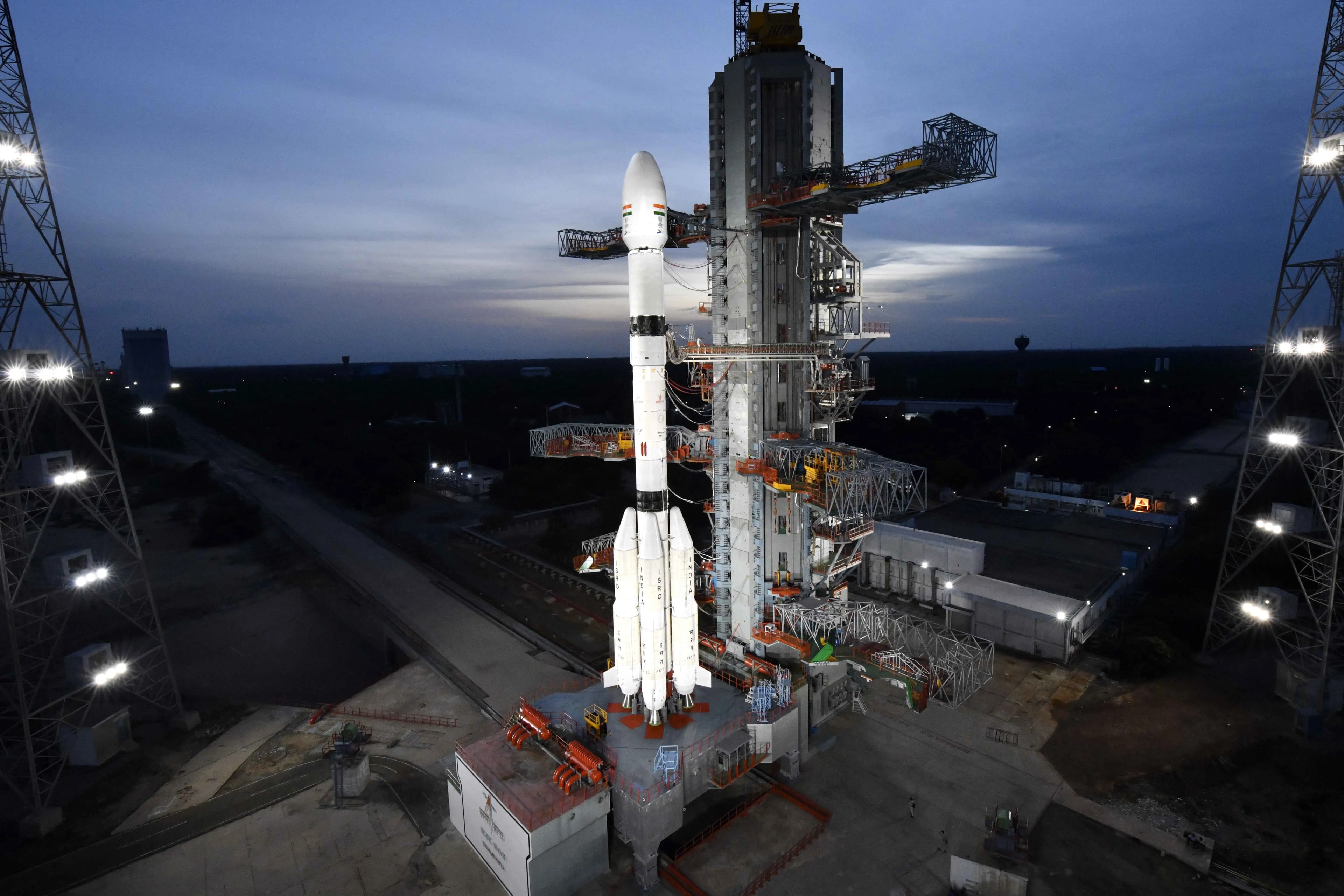
A complete engine must then become part of the SC120 stage that ISRO is developing for LVM3. The agency describes the stage as a replacement for the launcher's current L110 liquid core, powered by one 2,000-kilonewton-class SE2000 and loaded with about 120 tonnes of liquid oxygen and purified kerosene. The sources reviewed for this article do not provide a date for the first complete-engine firing, stage qualification or flight introduction.
Independent verification is limited. Business Standard reported the June test on the day of ISRO's announcement, but its account attributes the thrust level, stable operation and next step to the space agency. No independent telemetry or test report was available in the reviewed material. For that reason, the test outcome and parameter performance remain attributed to ISRO rather than presented as independently confirmed results.
Why the programme matters to LVM3
The propulsion change is intended to increase how much mass LVM3 can send toward geosynchronous orbit. ISRO says the current vehicle has a four-tonne-class capability to geosynchronous transfer orbit. Its March 2025 programme account said combining the SC120 semi-cryogenic core with an uprated cryogenic upper stage would lift that figure to the five-tonne class. The gain belongs to that combined vehicle upgrade, not to the power-head test or SC120 alone.
The planned SE2000 uses an oxygen-rich staged-combustion cycle with liquid oxygen and space-grade kerosene. ISRO lists a 180-bar chamber pressure, propellant-feed pressures as high as 600 bar and a specific impulse of 335 seconds for the engine design. The June firing did not include the chamber where those full-engine conditions come together, but it exercised the high-pressure feed machinery on which that design depends at the programme's highest reported PHTA thrust.
The 175-tonne run therefore answers an important intermediate question: ISRO reports that the power head can pass through ignition build-up and hold steady operation close to its target while its main turbopumps produce high outlet pressures. The next disclosed test at 200 tonnes will determine whether the same configuration can reach full power. Complete-engine tests and SC120 stage qualification will still be required before the performance increase can move from the test stand into LVM3 missions.
Reporting trail
Primary sources
ISROISRO successfully conducted hot test of Semicryogenic Engine Power Head Test Article at higher thrust levelisro.gov.in
ISROISRO achieves major breakthrough in Semicryogenic Engine developmentisro.gov.in
ISROSuccessful third Hot Test of Semi-Cryogenic Engine Power Head Test Articleisro.gov.in
ISROFirst hot test of the Semi-cryogenic engine conducted at IPRC, Mahendragiriisro.gov.in
ISROSuccessful ignition test on Semi Cryogenic Pre-Burner Ignition Test Article (PITA)isro.gov.in
Business StandardIsro conducts successful test of semi-cryogenic engine power headbusiness-standard.com
For an image post, download the card and copy this suggested caption.
The 88%-thrust firing exercised ignition build-up, steady-state operation and the main turbopumps, but a full-power power head, complete engine and flight stage still remain. Read the full report: https://www.spaceexploration.in/news/isro-semi-cryogenic-engine-175-tonne-test #SpaceExplorationNews #SpaceNews #RocketLaunch